Published
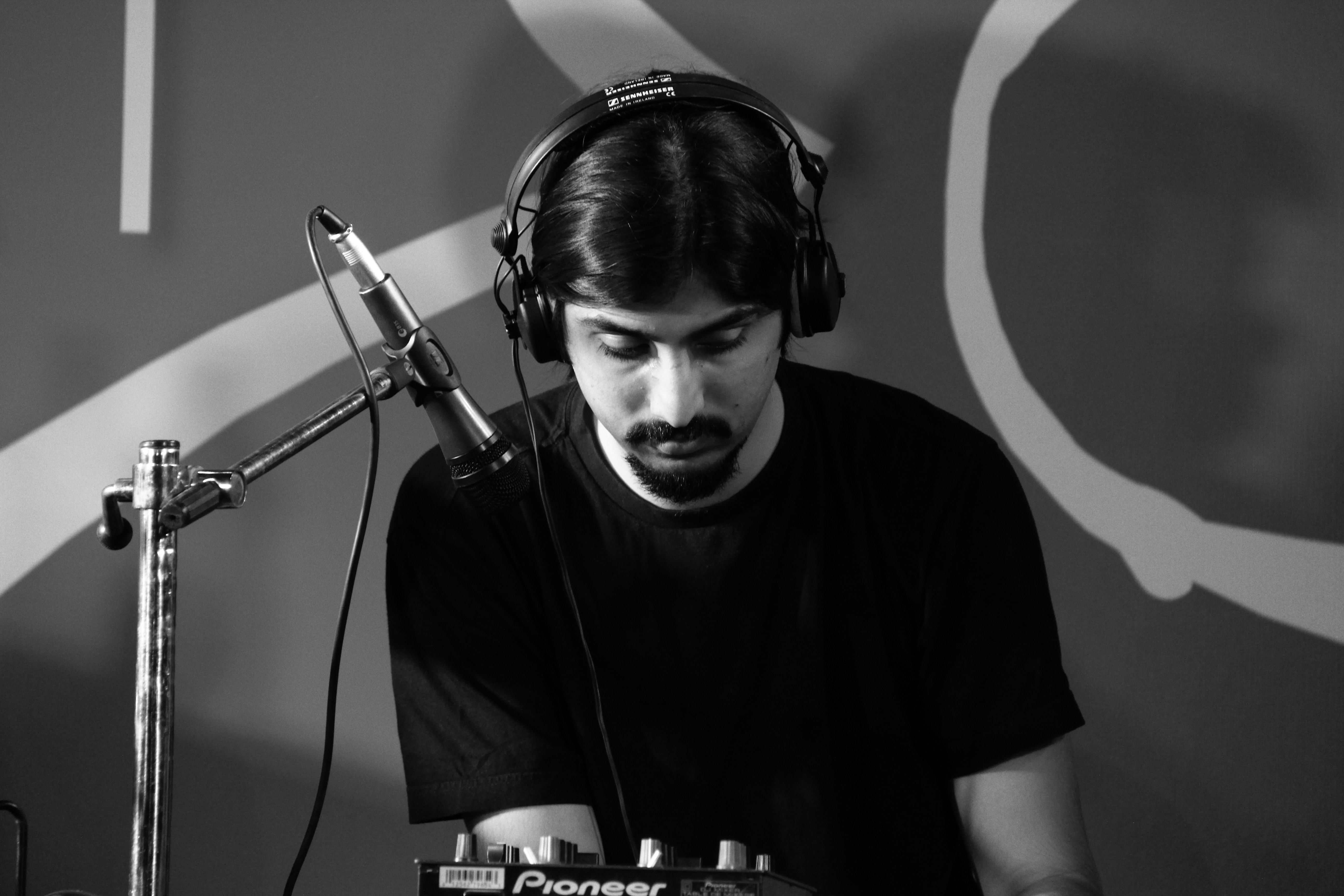
Name: Varun Desai aka 5volts
Occupation: Producer, composer, performer
Nationality: Indian
Current release: 5volts is one of the artists included on compilation Indian TechXpress 2, compiled by Alexander Robotnick, out via Hot Elephant. Other artists on the release include Pawas, Hybrid Protokol, Farhan Rehman, and Noni-Mouse.
Recommendation for Kolkata, India: Zee’s Coffeeshop on 11 Mayfair Road. Visit on a Sunday to experience locals play their record collections to a dedicated group of listeners.
Topic that I am passionate about but rarely get to talk about: I love finding and restoring old things. Machines built in the 1970s and earlier to me have a quality that’s extremely appealing. I feel like they were designed to keep both usability and durability in mind as opposed to the direction we’ve taken now where everything is replaced and discarded every few years. You’ll often find me playing records for a listening audience or hanging out at the auction houses.
I’m a foodie as well and Kolkata is one of the best places to find different flavours but that list is way too extensive for a brief interview.
[Read our Alexander Robotnick interview]
[Read our Farhan Rehman interview]
If you enjoyed this 5volts interview and would like to stay up to date with his music, visit Varun Desai's official homepage. He is also on Instagram, Soundcloud, and Facebook.
Are there examples of minimalism in music – and outside of music - that impressed you early on?
Being from a non-minimalist environment as a resident of Kolkata the concept of minimalism was mostly a theoretical construct. Visual Art I would say was my first exposure to tangible minimalism. Bauhaus and Opart being entry points into that world. Even in those genres I found myself attracted to works that had very little blank space.
Musically I’d say dub-techno and the work of Basic Channel was critical in my understanding of minimalism in electronic music. John Cage and Stockhausen for music in general. Ambient music had always been a longtime companion.
Nothing made as much impact however as entering environments, a trip to the mountains where sounds could actually be differentiated and had silence in between, or a moment watching a solitary cloud hang in an empty deep blue sky.
Both unavailable in urban environments in India so the impact of those the first time was huge.
Were you ever interested in minimalism as a style – from the Philip-Glass-variety to solo instrumental work to minimal techno? If so, tell me a bit about your interest in this.
I’ve always appreciated solo piano work. Erik Satie has been my go to in that respect. Some of Philip Glass’ work for sure.
Digging into the entire repertoire of classical and neo classical composers is something that happens very slowly with me so I’m always open to finding more works that are inspiring.
When I find something I connect with I end up listening to that work obsessively, rarely moving beyond.
Do you tend to find that, as many claim, “less is more?” Are the notes you don't play really as important as the ones you do play?
Once you discover the power of putting silence into music it’s very hard to ignore. I feel the notes you don’t play could be much more important than the ones you do if you use silence with skill.
A shoutout to Murcof, he really does that with unparalleled style.
Do you feel as that making music is a process of adding elements until it is done – or one where you chisel away pieces from something that is already there?
My process involves improvisation and committing directly to a 2-channel recording so it’s impossible for me to chisel away.
It’s always an additive process. I use the subtractive process when preparing the sounds themselves.
Many artists are becoming more minimalist in their music as the years go on, focusing on the “essence.” How is that for yourself and how would you describe your development in this regard?
Yes I can totally see myself making music with more silence than sound somewhere down the line.
My sound design skills and timing needs to improve before I try to do that though.
What were some of the starting points for your most recent releases?
I’ve been trying new things lately like playing visual scores, limiting myself to one instrument and generally not recording what I do. It’s allowed for a freedom of expression in an industry that’s constantly forcing artists to show everything they do via social media.
I find starting points in places where I feel no pressure to share what I’m doing. If it leads to a finished project then it’s well and good but many times it does not.
How did a minimalist mindset possibly inform the creative process?
Once you’ve amassed the technical skills to create what you can feel or imagine then minimalism really helps you take things to a different level.
It then works like a feedback loop allowing you to rethink your creative process.
Do you like to set yourself limitations? If so, which were some of those limitations for the new pieces?
Using one instrument is a great exercise.
An acoustic guitarist does it all the time but in electronic music creation it’s such a radical thing to do, especially if you’re working in the box.
Thanks to sampling and digital synthesis, there are endless possibilities for sculpting the sounds and overall sound design of a piece or album. What are your considerations in this regard?
A lot of sound design comes from where you are at that point of time emotionally and in your musical journey in the bigger scheme of things. I’ve found this so apparent when listening to bands especially.
A debut album and an album a decade after always have very distinct changes in the sound design. Have found this across genres and not just with those using digital technology.
What were some of the most important pieces of gear or instruments for this release?
The 808 & MS-20.
Reducing one's options and techniques often implies a different way of working with the materials. Tell me about yours, please.
Performing with an analog mixer where I’m sequencing, playing keys, mixing and routing effects is like a workout. So whether the music is minimal or maximal it still requires a similar effort.
Often the contemplation and preparation of the instruments and routing is the only time where I can really sit back and make thought out decisions. Everything else has to be on the fly.
French producer Guillaume Duchastel told me: “Minimalism is about more than owning fewer things. It’s about focusing on what truly matters.“ What are some of your strategies for separating what matters from that which doesn't?
Well that would be convenient but I’ve amassed a lot of gear over the last 20+ years of making music and I’m very sentimental about each machine. I’d rather not switch it on or cover the gear up to avoid the distractions.
Haven’t reached that point where I’m ready to let gear go to help free myself but I have seen it being a very effective method for a lot of professionals.
With so much incredible music instantly available, are you finding that you want to take it all in – or that you need to be more selective? How do you pick the music you really want to invest in?
Listening to music these days is often like spinning a roulette wheel because of streaming algorithms. I’m not a fan and I don’t think any streamer is really “investing” in music when they stream something a hundred times.
My choice of selection comes to play when I’m buying a record, which itself is a much smaller pool of choice. The chances of finding what I would consider good music is also higher.
Would you say that minimalism extends into other parts of your life as well?
That’s been a goal, but living in India and as a family man, that remains a dream.
However I do try and exercise minimalism in my habits and daily routine even if I can’t find it in a physical sense.