Published
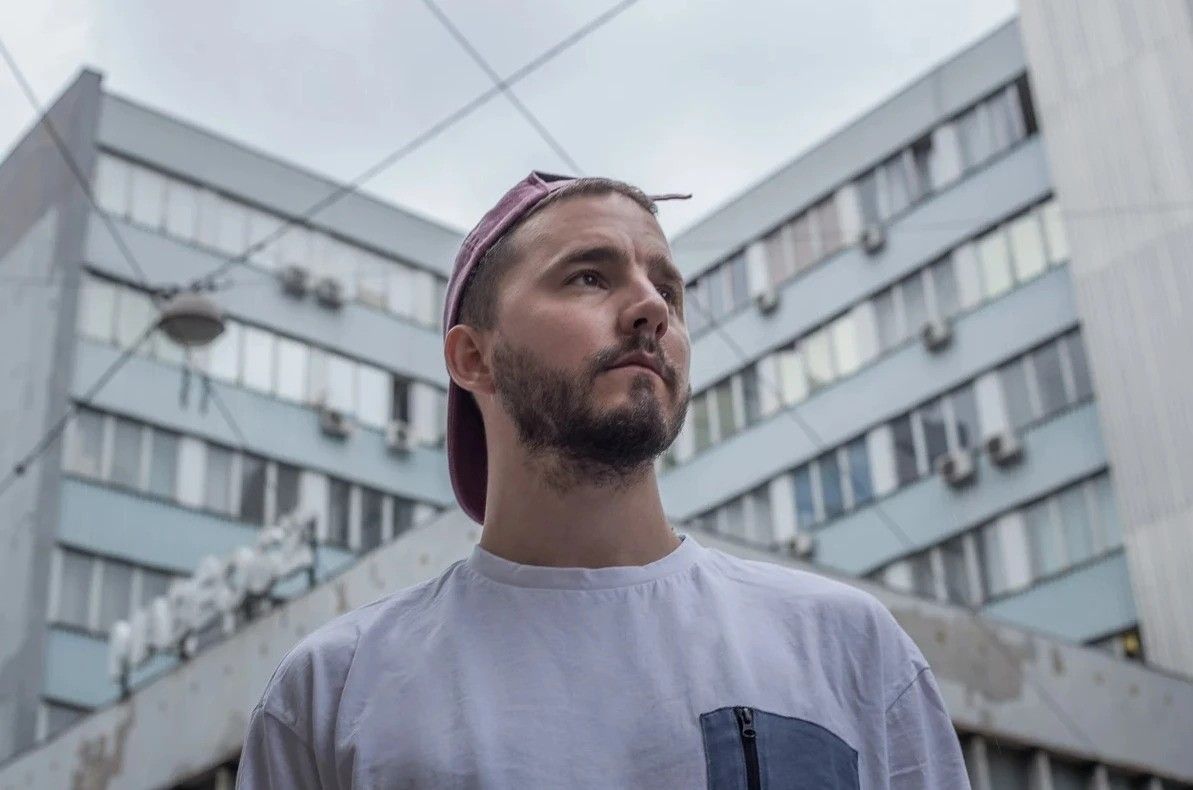
Name: Szabolcs Bognár aka Àbáse
Occupation: Producer, improviser, composer, keyboard player
Nationality: Hungarian
Current release: Àbáse's new album Awakening is slated for release July 5th via Analogue Foundation. Together with Sebastian Hecht, Àbáse also co-developed the compilation Entangled Grounds. The Sound of XJAZZ! Berlin. Recorded live over two days, which aims to capture the current jazz sound of Germany's capital in ten tracks.
About his involvement, Szabolcs simply says: “I was happy to help with the coordination of the sessions and have creative input on the artistic direction of the project. I also came up with the idea to partner with Brewery Studios for the recordings and go-to tape.”
If you enjoyed this Àbáse interview and would like to know more about his music and upcoming live performances, visit him on Instagram, bandcamp, and Facebook.
For more information, visit the XJAZZ! Festival website.
The XJAZZ! festival has always prided itself on an eclectic approach but there always seemed to be a clear understanding who fits the bill. What does the term jazz mean today, would you say?
I think what many of the contemporary genres and projects learned from the jazz tradition and incorporated into their own expression is the reactive nature of the genre, being able to improvise and react to each other and our surroundings musically.
While some of the acts might not fit into the traditional 'jazz' styles, I think they very much have validity in these lineups. One of the beautiful aspects of jazz is that It's always evolving and incorporating new styles, It's ability to react to the current cultures. Many of us grew up listening to just as much electronic music as acoustic performances and it's only natural that we incorporate these elements into our playing.
In this sense, as long as it has an improvisational element and reactive to It's immediate surroundings, an act could fit the 'jazz' term.
Music has become a lot more global and incorporating elements from other parts of the world or the musical spectrum is commonplace. Do you still think there are city scenes with a distinct, unique sound? What holds these communities together?
Even though we have access to immediate communication across the globe and seemingly limitless information you can never replace the power of personal connections and local interactions. Every major city has It's unique history, culture and major musical figures and movements that will define It's sound.
While we'll definitely see more and more similarities and collaborations between communities and genres crossing boarders, you will always have distinctions between them. Every city has It's own vibe.
The press release to the compilation speaks about capturing a variety of “movements unfolding.” Speaking more concretely, what are these? What are some of the shared aesthetics or characteristics of the Berlin jazz scene?
What's most interesting to me about Berlin is that it feels very raw and fresh. I don't have a sense of subcultures in the live music scene going back to decade long histories with It's own rules or gatekeepers.
The community is in the middle of defining itself. I'm inspired by the wave of first generational migrants (like myself) bringing their own culture and unique approach and sound and see how they bland together. In that sense the shared characteristic is the very active experimentation and active 'sound clashes'.
The press release also states: "Connection is collaborative; what isn’t heard on the album is all the contributions made outside of the recording sessions. From the venues to the promoters and the audience to the musicians, these all inform the community and facilitate creativity." Can you talk about that a little more, please?
We have a very vibrant music scene in the city with lots of dialogue between subcultures and genres.
As mentioned above, the radio stations, venues, promoters, festivals like XJazz, collectives, jam sessions, rehearsal and exhibition places as well as the very open minded and welcoming audience all play a very important role in fostering and keeping these creative projects alive. All these parties wouldnt exist without the other.
What Henry (who wrote the liner notes) meant in the quote is that the compilation, while showcasing the musicians, also represents a greater community with many moving parts.
What is the connection between the festival and the compilation?
The festival crew commissioned and facilitated the compilation. It's a recorded representation of what the festival stands for artistically, what they feel represents their sound and vision the best.
It's aiming to incorporate and represent the diversity of sounds and approaches in a condensed 2xLP format that you might experience live during the festival week in May.
I'd be curious to hear if you feel as though this project would have ended up differently had it not been approached with an “analogue philosophy.”
Most definitely. Our generation grew up in the era of accessible DAWs (Digital Audio Workstations) where editing, looping and all sorts of sound processing is common practice. A few decades ago you had very limited options to correct yourself and fine tune your performance in a studio environment. You had to show up, know your part, nail the take and that was it.
Meanwhile we are used to being able to edit our recordings to the tiniest of details. It's a great tool but we often loose something magical on the way. Recording straight to tape meant that we had to commit a fully live and very raw performance and we had very limited options to process the sound.
What you hear is pretty much what we did on the day at the studio. If we'd have gone digital most of us would still be in the process of tweaking and editing details and we wouldn't have this conversation.
Entangled Grounds was recorded over five days. Tell me about the sessions, please.
Each day had two groups, one in the morning and one in the afternoon. Each group had a limited amount of time to record their idea and finalise it and once they left the studio, that was it. They left their creation to the expert hands of engineer Erik Breuer to mix it.
It was a very straightforward process that was at the same time daunting - because of how exposed we were - and liberating and refreshing because we were able to create in the moment and detach ourselves from the rest of the process (something that is very rare these days to the above mentioned prolonged digital processes).
Tell me about the recording of the suite at the end, how did that come together?
The suite was Erik Breuer's idea. He has been collaborating with Zacharias S. Falkenberg (composer, arranger, conductor) on numerous occasions in the studio and he felt like we should prepare a piece that has a longer form and incorporate strings.
We got together with Petter Eldh, Moses Yoofee and started composing and carving out the arch of the piece, we recorded the demos and guides for the orchestral part and the rhythm section with Petter, Moses, myself with Philo on drums Tsoungui on drums, Ori Jacobson on saxophone and Monica Mussungo on vocals.
Zacharias later wrote string parts and composed his own section and members of A Song For You Berlin choir came to sing on the last section. We wanted to have different 'movements' and sections, representing different aspects of the city's musicality.
Did the collaborations on the release come about spontaneously, or was there some form of planning involved?
I would say it was a little different in each situation but in every case we left time for preparation to every group it was up to the individuals to decide if they come with their usual setup or try something new.
I recorded an Àbáse track with two totally new collaborators for example, Moses invited Zuza Jasinska and Marc Muelbauer but Sonic Interventions came with the core band with only a few additional surprise guests.
Is there still a lot of unreleased material?
I know that there are a couple of outtakes from my session and from sonic interventions. I'm not sure how many unreleased songs there are besides though.
The time was ticking and tape is expensive so I doubt that theres a lot lot haha.
How do you see the role of collaboration for this music, especially between a group of musicians who are frequently rotating constellations amongst themselves?
Even one unique compositional idea or an addition of a new musical voice to an existing group can completely shift the sound and approach. The same group of four five musicians could sound totally different depending on witch member is leading the ensemble.
I would say collaboration is always key.
Ímprovisation is obviously an essential element of jazz, but I would assume that just like composition, it is transforming. How do you feel has the role of improvisation changed in jazz?
Since many of the music that is prominent in our culture is electronic / sample / loop / groove based it has an integral part of improvisation too.
You would hear many groups improvise on the level of the rhythm section, borrowing ideas from electronic genres, incorporating sound design and electronics instead of virtuoso melodic lines and following one leading soloist at a time.
As a journalist, I would love to get involved more with this music. What are media formats that you think “work” and would serve the community best?
As independent musicians we are very much bound to the culture around social media, we must maintain a constant presence to be able to communicate with our audiences outside of our immediate communities. The landscape is constantly shifting, literally every six months there appears to be a new platform or trend.
I'm very much interested in seeing Bandcamp grow their community building tools, It's definitely the number one platform that is truly supporting independent music. Out of the social media giants Instagram still feels the most "healthy" in terms of what form of communication it allows though I'm more and more interested in shifting into more slow and independent, personal platforms, email lists, own websites. I think everyone is getting tired of the fast and shallow nature of the 'feed'.
Supporting live events at live venues with live musicians and audiences and supporting independent music directly through platforms like Bandcamp is still most important and helpful.