Published
Name: Abby Nissenbaum
Nationality: American
Occupation: Singer, songwriter
Current release: Abby Nissenbaum's Don't Want to Cry EP is out now.
Recommendations: Two of my all-time favorite albums: Midnight Organ Fight by Frightened Rabbit and Planetarium, which was a collaboration among Bryce Dessner, James McAlister, Nico Muhly, and Sufjan Stevens.
If you enjoyed this Abby Nissenbaum interview and would like to know more about her music and current tour dates, visit her official homepage. She is also on Instagram, Facebook, and tiktok.
Where does the impulse to create something come from for you? What role do often-quoted sources of inspiration like dreams, other forms of art, personal relationships, politics etc play?
I really enjoy making “magic out of the mundane” in the sense that my songwriting style tends to be observational, inspired by political issues or other issues I’m seeing in my local community.
For example, the title track from my new EP Don’t Want To Cry was written after witnessing and receiving homophobic comments online. I have a line in the title track that says, “I don’t have to hold your shame,” which is a lyric I had written down in my Notes app one day and kept coming back to before even conceptualizing the idea of this EP.
I decided to weave it into “Don’t Want To Cry” because it’s the perfect retort to bullies, harassers, or abusers of any kind. If someone chooses to spend their time in a violent headspace, hurting and degrading others, then that’s an embarrassing and shameful reflection of THEM – not their target.
For you to get started, do there need to be concrete ideas – or what some have called a 'visualisation' of the finished work? What does the balance between planning and chance look like for you?
As someone who works a full-time job outside of music, my songs are formulated mostly by chance (e.g., a fragment of a lyric or melody popping into my head during the day).
Dedicated creative time is a privilege and luxury for most working-class people, so the balance skews heavily toward chance (and whether my brain is able to come up with anything interesting during the day!)
Is there a preparation phase for your process? Do you require your tools to be laid out in a particular way, for example, do you need to do 'research' or create 'early versions'?
I create demo tracks to send to my producer, Steph Trivison.
My song “Limerence” actually features my bass line from the original demo, which was Steph’s idea and is a really fun nod to the original conception of the song!
Do you have certain rituals to get you into the right mindset for creating? What role do certain foods or stimulants like coffee, lighting, scents, exercise or reading poetry play?
I work in health tech and am swamped in job demands from early morning till night, so, as much as I wish I did, I don’t have dedicated songwriting or creative time.
I jot down lyrics or make audio notes of melodies if I have a few moments during the day, or if they come to me while I’m showering, so there is no set “ritual” for getting into a creative headspace. I will say I am a big coffee and tea drinker, so the caffeine probably helps!
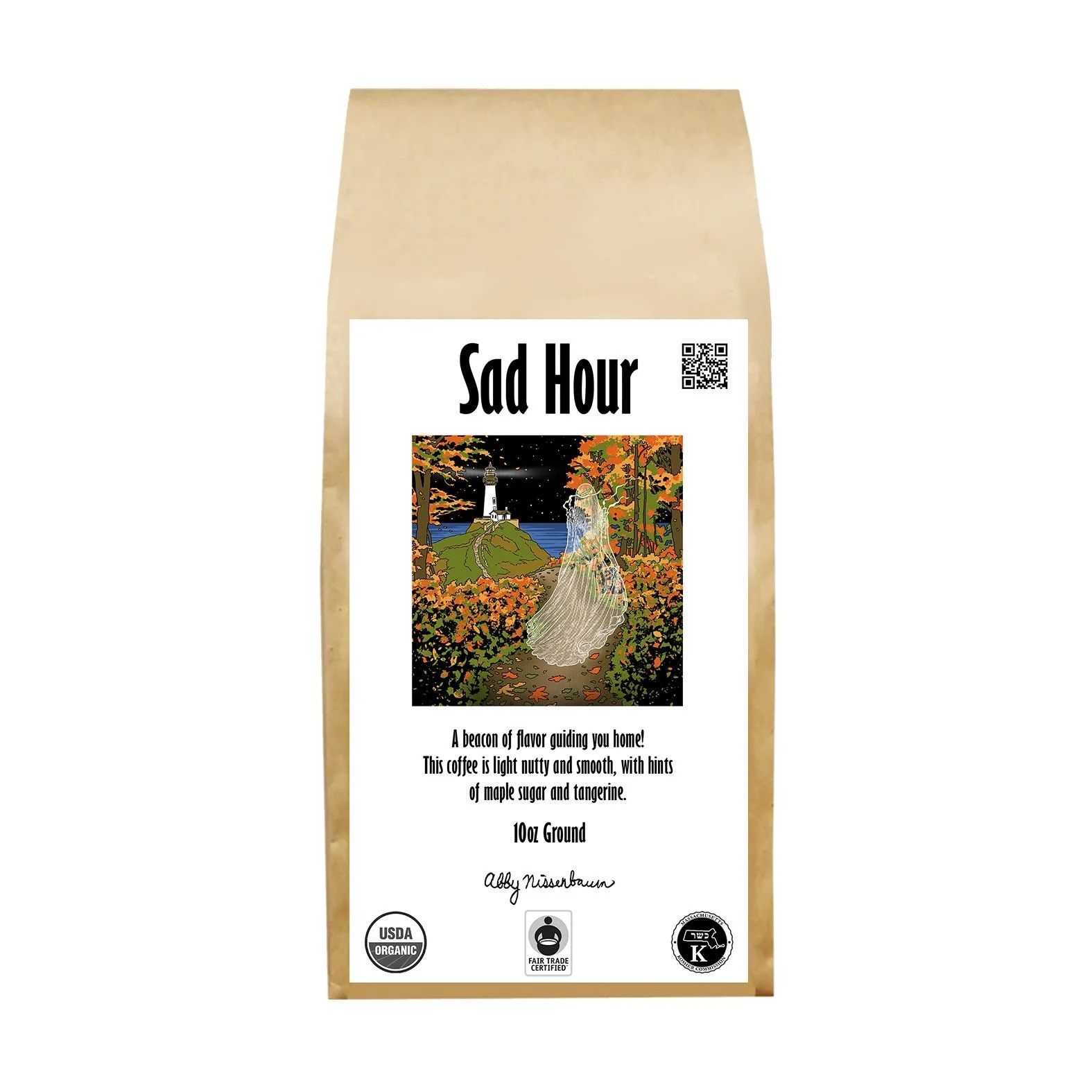
Fun fact: I actually have a coffee line based on my music in partnership with my favorite coffee roaster, Fogbuster Coffee Works! They’re musicians themselves and wonderful community builders, and being from New England myself, it was a natural partnership. I always feel more creative when I drink Fogbuster coffee.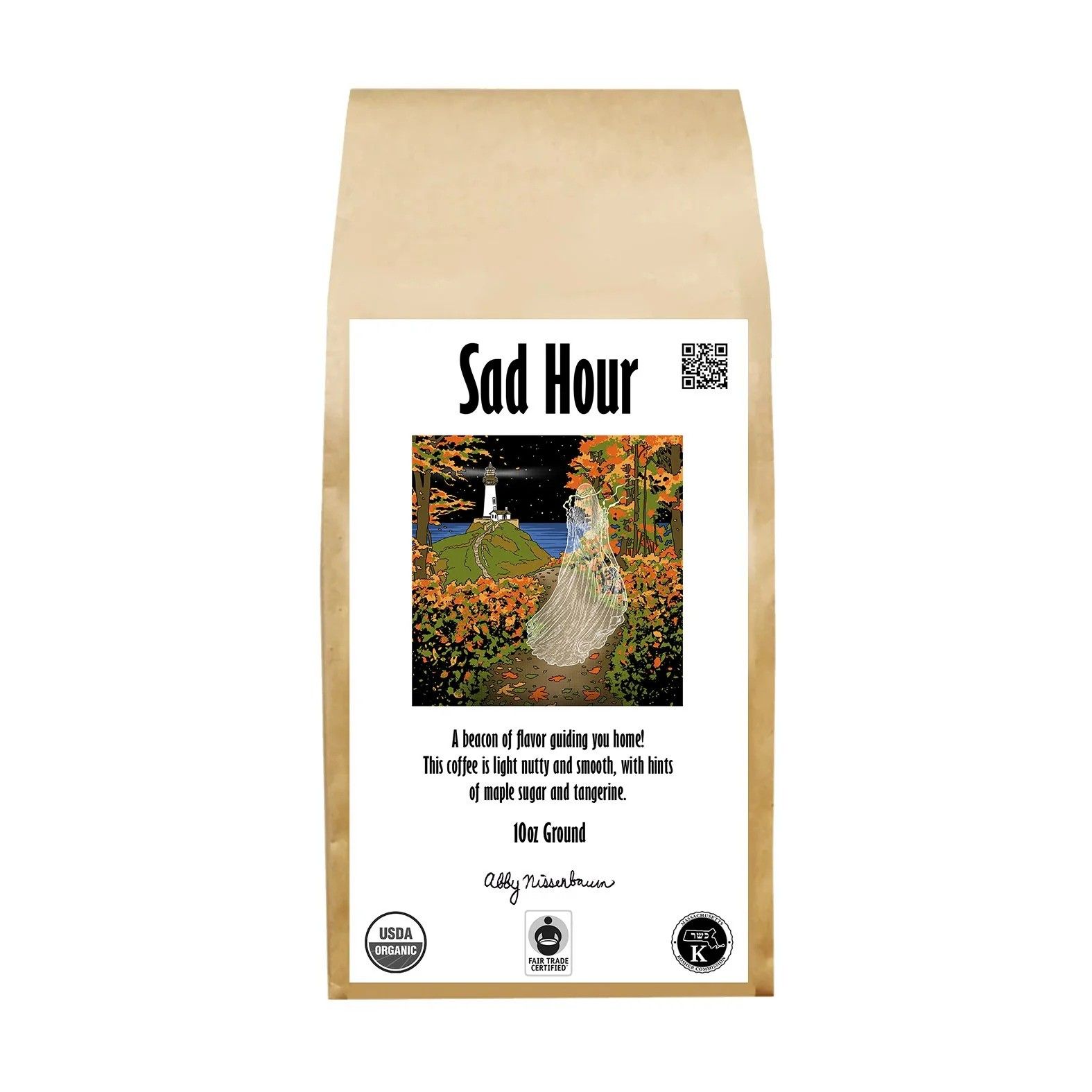
Abby Nissenbaum's Sad Hour Coffee by Fogbuster
What do you start with? And, to quote a question by the great Bruce Duffie: When you come up with a musical idea, have you created the idea or have you discovered the idea?
I think “created the idea” is a better descriptor of what I do. When I think about order of operations, I usually start with some type of catchy lyric and build a melody around it.
Once in a while I’ll start with a melody in mind and try to devise good lyrics around it, but it’s most often the other way around.
When do the lyrics enter the picture? Where do they come from? Do lyrics need to grow together with the music or can they emerge from a place of their own?
It depends on the song, but lyrics are typically where I start even before having a melody in place. I’ll jot down random phrases in my Notes app and try to identify repetitive phrases that stick out to me as something that could be interesting or relatable. The tune usually flows naturally from there.
Occasionally I’ll hear a cool melody in my head and try to build lyrics into it, but usually I find it easier to work the other way around.
What makes lyrics good in your opinion? What are your own ambitions and challenges in this regard?
It depends on the audience. Lyrics that really speak to me may not resonate with others, and lyrics that I think are cheesy or bad may be really impactful and important to a different listener.
Many writers have claimed that as soon as they enter into the process, certain aspects of the narrative are out of their hands. Do you like to keep strict control or is there a sense of following things where they lead you?
I usually have a pretty clear sense of where the song will go, but it can also be useful to play around and see if there are any cool melodies or harmonies that come up.
My best harmonies and ad libs always come after I’ve had some time to sit with the lead vocal line and instrumental, so in that sense, I like to try different things and let ideas flow naturally.
Often, while writing, new ideas and alternative roads will open themselves up, pulling and pushing the creator in a different direction. Does this happen to you, too, and how do you deal with it? What do you do with these ideas?
I think I tend to be a little stubborn with a song’s direction if I have a clear vision of what I think it should sound like, but part of the fun is also trying different things.
The thing about being a self-funded independent artist, though, is that I’m always fighting against the clock: I can only afford so many hours in the studio before my booking expires, or in songwriting situations before having to prepare for or go back to work.
In the future, when I have more time and freedom with songwriting and the recording process, I think I’ll be able to experience more alternative roads within songs.
There are many descriptions of the creative state. How would you describe it for you personally? Is there an element of spirituality to what you do?
To me, creativity is a flow state where I’m fully immersed in what I’m doing, devoted solely to the process, and easily lose track of time.
I don’t know if it’s spiritual, but creativity definitely energizes me and fills my cup even after long hours of hard work.
When you're in the studio to record a piece, how important is the actual performance and the moment of performing the song still in an age where so much can be “done and fixed in post?“
I come from a musical theater background, where you only have one shot to sound your best! Studio recording was actually a very foreign concept to me when I first started in 2020 because I’m so used to live vocals.
First of all, vocal dynamics you use in studio performances vs. live can be quite different, so that has certainly been interesting to adapt to. Second, when you’re in a vocal booth and hearing the same little piece played back over and over, there’s much more room to nitpick and critique even the tiniest things.
I hear a lot of hyper-polished vocals in current pop and singer-songwriter music, and I don’t personally love the “overly comped” or “overly tuned” vibe because it removes a lot of the emotion and personality from a singer’s voice. I’m more of a proponent of smoothing out vocals through tried-and-true “studio magic” of doubling or layering harmonies.
Also, fun fact: My song “Glass Half Full” was actually recorded in one take during a thunderstorm! There are some small imperfections and you may even hear some thunder in the background if you listen closely, but that’s what makes it unique and true to my voice.
Once a piece is finished, how important is it for you to let it lie and evaluate it later on? How much improvement and refinement do you personally allow until you're satisfied with a piece? What does this process look like in practise?
If time permits, I like to sit with the instrumental and lead vocal for a few weeks and think of harmonies or ad libs. But oftentimes I don’t get to do that – recording sessions typically happen within a day or even just a few hours, so what I end up with is what I end up with.
I try not to be too critical with the final product because I know I don’t have the same freedom of time as other artists may have.
Even recording a solo song is usually a collaborative process. Tell me about the importance of trust between the participants, personal relationships between musicians and engineers and the freedom to perform and try things – rather than gear, technique or “chops” - for creating a great song.
You definitely have to trust your producer and vocal engineer! I often record with my friend Jonny, who’s an amazing audio engineer and musician (shout out to his band Wesley and the Boys), and I’m not too worried about messing up or experimenting with harmonies or ad libs that may end up sounding terrible, because I know he won’t judge me for it.
I also have a lot of trust in my producer, Steph Trivison! We started working together a few years ago and I have innate trust in her musical sensibilities. Same with producer Matt Qualls, whom I’ve also worked with a lot. You just have to find people whose musical senses you vibe with.
What's your take on the role and importance of production, including mixing and mastering for you personally? In terms of what they contribute to a song, what is the balance between the composition and the arrangement (performance)?
Obviously your performance in the studio is important, but mixing and mastering can make or break a song! I used to be one of those people who joked about mastering just “making the song louder,” but through the making of this EP, I’ve realized that it can completely change the feeling of a track.
I have very specific opinions on my vocal timbre and the ways that I want harmonies to blend, so the production piece is definitely something that Steph and I have been refining more and more through each track we work on.
After finishing a piece or album and releasing something into the world, there can be a sense of emptiness. Can you relate to this – and how do you return to the state of creativity after experiencing it?
It’s exciting when there’s a lot of build up to a new project, and of course your life is going to feel a bit duller when the project is released (especially when it doesn’t perform like you want it to).
But the cycle continues and I’m always excited to start working on new music.
Music is a language, but like any language, it can lead to misunderstandings. In which way has your own work – or perhaps the work of artists you like or admire - been misunderstood? How do you deal with this?
Not everyone is going to like or understand your art, or you in general. It’s just an innate fact of life that you can’t be liked by everyone, so I just focus on the people who do!
Creativity can reach many different corners of our lives. Do you personally feel as though writing a piece of music is inherently different from something like making a great cup of coffee? What do you express through music that you couldn't or wouldn't in more 'mundane' tasks?
There are different parameters to every artistic expression – for example, in coffee brewing, it could be roasting time or method, and in lyricism, it could be rhyme or cadence.
When you’re playing without certain bounds, you have to be clever about the way you express what you’re trying to say, and that makes writing music inherently different from what we’d consider more “mundane” forms of expression, like plain speech or writing.