Published
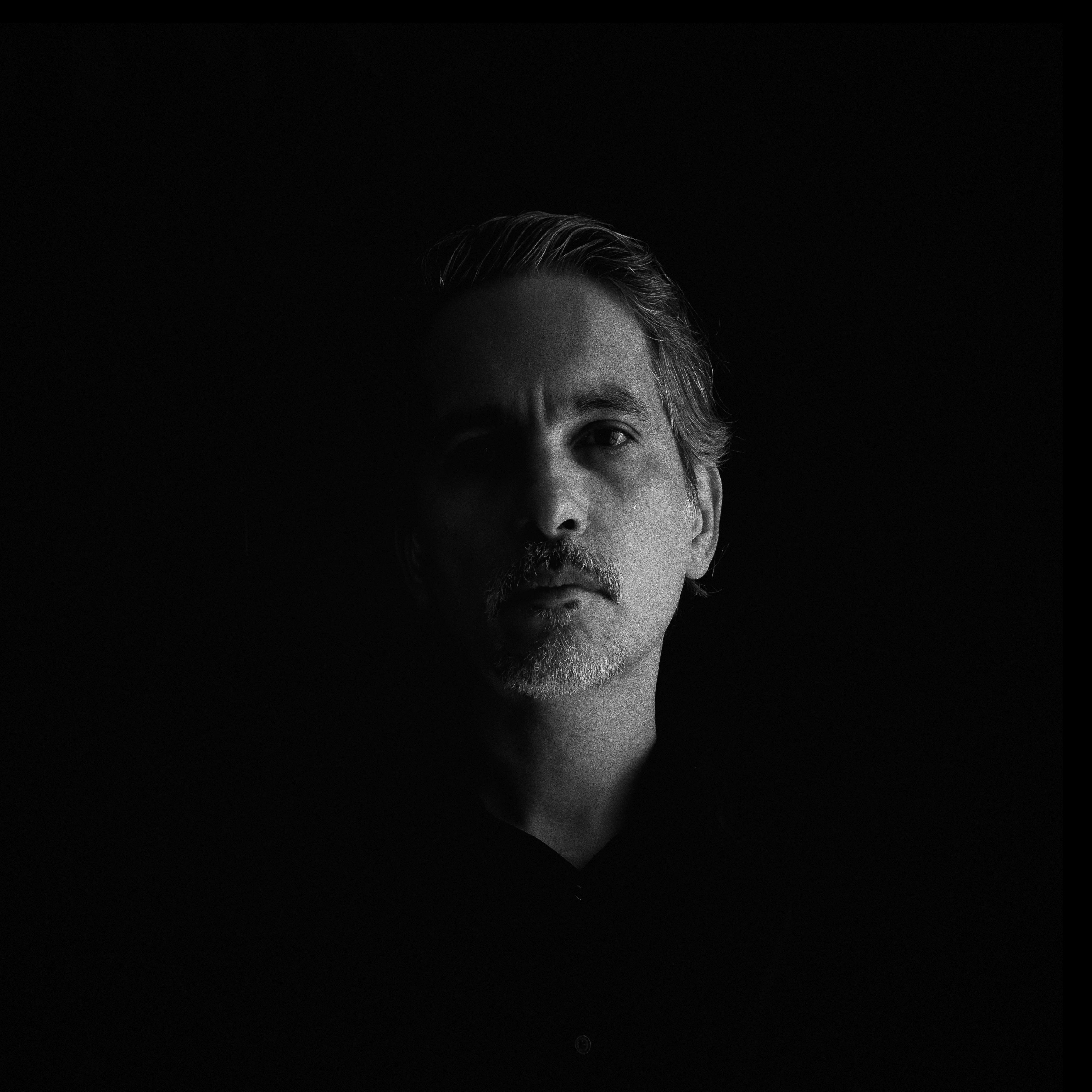
Name: Guido Zen aka Abul Mogard
Nationality: Italian
Occupation: Composer, producer, sound artist
Current Release: Abul Mogard's new album Where Light Pauses in the Silence of the Sun, a collaboration with Rafael Anton Irisarri and featuring Martina Bertoni and Andrea Burelli, is out June 26th 2026 via Black Knoll Editions. His latest solo album Quiet Pieces, published in 2025, is out via Soft Echoes.
Local Recommendation: Near where we live, there are the remains of the ancient pre-Roman and later Roman town of Tuscolo, with its beautiful theatre, which gave its name to one of my pieces. It's on top of a hill and, besides having a certain energy, it also offers a beautiful view over the area south-east of Rome. On a clear day you can even see the sea on the horizon.
Things I am passionate about but rarely get to talk about: I am quite passionate about building electronic instruments. I am not a designer, but over the years I have built a lot of my own equipment, from microphone preamps and compressors to filters and most of my current modular synth setup. I don't seem to have as much time for it as I did a few years ago, but it is a practice that has allowed me to use instruments that I would not have been able to afford if purchased off the shelf. I also find it very relaxing and almost meditative to spend time assembling components and working with a soldering iron.
[Read our Rafael Anton Irisarri interview]
[Read our Rafael Anton Irisarri interview about the magic of sound]
[Read our Martina Bertoni interview]
If you enjoyed this Abul Mogard interview and would like to know more about his music and upcoming live dates, visit him on Instagram, and bandcamp.
Where does the impulse to create something come from for you? What role do often-quoted sources of inspiration like dreams, other forms of art, personal relationships, politics etc play?
I think it comes from my life experiences, which could be all of the above, and which get transformed into sound once I find myself in the studio. Sometimes it's simply the process of using a particular instrument and being inspired by the sound it creates, whether that's a new synthesiser, an acoustic piano, an interesting modular patch, or a sample from another piece I might have left behind.
More recently, old 78rpm records I found in our attic became a source of inspiration for the album Quiet Pieces. In particular, the core idea for the track "Following a dream" came from a short loop taken from one of those old classical records.
For you to get started, do there need to be concrete ideas – or what some have called a 'visualisation' of the finished work? What does the balance between planning and chance look like for you?
It's a balance, I think. I might start to see a sort of picture of the music, but that often comes from experimenting in the studio with equipment. At some point, if I have a few pieces of music that start sounding cohesive, I might start having an idea of the whole album.
But often there's a lot of trial and error. Many times, I simply continue changing a piece until it feels right. It's not something that's easy to explain. At a certain point, you just have the feeling that it's finished.
One album that didn't take very long to make, and which I could almost see forming in my head, was In Immobile Air.
It all started during the Covid lockdown when I was given a beautiful 1891 Bechstein piano. After I managed to tune it enough to play, the ideas appeared quickly and the whole album was completed in about a month, which is a very short time for me.
Is there a preparation phase for your process? Do you require your tools to be laid out in a particular way, for example, do you need to do 'research' or create 'early versions'?
It's a continuous process of research. Sometimes the research can be quick, and other times it can take years, such as with the track "In a studded procession" from my latest album.
That piece was started in 2013 and was even released on a free digital compilation the following year, but I always thought it had more potential and needed another version.
I worked on it over the years, first at EMS Studio in Stockholm using a beautiful vintage Serge synthesiser, and then continued working on it in my own studio with my modular synth. I only finished it recently, when I managed to assemble everything together alongside some string samples from the 78rpm records mentioned above.
The piece also had a further development when I was invited to perform it with the Deutsches Symphonie-Orchester Berlin. Sven Helbig, who invited me for the live broadcast, created a beautiful orchestration of it, which I performed alongside the orchestra. It was an unforgettable experience for me and one I hope to repeat whenever the opportunity arises.
[Read our Sven Helbig interview]
Going back to the preparation phase, generally I don't really have one. I just make something and always aim for it to become the finished version.
However, one time I did have to go through a long period of preparation was for the Fovea Hex remix, where I wrote all the musical parts using a generic organ sound. Once I was happy with the arrangement and the flow, I started sending all those notes and voices through the modular synth and slowly built the backing track.
Do you have certain rituals to get you into the right mindset for creating? What role do certain foods or stimulants like coffee, lighting, scents, exercise or reading poetry play?
It depends. In the morning I enjoy having a couple of coffees, while in the evening I might have a glass of wine.
The light in the studio tends to be quite dim in the evening, but in general I don't really have any specific rituals. I simply try things and, if something sounds interesting, I record a take.
Sometimes it's good, sometimes it isn't, but there might be an element or a short section that is worth expanding later.
For Quiet Pieces, what did you start with? If there were conceptual considerations, what were they? Tell me a bit about the way the new material developed and gradually took its final form, please.
The original idea behind Quiet Pieces was to compile a number of older tracks I had made which never found a place on any album, but which I really liked. So I tried to finish those tracks.
At the same time, I was also working on a few pieces derived from samples taken from the 78rpm records. I realised that the two projects could be joined, as some of those samples actually helped me finish those older archival pieces, and that is how the album was made.
Many writers have claimed that as soon as they enter into the process, certain aspects of the narrative are out of their hands. Do you like to keep strict control or is there a sense of following things where they lead you?
I generally try to be guided by the sounds, and I am happy if things get out of hand or go in a direction I had not planned.
There are many descriptions of the creative state. How would you describe it for you personally? Is there an element of spirituality to what you do?
For me it's all down to the emotional connection I get with the work I am doing, so perhaps that can be seen as spiritual.
I think that when you are in a creative flow, you try to let go, and that can become a sort of trance state at certain moments.
Once a piece is finished, how important is it for you to let it lie and evaluate it later on? How much improvement and refinement do you personally allow until you're satisfied with a piece? What does this process look like in practise?
When I started this project, I didn't step away from the music at all. I worked on a piece during the day and would upload it to SoundCloud in the evening. I just felt the pieces worked, and perhaps I wasn't even taking the project so seriously. It was mainly an experiment for me to work on my own after many years of only collaborating with other musicians.
I should also mention that some of those pieces were developed from unfinished sketches I had originally made for other projects. Perhaps the reason I returned to them is that they had been sitting around for years, and I always felt there was something interesting in those musical ideas.
Generally, nowadays, I prefer to leave some distance between myself and the music. Later on, I might change it drastically, scrap it completely, or perhaps just extract one sound from it to use for something else. Occasionally, I work on a piece very quickly and am simply happy with it.
An example would be the track "Constantly slipping away" from my latest album, which was made in a single recording session and ended up on the record without too much further thought.
How do you think the meaning, or effect of an individual piece is enhanced, clarified or possibly contrasted by the EPs, or albums it is part of? Does each piece, for example, need to be consistent with the larger whole?
Yes, I think an album needs to have a consistent sound or atmosphere, or at least a flow that takes you from one place to another.
I try to be very careful with the track selection for a release, and I would rather leave a piece out if I am not sure it serves the album, even if I like it.
What's your take on the role and importance of production, including mixing and mastering for you personally? In terms of what they contribute to a song, what is the balance between the composition and the arrangement (performance)?
The way I work, I generally mix as I go. For me, the sounds I use are as important as the musical notes and are an essential part of the composition.
I also tend to arrange while I record, trying to get good takes of what I am doing, or redoing them if I am not happy I do more work on the arrangement later, but I try to start with the right material and a clear sense of the overall shape.
As for mastering, I like to have another person do it, someone who has the knowledge, experience and equipment to do it properly.
Music and the accompanying artwork are often closely related. Can you talk about this a little bit for your current project and the relationship that images and sounds have for you in general?
Most of my album covers were made by Marja de Sanctis, whom I have worked with since my very first cassette releases. Beyond the album artwork, we have also collaborated on many audiovisual performances over the years.
I like how she interprets the music, as she always comes up with unexpected ideas and concepts. I like the contrasts she creates between the music and the images.
Recently, the Italian journalist Gino Dal Soler mentioned that the cover of In a Few Places Along the River reminded him of a Hipgnosis sleeve. The album was recently reissued, and I was very pleased to hear that comparison.
Marja's artwork is also on the cover of my forthcoming release, a collaboration with Rafael Anton Irisarri titled Where Light Pauses in the Silence of the Sun.
The cover features the vessel sculpture she created for our previous album, which has now been glazed and reflects the light, whereas before it was made of raw clay.
I like the fact that she decided to use the same piece again, as it creates a sense of continuity with the previous record, Impossibly Distant Impossibly Close. At the same time, it feels transformed, much like the music itself.
After finishing a piece or album and releasing something into the world, there can be a sense of emptiness. Can you relate to this – and how do you return to the state of creativity after experiencing it?
If I finish a piece, it's possible that I am simultaneously working on other pieces for the same album, so I'll probably move on to the next one. But if I have finished working on an entire release, I definitely need some time to rest creatively, as I have probably given all my energy to the project.
It's also usually the moment to start planning the next steps: the release, the artwork, and all the practical aspects around it, including thinking about how to present the work live.
I would love to know a little about the feedback you've received from listeners or critics about what they thought some of your songs are about or the impact it had on them – have there been “misunderstandings” or did you perhaps even gain new “insights?”
Over the years I have received a lot of beautiful and moving messages. I am often surprised by how people perceive my music, and it regularly gives me new insights.
I don't really think in terms of misunderstandings, as my aim is to keep the music fairly open to interpretation. I hope each listener will have a different relationship with it.
Creativity can reach many different corners of our lives. Do you personally feel as though writing a piece of music is inherently different from something like making a great cup of coffee? What do you express through music that you couldn't or wouldn't in more 'mundane' tasks?
For me, music is a need. It's a way of communicating and expressing my feelings that I find easier than words. In that sense, it feels quite different from most everyday activities.
However, a friend once suggested that cooking is not so different from mixing music, as both require just the right amount of each ingredient and process to make them work. I agree with that idea, although for me music remains a much more personal form of expression.