Published
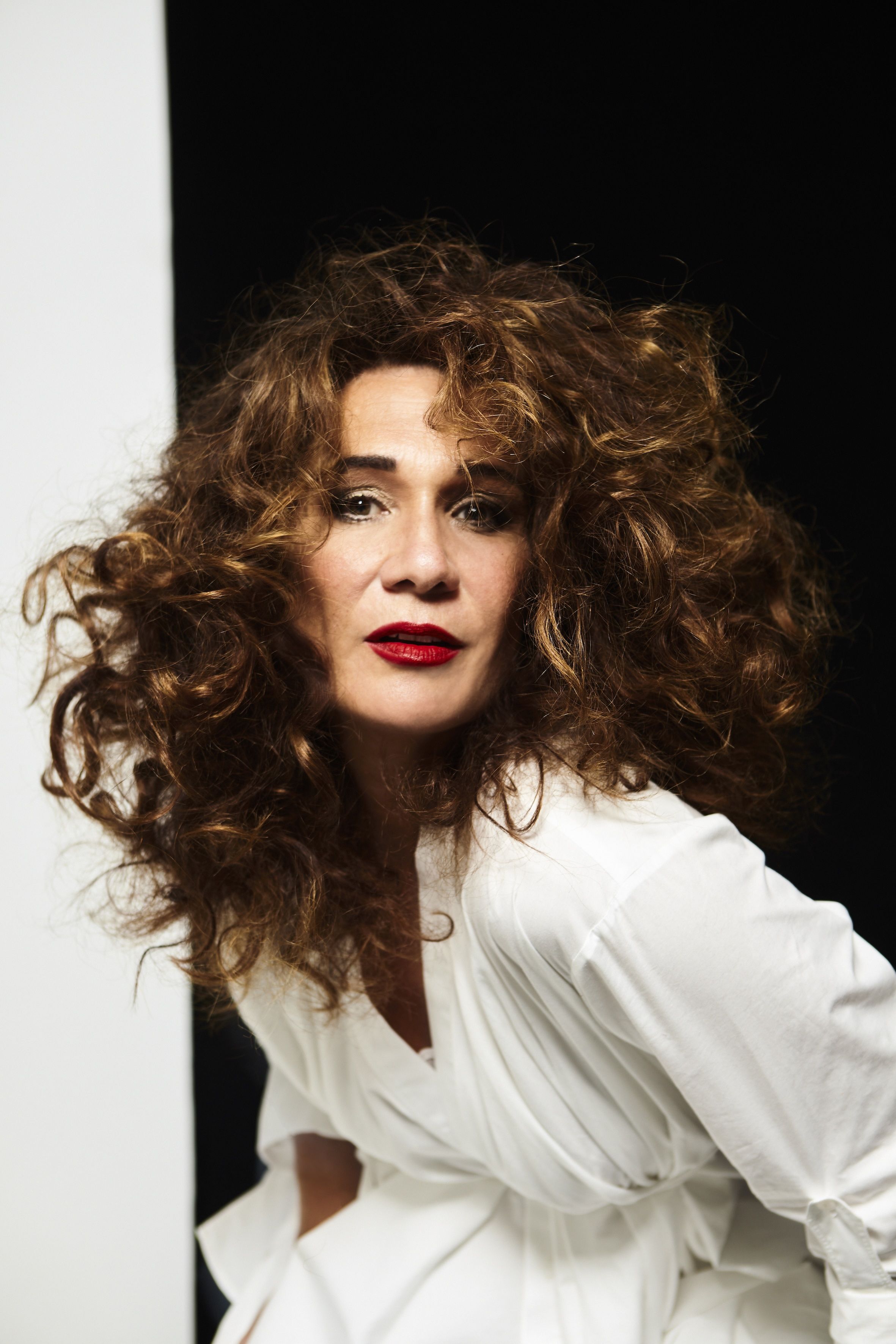
Name: Alexandra Helmig aka Ada Morghe
Nationality: German
Occupation: Singer, songwriter, actress
Current release: Ada Morghe's new single "Passion Play" is out via Lalabeam. It it taken off her upcoming full-length album Pure Good Vibes, slated for release June 13th 2025..
Global Recommendations: I live mostly in London now, but I still keep a home in Munich. One of my favourite places is St.-Anna-Platz in Lehel - it has this quiet, Parisian elegance. The way the light hits the facades, the symmetry, the calm … it feels like time slows down there.
Topic I rarely get to talk about but I am passionate about: Together with my husband, I founded Kinderkunsthaus in Munich, a charitable art space for children and adults. It’s a place rooted in the belief that every child - and every person - should have the freedom to create without fear of judgement. Our aim was simple but profound: to offer a space where creativity becomes a pathway to self-confidence. I’ve always experienced art as a soul-saver - especially in moments when words weren’t enough.
If you enjoyed this interview with Ada Morghe and would like to stay up to date with her music, visit her official website. She is also on Instagram, and Facebook.
For a deeper dive, read our earlier Ada Morghe interview.
Do you think that some of your earliest musical experiences planted a seed for your interest in writing lyrics or poetry? How and when did you start writing?
Music was always around me growing up.
My father would play classical pieces loudly, as if he wanted the whole house to feel them. My mother often listened to Sade - her songs felt like short stories to me. That blend of emotional arc and economy of words shaped me early on. It taught me that music isn’t just something to hear - it’s something to feel and live.
Besides songwriting, I also write plays and books. For me, writing is rhythm. It lives in the silences, the pauses, the breath between words. That’s where emotion lingers.
I wrote my first story at eleven - a terrible tale about a horse that needed saving. But I remember how good it felt to live inside that story for a while. Writing songs became the space where my acting background, my emotional world, and my love for storytelling all came together.
That feeling of being more of a channel than a creator is pure magic - when a story seems to unfold on its own, like it already exists somewhere and you're just discovering it, word by word.
Entering new worlds and escapism through music and literature have always exerted a very strong pull on me. What do you think you are drawn to most when it comes to writing?
Entering new worlds - through music, literature, or on stage - has always had a magnetic pull for me. There’s something deeply powerful about stepping outside of yourself.
What draws me most in writing is transformation. The way a single line can shift your entire perspective. The way a melody can open a door to a place you didn’t even know existed inside you.
In my song “Shadow,” the line “I’m sleeping with a shadow” captures that quiet ache of loving someone who’s still there physically, but no longer present in spirit. Their spark is gone, their smile no longer reaches their eyes.
You lie beside them, feeling the weight of absence in their presence - mourning someone who is still alive, but lost in the dark.
What were some of the artists and albums which inspired you early on purely on the strength of their lyrics? What moves you in the lyrics of other artists?
Sade has written some of the most powerful lyrics I know. I’ve always been deeply moved by her song “Pearls.” The opening line - “There is a woman in Somalia …” - immediately pulls you into a story, into her world.
That ability to say so much with so little is something I deeply admire.
Sade, like Joni Mitchell, inspires me not only musically but also as a storyteller. They both have this gift of placing you inside a moment, inside a life.
Have there been song lyrics which actually made you change (aspects of) your life? If so, what do you think, leant them that power?
The first time I truly listened to “Fragile” by Sting, it hit me deeply.
The softness of the melody, the honesty in the lyrics - it reminded me how delicate life is, how the things we love can be lost in an instant. That song made me more aware, more present. It taught me to hold life with care, to feel more, love more, and never take anything for granted.
Since then, that perspective has shaped everything I create. It’s a reminder that beauty often lives in the fragile things.
I have always considered many forms of music to be a form of poetry as well. Where do you personally see similarities? What can music express which may be out of reach for poetry?
I’ve always felt that music and poetry are two sides of the same coin. Patti Smith is a perfect example - I’m a huge fan. She started as a poet, and when she added music to her words, her work and career took flight.
There’s something transformative about the moment when a poem finds its rhythm and voice. Artists like Patti or Leonard Cohen show how music can awaken something deeper in poetry. It makes the words breathe.
Music reaches the heart before the mind even has a chance to catch up.
What are areas/themes/topics that you keep returning to in your lyrics?
When I write songs, I’m always searching for the expression that captures a feeling in its essence. Often, that means holding space for contradiction - joy and pain, strength and vulnerability. That tension drives me creatively.
I believe you can only truly feel joy if you’ve known sorrow. That contrast gives the music depth. I see songs as poems in motion - a way to express the complexity of being human, in all its messy, beautiful duality.
On the basis of a piece off your upcoming album Pure Good Vibes, tell me about how the lyrics grew into their final form and what points of consideration were.
Writing Pure Good Vibes was literally a summary of my time in Jamaica.
My producer, Livingstone Brown, and I spent three unforgettable weeks there. Every conversation, every encounter - even a random chat with a stranger - found its way into the music. We soaked up the energy of the island, that vibrant spirit you feel everywhere: in the rhythm of the streets, the warmth of the people.
It was all about presence, respect, connection, and joy. The song became a reflection of that feeling of “One love”, as Bob Marley so beautifully put it. We didn’t just write “Pure Good Vibes” - we lived it.
Do you tend to start writing with what will be the first line of the finished lyrics? The chorus? At a random point? What are the words that set the process in motion?
I usually start by improvising on the piano. My hands lead the way, and from that, a sentence surfaces. Often, a single image inspires me - a painting, a photo, something that carries a certain mood.
My song “We Will Never Be Closer” began with a scene in my mind: a mother at the threshold, leaving her child behind, knowing it’s for the child’s future - even if they never meet again.
That emotional tension sparked the song, and the first line came naturally: “We will never be closer than right now.”
I'd love to know how you think the meaning or effect of an individual song is enhanced, clarified or possibly contradicted by the EPs, or albums it is part of. Does the song, for example, need to be consistent with the larger whole?
I absolutely believe that the meaning of a song can be deepened - or even transformed - within the context of an album. On its own, a song tells a story, but within an album, it becomes part of a larger journey.
Streaming has changed how people listen. We often pick individual tracks now. But I still love the full experience of an album. With Lost, my 2023 concept album, this was even more important. Some pieces only fully reveal themselves through what comes before and after.
To me, an album isn’t just a collection of songs - it’s a living story. Every transition, every pause, every key change carries meaning.
When you're writing song lyrics, do you sense or see a connection between your voice and the text? Does it need to feel and sound “good” or “right” to sing certain words? What's your perspective in this regard of singing someone else's songs versus your own?
There’s a deep connection between my voice and the text. Even when I’m writing stories, I often read them out loud to hear the rhythm, to feel the weight of the words in the air.
In songwriting, this connection becomes even more important. Some words might look right on the page, but they don’t feel right when spoken or sung. They miss the emotion or the resonance. In those moments,
I search for words that sit naturally in the mouth - words that carry the feeling in their sound as much as in their meaning.
I would love to know a little about the feedback you've received from listeners or critics about what they thought some of your songs are about – have there been “misunderstandings” or did you perhaps even gain new “insights?”
In general, I don’t believe a song can be “misunderstood.” People bring their own stories, their own emotions to the music - and that’s beautiful. I’ve had listeners tell me what they thought a song was about, and sometimes it’s completely different from my original intention. But that’s the magic.
I love lyrics that stay open - ones that allow each person to find their own truth in them. Sometimes, their interpretation even gives me a new insight.
And then, of course, there are songs that are crystal clear. “Box” is one of them.
It gets a lot of love because that feeling - not wanting to be put in a box - is something almost everyone can relate to.
Creativity can reach many different corners of our lives. Do you feel as though writing song lyrics or poetry is inherently different from something like making a great cup of coffee? What do you express through music that you couldn't or wouldn't in more 'mundane' tasks?
I believe creativity lives in everything we do. The Japanese concept of ikigai really resonates with me - it’s about putting your full attention and love into whatever you do. Even something as simple as making a cup of coffee becomes meaningful if you do it with care. And yes, it will taste better.
Writing music or poetry is just one form of that same creative energy. Creativity simply means to create and that’s one of the most beautiful things we’re capable of as human beings. Through music, I express emotions that words alone can’t hold, but the spirit behind it, that love and awareness, is the same as in any mindful act.
My song “Here Now” celebrates the beauty of shared moments, like being at a concert where it doesn’t matter where we come from or where we’re going. In those moments, we’re simply present – together.