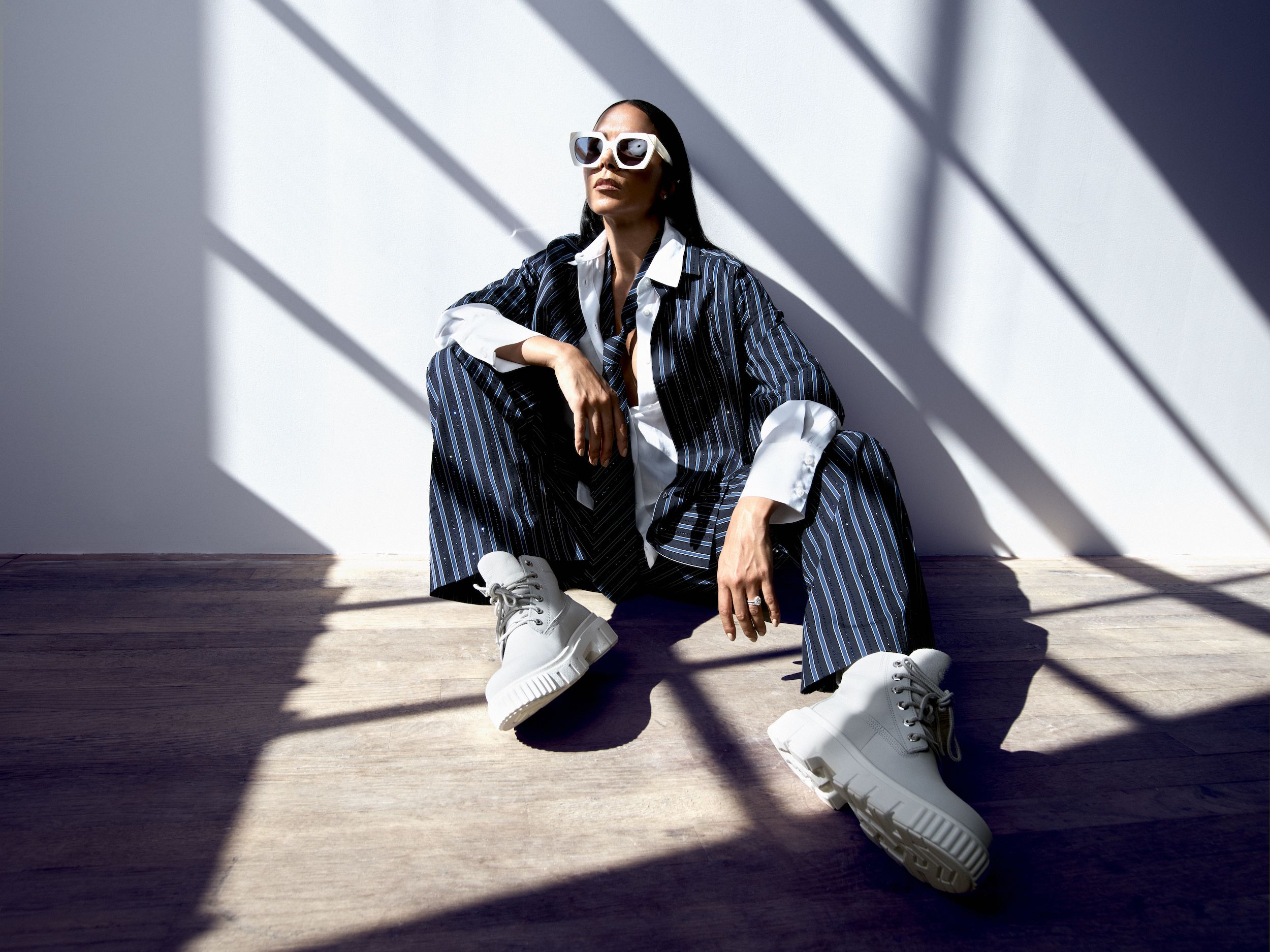
Published
Name: ADRIANNA
Nationality: Canadian
Occupation: DJ, producer
Current release: ADRIANNA's new single "Hallucinations" is out via her very own Temple Music.
Recommendations:
1/ I love this song, the lyrics tell a great story. This is not my favourite version of Nina Simone- "Stars," but I love in this one how at 0:28 seconds she points at someone and tells them to sit down LOL, the audacity.
2/ It’s so popular, I know, but anything by Dali. He paints what my dreams look like.
If you enjoyed this ADRIANNA interview and would like to stay up to date with her music and current live dates, visit her official homepage. She is also on Instagram, Facebook, tiktok, and Soundcloud.
Do you think that some of your earliest musical experiences planted a seed for your interest in DJing? How and when did you start DJing?
Music was always around from the time I was young. My dad played and built steel drums at home. All the hours listening to him play and tune them impacted me for sure.
We had a synthesizer and other instruments, and I picked them up and studied a few early on. By my teens I had friends that would be playing records at parties, and I would always get them to teach me. I went to my first DJ school in 2012.
Today, DJs are rarely just DJs. Very often, they can be producers who are also DJs or DJs who are also producers. Where do you see yourself on this spectrum and what kind of potential issues and cross-pollinations does this create?
Producing and Djing are two different skills, I consider myself to be both.
Understanding the energy of the dance floor, culture, what gets people moving in a club or festival environment is very important when producing music. Djing helps with that so much. It’s constant live feedback, I can test my sounds, see how long breakdowns can hold the crowd's attention and which drops get people excited. It’s not always what you expect sitting in the studio.
The importance of sound design, the precision and being able to interpret what the mix will sound like in a club or festival is a production skill that can determine whether a track succeeds or falls flat.
What were some of the most important insights you gained from teachers/tutorials, other DJs, or personal experience? What does it mean to be a “better DJ?”
I’ve had so many great music teachers over the years and mentors. Sitting and learning from some incredible artists has been invaluable in my music journey. Their insights on aspects like mixing, arrangement, reading the crowd, and finding the right balance between practice and spontaneity will always resonate with me.
It may sound cliché, but the most important lesson I've learned is to have fun. Once you feel comfortable with your music, embrace it and enjoy the experience.
For you, is there still listening outside of looking for music for your next sets? If so, what do you prefer to listen to and how does it possibly nonetheless have an influence on your performances?
When I’m not making or looking for new music, I’m probably resting my ears or listening to a totally different genre.
I’ve been playing a lot of piano lately so learning jazz or contemporary songs is fun and sort of resets my ears.
When digging, what are you looking for? Is the process all about taste for you, or is it about “going beyond taste?”
For me, it’s all about the sound and how it makes me feel. Does it sound too much like something I’ve heard too many times? If a track gives me goosebumps, that’s usually a winner.
As DJs, we can share what we’ve created or discovered and truly love with others. It's almost selfish not to share that music.
When I think of the music, I grew up listening to, not every track I loved was a hit. Many of my favourites were the more obscure. I think as a DJ we owe it to share some of those songs as well, take risks and introduce new sounds.
On the basis of one of your most recent gigs, tell me about how the preparation- and decision-making process works during a gig with regards to the inclusion of key records, the next transition and where you want the set to go?
Sort of a unique gig, I was at a festival afterparty in Uruguay with some of the guys from Surbeats Records, the label I released my last track “Memory” on. The festival headliner was Fatima Hajji, who plays super hard, so I was excited to play some dark techno and test new tracks like “Hallucinations” as well as some of my current favourites from other artists, and a few with cool Spanish vocals.
[Read our Fatima Hajji interview]
I planned a heavy set, but when I found out I’d be playing outside at 9:30 a.m. in the sun, I adjusted my selection—still hard but less dark. It was great, the people over there were awesome.
There must be endless ways of “matching” two or more tracks. How do you prefer to do it? What makes two tracks inherently “matchable” and what constitutes a great transition?
Key is super important to me, but just being in the same or relative key doesn’t always mean tracks will work together. And just because they aren’t in a key where a “rule” applies doesn’t mean they won’t, especially if you’re mixing percussion. Sometimes a smooth transition is perfect, but other times, something unexpected hits harder.
I think switching it up keeps things from getting predictable.
How would you describe the experience of DJing, physically and mentally? Do you listen – and deejay - with your eyes open or closed?
At its purest, DJing is beautiful, spiritual, humbling, and energizing—a real privilege.
The experience, though, can be intense because the environments are often artificial and overstimulating. I love these spaces, but they can be tough on the mind, so staying physically and mentally well is a top priority.
I close my eyes sometimes without realising it or when I need to focus on what I’m doing and not get distracted by the crowd.
Do you engage with audiences/dancers - and how? Taking one of your online DJ mixes as an example, how does the experience and the way you deejay change when you subtract the audience?
I love making guest sets when I have the time and doing my own monthly radio show. It’s keeps me current with lots of new music coming out and provides good insight into what samples are being heavily used and therefore which to possibly avoid.
When I make my radio sets it’s pretty much exclusively what I am just enjoying that I’ve recently found. These days predominantly peaktime techno with techno raw deep, hard dance, maybe hard techno or tech house or even melodic techno, depending on the vibe of the set. I listen to my own sets back when I’m driving on the highway or running as they are high energy.
When I’m playing a live set I take into consideration the venue, timeslot and line-up. Interaction and connection with the crowd can be really special- like nothing else.
Collaboration is a key part of almost every aspect of music making, but it is stil rare in DJing. Tell me about your own views on back-to-back DJing, interactions with live musicians or other forms of turning DJing into a more collective process.
I think track collaborations are great, one artist giving their own flavour to someone else’s track. Anytime I’m at a club and a new DJ comes on whether you can see the decks or not, you know it’s a new DJ.
A DJ set has a journey, if the b2b can go on a great journey together without it feeling choppy - cool. Back-to-back for the sake of it I don’t understand.
Live musicians are amazing. Especially vocals, drums, violin or live synths can be great.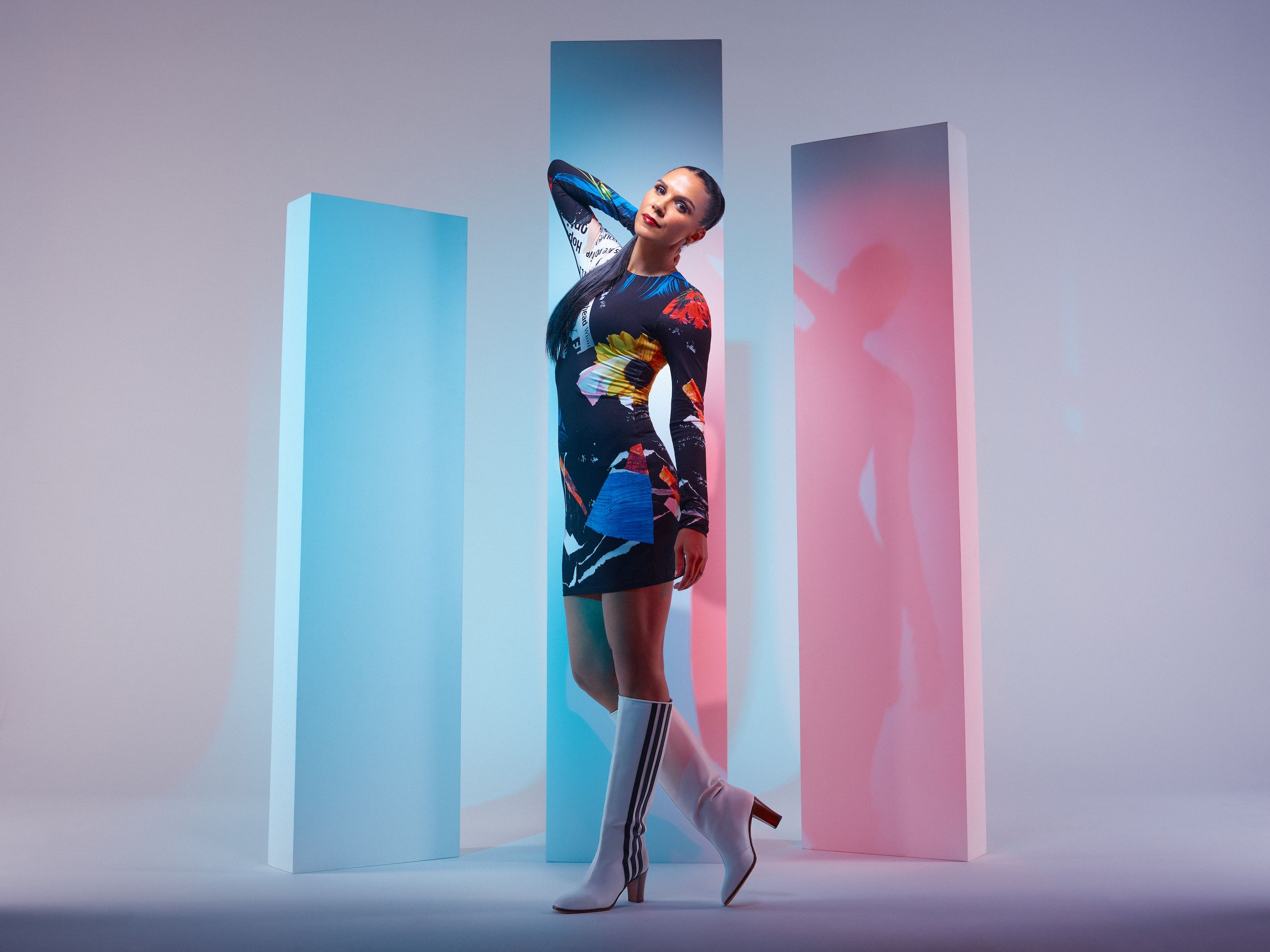
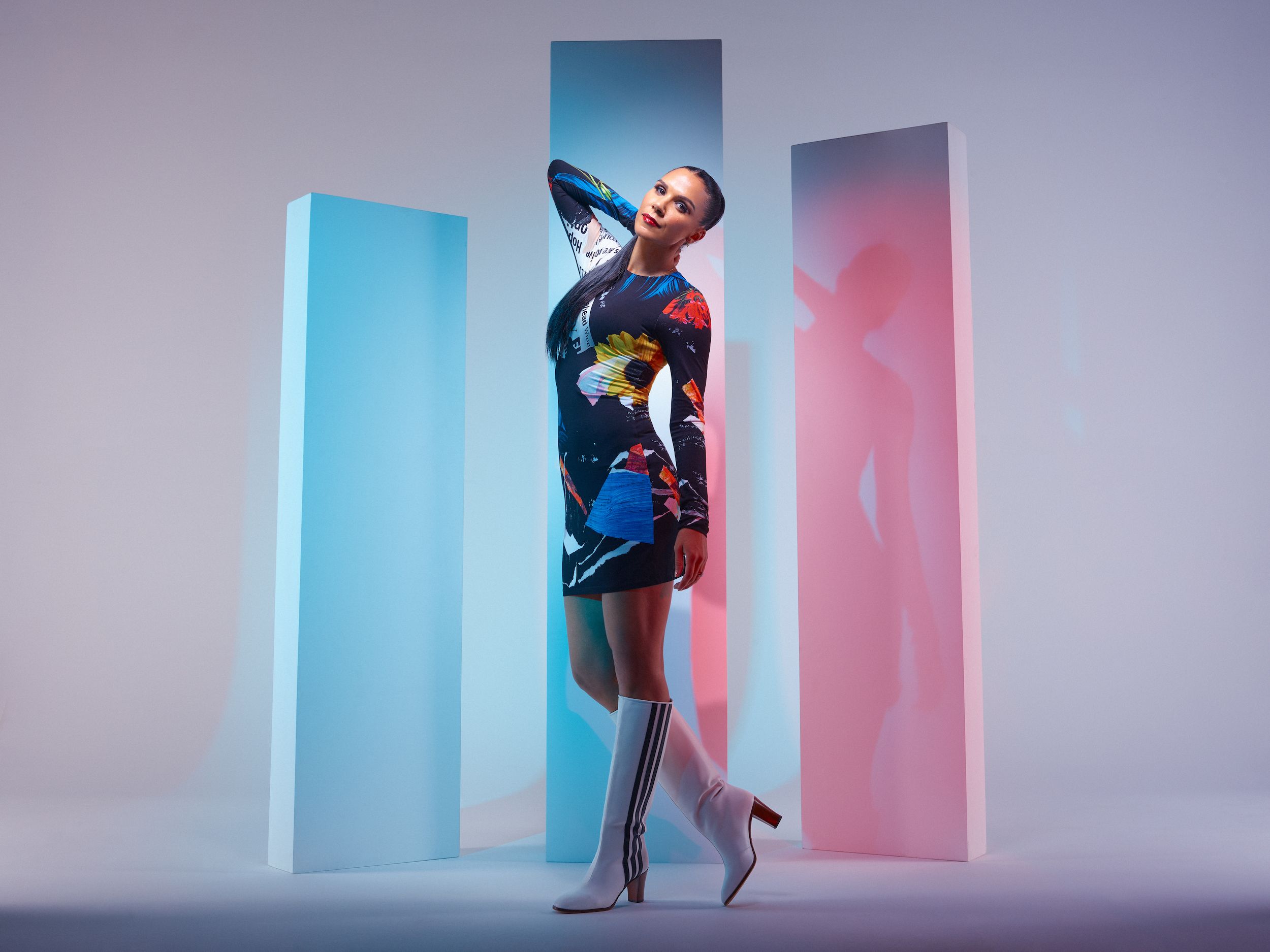
ADRIANNA Interview Image (c) the artist
How important is dancing for our wellbeing on a personal and even on a societal level?
Is there anything better? I trained as a dancer for years so it’s a personal thing to me. When I started going to raves in my early mid-teens, I would always be up by the DJ watching, dancing.
But the importance of being out with people on the same frequency, vibing together, seeing each other smile and enjoy being alive. We need that for sure.
Especially in the light of advances in AI, where do you see the role of humans in DJing versus that of technology? Can AI act as a collaborator or creative stimulus?
I’ve never heard an AI DJ mix, if it doesn’t exist yet I’m sure it will soon.
I’ve heard AI productions and honestly, they didn’t sound bad. I was watching a video yesterday of a producer doing some great vocal fx with AI. The voices especially have come a long way. I don’t think we can fight it.
But in this world of artificial everything it is nice to hear human imperfections. That’s why I like to listen to old recordings sometimes on YouTube of soul singers without auto tune or music that hasn’t been made with the loops and plug-ins we’re all so used to hearing.
But unless you want to go off grid and rebel against modern society, I don’t think we can fight AI. I like technology. I’m sure 20 years ago producers and engineers were saying the same thing about analogue vs digital that people are now saying about AI.
Tinnitus and developing hyperacusis are very real risks for anyone working with sound. Do you take precautions in this regard and if you're suffering from these or similar issues – how do you cope with them?
I have very sensitive ears and if there is an act I want to see I usually make a point of going to see them when I can dance and unwind rather than hanging around at a gig when I’m playing.
If I am in the gig too long before playing and the room is not treated well it effects my ability to confidently delivery the best performance. I try and wear earplugs but haven’t found any that I can say I love, and I don’t stand or dance directly in front of the speaker when I’m out like I used to do.
Do you feel as though DJing is inherently different from something like making a great cup of coffee? What do you express through music that you couldn't or wouldn't in more 'mundane' tasks?
I do most things very absentmindedly. I have to try very hard to focus on most things, it doesn’t come naturally.
When I’m doing things like Djing, playing an instrument, when I trained in dance or do yoga there is a very precise focus that I don’t really have in my day-to-day life. It’s the opposite.
Let's imagine you lost all your music for one night and all there is left at the venue is a crate of records containing a random selection of music. How would you approach this set?
A similar thing happened to me years ago in Ibiza. I was playing a small venue, and the promoter thought my music was too hard (story of my life). So a friend offered her USBs, and I just went with it.
Luckily, the tracks worked well together—similar structure, and you have so many clues you can literally read the wave forms, so it worked, no vocal clashes or anything.
Now, with records, that would’ve been trickier since you can’t really see the arrangement info. I’d let them play longer, mixing out near the end to avoid clashes. If a record didn’t fit, I might drop something else during a quiet moment or use a scratch transition to switch things up, more open format style.