Published
Name: Adrien Kanter
Occupation: Composer, producer, musician
Nationality: French
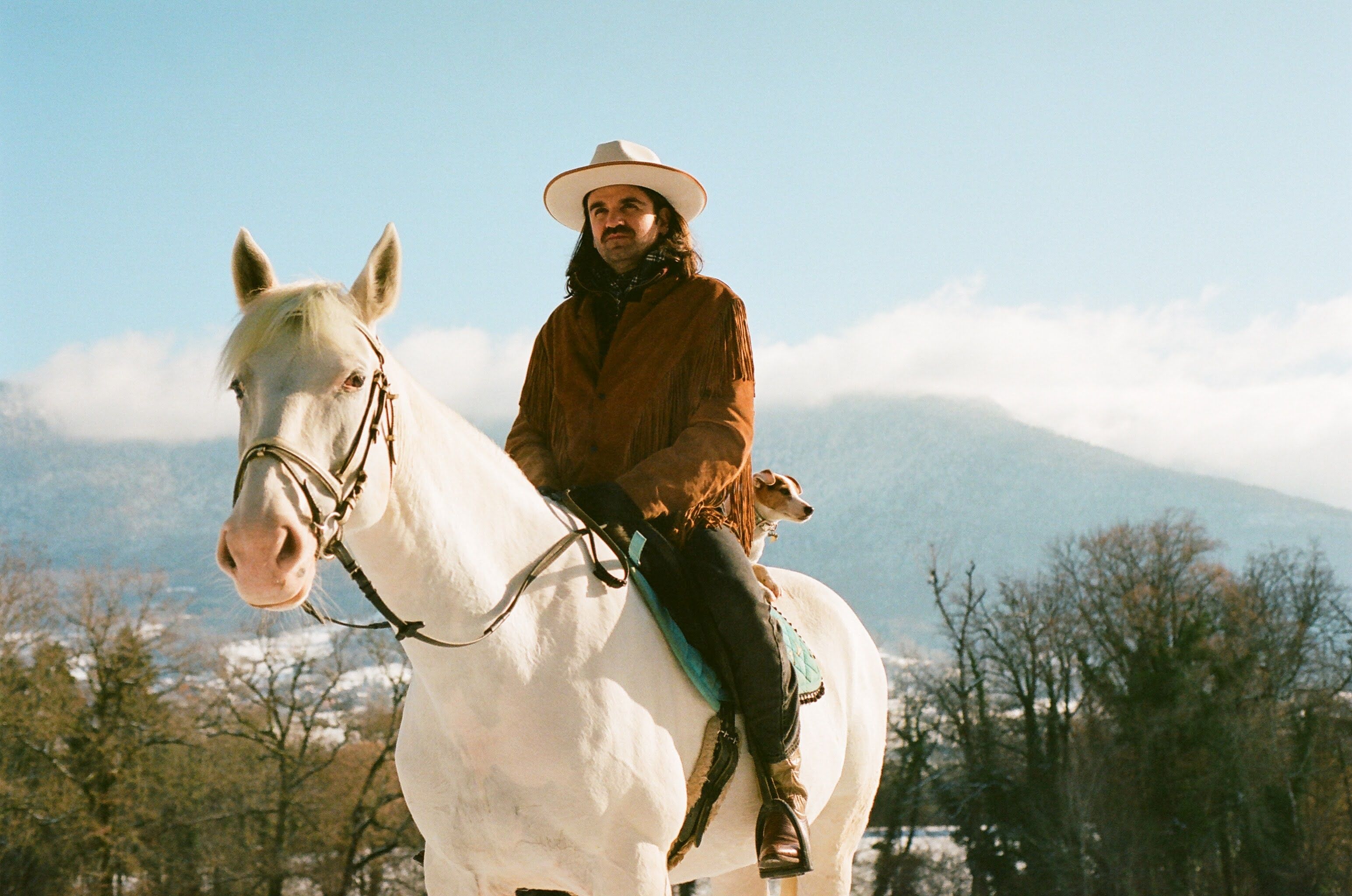
Current release: Adrien Kanter's Mont Falco is out via Club Teckel.
Recomendations: For music, I’d recommend “Man of Words” by Booker Little—one of the most powerful songs I’ve heard. And for a book, Les Conquérants de l’Inutile by Lionel Terray—it’s about mountaineering, but it taught me so much about life.
If you enjoyed this Adrien Kanter interview and would like to stay up to date with his music, visit his official homepage. He is also on Instagram, Facebook, and Soundcloud.
Where does your creative spark come from? What role do the usual sources of inspiration like dreams, other art forms, personal relationships, or politics play in your process?
It’s all about what’s around me, really. On my albums, you’ll hear all kinds of sounds and noises that feed into the music.
Sometimes, I’ll just pick up a guitar, and the inspiration flows right away—melodies, lyrics, everything comes together almost on its own. Other times, I spend hours in my studio, experimenting with setups, wiring, and recordings I’ve already done, just playing around until something clicks.
Improvisation is key. I mix, chop up, and transform things, adding effects, creating loops, and removing elements until I find a sound that excites me. It’s a kind of patchwork of spontaneous moments. A lot of the tracks on my album started from these improvisations, with basslines, vocals, and synths added later to give them a more 'pop' feel.
My inspirations are almost always subconscious, though. I listen to a lot of different music, but I never think, “I’ll copy this.” Even the sounds of nature, like when I’m out walking in the mountains, can make an impact. Music is constantly running through me, with every sound I hear resonating deeply. But I don’t set out to mimic nature’s sounds. It’s more like they’re already in me, and they just come out naturally.
On my album, there are hidden meanings everywhere. You might hear my daughter crying faintly in the background (the song’s even named after her), or the sound of a friend mowing the lawn. Friends pop up all over the album, which was also true for my first release.
Do you need a clear vision of the finished product before you start, or is it more of an organic process for you?
I don't visualize the final result at all—it's all about feeling my way through.
I like to use equipment that surprises me, where I know vaguely what turning a knob will do, but I let myself be open to the unexpected.
Sometimes it works, and that’s amazing, and sometimes it takes me somewhere completely different.
Is there a preparation phase for your process? Do you need things organized in a certain way, or do you do any research beforehand?
My process is ongoing—constantly improvising. If something catches my attention, I record it and come back to it later. I keep a notebook on my phone where I jot down ideas, mostly technical ones.
Like, I once had the idea to try a spring reverb in feedback, wondering what would happen. I tried it, and well, it wasn’t great, but that’s part of the process. Simple ideas like that are jumping-off points for improvisation, and sometimes they lead to interesting sounds.
I really believe the first take is often the best one, so I always record my improvisations. That first take is where the magic often happens—something I could never recreate. Even live, there are parts I have to play back because I can't replicate them again.
My music evolves through years of improvisation, shaped by my mood, experiences, and the people I’ve met. Everything from the sound of onions frying in a pan to a simple walking rhythm can inspire me to create.
Do you have any rituals to get into the right headspace for creating? Does anything like coffee, lighting, or exercise play a role?
I built my studio in the attic of my house, with all my gear and instruments. I’m lucky to live in a village in the Alps with plenty of space, so I’ve got this constantly evolving creative mess upstairs, always ready to go. Whenever I get an idea, I can just run up there and start working.
I’ve noticed that urgency can spark some of my best work—like when I have 10 minutes before I need to leave, I’ll rush up, record the idea, and it just works.
Do you discover musical ideas, or do you create them?
I can’t copy other genres or repeat what’s already been done—I get bored fast. I need surprises, challenges, new emotions. If something feels too familiar, I lose interest. But I practice constantly, so the ideas come from my unconscious and then just spill out.
For example, a friend taught me the Travis Picking style four years ago, and I worked hard to master it. Now it’s in my body, part of me, and you can hear it on my album, like in the track "No Rain Down."
When do lyrics enter the process?
Lyrics tend to emerge naturally while I’m composing or improvising. Sometimes my songs don’t have lyrics at all, but when they do, they often come at the same time as the music. It usually starts with a couple of phrases that connect with something in my life, and from there, they grow. I’m always amazed by how deep the lyrics can be when I look back at them later.
For example, the song “A New Dawn” was originally called “It’s the Worst Time of the Year,” and the lyrics were just “It’s the worst time of the year, and I like it,” repeated over and over. I eventually asked my friend Adrien Durand to write more lyrics because I felt the song needed them.
Do you prefer to keep control of the creative process, or do you like to let things evolve organically?
It’s all out of my hands most of the time. I work with raw materials where everything is up for change. Some tracks on the album went through 10 or 15 completely different versions before I found the right direction.
I’ll spend days on something only to realize the original version was better.
How would you describe your creative state? Is there a spiritual aspect to your work?
Yes, there’s definitely a spiritual side to what I do. I feel like a receiver for creative energy, like spiritual waves that push me to create.
There’s this emotional state that takes over, where the outside world doesn’t exist. I’m carried by the sounds, transcended by something greater, and my body transmits it into vibrations that the Earth can feel.
What role does production play in your creative process?
I handle all the recording, production, and mixing myself. It’s part of the creative process—everything is connected. I get to organize all the sounds, sculpt them into something cohesive.
I love experimenting during mixing, but for mastering, I work with someone else, Tony Chauvin, to polish things up. Having a second set of ears is crucial when you’re doing everything solo.
How do you stay creative after finishing a project?
For me, the process never stops. I’m always working on something new. I need multiple projects going on at the same time to stay inspired, whether it’s creating music for live performances, theater, or hip-hop dance shows.
There’s no creative void—I’m constantly creating.