Published
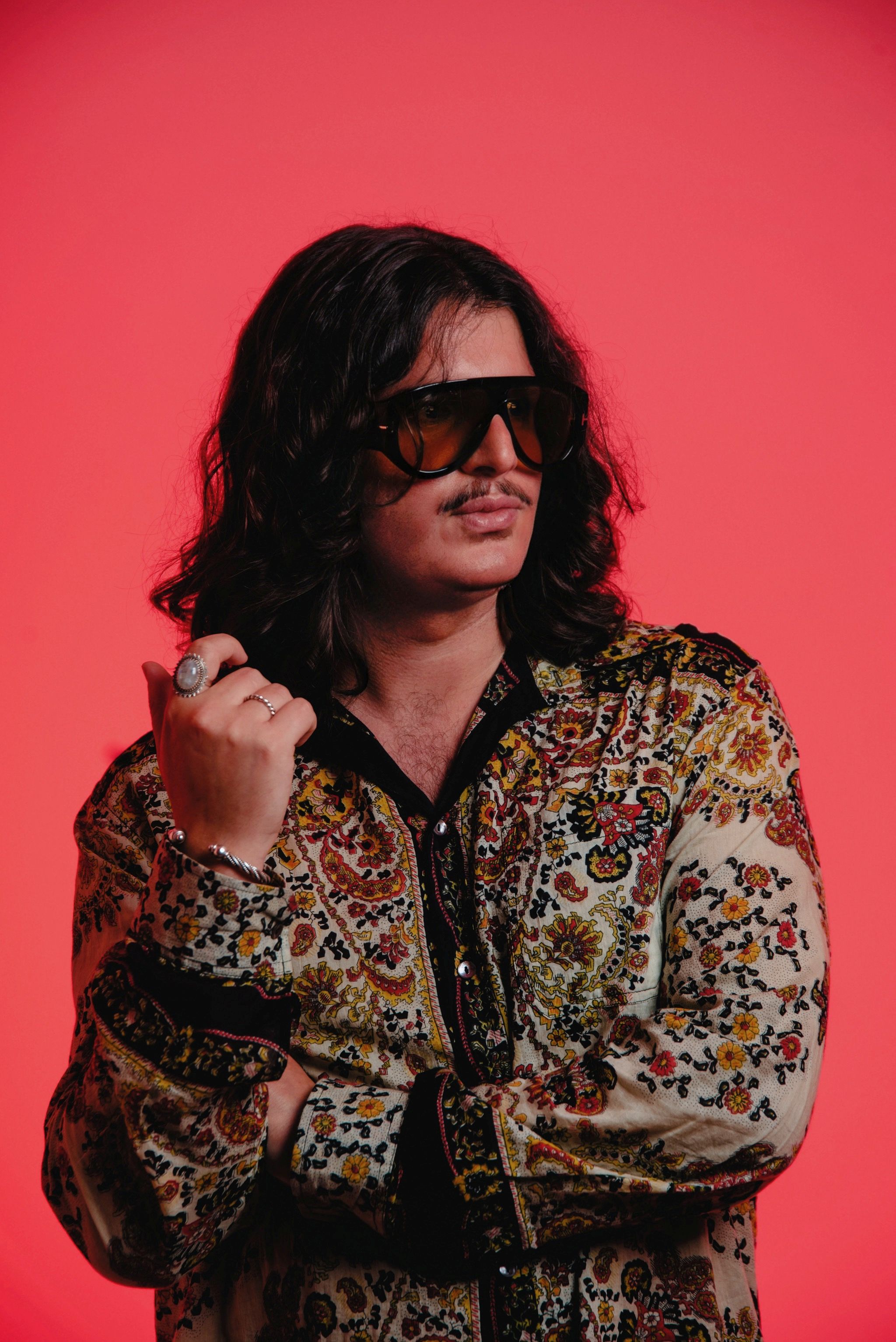
Name: Alastair Lane
Nationality: French
Occupation: Producer, DJ, songwriter
Current Release: Alastair Lane's latest single “Bon Voyage” is out now.
Recommendations for Paris, France: If you find yourself in Paris, I highly recommend visiting Montmartre. One of my favorite spots is Chez Camille, a charming little restaurant where the atmosphere really captures the spirit of the neighborhood. Nearby, there’s also the Lapin Agile, a historic and intimate cabaret club that’s perfect for soaking in some authentic Parisian music vibes. Montmartre itself is full of character, with its winding streets and artistic history; it’s a place that always inspires me.
Topic that I am passionate about but rarely get to talk about: I have a deep passion for cinema that runs in my family, both of my parents worked in the film industry and introduced me to many films that have since become close to my heart. From timeless French classics to masterpieces from around the world, these movies shaped my appreciation for storytelling and artistry. For me, cinema and music are inseparable, the soundtrack often elevates the emotional impact and makes me fall even more in love with a film. It has always been a dream of mine to compose music for movies someday, bringing stories to life through sound.
If you enjoyed Alastair Lane interview and would like to know more about his music and current live dates and releases, visit him on Instagram, Facebook, and Soundcloud.
Debates around production tend to focus on gear. What, though, were some of the things you learned by talking to colleagues or through performing and/or recording with other musicians? What role does community play for your interest in production and getting better as a producer?
Absolutely, gear is a part of the process, but for me, the biggest growth has always come through conversations and collaborations.
I absolutely love being free to collaborate with anyone I want, and that's a big advantage of being an independent artist. Talking with other producers, meeting people at record stores or jazz clubs, and having long conversations with passionate people.
Also, performing live especially taught me a lot about reading energy, how a groove breathes, when to hold back, when to push. That fed directly into how I approach structure and dynamics in the studio. Community plays a huge role in this. You grow faster. It keeps you grounded and curious.
For me, being a better producer isn’t just about mastering tools, it’s about listening better and staying open.
Would you describe yourself as a very “technical” person with a natural affinity for technology, gadgets, electronic circuits, software, etc …? What is your relationship with technology in- and outside of music?
I wouldn’t describe myself as a purely technical person, but in music production, I see technology as a playground. I love exploring software, sound textures, effects.
Outside of music, I’m less drawn to tech. I try to stay present, connected to people and the environment. So yes, I use technology, but I make sure it stays a means, not the end.
The word “production” as a separate item from “composition” suggests a creative processes with different stages. Do you see it that way – or are all the steps towards a piece of music always integrated and connected for you?
For me, composition and production are deeply connected, they happen in parallel.
A sound choice can inspire a melodic idea, and a rhythmic element might shape the structure of the track. I don’t separate them in a strict, linear way. It’s more of a dialogue between elements, evolving together. Sometimes a track starts with a texture or a groove, and the rest builds around that. So yes, there are stages, but they’re fluid and often overlapping.
A recent example of that is ‘Roman d’Amour’, a single I released in collaboration with Sarah Degny. It was actually her first time recording vocals on a track, and her voice brought a nostalgic, poetic touch to the energy of the production.
The track has since become a hit, which makes me especially proud, as it blends deep house / indie grooves with emotional storytelling, the kind of balance I’m always aiming for.
Do you want technology and production to mainly “serve musical ideas” – or do you like to bring them to the fore and play with them?
Both, actually. Most of the time, I want technology to serve the musical idea and to support the emotion, the story, the atmosphere. But I also love moments where the sound itself becomes the idea.
So it’s a balance, because I use technology to enhance the message, but I’m not afraid to let it take the lead when it brings something unexpected.
In how far, would you say, was your evolution as an artist connected to the evolution of your music set-up? Were there shared stepping stones?
As I grew, I wanted more flexibility and control to express new ideas, so I gradually added gear and refined my workflow. Each upgrade or new tool opened up fresh possibilities, pushing me to explore different sounds and techniques.
But it’s never just about the equipment; it’s how I use it to tell a story or create a mood. So yes, my setup and my artistic growth have gone hand in hand, each influencing the other.
There are artists who can realise their ideas best with a traditional – or modified – piano interface, others with a keyboard and a mouse, yet others by turning knobs or touching screens. What's your preferred and most intuitive/natural way of making music and why?
For me it always starts with an idea, a melody I will sing into my phone and record it, or maybe lyrics I’ll write down. I have hundreds of those ideas, and when the time comes, one of them comes to life and I’ll start working on it, continue developing it, or simply finish it.
But to answer the question, I do use a mouse and keyboard interface, and sometimes a MIDI keyboard. And will later bring musicians and sometimes collaborate with other producers in the studio.
Tell me about one or two of your early pieces that you're still proud of (or satisfied with) in terms of production – and why you're content with them.
‘Naked in the Water’ is, of course, my first real hit, the track that introduced my sound to a wider audience.
But if you're curious to explore more, I’d highly recommend checking out my EP ‘Harlem Groove’, created in collaboration with Lee Wilson. It was the first project where I truly felt proud of the musical direction I was taking.
That EP marked a turning point for me, both creatively and personally, and it still holds a special place in my heart.
Tell me about the space of your current studio/workplace and how you've set it up to optimise creativity.
I produce a major part of my music at home, in my apartment in Paris. It’s a compact but comfortable space that I’ve set up to keep things simple and inspiring. I’ve focused on having the essentials close at hand.
Being at home also means I can work whenever inspiration strikes, which really helps keep the creative flow going. It’s not a big professional studio, but it’s definitely a place where I feel free to experiment and develop my sound.
Late producer SOPHIE said: “You have the possibility with electronic music to generate any texture, and any sound. So why would any musician want to limit themselves?” What's your take on that?
I totally agree with SOPHIE’s point. Electronic music offers an incredible palette of sounds and textures, the possibilities really are endless.
But for me, it’s not about using everything just because I can. I love exploring new textures, but I also believe that sometimes, less is more. It’s all about finding the right balance.
For you personally, where does composition end and production start (or vice versa)?
For me, composition and production are deeply intertwined; there’s no clear line where one ends and the other begins.
Often, a compositional idea evolves as I experiment with sounds and textures during production. Sometimes production choices inspire new melodies or arrangements.
I think it’s a continuous, back-and-forth process where both elements shape each other until the track feels complete.
We can watch videos on production, take producer courses, and exchange deep insights on gear forums. Amidst these options to improve one's chops/skills, how do you keep things playful?
I actually never watched an online tutorial on music production, that’s why it took me a while to produce something good.
I used to randomly try things in Ableton, which was like a game to me, using the wrong VSTs and sometimes ended up with happy accidents. That’s playful!