Published
Name: Alejandro Mosso
Nationality: Argentinian
Occupation: Producer, composer, performer
Current release: Alejandro Mosso's Esserts EP is scheduled for release August 30th 2024 via Oath.
Recommendations: Book: Man’s Rage for Chaos by Morse Peckham. This is by far the most intriguing book I've read on art, profoundly shaping my view on artistic behavior and creativity. Peckham argues that art has an evolutionary function in humans, helping us to improvise and see the world in alternative ways to adapt faster to our environmental challenges. It’s a heavy read, but well worth the effort.
Music: While it's already well-known and highly praised, "Music for 18 Musicians" by Steve Reich never fails to touch that intimate music nerve in me, triggering a sense of transcendence and emotional overload. A true masterpiece.
If you enjoyed this Alejandro Mosso interview and would like to stay up to date with his music and work, visit his official homepage. He is also on Instagram, Soundcloud, Facebook, and bandcamp.
What was the first time you were consciously impressed by technology – in and outside of music?
Outside of music, I would have to say the advent of the internet. Those of us born in the '80s experienced a childhood without it, making the arrival of the internet a revolutionary moment. I remember getting my first dial-up connection at 17 and being amazed at the new world it opened up.
In terms of music technology, my first awe-inspiring experience came with early versions of Cakewalk, Ableton, and Rebirth (later Reason). These tools revealed a new realm of endless possibilities for creating and shaping music, and they truly transformed my approach to music-making.
Tell me about some of your early productions that you're still proud of – and why.
My first full-length album, Hiperborea, was released in early 2005 under the Funzion alias. While my production techniques and expertise have significantly evolved since then, I'm proud of what I accomplished with that project despite my limited knowledge at the time.
When it comes to arranging, sound design, performing, composing, etc – what are currently concrete topics and aspects that interest you and where you want to improve or simply challenge yourself?
In terms of the writing and production process, my current focus is on avoiding the trap of spending excessive time polishing a sound that I like but that doesn't fit the song I'm working on. It's easy to become attached to certain sounds and want to include them at all costs, but often it's better to simply mute them or replace them with something that serves the track better.
It's crucial to keep the bigger picture in mind: making a cohesive song, not just a perfect sound preset. I've been getting better at quickly detaching myself from particular sounds and remembering that elements that don't enhance the track will actually detract from it.
This approach helps me stay focused on the overall composition and ensures that every part of the song contributes meaningfully to the whole.
Do you keep up with recent developments in terms of gear and software? If not, why not? If so, what are you looking for?
Yes, I make it a point to stay informed about the latest developments in gear and software. I genuinely enjoy reading about these topics, even if it might not always be the most efficient use of my time.
However, staying updated helps me envision more efficient ways of working or simplifying tasks, and often provides new sources of inspiration.
How and for what reasons has your music set-up evolved over the years and what are currently some of the most important pieces of gear and software for you?
Over the years, my music setup has seen a lot of changes, with gear being bought and sold as my needs and preferences evolved.
Currently, I maintain a relatively simple setup. I'm not a compulsive buyer; I prefer to keep only what I truly need or deeply enjoy. I spend considerable time researching and imagining how a new acquisition could enhance my workflow before making a purchase.
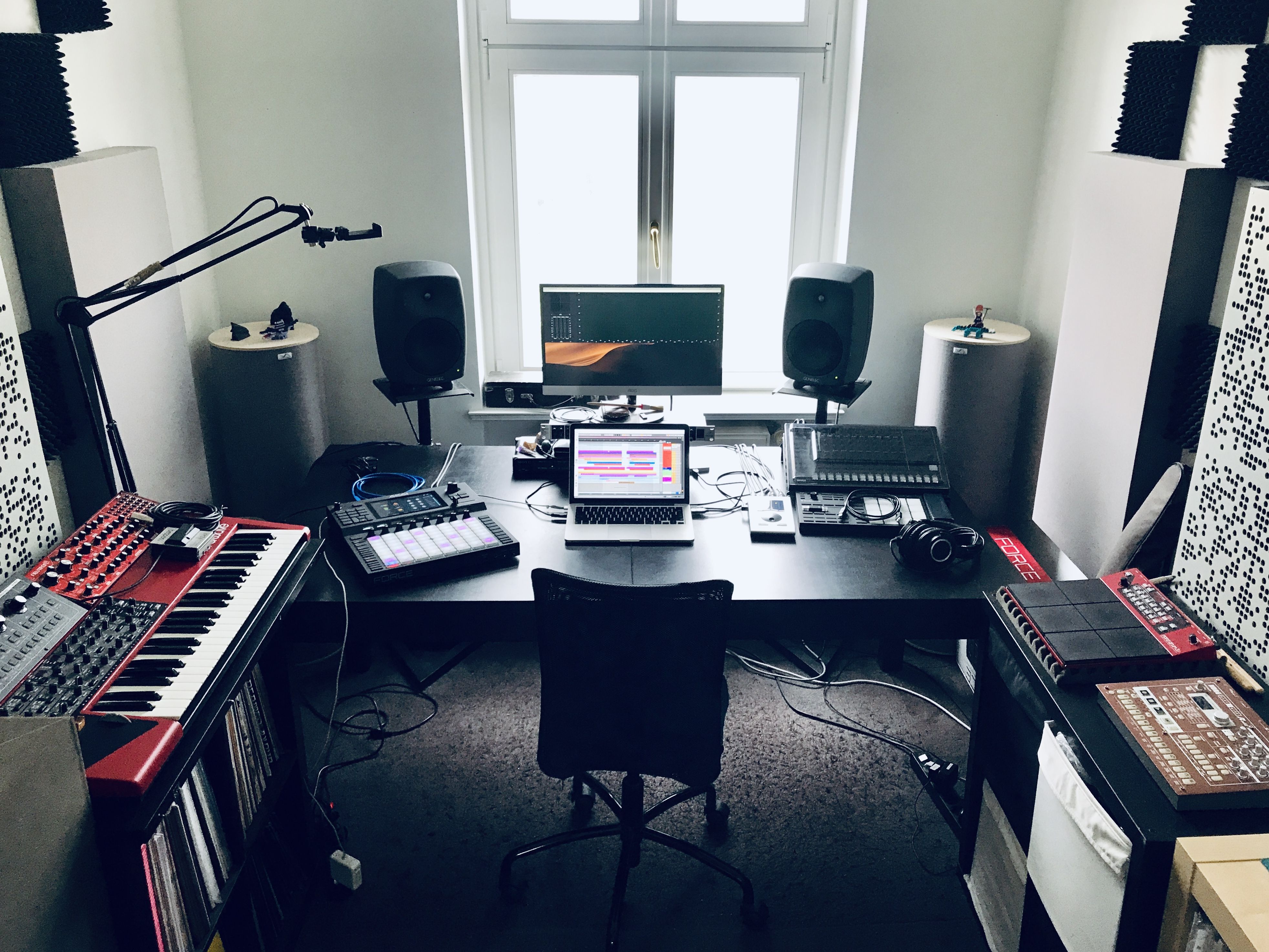
Alejandro Mosso's studio // Photo (c) the artist
In terms of software, Ableton Live stands out as the cornerstone of my setup. I've been using it since version 1 and have admired its evolution over the years. Honestly, I could create any music I wanted using just a full version of Ableton.
As for hardware, a few key pieces are particularly important to me, even though they are not irreplaceable. These include the Nord Drum 3, Roland TR-8S, Nord Wave, Moog Slim Phatty, and my trusted Akai Force, which is essential for live performances.
Jean-Michel Jarre maintained that, despite the advances in virtual technology, we are still "analogue animals made out of blood and bones who need buttons and knobs to touch.” In how far is this statement true or false for your own music?
The abstraction and detachment from physical interfaces that digital technology brings can indeed be problematic for certain tasks. However, the issue is more nuanced than that. It really depends on what you’re trying to achieve. For instance, when recording a melody line with accents or a human timing, a physical interface like a synth keyboard is essential. The tactile feedback and expressive capability are irreplaceable.
On the other hand, for many non-expressive tasks in music production, using a trackpad and inputting numbers can be much more efficient. This is how I approach my music creation process: I automate and precisely structure everything that doesn’t require the expressive and imperfect human touch.
Striking the right balance can be challenging, as the possibility of making everything exact is very tempting, but it’s crucial for maintaining the human element in my music.
What are examples of production tools/instruments that you bought for a specific purpose?
Every tool I purchase serves a specific function in my mind, though sometimes they fulfill that function and other times they end up being used in completely unexpected ways.
For example, a couple of years ago, I bought an Akai Force to streamline my live setup. I wanted to move away from the bulky, cable-heavy arrangement of a laptop, interface, controller, drum machine, USB hubs, and more. I needed a stable centerpiece for my set that was easy to travel with, quick to set up, and feature-rich enough to allow the level of expression I required for performing.
Today, I still use the Akai Force for all my shows, but it has also become an integral part of my writing process thanks to its excellent interface and the interesting sound of its onboard synths.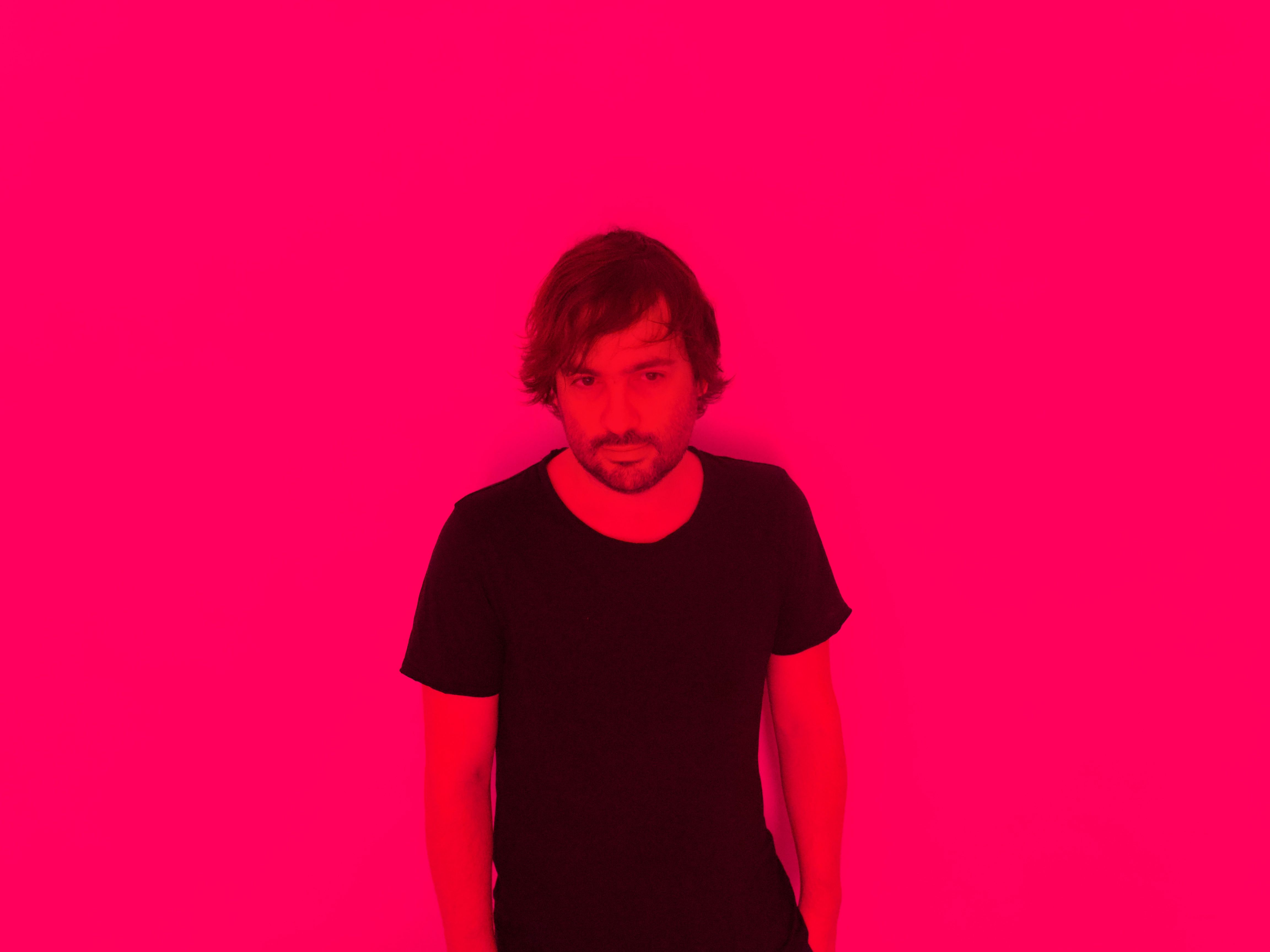
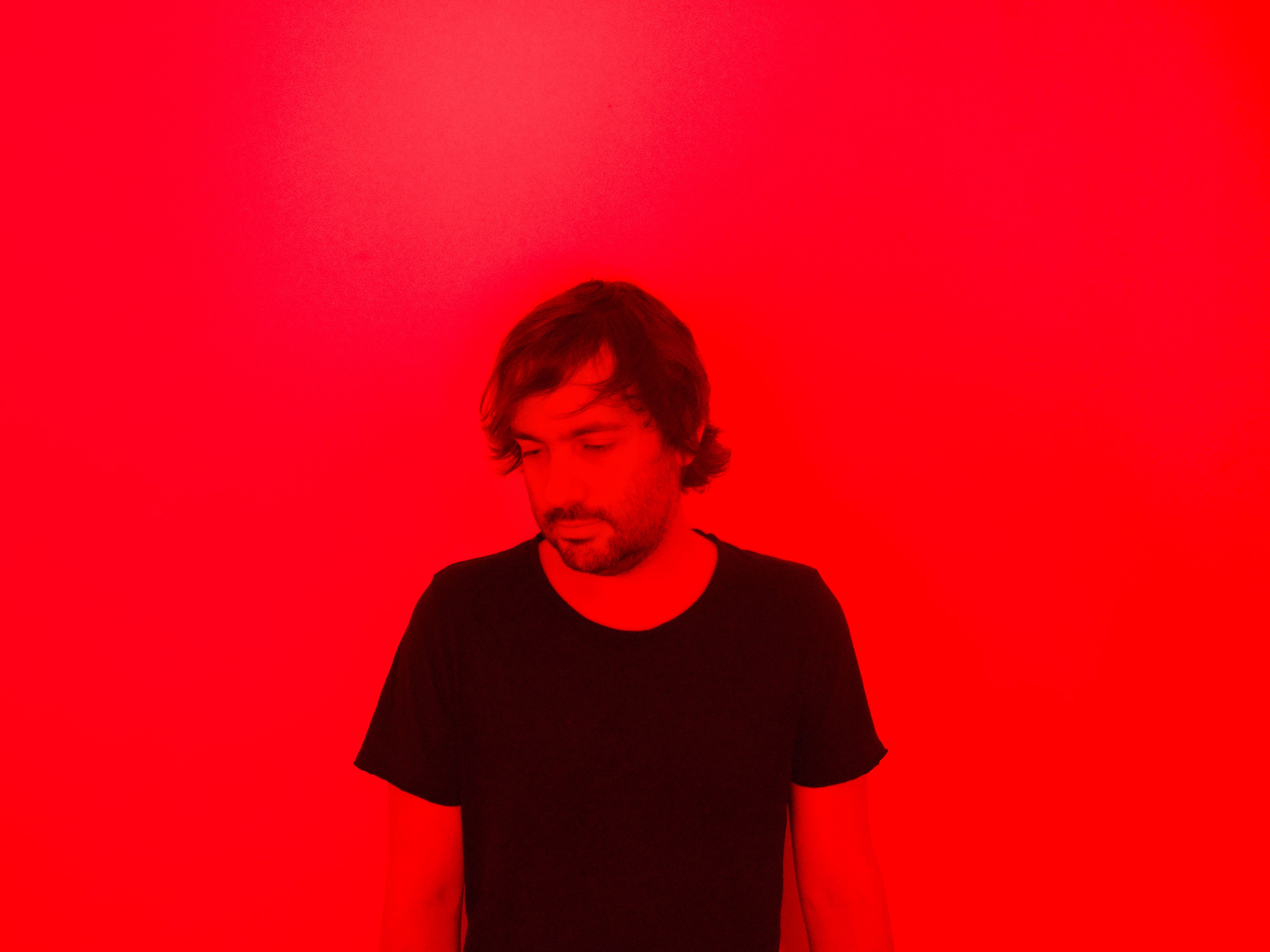
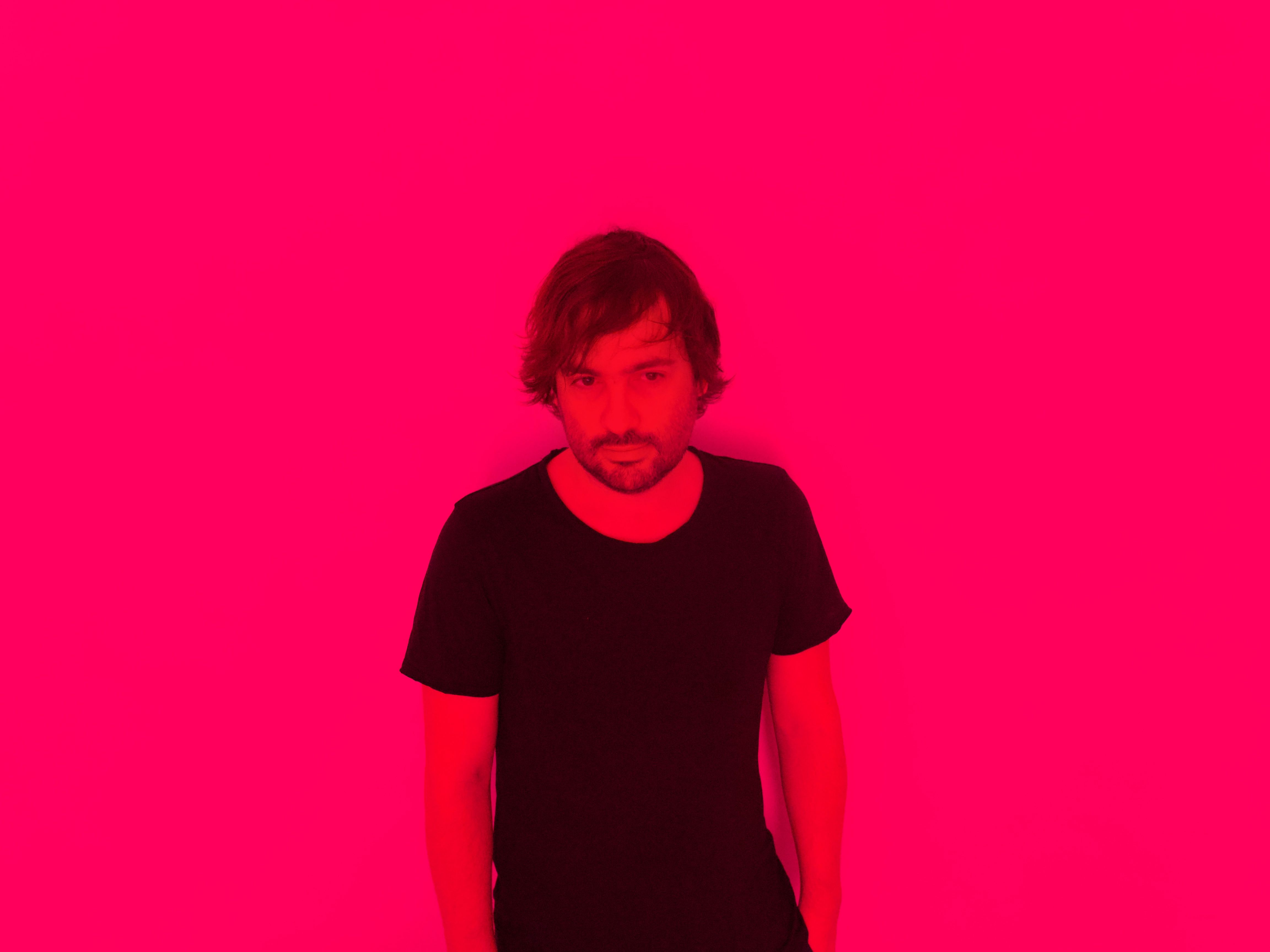
Alejandro Mosso Interview Image (c) the artists
Late producer SOPHIE said: “You have the possibility with electronic music to generate any texture, and any sound. So why would any musician want to limit themselves?” What's your take on that?
For decades we have been saying that we have reached endless sonic possibilities, but then we continue to push the boundaries with new technologies emerging every year, allowing us to imagine and create in ways we previously couldn't. However, this abundance of options can make it difficult to focus your energy and truly realize your vision. It's essential to dominate the technology, not let it dominate you.
While limiting your choices might not necessarily lead to "better" music, it can help you create music that is more authentically yours. By setting boundaries, you can hone in on your unique sound and ensure that your creativity isn't overwhelmed by the sheer volume of possibilities.
From the earliest sketches to the finished piece, tell me about the production process for your current release, the Esserts EP, please.
The origin of some of these tracks goes back a few years, so I can't remember every detail of their development. However, they were all reworked numerous times until the final days before sending them to the pressing plant.
Esserts is a project I started in 2020, built around a piano sample. It's a very simple phrase that allows for endless repetition without becoming tiresome, which sometimes almost magically happens. I experimented with different rhythms and textures around it, ultimately choosing a very clean palette that complements the piano without interfering much. I then added string harmonies and vocal textures to enhance the emotional theme of the song.
“Bruson” is relatively new, from 2023. This one began with the rhythm. I had a selection of drums that merged well together and then added a strange bass line while jamming with my Akai Force. The melody line also came from the Akai. The final touches were added with my Fender Telecaster, recording some simple guitar licks.
“Sosneado” is the oldest, dating back to 2019. This track went through many different versions. It was originally composed for the 47-minute one-track album SURRENDER, but somehow didn't fit with the rest of the project.
The entire track is built around a dusty flute motif, which is extremely basic but has a nice hypnotic vibe, and the sweeping pad that propels the entire song forward.
What does your own way of working with sound look like? Do you find using presets lazy?
The topic of presets needs to be put into context. It really depends on the type of music you're making. A preset is essentially a "timbre," a specific setup of an instrument's parameters to create a certain sound—it's a form of sound design. If your music relies heavily on timbre and sound design, like some sub-genres of techno, overusing presets can make your tracks sound generic and indistinguishable from others.
However, if your music focuses more on rhythmic, harmonic, and melodic complexity, the specific synth sound might be less critical. Many rock or pop records use the same snare sound or a similar guitar tone, yet they sound unique due to their composition and arrangement. Sound design is just one aspect of music production, and its importance varies by genre. For some genres, it’s a critical component; for others, it’s less significant.
Personally, I start most of my musical ideas with a preset. I quickly choose a sound that is close to what I have in mind and move on to composing the other elements in a similar manner. Then, as the production progresses, I refine or completely change the timbre of every sound through sound design and mixing techniques. This approach allows me to focus on the composition first, while still ensuring each element is uniquely tailored by the end of the process.
Richie Hawtin, speaking about semi-modular equipment, has stated that a deeper understanding of sound synthesis can lead to “life lessons that go beyond what we can hear.” Can you relate to that statement?
I have been working with synths for over twenty years and I am still waiting to have a life lesson from an oscillator. But who knows?!
What were some of your most positive collaboration experiences? How did this "human element" enhance your solo approach? Did you record via filesharing or in the same room and if so, what did the recording process look like?
I don’t collaborate with other artists very often, but a recent project with my friend Mad Dim on a couple of minimal tracks was very productive and inspiring. We did all the writing and recording in his studio, which was a fascinating experience because our working styles are completely different.
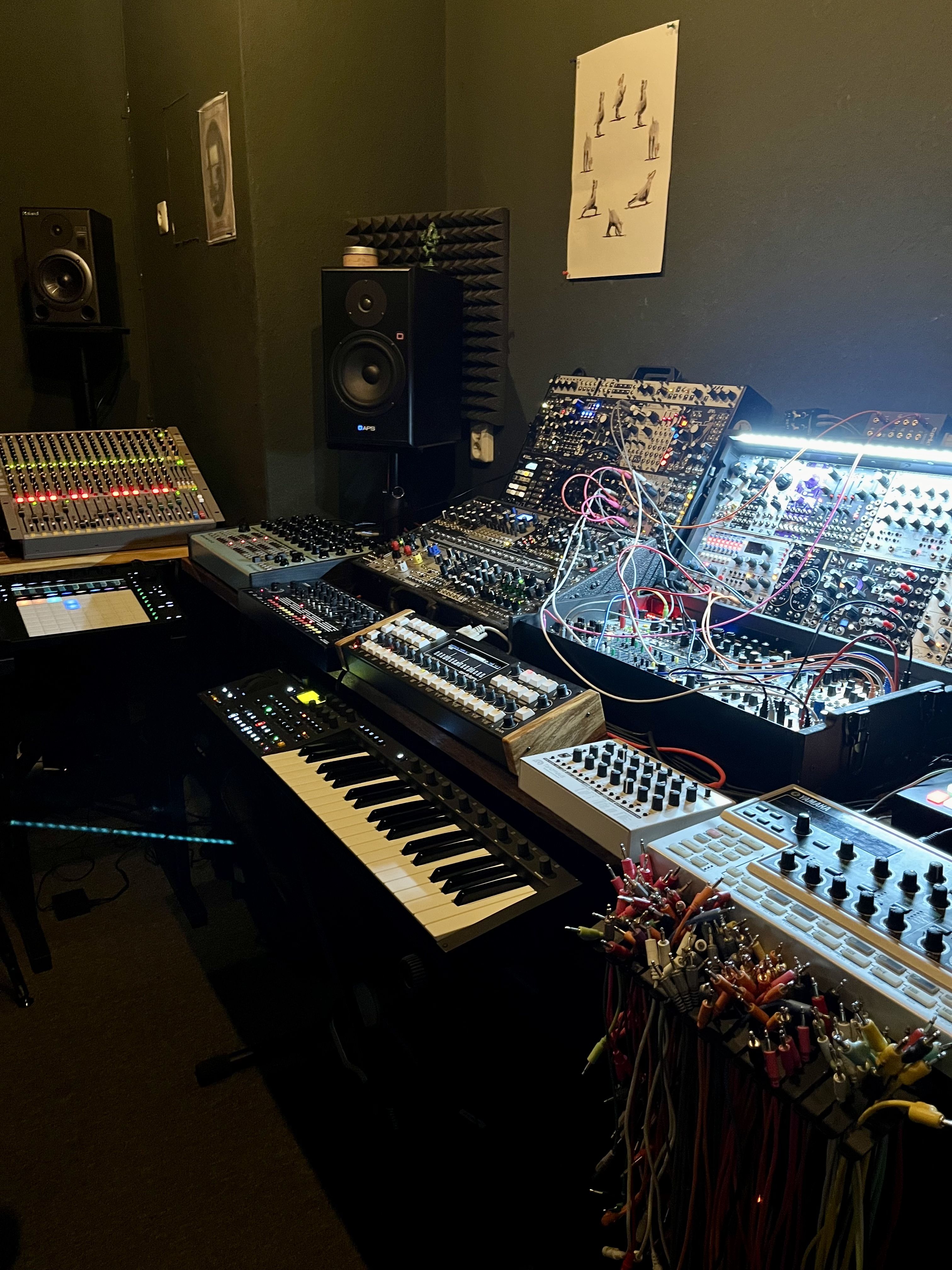
Mad Dim's studio is filled with gear and modular synths, which fostered a very spontaneous and playful approach. 
Photo (c) the artist
We began by jamming until we had enough elements to build a track, then recorded everything in detail. After that, I took the mixes home to my studio and we exchanged the Ableton projects back and forth a few times until we were both satisfied.
To some, the advent of AI and 'intelligent' composing tools offers potential for machines to contribute to the creative process. What are your hopes, fears, expectations and possible concrete plans in this regard?
Like any new technology, AI brings both threats and opportunities.
It will undoubtedly transform the musical landscape, and the entire industry will need to adapt. This adaptation process will likely be painful for many, myself included. My hope is that AI can support creativity by offering new tools and perspectives. However, I fear the potential for AI to homogenize music, erode the uniqueness of human creativity, and disrupt the livelihoods of many musicians.
To mitigate these risks, it’s crucial to raise awareness about the implications of AI in music and advocate for governmental oversight on key aspects. This can help minimize the shock and facilitate a healthy, balanced adoption of these technologies.
Have you used AI or generative music tools for your own productions? If so, in which way and what did they add?
Generative music predates the current AI revolution; like Brian Eno’s Music for Airports for example.
In my practice as a sound artist I’ve explored similar generative music using tools like Max/MSP, which allowed me to create dynamic and ever evolving compositions through a predefined system.
As for AI, my involvement has been relatively limited so far. I’ve regularly used iZotope's plugins for their intelligent audio processing capabilities and, more recently, I've asked ChatGPT to help fine-tune lyrics for a pop side project I'm working on.
These tools have provided valuable assistance and efficiency, but I still rely heavily on my own creative intuition and skills to shape the final product.