Published
Name: Alessandro "Asso" Stefana
Nationality: Italian
Occupation: Composer, multi-instrumentalist
Current Release: Alessandro "Asso" Stefana's new, self-titled album is out now via Ipecac. Order the album here.
Recommendations: BOOK: Our souls at Night - Kent Haruf; MUSIC: Goldberg Variations, BWV 988: Aria, Glenn Gould (1981)
If you enjoyed this Alessandro "Asso" Stefana interview and would like to stay up to date with his music, visit his official homepage. He is also on Instagram.
Where does the impulse to create something come from for you? What role do often-quoted sources of inspiration like dreams, other forms of art, personal relationships, politics etc play?
As a musician, my creative impulses are deeply rooted in life's rich tapestry—fuelled by experiences on the road, the nuanced sensations that surround us, and the vibrant hues that paint our existence. This is why I envision my music as a living soundtrack, capturing the essence of life itself.
Interestingly, I've found that my most inspired moments often arrive at the most unexpected times. It's during these seemingly inconvenient junctures that I'm compelled to capture raw ideas, even in the midst of unconventional situations where time is a scarce commodity.
For you to get started, do there need to be concrete ideas – or what some have called a 'visualisation' of the finished work? What does the balance between planning and chance look like for you?
Often, they're like little gems of inspiration, just fleeting sketches of ideas. Then, when I feel the time is right, I take them to the studio and start fleshing them out, trying to give them a bit more substance, a bit more coherence.
This is the planning part of the process. Then I'll just head to the studio with an open mind and see if the magic happens.
Is there a preparation phase for your process? Do you require your tools to be laid out in a particular way, for example, do you need to do 'research' or create 'early versions'?
You know, I've never been one for doing demos of my music. Early on, I discovered that those initial sketches—the first raw recordings—hold something truly special, almost sacred. There's this purity to them, this raw essence of the original idea that speaks volumes.
So, instead of overthinking it or trying to refine it too much, I focus on capturing that authenticity in the best possible way right from the start. That initial recording becomes the cornerstone, the starting point from which everything else flows.
Do you have certain rituals to get you into the right mindset for creating? What role do certain foods or stimulants like coffee, lighting, scents, exercise or reading poetry play?
I’m so sorry but nothing in particular …
What do you start with? And, to quote a question by the great Bruce Duffie: When you come up with a musical idea, have you created the idea or have you discovered the idea?
In my experience, inspiration often comes directly from the instruments themselves. It's as if they possess their own melodies, waiting to be discovered and unleashed. I see myself more as a conduit, tasked with bringing these latent melodies to life, infusing them with a fresh perspective and energy.
That’s why I love old instruments and collect them, they contain a rich history and untold stories, each one a treasure trove of musical wisdom and narrative waiting to be heard.
Many writers have claimed that as soon as they enter into the process, certain aspects of the narrative are out of their hands. Do you like to keep strict control or is there a sense of following things where they lead you?
I love to lose myself in the music-making process, both in playing and producing. There's this unparalleled sense of freedom that comes with it, unlike anything else.
In life, there's often this pressure to have everything under control, to navigate through the chaos with precision. But in music, it's like I find this this refuge where I can just let go and lose myself in the creative flow.
Often, while writing, new ideas and alternative roads will open themselves up, pulling and pushing the creator in a different direction. Does this happen to you, too, and how do you deal with it? What do you do with these ideas?
Music production is like standing at a crossroads, a timeless dilemma reminiscent of the bluesmen of old—left or right, east or west. Every decision, no matter how seemingly small, can steer the course of a project in a whole new direction.
I often find myself at these junctures, faced with choices that could shape the entire sound and feel of a track. But I've learned to trust my instincts. Sometimes I have to channel my inner musician, feeling out the vibe and groove. Other times, I have to step back and view things from the producer's perspective, making decisions from a more detached standpoint.
It's a delicate balance until you find your way out.
There are many descriptions of the creative state. How would you describe it for you personally? Is there an element of spirituality to what you do?
It's a soulful ecstasy, a rapture of the soul akin to wandering into another dimension for a spell. This exquisite sensation envelops me entirely. In those moments, nothing else matters—I'm so entranced by the realisation of the soundscapes in my mind that I forget about the basic needs of eating and drinking.
It's like being under a spell, where all that exists is the pure magic of music.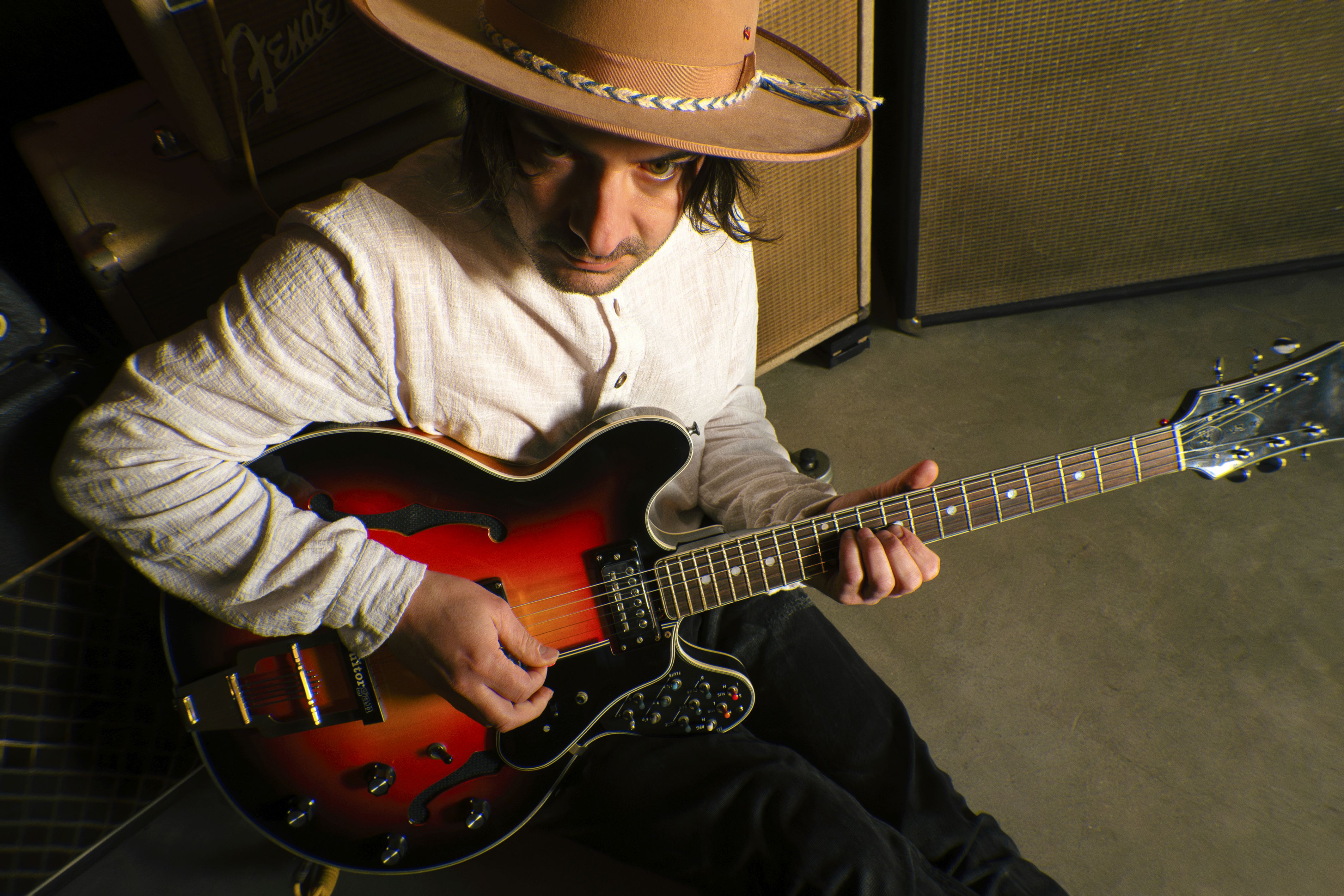
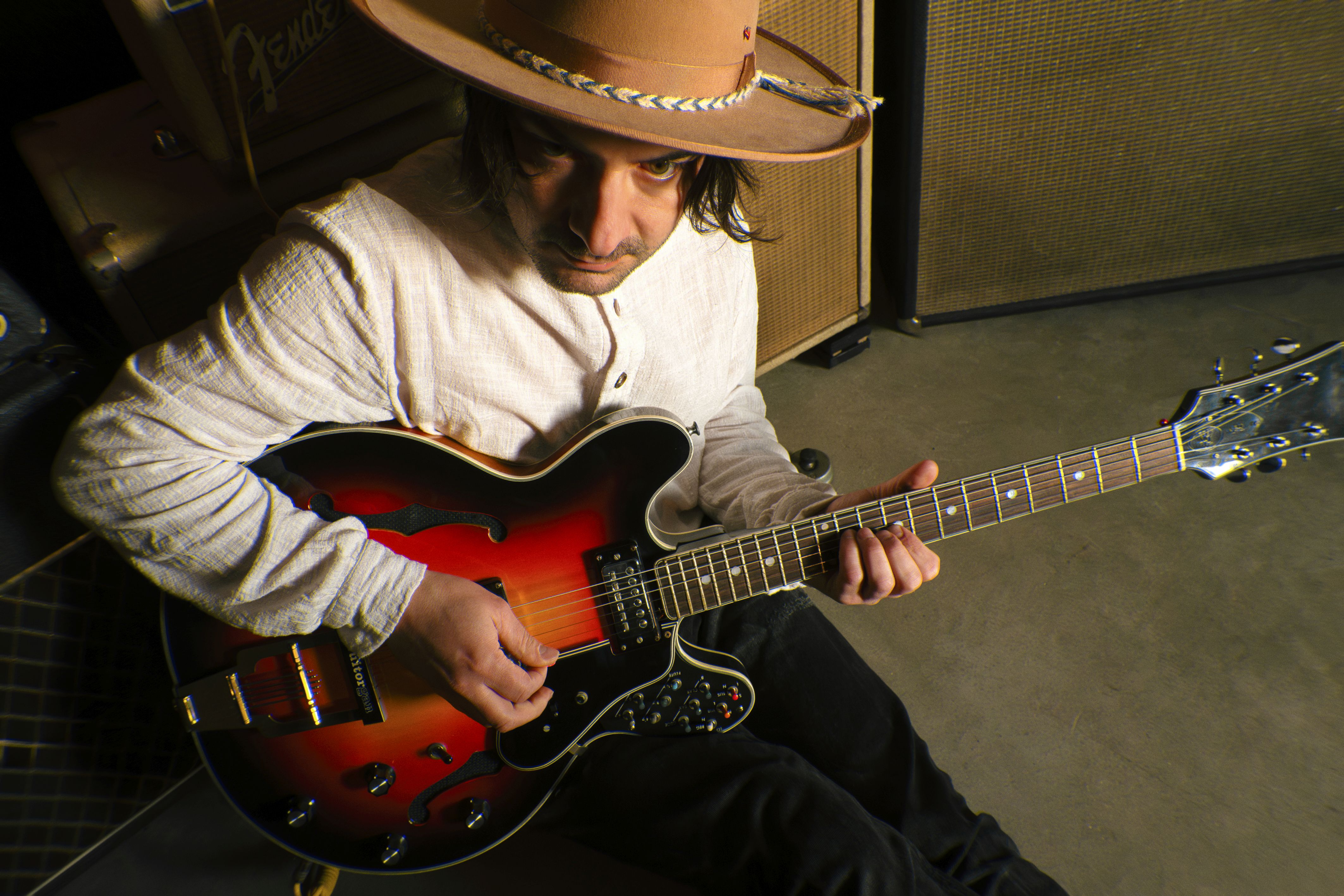
Alessandro "Asso" Stefana Interview Image by Roberto Cavalli
Once a piece is finished, how important is it for you to let it lie and evaluate it later on? How much improvement and refinement do you personally allow until you're satisfied with a piece? What does this process look like in practise?
It's always a delicate balance, but I'm never afraid to make refinements if necessary. I really enjoy taking my time with each project, avoiding any rush.
I often find that listening to the track in different environments, outside of the recording studio, can provide a fresh perspective. This approach helps me gain a clearer understanding of the work
When you're in the studio to record a piece, how important is the actual performance and the moment of performing the song still in an age where so much can be “done and fixed in post?“
I really love playing music and bringing my ideas to life exactly as I envision them.
For me, the most important aspect is capturing the emotion that's in your mind, even if it's not "technically" perfect. In the end, it's about transforming something intangible into something you can actually listen to.
This physical process of creation is where the magic happens. Fixing things in post doesn't really fit with my approach
What's your take on the role and importance of production, including mixing and mastering for you personally? In terms of what they contribute to a song, what is the balance between the composition and the arrangement (performance)?
Over the last 15 years and more, I've gotten used to engineering, recording, and playing all at the same time. If you think about a writer, they can basically work whenever they want, just with a pen and a blank page. For a musician, it’s not that simple.
I had to learn everything to bring my ideas to life, and to have the flexibility to do it whenever I want. Understanding sounds and recording techniques has been crucial for developing my music. So now, it all comes pretty naturally to me.
I don’t see these tasks as separate compartments anymore. Instead, I have a unified vision of the whole process, rather than thinking, "Now I need to play, now I need to mix, now I need to arrange and produce." It's all part of the same creative flow.
After finishing a piece or album and releasing something into the world, there can be a sense of emptiness. Can you relate to this – and how do you return to the state of creativity after experiencing it?
For me, it's not really a sense of emptiness; it's more like a liberation.
I held onto this record for a long time before bringing it into the spotlight, so now I really feel free. It's like a weight has been lifted off my shoulders, and I’m free to create new music without that lingering pressure.
Music is a language, but like any language, it can lead to misunderstandings. In which way has your own work – or perhaps the work of artists you like or admire - been misunderstood? How do you deal with this?
Music is definitely a language, and misunderstandings are part of that.
For this record, people might expect a lot of guitar work since I’m primarily known as a guitarist. However, this album might surprise them—there’s almost nothing that showcases the "guitar man" in me. I approached this project more like a songwriter, intentionally avoiding any elements too closely tied to a single instrument.
Music, to me, is a journey
Creativity can reach many different corners of our lives. Do you personally feel as though writing a piece of music is inherently different from something like making a great cup of coffee? What do you express through music that you couldn't or wouldn't in more 'mundane' tasks?
Creativity is this omnipresent force, weaving its magic into every aspect of life. I often draw parallels between writing music and cooking up something special. Just like crafting a delectable dish, composing music involves layering flavours of melody, harmony, and rhythm to create something …
Music, it's like this universal language, a language of emotions that transcends words and speaks directly to the soul. It has this incredible power to evoke feelings and stir emotions in ways that words alone often can't. It's a profound form of expression that has the ability to resonate deeply with people, leaving an indelible imprint on their hearts and minds.