Published
Name: Alex Ventling
Nationality: Swiss-New Zealand
Occupation: Pianist, composer, improviser, film maker
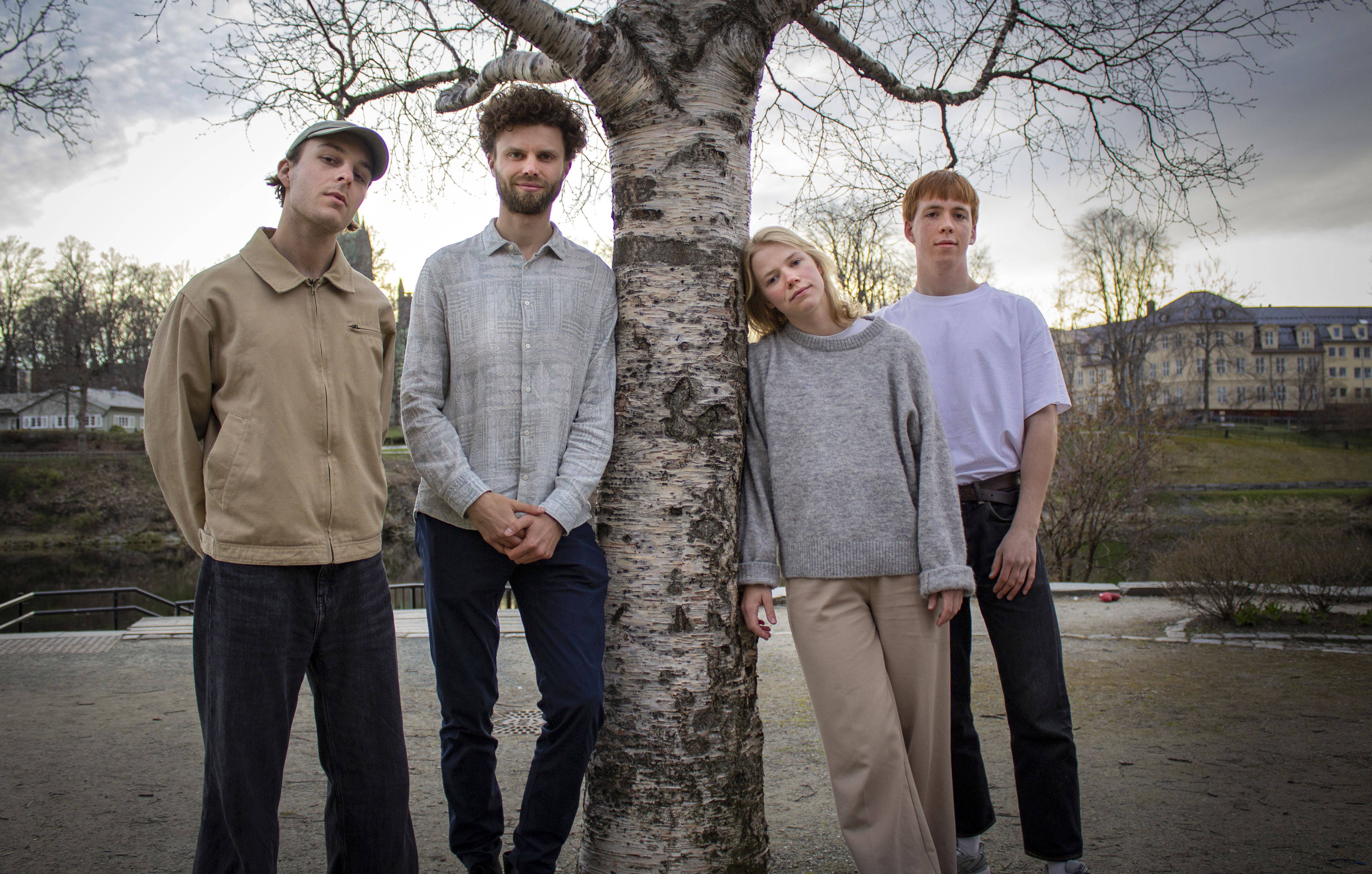
Current release: Alex Ventling's new album Wavemakers is out now. It features himself on piano and synth, Tuva Halse (violin), Amund Stenøien (vibraphone), August Glännestrand (drums, drum machine) and Sissel Vera Pettersen (voice).
If you enjoyed this Alex Ventling interview and would like to stay up to date with his music and upcoming live dates, visit his official homepage. He is also on Instagram, and bandcamp.
Do you think that some of your earliest musical experiences planted a seed for your interest in improvisation?
Starting with classical training as a teenager, I always felt the pressure to play ‘correctly’ and without mistakes. I naturally felt more relaxed and creative when I could choose which notes to play and when. To the teacher’s dismay I would play Bach piano pieces and stitch together the sections in my own order and timing.
Of course now I do enjoy the challenges and practicing the skills needed for all spectrums of improvisation, whether small and limited or completely free and open. I find the balance between improvisation and composition interesting.
Derek Bailey defined improvising as the search for material which is endlessly transformable. What kind of materials have turned to be particularly transformable and stimulating for you?
In my opinion, the transformative aspect of a time-based art like music is the most interesting and captivating part of it all. I like to think in terms of motifs as my improvisational ‘material’. How a short phrase or idea (whether rhythmic / harmonic or melodic), can evolve and change.
Personally I think the real art lies in how one manipulates the material / the motif and the story told in this transformation - rather than the motif or idea itself. I would go as far to say that the initial idea doesn’t even matter compared to the transformation of it. This could happen in smaller ways, like sequencing a phrase in one melodic line, or larger ways, like main themes reoccurring in a whole piece.
In the first track of our new album Wavemakers, ‘Tracking’, you can clearly hear the transformation of the left hand’s harmony while constantly keeping the motif, and the relatively strict development of the melody on top. This for me creates narrative and tension.
Do you feel as though there are at least elements of composition and improvisation which are entirely unique to each? Based on your own work or maybe performances or recordings by other artists, do you feel that there are results which could only have happened through one of them?
When I improvise, I’m trying to think like a composer in real time. It makes me think about the tune instead of playing without context in a similar way each time. It makes me shape the direction of the music and create a ‘zone’, while taking pressure off having to ‘solo’ and show chops.
I think there are benefits of exploring each extreme of completely composed and completely improvised music. There is music that would never be possible only using one or the other.
I enjoy the peculiarity and results of music that is disguised as composed, but is actually improvised (myself and Hein Westgaard tried to achieve this in our album In Orbit) and vice-versa, music that sounds improvised but is actually fully composed (like classical new-music - check out Enno Poppe!).
There are beautiful qualities that emerge when both are used and move in balance.
Are you acting out parts of your personality in your improvisations which you couldn't or wouldn't through other musical approaches? If so, which are these? What, would you say, are the key ideas behind your approach to improvisation?
When I compose, I sometimes record myself improvising and then transcribe it. This then gets filtered into the final composition.
I like this method because it captures a spontaneous type of flow that I couldn’t follow in slower more laborious composition. The Wavemakers track ‘Trondheim III’ was written this way.
However, I then often miss the energy and looseness of the original improvisation when afterwards playing the composition. So when playing the piece I really try to remember the feeling and energy I had while initially improvising the idea. This could also mean researching into the building blocks of the idea and developing my knowledge around the piano in manipulating these ideas.
Christian Wallumrød talks about that in his solo performances – he plays the same pieces but as new versions each time, even though they are compositions, because he knows how to compose them in real time. I think this process really develops useful musical tools and personality.
In terms of your personal expression and the experience of performance, how does playing solo compare to group improvisations?
Actually I want to feel the same in both solo and group improvisational settings, funnily enough. When playing in a group, I want to feel like the other musicians and sounds are an extension of my own sound, and I try to play ‘into’ the others’ sound. That way the sonic image is complete, as I aim for when playing solo.
The difference would be that group playing is more unpredictable, since I don’t know what my band members will play. But that can be a great thing to help let go of control. It’s far too easy to control everything while playing solo, which can strangle improvisation flow.
The band helps to bring you out of your own thing, out of your head, if you have the courage to let go and listen.
In a live situation, decisions between creatives often work without words. From your experience and current projects, what does this process feel like and how does it work?
I had the pleasure to record and at our release concert perform the song ‘Omaha’ with the amazing vocalist Sissel Vera Pettersen from Trondheim. With master musicians like her, I feel absolutely lifted into a higher level of musicianship while on stage together.
Feeling their unshakeable presence and how they listen to you on stage, is remarkable, and opens the moment as if anything is possible. I feel like the best learning experiences have been playing with high-level musicians like Sissel.
Stewart Copeland said: “Listening is where the cool stuff comes from. And that listening thing, magically, turns all of your chops into gold.” What do you listen for?
I listen for beauty and authenticity. I listen to what’s happening around me, and what I hear inside of myself — what I could add to the music.
The better I get at improvising and playing music, rather means the better I get at being present in the moment, listening more deeply and gaining faster and clearer access to what I hear inside.
This for me is the zone to be in while performing. It might mean less is more too.
I have always been fascinated by the many facets of improvisation but sometimes found it hard to follow them as a listener. Do you have some recommendations for “how to listen” in this regard?
Some more ‘challenging’ music to listen to might require an open heart and ears and your complete presence. If you manage to give this but the music is still ‘hard to follow’ then I believe it’s on the performers lack of clarity or presence.
I also believe no music should be more ‘challenging’ to listen to for non-musicians / a general audience.