Published
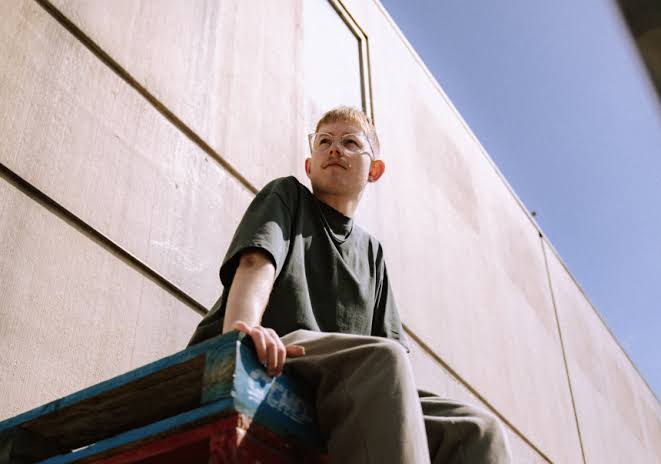
Name: Alexander Flood
Occupation: Drummer, percussionist, composer, producer, private drum teacher
Nationality: Australian
Recent release: Alexander Flood 's new album ARTIFACTUAL RHYTHM is out via Atjazz.
Recommendations for Adelaide, Australia: One place I really love here is the Mt Lofty Botanical Gardens up in the Adelaide Hills, about 20 mins drive from the CBD. I go for walks here often, and it’s especially beautiful in Autumn with all the colours! Lots of stunningly maintained gardens, and lots of nice walking trails, kangaroos, birds, etc.
Topic I am passionate about but rarely get to talk about: I love indoor plants - I really love the vibe they bring and that they can brighten up a space (especially a creative space or studio etc) and they help keep me relaxed and positive. Plus the care / maintenance / watering / repotting etc can be a nice mindful practice and is quite fulfilling.
If you enjoyed this Alexander Flood interview and would like to stay up to date with his music, visit his official homepage. He is also on Instagram, Facebook, and bandcamp.
Debates around production tend to focus on gear. What, though, were some of the things you learned by talking to colleagues or through performing and/or recording with other musicians? What role does community play for your interest in production and getting better as a producer?
Many hands make light work!
I think it’s always important to have other people's perspectives and influences in a project, and collaboration is a beautiful thing that can result in work that you may never have created or had the skills to create yourself. It’s always beneficial to have another set of ears on the music and someone (or many people) to bounce ideas off of.
Something really valuable I’ve learned through working with other mix engineers in regards to mix and production is that often less is more. It’s easy to get lost in the nitty gritty details of a sound and trying to sculpt something, but sometimes you end up with like 10 plugins loaded on the snare mic and it still doesn’t sound right - then you turn off all the processing and suddenly the snare sounds alive again.
Would you describe yourself as a very “technical” person with a natural affinity for technology, gadgets, electronic circuits, software, etc …? What is your relationship with technology in- and outside of music?
Yes for sure! I was born in 1996 and so growing up I was right in the thick of lots of rapid technological advancements, and I think when you’re young and surrounded by new technologies all the time you tend to pick it up quickly and adapt. Although I have to say, as I’m approaching 30 now I’m starting to feel a little behind on the fast evolution of AI etc.
Elements of tech are a crucial part of my music, in the way I write, the instruments we use, and the sound we sculpt.
The word “production” as a separate item from “composition” suggests a creative processes with different stages. Do you see it that way – or are all the steps towards a piece of music always integrated and connected for you?
I’m usually composing directly into a Logic Pro X session, inputting sounds and parts, and then tweaking elements and fx to suit.
There’s definitely an element of “production” in my compositional process, as I’m not only writing a “song” but also finding a “sound”. The actual sound and aesthetic of the music is super important for me and experimenting and pinpointing that in the compositional stage often helps influence the composition and move it forward.
However once the “demo” stage of a track is finished and when the track is actually recorded later on with the band, I’ll aim to get most of the parts tracked and edited before moving on to the actual production side of things.
Do you want technology and production to mainly “serve musical ideas” – or do you like to bring them to the fore and play with them?
Generally for me the tech and production are serving the ideas, sound, and style, but sometimes a certain style will really call for the tech side of things to have a more prominent role or focus, and certain tracks will need a heavier dose of electronic produced elements.
So really it depends on the context and on the track and intention/vision.
In how far, would you say, was your evolution as an artist connected to the evolution of your music set-up? Were there shared stepping stones?
Great question, and I’d say these things have actually moved hand in hand quite a lot. As I’ve become better at using Logic and playing keyboard over the years and deepened my skills, I think I’ve grown to be a better composer because I’ve become quicker, had access to more sounds and tools, and been able to go deeper on crafting my “own” sound and style, which has then influenced more of the music.
Some big stepping stone for me has been acquiring some hardware keys rather than using VST keys - for example the centrepiece of my setup now is a 1978 Mark 1 Rhodes, and a Behringer Poly D synth (emulation of a Moog Model D), which I use for a lot of bass sounds, lead synths, and it also has 4-note polyphony so I use for some pads / stabs too.
Playing analogue hardware to me feels so much more inspiring than playing a VST - a lot of it comes down to touch and feel, and being “hands on”, but ultimately you can’t beat the sound of a real rhodes, and that in itself influences the playing and evokes something different. So I feel this has really improved my sound and direction as an artist.
There are artists who can realise their ideas best with a traditional – or modified – piano interface, others with a keyboard and a mouse, yet others by turning knobs or touching screens. What’s your preferred and most intuitive/natural way of making music and why?
I nearly always start at my Rhodes, finding a chord progression, or melody, or bassline idea.
I’m not really much of a keyboard player, but I like to be able to “find” and “play” the parts of my songs myself first, as then it’s really a reflection of my mind and my hands and my skills in the moment, as well as by limitation keeping the music relatively simple (which often is what this musical style calls for).
I’ll also often come up with some quirky or interesting rhythms on the drums and that will inspire or spark some sort of idea or motif, then I’ll run to the piano to write over the top of that rhythm/beat.
Tell me about one or two of your early pieces that you’re still proud of (or satisfied with) in terms of production – and why you’re content with them. Tell me about the space of your current studio/workplace and how you’ve set it up to optimise creativity.
I’m proud of all of my music, but from my earliest album HEARTBEAT, the track I’m most proud of is “Impatience”.
I recorded the drums (and everything for that matter) at home myself with some basic cheap mics and interface etc, and did the production back before my DAW skills were really refined.
I didn’t mix the track myself (that was done by Gareth Thomson) but I think this track was an early look into the direction that I’d start to follow with my more recent releases OSCILLATE and ARTIFACTUAL RHYTHM, and I still think it slaps.
Late producer SOPHIE said: “You have the possibility with electronic music to generate any texture, and any sound. So why would any musician want to limit themselves?” What’s your take on that?
There’s nothing that can replace real drums, real musicians playing real instruments, with real human touch and imperfection and raw spontaneous energy and expression. Period.
I would argue that using ONLY electronic music/sounds is limiting.
For you personally, where does composition end and production start (or vice versa)?
I work on new compositions in a demo stage first, and get the arrangements and sounds dialled in, feeling tight, and roughly how I want the actual track to sound. These demos will then be sent to my band to learn, and then we get in the studio and record the parts (usually with the main parts being done live, eg. drums, keys, bass, flute live together).
The production starts once I’ve chosen takes, done edits and cleanup etc.
From the earliest sketches to the finished piece, tell me about the production process for ARTIFACTUAL RHYTHM, please.
ARTIFACTUAL RHYTHM was mostly written (again in demo form in Logic Pro X) during November & December 2023.
The band and I recorded 9 tracks in a studio in Melbourne in January 2024, and then for the next month or two I worked on choosing takes, editing, overdubs, and some production etc. I then sent the tracks to Lewis Moody over in London for mixing and more production, and we bounced back and forth with mixes and production from March to May.
Then in September 2024 I signed the release with Atjazz Record Company who then also mastered the tracks. The first single was put out in Nov 2024 and the full LP out in April 2025!
Tell me about your aesthetic preferences for picking effects like reverb, delay, compression, chorus etc … - what was the role of these effects in the production of your current release?
I don’t currently have any outboard / analogue units at home, but I always tend to reach for analogue emulation.
Some of my most used plugs are the UAD Pultecs EQs, UAD LA2A and 1176, as well as Waves SSL G Bus compressor, J37 Tape, SSL E Channel Strip. I really dig some of the Soundtoys verbs and saturation/distortion, plus Waves H Delay is super versatile. I also like using the Black Rooster RO-SPR spring reverb.
I also use lots of the Logic native plugins like EQ, verb, limiter, sometimes the Logic phaser etc.
Do you see a benefit in getting an external producer on board for your studio work? Do you see a benefit in recording or refining at least parts of your music in an external studio?
Totally, and I’ve had great experiences and results working with other producers and mix engineers and studios, but sometimes I do feel like I need to follow my own vision completely too.
I always prefer recording in external studios, with a nice dry drum room and great mic selection (Neumans, Coles, Royers etc), and always like running the drums straight through some nice vintage outboard gear. These are commodities I simply don't have at home.
But as I explained earlier, many hands make like work, and the musical always benefits from a collaborative environment.
Have you used AI or generative music tools for your own productions? If so, in which way and what did they add?
Nope - I currently have no interest in using AI tools in my music creation.
We can watch videos on production, take producer courses, and exchange deep insights on gear forums. Amidst these options to improve one’s chops/skills, how do you keep things playful?
Experiment! Just like in the practice room when I’m practicing drums, I always get a lot out of experimenting in my DAW and pushing my skills.
I find it’s always good to learn to make the most out of the tools you have, so rather than trying to buy all the “best” expensive plugins, just really try and learn the native plugins in your DAW and challenge yourself to make great sounding music with that.