Published
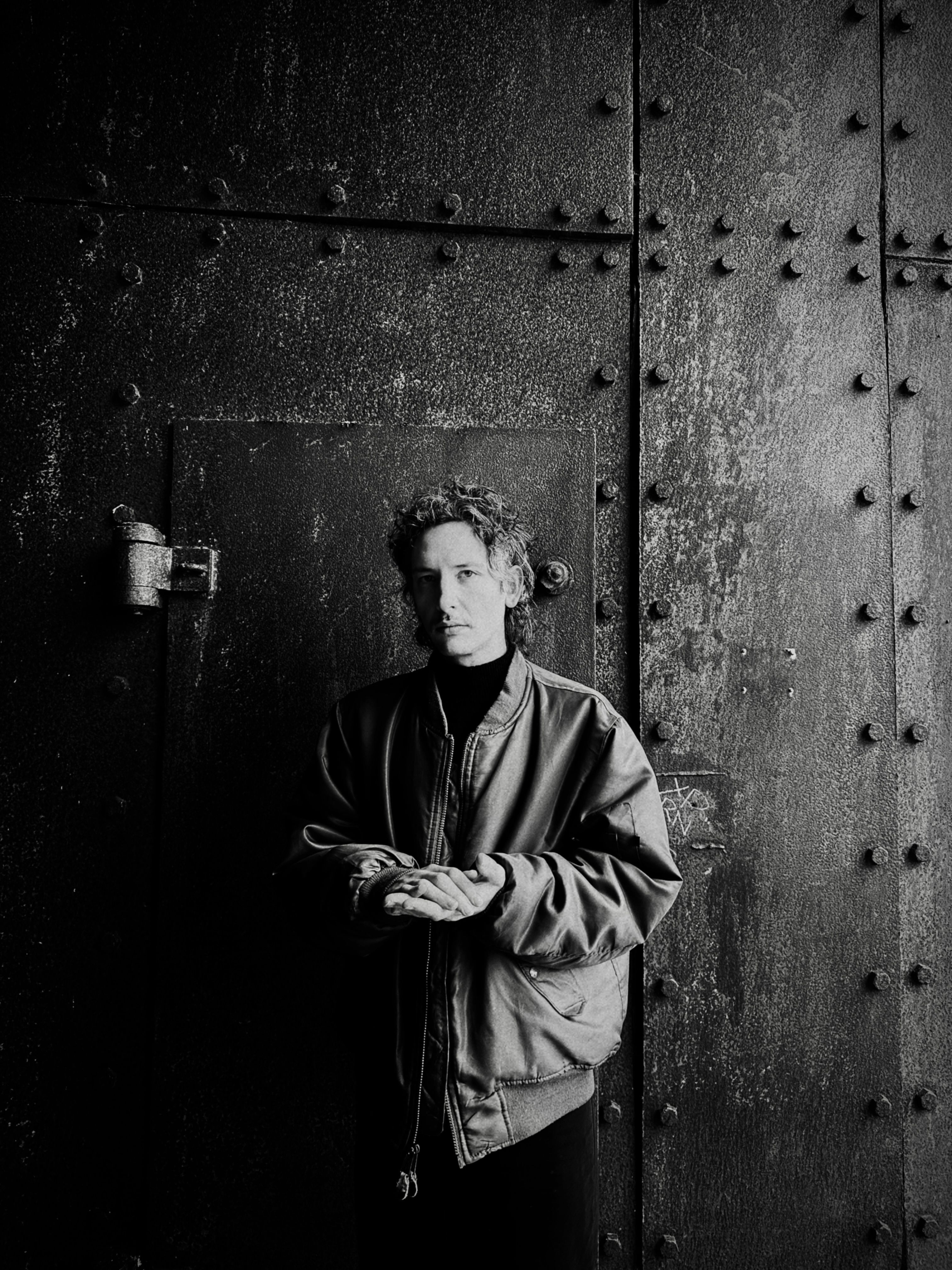
Name: Alexis Delong
Nationality: French
Occupation: Producer, arranger
Current release: While his first band Inüit is taking a break from recording, Alexis Delong has been involved in several projects over the past year. So far, his biggest breakthrough moment came with the release of Zaho de Sagazan's La symphonie des éclairs (out via Disparate) which he and fellow Inüit-band-member Pierre Cheguillaume helped orchestrate, arrange, and engineer. Other notable production and co-composition jobs include Alexia Gredy's Hors Saison, Claude's “La Pression” (single off an upcoming full-length album) and Yoa's “Chansons tristes.”
[Read our Zaho de Sagazan interview]
If you enjoyed this Alexis Delong interview and would like to stay up to date with his music and work, visit Inüit on Instagram. For a deeper dive, read our upcoming second interview with Alexis about the recording process for La symphonie des éclairs.
Do you think that some of your earliest musical experiences planted a seed for your interest in production and technology? What interested you in working on sound and arangements even more than writing songs?
I started music with bass and guitar as a hobby during high school - which is quite late related to a standard journey as a professional musician or producer. Before that I was more into sports. I wanted to become a professional soccer player!
My mom’s boyfriend from this time was a high fidelity sound systems enthusiast and he had this absolutely huge music collection. I started digging in his library and this is where my passion for sounds took its roots. I listened to Aphex Twin, Boards of Canada or Steve Reich for the first time, I was totally amazed and intrigued by these sounds I had never heard before.
I think I wanted to understand how it was possible to make such pieces of sonic art - beautiful and complex at the same time.
Already as a little kid, I was drawn to all aspects of electronic/electric music but I've never quite been able to put a finger on why this is. What's your own relationship to electronic sounds, rhythms, productions like – what, if any, are fundamental differences with “acoustic“ music and tools?
I think one of the most interesting aspects of electronic music is that the idea of using computers, electronic chips or anything related to electricity is quite new if you relate it to the history of mankind.
Before this change, there were thousands of years of sound experimentation with acoustic instruments. If we compare this to the more or less 100 years of making music with electronic instruments, we are still pioneers. It makes me feel that there’s still a lot to do, there are a lot of beautiful things to create and experiments to conduct.
I love the idea of embracing the present and using all the technology surrounding us to make art. I am not saying that everything has been done with piano or cello because it absolutely hasn't. But these things don’t scare anyone. We've become used to them. Which is not the case when using AI to create, for example.
What were your very first active steps with music technology and how would you rate the gains made through experience?
As far I can remember, these first steps took place during high school. I was using this very basic software, Audacity, I don’t even know if it is still getting updated. It was more of a recorder than a sequencer, with very basic editing capacities. Trying to make music with it was a pain in the ass.
Today I’m a total synth nerd, I learned using trackers during the Christmas holidays just because I wanted to experience the «OG» way of doing jungle and breakcore. Not in order to release anything but with the only purpose of learning something «new» (laughs).
I think this is what I've been doing since I started 15 years ago: learning new stuff and eventually using the skills I learned on the Internet and trying to make a living out of it. Thank you Internet!
How and for what reasons has your music set-up evolved over the years and what are currently some of the most important pieces of gear and software for you?
I bought my first synth in 2009, a microkorg, to celebrate the fact that I was quitting college after two weeks studying art history. I spent like two months seeing barely nobody and learning how to use it. I remember a friend of mine - Zaho de Sagazan’s current drummer, Simon Quénéa - visited me one afternoon. I was in underwear and I said to him «listen to this patch I made, it sounds like crying robots.» As I said it before, I was a total nerd.
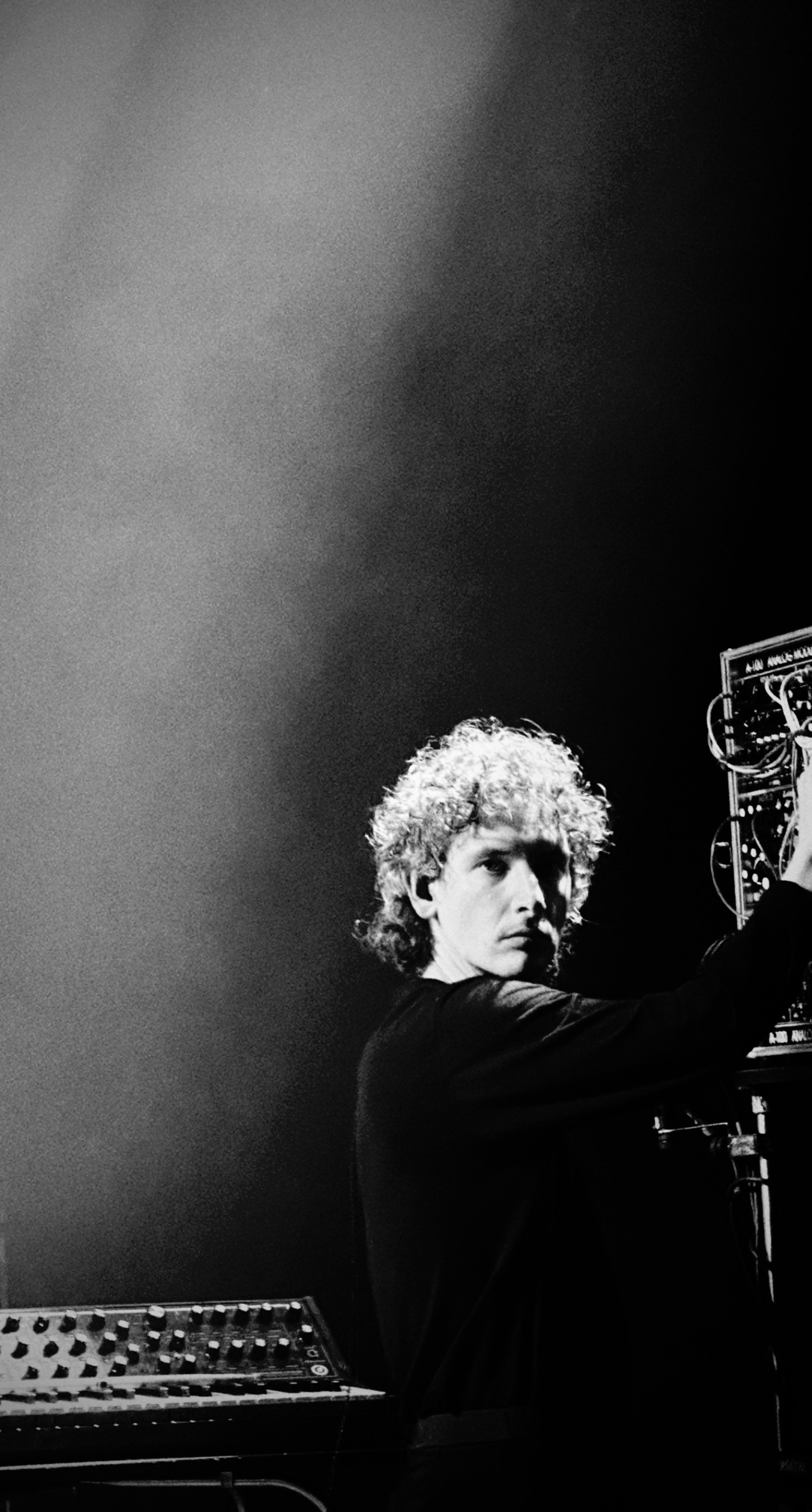
After that, I never stopped buying and selling synths, fx machines, drum machines, tape recorders. Currently I’m a lot into modular synthesis so my modular systems are obviously a central part of my workflow right now. But beside these, there’s also my Octatrack which remains one of the most inspiring pieces of gear I ever used - even if the learning curve is very, very, very strong. And of course, Ableton, the only DAW I used since I learnt it in 2011 ... I was on Logic before.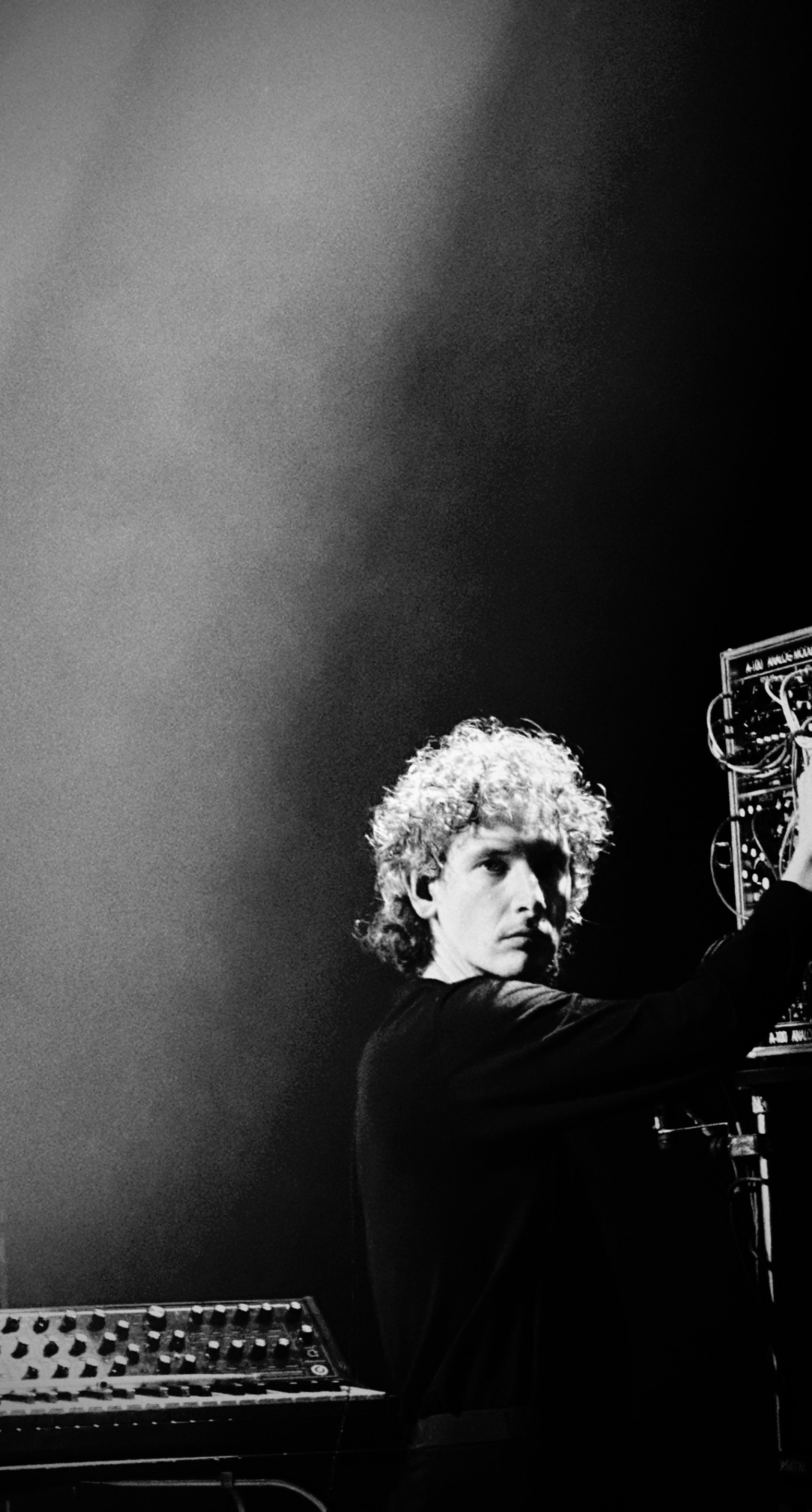
Alexis DeLong Interview Image by Remy Fanchin
Have there been technologies which have profoundly influenced, changed or questioned the way you make music?
When I was in college for the second time, this time studying sociology, I met this guy, Gildas Bouchaud, and he was into expermental tape music. He taught me how to make tape loops. I was really amazed by how random these loops sounded, the music was beautiful and unpredictable at the same time. I think I needed that because I started to get bored of the metronomic music I was making with computers and synths.
Suddenly everything I made with my Tascam Portastudio was raw, pure and sensitive. It was one of my favourite creative periods for sure. Gildas and I had a duo of prepared guitar, tape machines and synths based on improvisation and randomness called George. You can still find us on Bandcamp.
In 2021, I started my modular journey. But I’m so deep into it right know, I can’t measure the overall impact on my creation. The only thing I can say is that I use modulars a lot, in every session, for every purpose. Synths, fxs, textures … there’s a module for everything!
Late producer SOPHIE said: “You have the possibility with electronic music to generate any texture, and any sound. So why would any musician want to limit themselves?” What's your take on that and the relevance of limitations in your set-up and process?
Sophie was one of the greatest producers of our times. When she said that, she meant it! I wanted an Elektron Monomachine so bad only because of her and what she was doing with it!
I agree with the idea that with electronic music you can do anything, especially things that you can’t predict, that you can’t whistle to or even imagine. There are so many parameters ... you simply can't process as much information as a computer, even if you wanted to. That alone is kind of mysterious when you think about it (laughs).
This also the reason why electronic music, synth, DAWs and everything in that vein can be overwhelming: You can do anything - and for a lot of people anything is very close to nothing. Free will can paralyse you, especially when you're creating alone.
I mostly use my gear to make music for people. So there’s a limitation in the way I use it. I can’t get lost because I mostly create in a space restricted by other people’s desire. My job is to use my skill and the gear I have or currently use to make someone else’s gesture the most accurate, honest and beautiful!
I recently visited German producer Moses Schneider and he still favours recording drums without a click, quantisation, and triggers and voices mostly without pitch correction. How do you see the benefits and downsides of technology that “optimises” human performance? How important is the actual performance and the moment of performing the song still in an age where so much can be “done and fixed in post?“
As I work mostly on songs, I can say that the moment you record the voice is absolutely key. Even if you make some edits afterward, using playlists to make the perfect composite, you just can’t emulate the mood of someone singing something the right way. The key to the singer’s soul only belongs to him or her.
For everything else, however, there are a lot of tools that can fake «humanity.» I sometimes use a max4life plugin called humanizer. It creates random grooves and injects life into a part which may be too tight and digital.
There are also a lot of similar features in modular sequencers such as Erica Synth's Black Sequencer. You can use probability on triggers, micro timings and put LFOs on the top of that and it’s like having a drummer on LSD living the trip of his life.
In relation to sound, one often reads words like “material”, “sculpting”, and “design”. How does your own way of working with sound look like? Do you find using presets lazy?
I mostly use modular synthesizers and analog synth from the 70s. So I almost never have the ability to save presets. But if it were possible, I would indeed do it more often, just to be faster. Presets are good when you found good sounds yourself and you don’t want to take time to recall them or you don’t want to lose them forever (laughs).
In presets there’s more efficiency than laziness. The thing is, sometimes being efficient is not the right way of producing, sometimes you have to create the space to search and experiment and find something cooler than the presets ... like a gold digger.
I do understand on the other hand that presets are a good way to use complicated synths or plugins such as Serum or the DX7. But you won’t get to know the gear with presets, so you have to choose: Do you want to use or to learn the synth?
[Read our Lewis OfMan interview which contains his thoughts about the DX7]
In an interesting interview, Zaho was asked if she felt strongly about being“current” (“Pensez-vous être à la mode?“). When it comes to music, how do you feel about that yourself?
As a music producer I think there’s a moment where the music industry thinks that you have a certain amount of hype if you had a major success such as La symphonie des éclairs. It turns you into one of the few people whose name you put on the table when you want to replicate the success with someone else.
I don’t blame anyone for doing so because there’s a kind of logic in this. But it’s absolutely wrong. For me, there’s no such thing as a hype at all, there was just a moment where a group of people met and realized they had a particular focus at that precise moment and they helped each other create a very beautiful piece of art that they might have not been able to make if they had been alone.
You can’t predict that. The music industry relies on marketing, and it naturally wants strategies and methods. But unfortunately - or thankfully - it’s all about randomness!
Creativity can reach many different corners of our lives. Do you personally feel as though writing or producing a piece of music is inherently different from something like making a great cup of coffee? What do you express through music that you couldn't or wouldn't in more 'mundane' tasks?
Creativity is everywhere, in every aspect of life, if you want it to be.
I love what Rick Rubin says about being and artist, that it’s a state of mind, not something that you can turn on and off like a device. Because of that, sometimes you create good stuff, sometimes bad stuff – but it doesn’t make you a good or a bad artist. Because if there’s no intermission in the process of creation, there’s no scale of value in your art.
He says that when you are a monk you are fully committed to what you are. You can’t be a bad monk or a good monk. You are just a monk with good or bad days.