Published
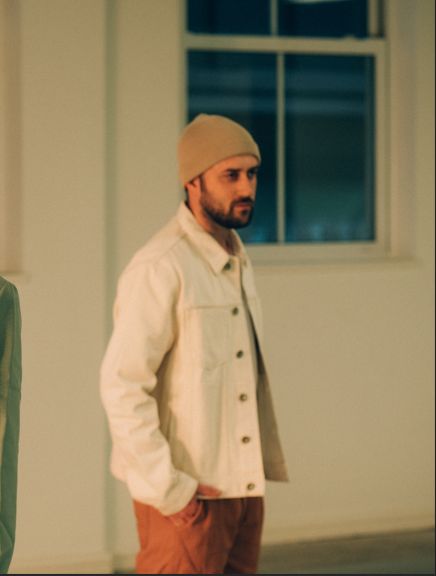
Name: Alfie Cattell
Nationality: British
Occupation: Producer, songwriter, CEO at Decent Music
If you enjoyed this Alfie Cattell interview and would like to know more about Decent PR, visit their official homepage.
If, for a moment, we forget about streaming numbers, target audiences, social media followers, and sales - why are you drawn to sound and music as a creator and listener? What is it that you give and receive through it?
I’ve been possessed by music since the age of 13, when I first started writing songs with my brothers.
The search for new, great melodies has been a lifelong creative endeavour, and the craft of piecing together the different elements of music - from bass to synths to vocals on top - is one of the most exciting things you can do.
You have a personal history as a songwriter and producer. Very briefly, what were your personal highlights in this respect?
I won a talent show as a songwriter when I was about 16, which was fun. I supported the Philharmonic Orchestra as a pianist and keyboard player at theatres around the UK, which was incredible. I also supported Sam Fender in Newcastle, which was amazing.
As a producer, some highlights would probably include working at Mark Ralph’s (the secret genius) studios in London, as well as making records for Lady Gaga’s boss, Vincent Herbert, in LA.
Producing for one of Disney’s artists - whose name I can’t mention yet but who I’m sure we’ll all know about in the coming years - was another big moment.
What were some of the issues and experiences from your creative work that made you start Decent PR?
The main issue was having to generate ‘stats’ in order to be seen as eligible by labels.
Me and Anna were managed by Muse’s manager, Anthony Addis, and his mission was to get us signed to one of the majors. We got all the way to the top execs, but the feedback was always: “Great music, but your stats aren’t high enough.”
One of the biggest bugbears for artists today is that we’re expected to become short-form video content creators and hope to go viral on TikTok - when all we really want is to write music.
The music industry is routinely criticised by just about everyone. But clearly, it can't all be bad … What, would you say, does the industry do well and what are the areas where artists can learn from it?
There are some amazing people working hard to support independent artists, but many of the positives we associate with the music industry are actually a result of technology rather than anything the industry itself is doing.
By that I mean, today anyone can make music and reach potential fans - regardless of what the gatekeepers say. It’s complicated and full of nuance, but with enough dedication and talent, artists can absolutely build a career without relying on a lucky break.
Vice versa, from your perspective, what are some of the inherent flaws of the music industry?
It’s statistically rigged to an extreme level. The top 100 artists account for the vast majority of income. Gatekeepers and tastemakers - whether Spotify editors, radio producers, journalists or music supervisors - only provide opportunities to a tiny percentage of artists.
Major labels don’t really support independent acts anymore - their model is focused on acquiring as much IP as possible to raise share prices.
The positive side of that, though, is that you no longer need these guys. There are effective, accessible ways to build a fanbase on your own.
Almost every day, in my own social media stream, I'm receiving numerous ads which claim to unveil secrets the industry isn't telling us. Is there some truth to this, would you say - are there secrets only insiders have access to, or is success merely about setting clear goals and continuity?
There are definitely unknowns when it comes to how algorithms work, and promoters will - rightly or wrongly - claim to understand them. But things are so complex now that to reverse-engineer effective marketing, you really have to treat fan acquisition as a science.
That said, the PR industry is saturated with either fake or super passive promotional methods that don’t provide long-term value. Artists have to be smart, diligent and study the algorithmic landscape if they’re going to successfully navigate all the charlatans and BS.
If it sounds too good to be true - it definitely is. What’s still true, and always will be, is that you dramatically increase your odds of success if you write amazing songs, have strong melodies and productions, represent yourself with style, and remain consistent.
In terms of the artists that approach you for support, would you say their main interest is getting heard, more attention, finding someone to take over the less appealing part of their job, improving their financial remuneration?
It varies, but most artists just want to be heard by the right people. They want genuine engagement with their music, not just vanity metrics.
Many come to us because they’re overwhelmed with the business side and want to focus on creating. The financial side is rarely linear - if you don’t yet have a truly engaged fanbase, your initial investments likely won’t yield immediate returns.
Like any new business, the aim is to build your audience brick by brick. Eventually, you’ll reach a point where your music generates royalties and triggers algorithms on its own - without further investment.
When it comes to advice for a client, what does this process typically start with? What are some of the basis questions artists should be asking themselves when it comes to PR?
It starts with defining their goals. What’s the endgame? Are they aiming for long-term brand-building or a short-term campaign for a single release? We balance their goals with our expertise to ensure they’re investing in the most cost-effective way.
If the focus is audience growth, we might suggest ads and a strong social media strategy. If they’re rebranding, we’d lean toward PR and press to establish credibility. When approaching PR, artists should ask: How is performance measured? Can this company deliver genuine engagement - not just streams? What metrics define success?
What should a campaign for one of your clients entail?
First and foremost: good music. Nothing works unless the music is strong.
From there, it depends on the service. For ads, we use the best visual content to drive fans to streaming platforms, testing different visuals, audiences and locations, then doubling down on what performs best.
For press, we need great press shots, a strong elevator pitch and a refined press release - all of which must be nailed before pitching to editors and journalists.
I'd be curious whether you believe most artists benefit from ultra-specific campaigns (such as for a particularly great single) or from a long-game approach (managing their career across releases, tours, etc)?
Because building a fanbase is a cumulative process, the long-term approach usually wins.
Every service we offer benefits from consistency. Radio producers are more likely to support you after repeated exposure - the same goes for Spotify editors and journalists. With ads, the more data you collect, the more effective the targeting becomes.
So whether it’s refining your process or influencing tastemakers, your chances improve over time.
From your experience, how important are recordings still in terms of building a career in the music business?
Recordings are absolutely essential. Yes, you can gain traction with rough demos on social media, but 90% of an artist's monetisation still stems from high-quality recordings - whether through streaming royalties, live performance fees, sync licensing, publishing deals or physical sales.
All of that is built on the foundation of compositional and master rights.
How do you see the role of the traditional media - magazines and reviews, radio play?
Radio is still hugely influential - competitive, but powerful. Outlets like BBC Introducing do a lot to support emerging talent.
Traditional press doesn’t directly translate into streams anymore, but it remains a vital tool for building credibility.
Many artists are increasingly on the fence about streaming for a variety of reasons. Do you believe success in the industry is still possible without streaming? As a creative yourself, how do you see the creative and “moral” implications of streaming in general?
Spotify is approaching 800 million users - nine times the size of Apple Music. Whether they admit it or not, industry professionals - managers, labels, bookers, distributors - are looking at your DSP engagement as a key indicator of influence.
What Spotify does to independent artists is disgraceful. They’re always the first to be cut when costs need reducing. But despite that, it remains the best discovery tool out there. We have to live with it, for now.
I’ve seen plenty of startups try to build a more equitable system, but none have matched the scale. Artists need to be more proactive - we can’t wait for someone like Taylor Swift to tweet about unfair payouts. Real change will only come through organisation and pressure on lawmakers.
That said, artists have built sustainable careers through Patreon-style models, email marketing, selling merchandise and tickets etc … There are ways to do things that give artists full control over their fans.
How do you see the future role and potential of AI in the creative PR industry?
I think AI might be a little over-hyped. It’s useful for saving time but doesn’t yet show much promise for creating original, emotionally resonant music.
You’d think that Meta - with all its AI firepower - could build tools to reliably find fans, but their ADV+ tech does a terrible job. AI can summarise things well, which helps beginners, but much of the advice is bland and repetitive.
Everyone should be using AI in some capacity, and maybe AI agents will be game-changers - but we’re not there yet. Let’s wait and see.
In human history, music is universal across cultures and eras of development. Still, musicians are possibly being exploited more than ever. How do you feel they can see beyond their personal limitations, and form bonds and communities capable of tangibly furthering their cause? How can we get people to listen?
By working hard on your craft, nurturing your talent and being true to yourself - no matter what anyone else thinks. People can smell it a mile off when you’re not being authentic.
If you’re consistently making great music and nurturing your audience, then I think you will overcome your limitations and build a community of loyal fans who will amplify your cause.