

Name: Amanda Ekery
Occupation: Multi-instrumentalist, vocalist, composerr
Nationality: American
Current release: Amanda Ekery's new album Árabe is out via Hey Lu.
Recommendation for El Paso, TX: Go to the Franklin State Mountains and drink plenty of water! The dry heat and high altitude are no joke. There are many different hiking trails and places to camp, but from any mountain lookout you can see Mexico, all of El Paso, and well into New Mexico. The album cover for Árabe is photographed at the Franklin State park.
Things I am passionate about but rarely get to talk about: I love reading sci-fi and fantasy fiction! I wrote an article about imagining new artistic worlds through science fiction last year for The Turnaround Magazine which is produced by Amy Bormet and the Washington Women in Jazz Festival. I read about 70 books a year and don’t get to talk about it much, but I know it influences my music. Experimentation, curiousity, and exploration are integral to the science fiction genre. Awe, wander, journeys, and joy are also integral to the fantasy genre and I hear all of those in my music. I also love storytelling - the structure, the plot, the order in which information is divulged. It all comes out in my music writing.
If you enjoyed this Amanda Ekery interview and would like to stay up to date with her music, visit her official homepage. She is also on Instagram, bandcamp, and Facebook.
When did you first consciously start getting interested in singing? What was your first performance as a singer on stage or in the studio and what was the experience like?
In 4th grade I participated in a summer program production of the Nightingale at the local university. I don’t remember anything about the play other than I was asked to sing a nightingale-esque song at some point during the show from the back of the small theatre behind the audience.
Thinking back, I was just improvising some high notes but that was the first time I thought “wow I feel like I’m good at this?” I liked performing, creating something with others, and shortly after that joined the local youth choir.
If you’re also playing other instruments, how does the expressive potential of these compare to your own voice?
I play piano and flute and can get by on guitar and mandolin.
Playing and singing are connected for me because 99% of the time I am also playing piano while I practice singing. I write music using these instruments and on voice. Flute is also a wind instrument so requires breathing and phrasing in similar ways to how I sing.
They all complement each other.
Singing is an integral part of all cultures, and traditions. Which of these do you draw from – and why?
I grew up singing in a few different settings including a youth choir, children’s opera, mariachi, and jazz band. I also listened to a ton of country, rock, musical theatre, and whatever was playing on the radio.
Later in life I studied classical Arabic music and did more avant garde free improvisation. I am also half Mexican and half Syrian and grew up in El Paso TX which has a history of norteño, mariachi, and punk music styles. I draw a bit from all of them.
You know that saying you are what you eat? I think it applies to music making. You are what you listen to, what you play, and what you are surrounded by. All of these show up in my writing in some way.
What are the things you hear in a voice when listening to a vocalist? What moves you in the voices of other singers?
I love being able to hear someone’s personal style when they’re singing. The way they emphasize certain syllables, their storytelling, the cracks on certain words, the emotion behind a phrase – it all contributes to someone’s personal style and to me that ultimately is what makes every voice unique.
I don’t want to sound exactly like someone else. I learn from other vocalists and am constantly inspired by others, but I still want to sound like me.
We have a speaking voice and a singing voice. Do these feel like they are natural extensions of each other, ends on a spectrum or different in kind?
Going back to personal style and sounding like myself, I think my singing voice is an extension of my speaking voice. I sound like me when singing and speaking.
When I was in undergrad, my on-campus job was giving tours. I’d be speaking for a few hours, loudly to a group of about 12, doing most of the talking. I learned quickly how I needed to start supporting my speaking voice like I do my singing voice to not feel vocal fatigue all the time.
So, to me speaking and singing are natural extensions of each other, because they are both just my voice and I have to care for both in the same way.
How do you see the relationship between harmony, rhythm and melody? Do you feel that honing your sense of rhythm and groove has an effect on your singing skills?
I don’t think I would be the singer I am without being the instrumentalist that I am. Studying piano and flute before and while I was learning to sing helped me to hear harmony and melody and read rhythms much easier. I had a reference point to work from.
The first time I sang and played piano together, it was so square! I couldn’t find the interdependence between the two parts and felt locked into a very specific rhythm singing and playing. I practiced figuring out how to play and sing together and feel free in both and found that it was similar to first learning to build interdependence between your hands when playing piano.
It is all connected - playing helps my singing just like singing helps my playing.
What are the potentials and limits of your voice? How much of your vocal performance can and do you want to control?
The voice is special because everyone’s voice is different. Our face shape, our vocal cords, our height, our bodies all contribute to the way we sound.
I obviously have physical limitations when singing like I can’t sing two octaves below middle C naturally, but I could use a vocal effect pedal to get that low sound if I wanted to. There are so many possibilities to expand my voice with technology and by also studying different techniques and types of singing.
When performing, I want to have control in the sense that I am confident in my technique. If I want to sing a certain note, I know I can. Or if I want to fade out to a whisper, I know how to do that and what it feels like physically to do that.
I don’t want to pre-plan the way I’m going to sing everything in a performance. That’s a level of a control that seems boring to me.
I'd love to know more about the vocal performances for Árabe, please, and the qualities of your voice that you wanted to bring to the fore.
Árabe is a mix of all my musical influences which include country, folk, jazz, creative improvisation, rancheras, and traditional Arabic music. But it’s all filtered through me. It’s not overtly in any one of those genres but you can hear all of them in my voice.
The vocal performance throughout the album ranges from more pointed and scathing like on the track “Between,” …
... to totally free improvisation spanning a large range on “Double Faced,” …
... to more playful and joyful like on “Without You.”
When you're writing song lyrics, do you sense or see a connection between your voice and the text? Does it need to feel and sound “good” or “right” to sing certain words? What's your perspective in this regard of singing someone else's songs versus your own?
I think music and lyrics are intertwined especially in music that has a story. All the music I write has a narrative of some kind and so when I write lyrics it has to express the story, and the music has to match what is happening lyrically. The music could be subversive, it could match the emotion exactly, but they are connected.
So, the way a lyric sits on a melody is also important. Some words sing better than others, some vowels sit better in my voice in certain ranges than others, and sometimes I throw all that out the window and just write something I like and figure out how to sing it after.
It's the same process when singing something someone else writes. How can I sing this melody and these words in my voice to express what’s happening story-wise (if it has a story)?
I love singing other people’s songs, and often perform with friends who write music for voice.
As an improvising vocalist, I can usually take liberties in these songs to sing something a certain way that fits my voice better or alter the melody each time to try to bring out a certain phrase more clearly.
If the composer is there, I can ask them what they think, and we can collaborate to find how best to share the music.
Strain is a particularly serious issue for many vocalists. How do you take care of your voice? Are the recipes or techniques to get a damaged voice back in shape?
Luckily, I haven’t had any major issues with my voice. I have had moments like when I was a tour guide, or when I yelled too loud at sporting events where I have learned what I should and shouldn’t do to care for my voice.
I always warm up before performing and practicing. Have spent many years working on technique so that I support my sound, have learned what it feels like for me to sing in different registers, play with tone, and know what I need to do to sing certain things. I try to drink at least 64 ounces of water a day, and don’t drink caffeine (which can cause dehydration and also makes me feel crazy!).
This is going to sound totally boring and not helpful but I try to sleep, eat well, and exercise. I feel better vocally when I feel better overall.
How has technology, such as autotune or effect processing, impacted singing? Has it been a concrete influence on your own approach?
When recording I don’t use any pitch altering effects.
I also am singing with the full band at the same time because there is improvisation and we need to be able to interact with each other fully which includes hearing what it’s actually going to sound like.
I do have a vocal effects pedal and enjoy experimenting with ways the voice can be altered using technology. I want the pedal to enhance a song not be used to fix something, if that makes sense.
For recording engineers, the human voice remains a tricky element to capture. What are some of the favourite recordings of your own voice so far and what makes voices sound great on record and in a live setting?
My voice on Árabe sounds the best thanks to Jenn Nulsen! Jenn recorded and mixed the album and set up two mics for my voice at the same time which captured what I sound like so well. She is such a pro and a friend, and I trust her judgement on which mics to use and mixing levels.
While I don’t have a live recording per se, I do sing live when I record. The only time that I went back to record overdubs on Árabe was to add harmony parts. I feel strongly about wanting to sing with my band live and together when recording because we feed off each other. If we were to record parts individually there would be no interaction in the songs, just responses to what someone already recorded.
I think we would have lost a lot of magic doing it that way.
Motherese may have been the origin of music, and singing is possibly the earliest form of musical expression, and culture in general. How connected is the human voice to your own sense of wellbeing, your creativity, and society as a whole?
Music is what I do, it’s not who I am. I love making music, using my voice to come up with creative ideas, cultivating wonderful relationships with others through singing, and enjoy teaching others how to find their personal style using their voice.
Through singing I have been able to meet others and participate in many meaningful musical projects, but for me it’s not the sole indicator of my wellbeing or creativity. I can create using instruments, crocheting, or cooking. I like running, reading, and doing things that don’t involve music at all to feel like I am healthy and happy.
Music making in general does make people listen in a certain way that I think can make someone a better person. If everyone in society played improvised music I’m sure we’d have a lot more problem solving, deep listeners, and collaborative people.

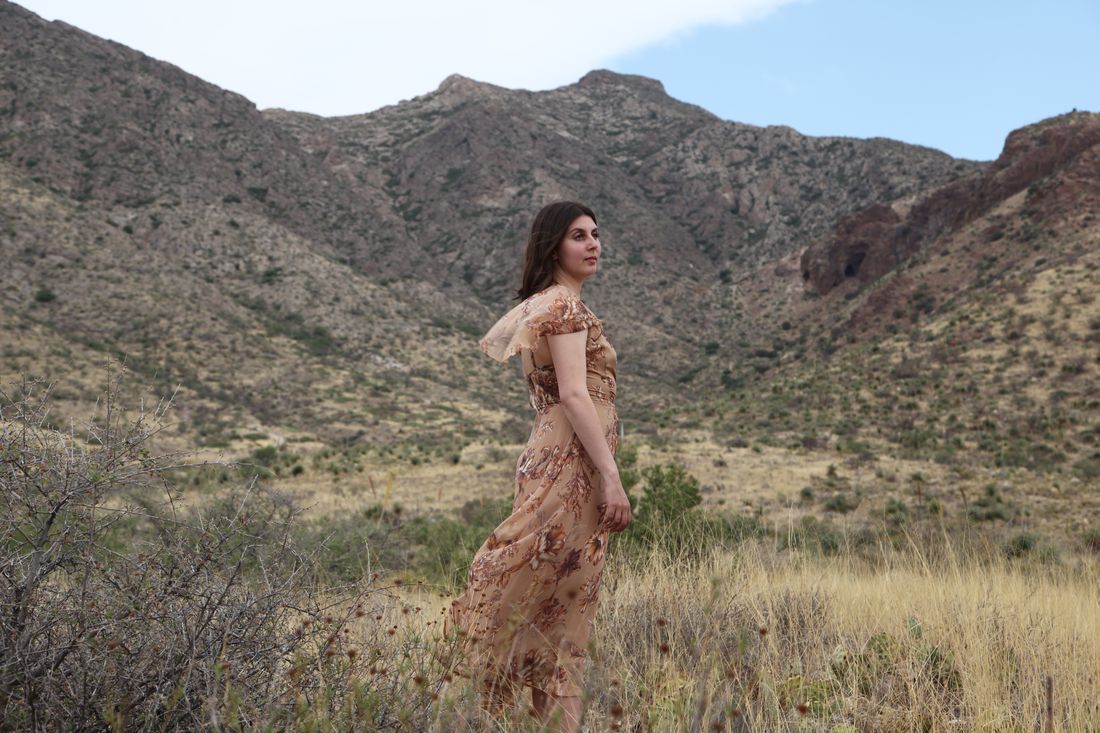 Amanda Ekery Interview Image by Ross Wightman
“I don’t want to pre-plan the way I’m going to sing everything in a performance. That’s a level of a control that seems boring to me.”
Video
