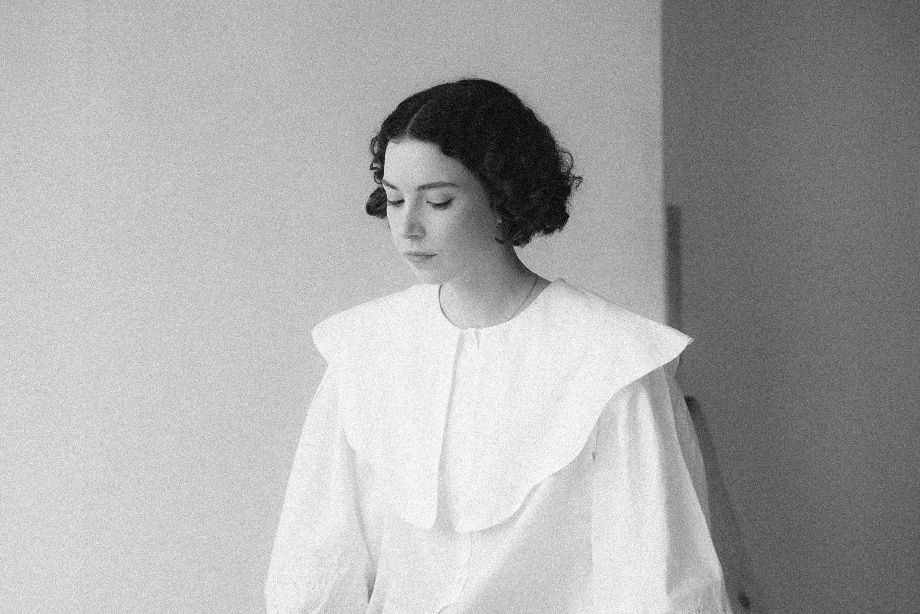
Published
Name: Ambre Ciel
Nationality: Canadian
Occupation: Composer, violinist, pianist, singer
Current Release: Ambre Ciel's debut album still, there is the sea is out June 6th 2025 via Gondwana.
Recommendations for Montreal, Canada: There’s Mount Royal, the iconic park in Montreal where you can feel like you’re in the forest while still being in the heart of the city.
But if you prefer quieter, less touristic spaces, I would highly recommend Parc Frédéric-Back. It was transformed from an old landfill and industrial site into a beautiful, vast, and somehow otherworldly space. It’s a peaceful place to walk and feel connected to nature. There are also green spheres around the park that monitor the air, and they light up in the dark. And every time I go there, I’m always surprised by the wildlife.
If you enjoyed this Ambre Ciel interview and would like to know more about her music and upcoming releases, visit her official homepage. She is also on Instagram, Facebook, and bandcamp.
The borders between producers, sound artists, and even songwriters are becoming increasingly blurry. What does being a composer mean today, would you say?
This question makes me wonder: what is the state at which we can say that a composition exists? Is it once the structure, melodies, and progression are formed in our mind, or once it’s mastered and fixed on a support, or somewhere in between?
I feel like composition is elusive in a way, because to me, the idea of it becomes the most precise once it’s recorded. But the journey to recording it is about carrying some kind of ‘ideal state’ of the composition in our mind that can feel at once clear, vague, and mostly constantly informed by the process of making the music exist in the real world, while your perception of it constantly evolves.
When composing the music for still, there is the sea, I’ve been inspired by recordings of compositions, as well as how these musics were produced—what kind of instrumentation, recording techniques, and mixing choices were used. So I’d say that the creative vision of a composition can extend to the producing part. And as this was my debut album, while I had a creative vision for the album, I had a lot to learn from the producing side.
The way I learn best is through experimenting with the music material with my hands and discovering different possibilities for how the music can unfold. I’ve been privileged to collaborate with co-producer Pietro Amato, who has helped oversee the whole process with me, while giving me space to figure some things out on my own, taking risks, and recording some parts alone. The producing aspect of the album isn’t as perfect as I had in mind, but it led me to discover a more personal and singular perspective of the music.
I’d say there’s value in developing one expertise over time, whether in composing, songwriting, or producing, or maybe we can become very good generalists in a very specific artistic space?
As of today, what kind of materials, ideas, and technologies are particularly stimulating for you?
My debut album is very nostalgic and involves many acoustic instruments, but since recording it, I’ve started to lean toward a dreamier, more impressionist mood.
These days I’m very interested in the whole-tone scale, Debussy’s works, and experimenting with ostinati made from pizzicati. I’ve also been inspired by the work of the electroacoustic string trio toechter from Berlin and the cellist and composer Gyða Valtýsdóttir.
And I’m also drawn to very simple, timeless songs with minimal production, but where these inspirations will lead remains to be heard …
[Read our toechter interview]
[Read our toechter band interview]
[Read our Gyða Valtýsdóttir interview]
[Read our Gyða Valtýsdóttir interview about her creative process]
Where do most of your inspirations to create come from – rather from internal impulses or external ones?
I’d say it starts with all the music that has touched me on an emotional level, whether I’ve been incubating it for years or just discovered it recently. I’m still analyzing some inspiring albums I heard long ago and still find elusive. Even if the inspirations come from the outside, the incubation phase is more internal.
I feel like creating is part of living—it’s always working in the back of my mind. And the more I engage with the world, the more I feel the need to retreat from it—not necessarily to escape, mostly to try to create another one, and hopefully invite others to live inside it for a while.
Which current social / political / ecological or other developments make you feel like you need to respond as an artist?
I think music has this capacity to transport us to different spaces and time continuums, and it’s special how it can make us feel more connected to one another—momentarily living through the same wavelengths, through our differences, throughout different parts of the world. There’s so much to learn and celebrate in music made from anywhere on the planet.
I sometimes feel like I have so little power over all that is going on in the world, but maybe continuing to create something as intangible as music might be a response in and of itself?
Music has become a lot more global, and incorporating elements from other parts of the world or the musical spectrum is commonplace. Do you still think there are city scenes with a distinct, unique sound? How does your local scene influence your work?
I grew up close to Montreal and moved into the city when I started studying music at university, so I’m probably still too close to my hometown to clearly see how it has influenced my work so far. There is also definitely music from different parts of the world that has inspired me to compose.
But starting this summer, I’ll be in an artistic residency in London for the rest of the year, and maybe being immersed in another local music scene will give me a new perspective on the music I make. At the same time, I really look forward to being inspired by the music I’ll have the chance to see live and people I will meet there.
Composing has always had an interesting relationship between honouring its roots and exploring the unknown. What does the balance between these two poles look like in your music?
My approach to creating still, there is the sea has been mostly about exploring the unknown, and many times along the way, I’ve learned why some traditions have existed for centuries. My ears have internalized the rules, but I’m always more interested in discovering new pathways while following my ears and intuition.
Never would I have thought there would be an orchestra on my debut album, and never would I have dreamt I’d be mentored by Owen Pallett to write the scores. I was originally aiming for a humble production—mainly a trio of two violas and one cello.
This ensemble sounds beautiful in the arrangement on some songs, or in solo parts, but in others, especially the instrumental pieces, I felt like the album needed a broader, more unified, and dense sound. Looking back, it’s nice to alternate between a trio and an orchestra as it creates dynamics throughout the album.
Pietro, who’s a long-time collaborator of Owen, asked them to collaborate with us, and this has been one of the most thrilling, inspiring, and enriching experiences I’ve ever had as a composer so far. I wrote the orchestral arrangements, and Owen reviewed them before the recording session, as this was my first time writing in this capacity. They were very supportive of the unconventional ideas I had written, and their feedback helped me trust my judgment and intuition even more.
I remember the string melody in the instrumental half of dream – mirage is based on mostly seconds intertwined, which leads to a blurry melodic cluster. Before having Owen review the scores, I thought it would probably be too unconventional, so I removed it. But Owen said they missed that part, so we kept it, and I’m really happy with how it sounds.
How much potential for something “new” is there still in composition? What could this “new” look like?
I think it depends on how ‘new’ is defined. When listening to music, we develop pathways for it, and that becomes some kind of reference for the music we’ll listen to afterward. It feels ‘new’ when it deviates from what we were expecting, based on what we’ve been listening to before.
On a macro level, it probably takes time and perspective to see things emerging from the surface. For me, ‘new’ implies borrowing elements from music that I’m less familiar with but interested in. I’m always curious to explore processes, ideas, or instruments that I haven’t worked with yet. I think it’s an organic process, because once you’ve explored something, it might lead to something else — or you just get tired of your own way of creating songs.
For my next album, I hope to find a balance between developing a sound and continuing to evolve.
What role do electronic tools and instruments play for your creative process? What does your creative space / studio look like and what tools does it contain?
For still, there is the sea, I knew early on that the album would revolve around piano, strings, and vocals.
All the songs started on the piano; I would just improvise until a structure was formed, and two songs were built on a piano loop. There’s something about an acoustic sound, the harmonics it creates, that I find very inspiring when composing (also, there’s nothing to troubleshoot).
When I wrote the string arrangements, I first improvised melodies on the violin and wrote them into score later on. I like how these instruments are grounded in physicality; it feels more intuitive to experiment with ideas that way.
When the main elements of the compositions were formed, I’d start exploring with a few electronic instruments and tools to add textures and explore arrangement ideas, but to be honest I don’t own a lot of electronic instruments beyond a few pedal effects, digital keyboard, portable synthesisers, and an Apollo sound card.
It is my impression that adding a conceptual, non-musical dimension to one's work is almost a prerequisite for commissions and grants. How do you view this tendency and how “conceptual” is your own approach to writing?
I’m not very aware of grants outside Canada, but I find them very important in supporting art-driven work where there might not be a demand yet, and in encouraging artistic risk and unconventional ideas.
Before composing a new album, I always think about where I’d like to go, how to create continuity with the debut album while evolving, and what new paths, techniques or timbres would be interesting to explore.
For still, there is the sea, I initially wanted to use only one motif throughout the whole album and create both instrumental pieces and songs. Even though I was interested in that concept, the creative process led me elsewhere. I did explore how one original music idea could become both a song and an instrumental piece, independent from one another, but I didn’t base the entire album on just one motif this time.
Human ears are very sensitive to the voice, and I feel like when there’s a voice added to an instrumental piece, it’s where our attention tends to go, and the other parts of the arrangement become less prominent. So I wanted to explore how a song could also become an instrumental piece on its own, with the strings carrying the melody, instead of it just being an element in the arrangement of a song, and creating some kind of continuum between these roles being arrangements and other times the main melody.
For example, ‘cycle’ and ‘atlantis’ are based on the same chord progression, but the structure and arrangements are different. fragment of and the sun, the sky are both based on the same theme, made up of the first four chords on the piano. These chords, repeated at the end of ‘fragment of’ (the last piece of the album), are also the same ones at the beginning of ‘the sun, the sky’ (the first piece), but at a different tempo.
But in the creative process, I mostly rely on my intuition, and sometimes it’s much later in the process that I realize why some choices were made and how some elements now connect to one another and contribute to find a balance between cohesiveness and variation.