Published
Name: Earth Ship
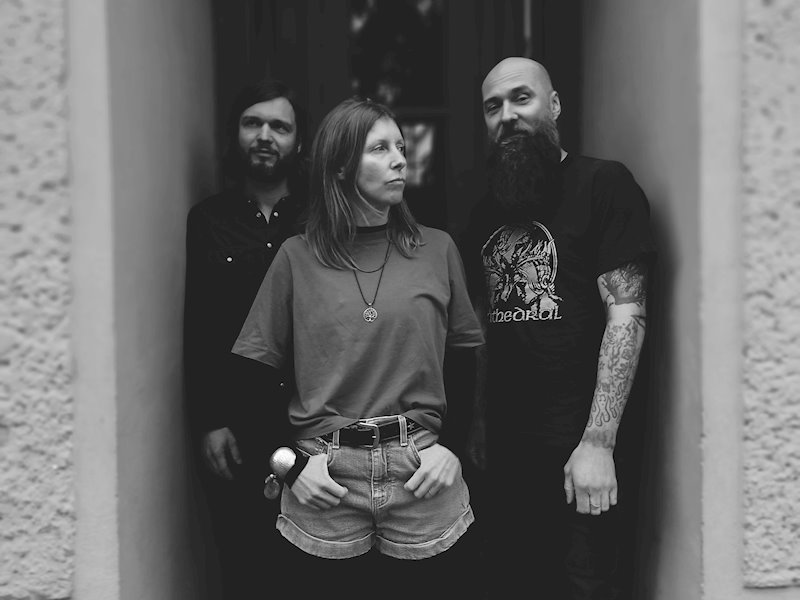
Members: Sabine Oberg (bass), André Klein (drums), Jan Oberg (guitars, vocals)
Interviewee: André Klein
Nationality: German
Current event: Earth Ship's Soar is out via The Lasting Dose.
Pure drumming recommendations: Check out Brian Blade. I love what he does with his oversized ride cymbals.
If you enjoyed this André Klein of Earth Ship interview and would like to know more about the band, visit them on Instagram, Facebook, and bandcamp.
What was your first drum set like and what are you using today? What, to you personally, are factors in terms of build and design that you appreciate in drums and percussion instruments?
First drum set: Tama Rockstar
Current drum set: Ludwig Galaxy Sparkle from 1964
I like the feel and smell of vintage instruments. It seems they have old spirits living in them, waiting to be awakened.
Late Rush-drummer Neil Peart said: “The equipment is not an influence. It doesn't affect the way I play. It's an expression of the way I play.” What's your take on that?
That is partly true, but no drum set sounds alike and that has an effect on your playing, inspires you even, to play differently.
Instruments have souls.
Drumming is an integral part of many cultures, and traditions. Which of these do you draw from in your playing – and why?
Since playing music wasn't part of a tradition in my family nor most German families.
I've always got my inspiration from all kinds of music cultures from abroad, especially from the U.S.
What were some of the main challenges in your development as a drummer / percussionist? Which practices, exercises, or experiences were most helpful in reaching your goals?
In my experience you learn the most if you make music with friends.
Practicing alone might make you better technically, but you grow spiritually when you develop connection and trust with your musical partners and in sharing live energy with people.
What do you think you're doing different than other drummers?
I'm not different then any other drummer. I'm passionate and I put my heart and soul into playing music in order to connect with people and share live experiences.
How do you experience the concepts of "groove," "swing," and "rhythmic feel" in music?
All these concepts come naturally to you in one way or another. You just keep staying on your musical path with ears wide open.
In relation to drumming, Stewart Copeland said: “Listening is where the cool stuff comes from. And that listening thing, magically, turns all of your chops into gold.” What do you listen for?
Music and learning about music history is a constant journey into the past.
How has technology, such as drum machines and sequencers, impacted the way rhythm is created and perceived? Has it been a concrete influence on your own approach?
I'm always looking for the human element. Computers don't make mistakes. Mistakes are keeping music alive and interesting.
Physical strain is a particularly serious issue for many drummers. How does it manifest itself, how do you deal with it and in how far does it affect your creativity?
Levon Helm once said: I'm not in it for my health. He was playing drums until his death. I'm with romantics like him.
Many recording engineers have remarked that the drums can be particularly hard to capture. What, from your perspective, makes drums sound great on record and in a live setting?
I love Jaki Liebezeit's drum sound on Can's Tago Mago. If you leave dirt, space and feeling instead of overproducing, you'll capture the heart of a natural drum sound.
Drums and percussion are remarkably often used for physical therapy / healing. What, from your point of view, makes them particularly suitable tools for this?
The whole idea of drumming is therapeutic.