Published
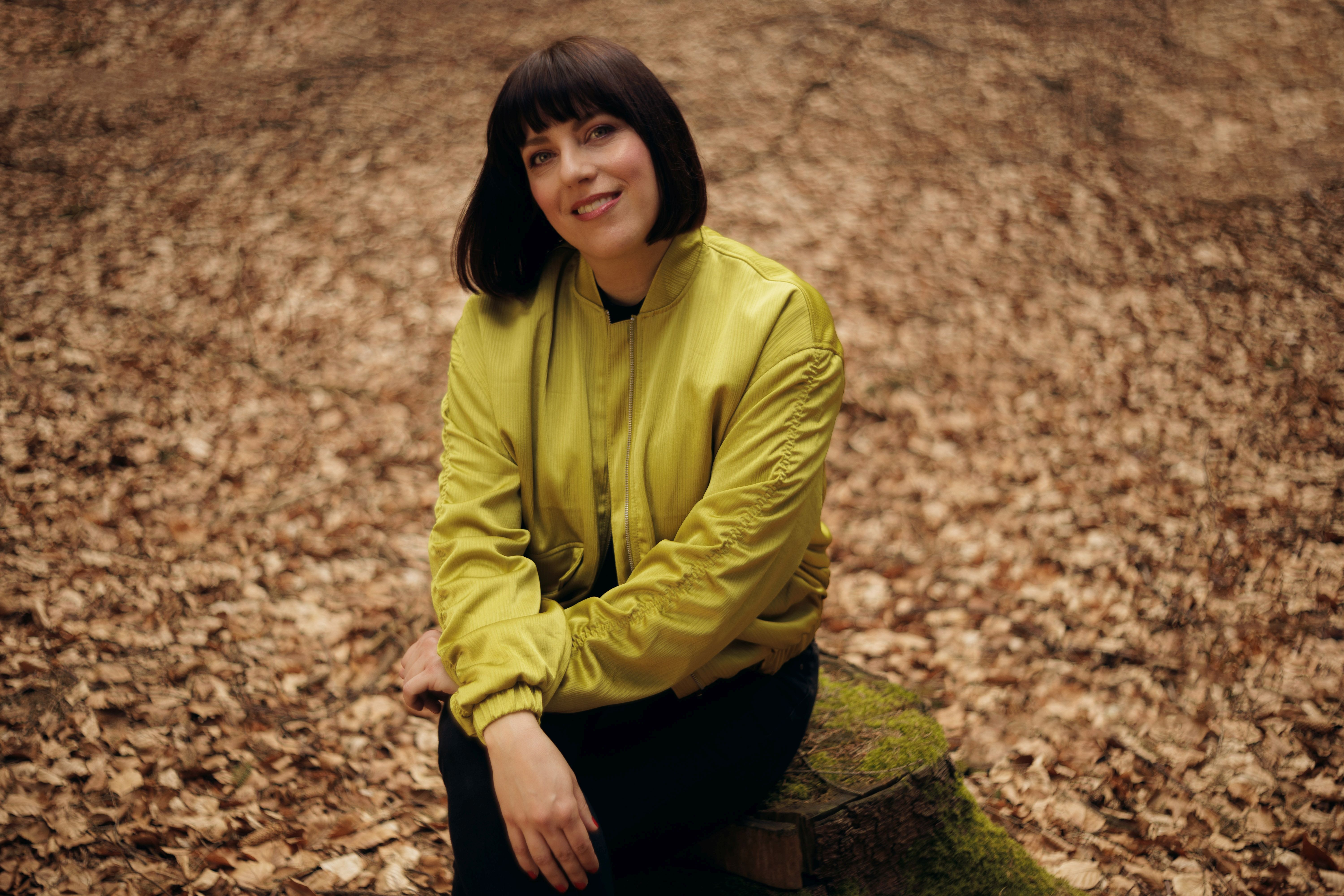
Name: Andrea Cichecki
Nationality: Dutch
Occupation: Producer, performer, composer, sound artist
Current release: Andrea Cichecki is one of the contributors to the new i u we compilation connected #3. Other artists included on the release include Silver Galaxy, Francesca Guccione, Tangent Universes, Danielle Nia, Nadia Struiwigh, Never Sol, Tunegirl, and lil.lili. About the inclusion, Andrea says: “I know Martha through her beautiful music and the Panic Girl YouTube videos, and at some point we started talking to each other and supporting each other’s work. Later on, Martha asked me to contribute music to one of her compilations, which I was, of course, very happy to do. She takes great care of her label, and you can really hear and see the attention to detail in everything she does. It’s been a pleasure working with Martha, and this year we’re finally going to meet in person for the first time at Superbooth.”
If you enjoyed this Andrea Cichecki interview and would like to stay up to date with her music, visit her official homepage. She is also on Instagram, Facebook, and bandcamp.
How would you describe the local scene for modular synths for the city you're currently living in? Which other artists or festivals are you in touch with?
Originally, I am from the Netherlands, currently live near Dresden, and I used to live in Berlin for many years.
There are, of course, big differences between all these places, but right at the moment, I am mostly on my own. In Berlin and the Netherlands, there is a much larger modular music scene, with more opportunities to spend time together or take part in workshops.
In Dresden, there is also a really good electronic music scene, but it is much smaller. However, I have also noticed that the scene here is very dedicated and the quality of the organised events is really high.
There is e.g. the Dave Festival, where I have also played a concert at, and they also organise events and workshops, featuring modular synths, among other things on their festival.
When you look at the artists who have been part of I u we – do you think that, other than a preference for the modular, there are musical/creative aspects that most of you share?
I think we all love electronic instruments and are quite nerdy.
To make music the way we do, you have to spend a lot of time learning how to use them. I think we’ve all found the instruments and tools that allow us to immerse ourselves completely in our own worlds, and create something beautiful along the way.
Describe the creative process for your contribution to connected #3, please.
When I started making the track, I quickly found myself in a good flow and felt very inspired to work. I wanted to go on a musical journey, where the music would feel cinematic. Apart from that, I didn’t overthink it and mainly followed my intuition.
First I started with chords and melodies to set a mood, and tried to bring light and dark elements together. So I approached the sound in the same way: there are darker synth drones with filter sweeps, while the melodies stay light and carry the main theme. Most of it was recorded live, with the effects played by hand.
Could you name one or two pieces by other artists from the compilation that stand out for you - and why?
I really love the tracks by Never Sol and Silver Galaxy.
Never Sol’s track feels like a very emotional journey and is great to listen to. Every time you hear it, you discover something new, it's deep and mysterious. The dark drones combined with her voice make it really special.
Silver Galaxy’s track is a perfect opener, and the arpeggios immediately take you on a journey into a new and undiscovered world.
I u we is an all-female label, up to the artwork. It did seem to me that the modular scene seems to be very diverse and inclusive. What's your own experience been like in this regard – and if you agree, why do you think this is?
That’s true, but it’s mainly something that happened in recent years and not before.
When I started almost 15 years ago, the scene was very small and and often also male dominated, there were fewer manufacturers, and the amount of books, workshops or tutorials about modular synths was very limited. However, this all changed a lot in recent years.
I think this is also because many young artists have discovered the Eurorack system through synth-festivals like Superbooth, which makes it much easier to meet like-minded people.
What did your first modular look like? Tell me about the first pieces you produced and performed on it, please.
My very first rack wasn’t actually complete! I was missing some of the basic modules, so I mainly used it to make experimental, out-of-tune sounds. :)
Over time, I learnt what I actually need and e.g. with the Mutable Instruments modules, I was finally able to create solid patches and really got into making music with a modular synth. That’s how all my ambient work came about.
I am under the impression that choosing the modular is not just a musical decision, but somehow extends into other parts of one's life as well. Can you reflect on this a little bit?
That’s certainly true. To me, the modular synth is just like any other instrument you have to learn, practise repeatedly and not give up. That applies to so many things you have to do as a musician and in life.
So I often practise my patches until I know them inside out, and understand the sweet spots of my entire system. You also learn to listen very carefully, and I can immediately hear when something isn’t right. Therefore, it also teaches you to be more patient. Now I also find it very relaxing to spend an evening reading books about synths and discovering new ideas for patches.
Additionally, through the synth community, I’ve met really lovely people and made good friends, which means a lot to me, and has also led to collaborations.
For example, last December, I organised an audiovisual show, performing in a cinema, together with the French visual artist Oilhack. For the opening performance, I invited my friends Estroe & Raaf, who create wonderful music on their modular synths.
This experience was unforgettable and it would never have happened if I hadn’t gone in this direction. You learn so much from moments like this, and it’s simply fantastic to share them together.
Can you take me through the evolution of your modular system up to your current set-up? What are aspects you consider when buying a new module?
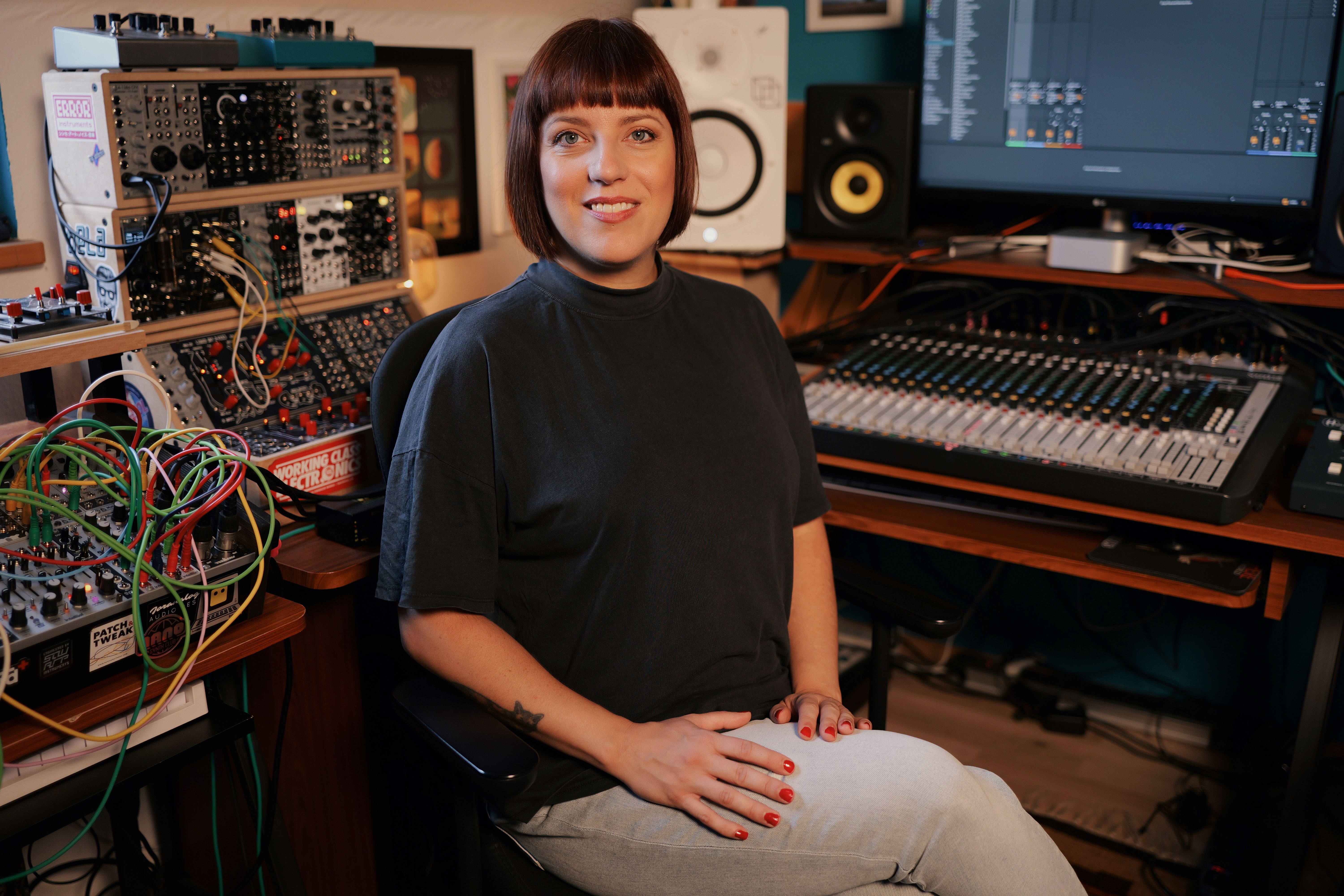
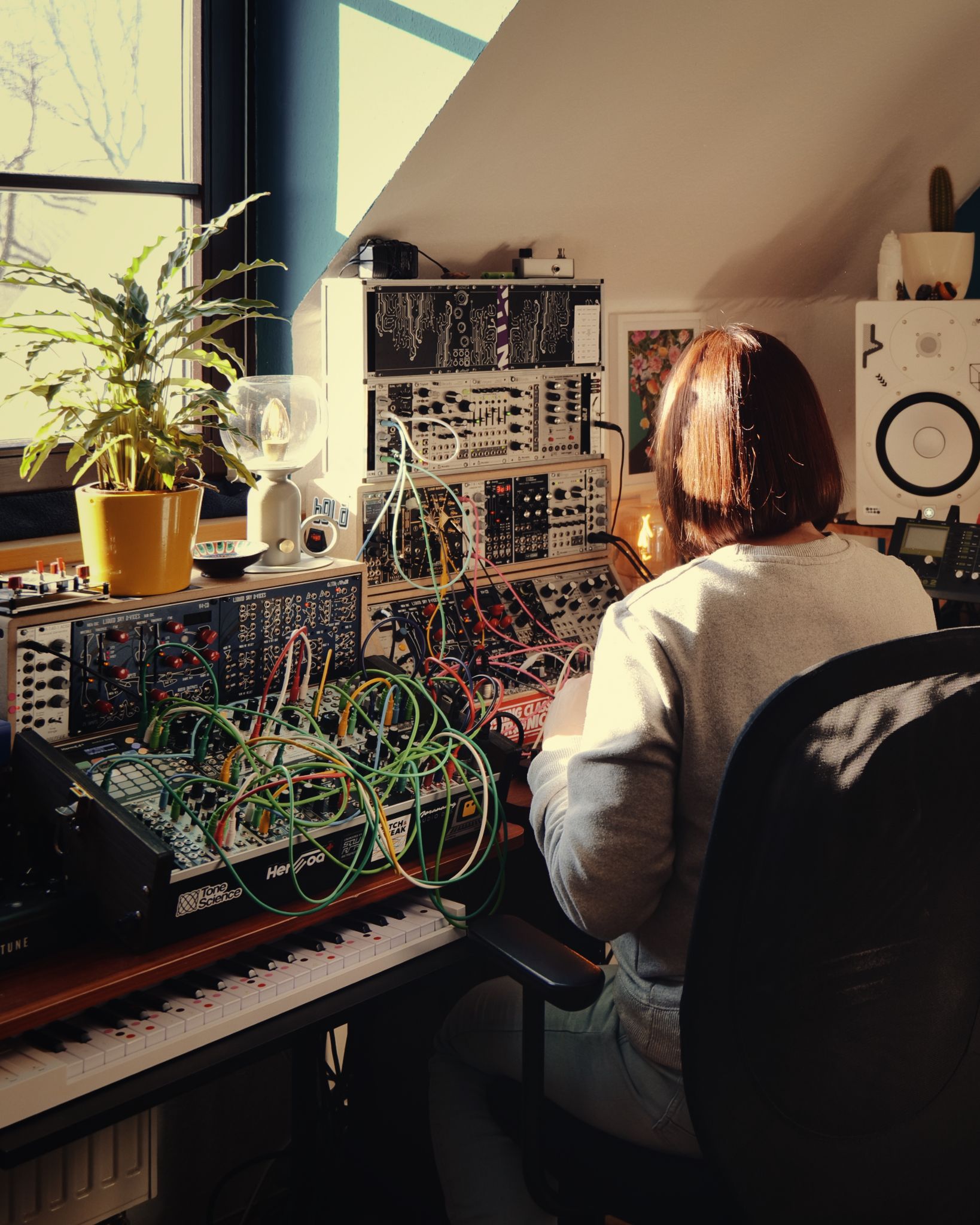
My modular cases are always changing. I tend to get tired of an effect or a particular oscillator sound quite quickly, so I replace modules if I don’t use them for a while.
In the past, I mainly focused on sound for studio recordings and didn’t pay much attention to module size or predictability. Since I started performing live, those are the first things I look at now.
Especially with oscillators, reliability is crucial for me. They need to stay in tune despite temperature differences at the venue. I’ve found that, for example, with the ONA oscillator from NANO Modules. They need a bit of warm-up during soundcheck and before tuning, but once tuned, they stay perfectly in tune throughout the entire show, even when it’s 45*C outside.
My Hermod + sequencer from Squarp Instruments is also extremely reliable. The developer is also always very helpful whenever I have questions. That kind of support is incredibly important to me when I choose a module or synth.
My live case is also very small, it fits perfectly into my carry-on luggage when I fly. I pay close attention to module size, and for my setup, the smaller the better.
Modular synthesizers allow for the most diverse and personal set-ups. What were some of the most surprising/inspiring configurations or ways of playing the modular that you've seen?
The modules from Error Instruments are very interesting, they’re highly creative and really invite experimentation. I especially enjoy seeing how people use these modules.
For example, I love watching artists who work with noise and drones, or who come from a circuit-bending background.
Which modules incisively changed your way of making music – and why?
I really love my wavefolders as they allow me to directly influence the timbre of the sound, which has a huge impact on my live performances. Along with that, the Sealegs from Intellijel is one of my favourite effects, together with the Zen Delay pedal.
Both effects are incredibly expressive, in my studio recordings as well as in live situations. They do exactly what I need to bring out the emotion in my music.
With a keyboard and a traditional synth, I would instantly know what something would sound like if I pressed down the keys a certain way. Would you say the same is true for the modular and certain patches and modules? How does working with wires, cables, and plugs change your perspective on music?
Of course, you can achieve the same results with a modular synth if you don't change your patch, but I don't think this is the point getting into modular.
With a traditional synth, the manufacturer has already taken care of the internal patching and decided how everything is connected and how it sounds, for example, what we recognise as a “Moog sound” or a “Prophet sound.”
With a modular synth, especially within the Eurorack system, you have the option to build the instrument completely to your own liking. You can choose your own oscillators, define the character of your filters, and decide how everything is connected.
A modular system also offers much more diversity, because you use cables to determine the signal flow, for example, whether you place an effect before or after a filter, or integrate a generative timing module that behaves in an unexpected way. This freedom allows you to create a very personal sound.
In which way does the modular influence musical results and what kind of compositions does it encourage / foster?
For me, my modular setup is a deliberate choice for the kind of music I'm making. You can hear this on my latest album 'Drawn Into The Edge Effect' where I use it to create emotional melodies and compose the other things around that.
Due to it's advantages and limitations, there are things I can and cannot do with it. So I know exactly what I want to get from the modular. And it’s also a lot about the feeling of freedom and not having to stare at a screen.
Playing the synth and effects as instruments feels fantastic and is very effective in the studio. I’m often much faster recording my synth than doing everything on the computer with a mouse.
Many modular set-ups still do not support saving patches or quickly switching between them. What possible benefits or inspiring consequences does this quite severe limitation have for your own music and creative practise?
It doesn't affect my own music that much, because I’m used to working that way. But when I work with clients on their music, I do have to be more careful, as you often can’t reproduce the exact same sound later on.
In those cases, I either work more with software or, if there’s a specific main melody or soundscape, I create and record several versions from my synth first, which I can then use and refine later on.
For you personally, is the goal to become as proficient and fluent on the modular as others might get at the piano – or to keep discovery mode on forever?
I’ll always have my discovery mode turned on! There’s always something new to explore and it helps you improve your skills.
It keeps you curious and open to input from others, which is what makes it so much fun.