Published
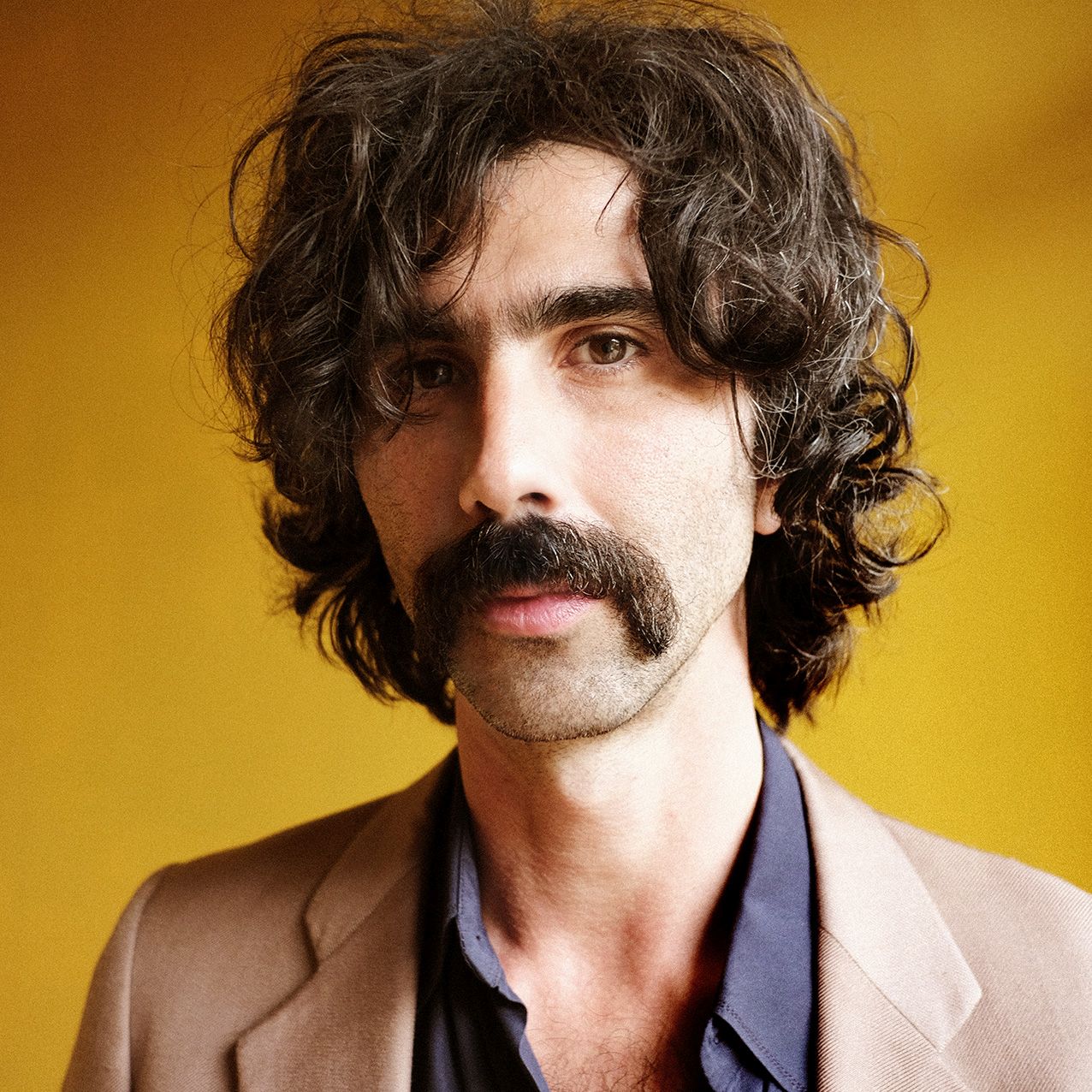
Name: Andrea Laszlo De Simone
Nationality: Italian
Occupation: Singer, songwriter
Current release: Andrea Laszlo De Simone's new album Una Lunghissima Ombra is out via 42.
If you enjoyed this Andrea Laszlo De Simone interview and would like to stay up to date with his music, visit him on Instagram, Facebook, and bandcamp.
Where does the impulse to create something come from for you? What role do often-quoted sources of inspiration like dreams, other forms of art, personal relationships, politics etc play?
Making music is a necessity for me, a form of comfort. It makes me feel good. It‘s a personal process of interpreting reality.
Stylistically, I believe I have been influenced by the films I watched during my childhood, mainly Italian and French neorealism.
I don't write autobiographical songs, but I express emotional states generated by my personal experiences.
For you to get started, do there need to be concrete ideas – or what some have called a 'visualisation' of the finished work? What does the balance between planning and chance look like for you?
I always start from music, from a melody or a sound that is capable of involving me.
Then, in most cases, I develop the arrangement until it is complete, and at that point, I sing what the music suggests to me.
Is there a preparation phase for your process? Do you require your tools to be laid out in a particular way, for example, do you need to do 'research' or create 'early versions'?
The only thing I truly need is solitude.
I record my songs in the process, so, needing to be alone, I practically play all the instruments on my records.
In the final stages of recording, I add strings and brass, both synthetic and real, played by trusted musicians. Sometimes, this also includes backing vocals.
Do you have certain rituals to get you into the right mindset for creating? What role do certain foods or stimulants like coffee, lighting, scents, exercise or reading poetry play?
As I said before, I need to be alone.
I make sure the door is closed, light a cigarette, and start playing the guitar or keyboards.
For Una Lunghissima Ombra, what did you start with? If there were conceptual considerations, what were they?
I began with the last track, the one that gives the name to the entire album. From there, the idea grew to develop the concept around the theme of shadow.
In its simplicity, it seemed to me the perfect metaphor to talk about emotional fragility, intrusive thoughts, memories — all those "shadows" that reality projects onto us and that we, in turn, project onto our surroundings.
Tell me a bit about the way the new material developed and gradually took its final form, please.
I worked on this record for about a year and a half, but within a span of four years.
I started writing songs, then paused to work on the soundtrack for Amanda Sthers’ film "Promises"; then I resumed work on the album, only to pause again for the soundtrack of "Le Regne Animal" by Thomas Cailley.
After that experience, I immersed myself completely in Una Lunghissima Ombra, and the development process was the same as always — one cigarette at a time.
What makes lyrics good in your opinion? What are your own ambitions and challenges in this regard?
For me, lyrics are truly valid when they can express the writer’s personal feelings, but without limiting the meaning of the words to a specific situation.
I believe it’s important for a song to be able to grow over time. If, after two years, the same words can say something different, then lyrics are valid.
What are areas/themes/topics that you keep returning to in your lyrics?
I often talk about the relationship between human beings and life from a rather existentialist perspective.
I am attracted to fragility, fear, guilt, but also relief and all the emotions that come with them.
A recurring theme is definitely death, or more generally the end of something. I often explore the process of grieving.
Many writers have claimed that as soon as they enter into the process, certain aspects of the narrative are out of their hands. Do you like to keep strict control or is there a sense of following things where they lead you?
For me, it’s pure freedom, free exploration.
That kind of solitude in which it’s possible to draw from the full range of human experience — even the most frightening sides — without risking hurting anyone.
There are many descriptions of the creative state. How would you describe it for you personally? Is there an element of spirituality to what you do?
It’s like going to another world for me. A sort of meditative state.
I wouldn’t be able to explain it precisely. It’s a place I sometimes find difficult to return from.
Once a piece is finished, how important is it for you to let it lie and evaluate it later on? How much improvement and refinement do you personally allow until you're satisfied with a piece?
Each song has similar processes, but a different story. Sometimes it’s ready in half an hour; other times, I keep playing around with it for years.
But here’s the point: I don’t make music for the result, but for the process. So, as long as I enjoy arranging and playing with those notes, I keep going; when I no longer enjoy it, it means the song is finished — that I have nothing more to give to those notes.
How do you think the meaning, or effect of an individual piece is enhanced, clarified or possibly contrasted by the EPs, or albums it is part of? Does each piece, for example, need to be consistent with the larger whole?
I always work on a concept; I don’t like the idea of creating a compilation of songs.
The songs in my albums are always deeply interconnected.
In terms of what they contribute to a song, what is the balance between the composition and the arrangement (including production, mixing and mastering)?
So, I personally take care of all phases except for the mastering, which is still overseen by me.
For me, each phase is a phase of writing.
Music and the accompanying artwork are often closely related. Can you talk about this a little bit for your current project and the relationship that images and sounds have for you in general?
As I mentioned earlier, every phase is a writing phase. Even the context you create around an album is part of the musical vision. It interacts with the meaning of the lyrics and the emotional capacity of the arrangements.
Nothing sounds in a vacuum, so it’s good to also consider the environment (conceptually) where the music will be played.
After finishing a piece or album and releasing something into the world, there can be a sense of emptiness. Can you relate to this – and how do you return to the state of creativity after experiencing it?
I make music constantly.
Releasing an album is not a pause for me. There are no periods when I write and periods when I don’t.
I would love to know a little about the feedback you've received from listeners or critics about what they thought some of your songs are about or the impact it had on them – have there been “misunderstandings” or did you perhaps even gain new “insights?”
Sometimes, a song can be misunderstood, but I must say it happens very rarely, and to be honest, I don’t mind at all.
In fact, I’m glad everyone can find their own meaning in it.
Creativity can reach many different corners of our lives. Do you personally feel as though writing a piece of music is inherently different from something like making a great cup of coffee? What do you express through music that you couldn't or wouldn't in more 'mundane' tasks?
I believe it’s just a coincidence that I focus on music. I’m capable of feeling the same passion while cooking, for example, or working with wood.
I think there’s a way to express yourself with satisfaction in any activity ... but I’m happy I found music.