Published
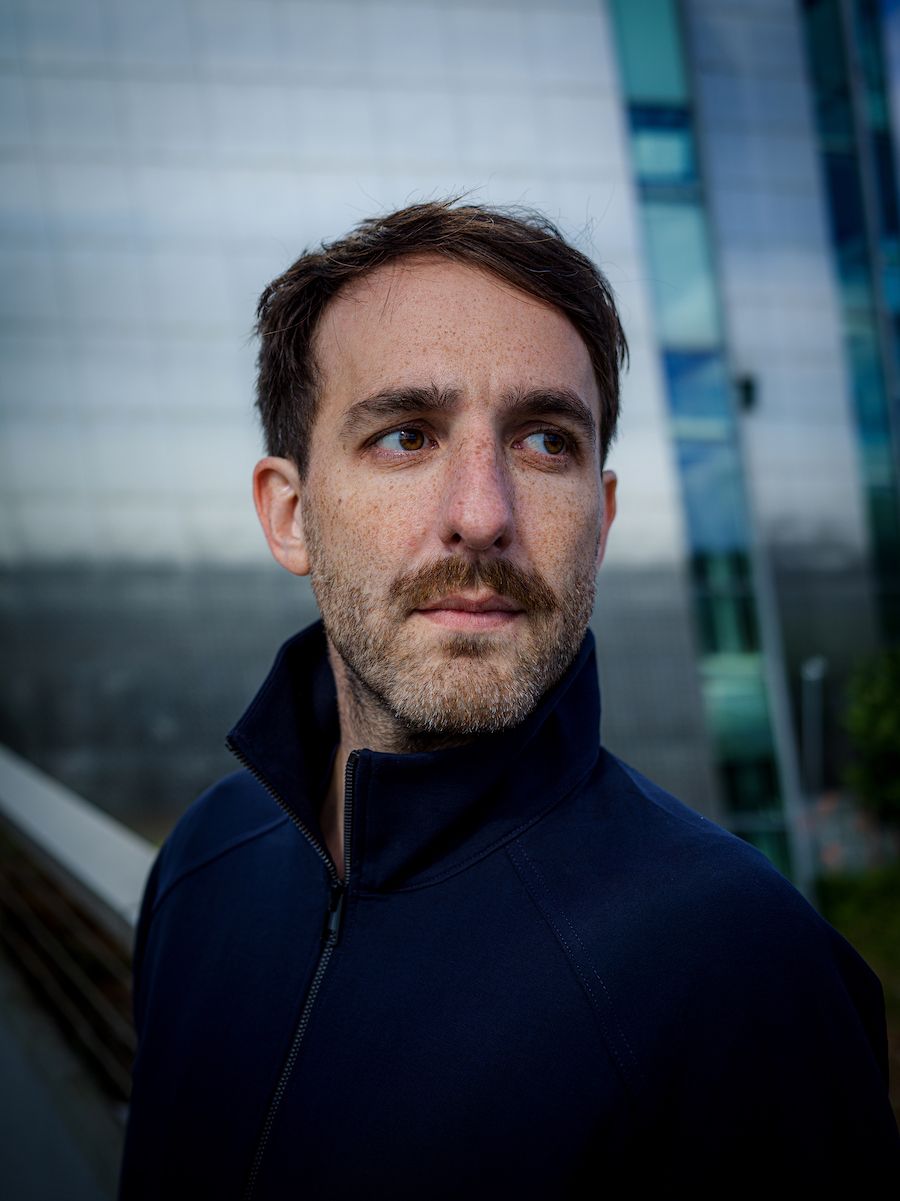
Name: Andreas Liebert
Nationality: German
Occupation: Singer, songwriter
Current release: Andreas Liebert 's new EP Mondlanding is out via Helloiam.
Recommendation for Berlin, Germany: In Berlin, where I currently live, the Tiergarten is a place I find myself returning to often. While you can drive through it, it’s on foot or while jogging that it truly comes alive - the air, the nature, all of it right in the middle of this enormous city. It’s fascinating how this space, surrounded by the Brandenburg Gate, the Reichstag and Bellevue Palace, manages to retain such a calm, almost intimate atmosphere.
I always find something there, a moment of my own, something you wouldn’t expect amidst the noise of the city streets. A small retreat in the hustle and bustle of urban life.
If you enjoyed this Andreas Liebert interview and would like to know more about his music, visit his official homepage. He is also on Instagram, and Facebook.
Do you think that some of your earliest musical experiences planted a seed for your interest in writing lyrics or poetry? How and when did you start writing?
No, I think the interest came during the phase of young adulthood, when you’re confronted for the first time with feelings that are bigger than yourself – feelings you don’t understand, or perhaps don’t want to understand.
In this chaos, it was mainly the people around me who shaped my perspective, who reflected me. You wanted to express yourself to find who you are.
For me, the answer often lay in formulation: speaking brought clarity, writing brought even more. But never straightforward, never simple. It was always an attempt to circle around the truth, to grasp it like a code – something that doesn’t reveal itself immediately, but finds its strength precisely in that.
Entering new worlds and escapism through music and literature have always exerted a very strong pull on me. What do you think you are drawn to most when it comes to writing?
I believe it’s mainly the answers that draw me in – or perhaps the questions that only arise once you begin to search. Which ones exactly, that’s not always clear. But it’s often the uncomfortable ones, the ones that pull me out of what’s easy.
Maybe that’s it: this feeling of being outside my comfort zone, where nothing is certain and everything is in motion. Because right there lies the possibility for growth.
Stagnation, on the other hand – that’s the real poison.
What were some of the artists and albums which inspired you early on purely on the strength of their lyrics? What moves you in the lyrics of other artists?
There are no artists or albums that have inspired me solely through their lyrics – it's always the interplay of music and words. Sometimes, just the music is enough to set something in motion.
What moves me most in the lyrics of other artists is their perspective on situations I’ve experienced myself or that may still lie ahead. It seems that certain questions arise at certain points in life – not always in sync, but closely tied to personal development.
Eventually, these questions stand before you, and you have to decide: confront them or let them pass by.
Have there been song lyrics which actually made you change (aspects of) your life? If so, what do you think, leant them that power?
Not directly, no. Changes rarely happen abruptly; they take time – often working quietly, behind the scenes.
Of course, a song can be a part of that. Through repetition, through singing along, through feeling along, something can emerge that finds its way into your own life. It can be something good, or something challenging, depending on which pieces accompany you.
Music has its own time. Songs don’t necessarily unfold their power when they are released, but at the moment when someone truly listens to them. For each person, individually, almost casually.
The more people experience this, the greater the effect – a shared, invisible web of resonance.
It is sometimes said that “music begins where words end.” What do you make of that?
I would say the opposite is true. Music is not less than words – it makes words lighter, perhaps more accessible, and sometimes it even carries them to places where words alone would be too heavy.
Music doesn’t overwhelm; it envelops. It can have an effect without demanding, and it allows us to decide for ourselves when and where it may touch us. Words stand on their own, often raw and unyielding, sometimes fleeting and transient.
Music, on the other hand, preserves them, giving them a duration, a depth they might not have on their own. It connects – moments, memories, people – and gives words a second, floating home.
I have always considered many forms of music to be a form of poetry as well. Where do you personally see similarities? What can music express which may be out of reach for poetry?
The tonality of poetry remains constant, while music, in its versatility, can take on an infinite number of forms.
Music accompanies, repeats itself, becomes part of everyday life – poetry, on the other hand, remains a conscious moment, a pause. Yet music often carries poetry with it, even when it sometimes recedes into the background, almost unnoticed, until it suddenly reemerges and surprises us.
Perhaps it is precisely this tension, this intertwining and separation, that constitutes the essence of art: the art of connection, and at the same time, the art of distinction.
The relationship between words and music has always intrigued me. How do you see it? In how far can music take you to places with your writing you would possibly not have visited without it?
In the mind, everything is ordered, almost comfortable – one arranges things so that they fit, make sense, and feel right.
But the moment you speak or write something down, the struggle begins. Suddenly, other perspectives enter the room, the view of the other person, the desire to be understood, and with it, the risk of being misunderstood. What once seemed clear and simple suddenly becomes more complicated – or it reveals itself to be surprisingly simple.
And therein lies the allure: You discover places you didn’t know before, because they only become visible through this confrontation.
What are areas/themes/topics that you keep returning to in your lyrics?
It's the spaces in between that captivate me – the fractures and connections between people, the challenge of understanding love, and all the unknowns that cast shadows around clarity.
In my latest release, Mondlandung, everything revolves around death, loss, the fragments of memory, and the question of how to carry on when stories remain unfinished.
It's not just a theme that brushes past us occasionally but something that, in truth, accompanies us every single day – like a constant murmur in the background.
On the basis of a piece off your most recent release, tell me about how the lyrics grew into their final form and what points of consideration were.
It’s “Mondlandung” that lingers so persistently in my mind.
My grandfather passed away young, leaving behind a wife and three children. I never had the chance to meet him, and yet he was always present – a photo on my parents’ desk, his face framed by a time that existed before me. He was there without ever truly being there. A picture on the wall, a name in an photo album, the year written beneath it.
In the song, I wrestled with the question of who he was. Was he a good man? Did he laugh often? Could he dance? And then there were the thoughts that might have accompanied him in his final days – did he have hope, dreams still unfulfilled, perhaps even the wish for one last family vacation? Questions no one can answer anymore.
It made something very clear to me: how vital it is to truly know the people who matter to us. To listen to their stories, to understand what defines them, before they, too, become just a picture on the wall, looking back at us from another time.
I'd love to know how you think the meaning or effect of an individual song is enhanced, clarified or possibly contradicted by the EPs, or albums it is part of. Does the song, for example, need to be consistent with the larger whole?
No, it doesn’t have to. The bigger picture is born from its smaller parts, and each one shapes how the whole is perceived.
In the past, the format of an album or an EP felt like a fixed narrative – a sequence I, as an artist, deliberately crafted. I knew which song followed the next, how the arc of the story unfolded. But changes in how music is consumed have disrupted that structure. Today, listeners choose the pieces that resonate with them most.
On the one hand, that’s liberating; on the other, it’s a little disheartening because you always hope that every song will be heard, that the work will be understood as a whole. But you can’t resist it. The shift in the form alters the meaning of the format – and perhaps that’s precisely where art stays alive: in its constant need to redefine itself.
When you're writing song lyrics, do you sense or see a connection between your voice and the text? Does it need to feel and sound “good” or “right” to sing certain words? What's your perspective in this regard of singing someone else's songs versus your own?
Yes, fundamentally, you should always feel comfortable when singing, whether it’s your own songs or someone else’s. There’s that moment when you sense if the words truly flow into the song, if they feel authentic.
What I find particularly fascinating is looking back – how I used to write and sing. It’s almost like a rediscovery, especially after not engaging with your own songs for a long time. It can feel as though you’re playing someone else’s music, as if you’re an observer of your own work, uncovering new layers within the lyrics.
I would love to know a little about the feedback you've received from listeners or critics about what they thought some of your songs are about – have there been “misunderstandings” or did you perhaps even gain new “insights?”
Misunderstandings have been rare, if they’ve happened at all. Lately, what fascinates me more are the responses to my song “Mondlandung.” It’s intriguing to see the wide range of emotions the song evokes in listeners and how each person approaches it in their own way.
This complexity - how people can experience the same song so differently - is captivating. It reminds me that music is always a deeply personal conversation.
How do you see the relationship between harmony, rhythm and melody? Do you feel that honing your sense of rhythm and groove has an effect on your lyrics-writing skills?
I wouldn’t say that. For me, writing lyrics isn’t necessarily dependent on rhythm or groove. I always have the freedom to decide how the rhythm works.
Especially between studio work and live performances, I enjoy playing with that flexibility. It’s less about fixed rules and more about how the lyrics take shape in a given space - whether they resonate differently in the studio than they do live, or whether they even belong to both worlds at all.
Creativity can reach many different corners of our lives. Do you feel as though writing song lyrics or poetry is inherently different from something like making a great cup of coffee? What do you express through music that you couldn't or wouldn't in more 'mundane' tasks?
Yes, of course.
A cup of coffee - or tea, if we’re being precise - is something fleeting, something that satisfies me for a moment but quickly fades. Song lyrics, on the other hand, stay; they preserve a chapter of life, a slice of time that might otherwise slip away.
I think I try to put into words what feels difficult to express in everyday life - things I can’t easily say out loud or don’t want to open up about. It’s a kind of translation, really - from thoughts into a language that somehow feels more natural.
Do you have things that you are deeply involved with but rarely get to talk about? I'd love to hear about them.
There are, of course, many issues that occupy my thoughts - societal developments, for instance, like the fact that both anti-fascism and right-wing extremism are regaining space in public discourse. It’s alarming to see more and more people gravitating toward populism, as if it offered something tangible, something easy to understand. But I think there are others who can articulate these issues more effectively and eloquently than I can.
I try to focus on engaging locally, by supporting initiatives and leading by example. Standing up for what matters to me, for my values. Perhaps that’s how we can work toward a better society - one where hatred and incitement have no place. Maybe education can be a part of that, especially in regions where infrastructure is weaker.
But it takes patience. And it takes courage.
Feel free to give a shout out to a person, organisation, website, or anyone else that our readers should know about who are currently changing the world for the better.
I don’t want to prescribe much but rather encourage people to look around and see what’s happening locally. What organizations are there where you can get involved, whether by becoming a member or donating? If culture plays a role, that’s all the more important - it serves as a bridge between people.
And we often ask ourselves: haven’t we met so many people through art and culture? These are the spaces that create opportunities for connection and exchange. It’s in these moments that you realize how much power culture holds. There are so many people and institutions doing meaningful and important work.