Published
Name: Another Taste
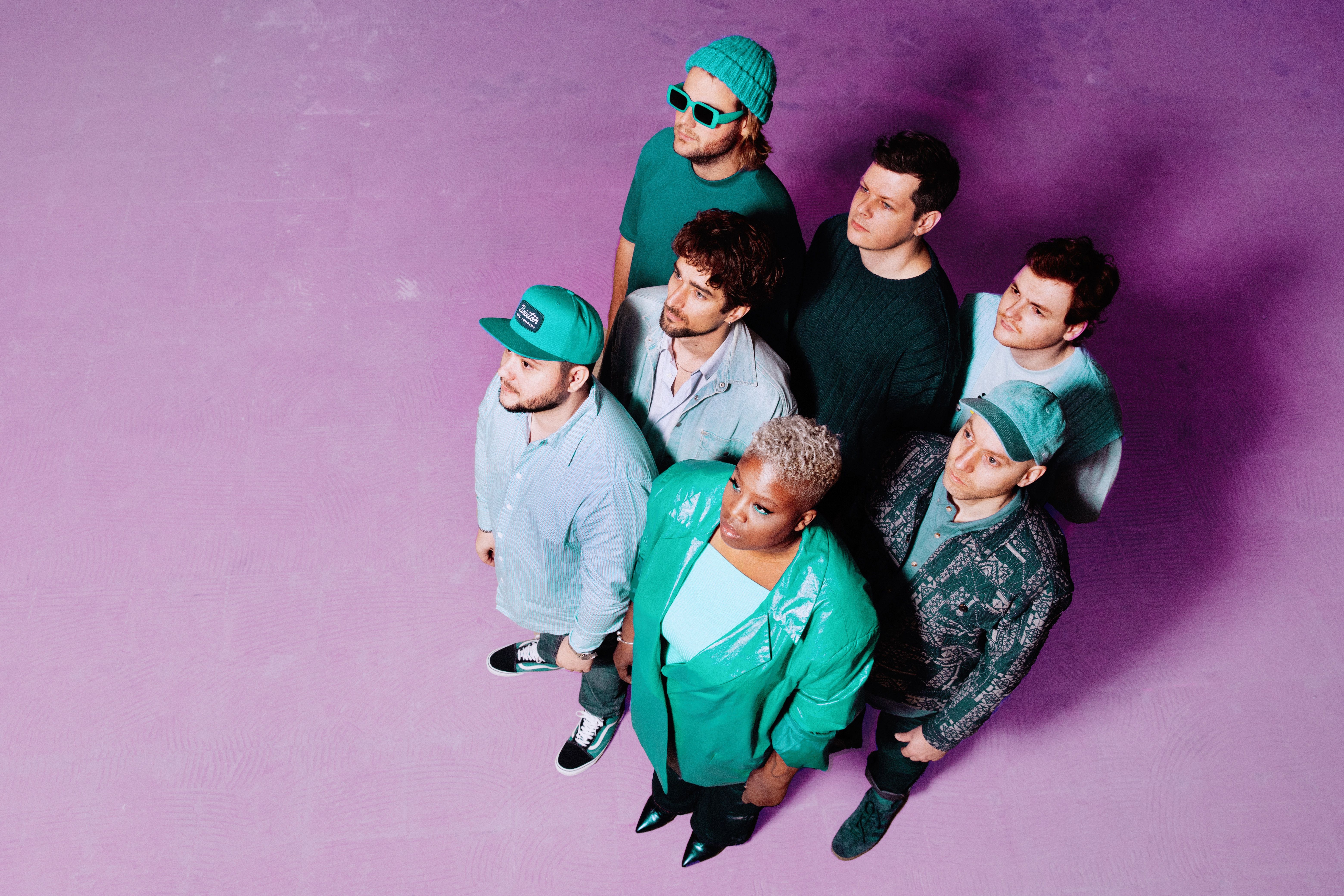
Members: Barend Lippens (lead vocals & keys), Bobby van Putten (lead vocals & percussion), Bob Roche (bass guitar, rhythm guitar & backing vocals), Teun van Zoggel (drums, percussion & backing vocals)
Nationality: Dutch
Current release: Another Taste's new album Another Taste II is out via Space Grapes. It also features contributions by Diogo Carvalho (percussion, balafon, vibraphone), Florian Verhagen (guitars), and Sarina Voorn (lead vocals, backing vocals).
Recommendations for Rotterdam, the Netherlands: Rotterdam is a fantastic city for crate-digging, which is one of our favorite hobbies. We have several top-tier record stores within walking distance, like De Oorzaak, Jensdo, Offbeat, and MijnMarktkraam. You can easily hit all of them in an afternoon, enjoying the local food and drinks along the way. It’s the perfect way to spend a day in the city.
Things we are passionate about but rarely get to talk about: Beyond the music, we are all deeply into food and drinks. We love exploring different cuisines from all over the world—experimenting with recipes, hunting for authentic ingredients, and discovering new spots. Much like our musical taste, our culinary interest is global and always driven by a search for new and exciting flavors.
If you enjoyed this Another Taste interview and would like to know more about the band and their music as well as upcoming live dates, visit their official website. The group are also on Instagram, Facebook, and bandcamp.
When it comes to experiencing the sensation of “energy” as as a listener, which albums, performances, and artists come to mind?
Our appreciation for music is deeply rooted in records that capture the raw, unfiltered energy of a live performance. A prime example is Eddie Palmieri’s 'Live at Sing Sing', Volumes 1 & 2.
What draws us to this record is how incredibly well the atmosphere is preserved; you can hear the crowd screaming and the soloists almost groaning with effort as they play. That explosive energy is palpable.
Similarly, Donny Hathaway’s 'Live' album is a huge inspiration. Despite being recorded in a very intimate venue, the energy is immense. You can feel the involvement of every single person in that room; they are completely locked into the performance of Donny and his band.
Finally, the Alice Clark album resonates with us on a visceral level. You can hear the raw emotion, the pain, and the sorrow in her voice. It feels as if every track is sung from the very depths of her soul.
There can be many different kinds of energy in art – soft, harsh, healing, aggressive, uplifting and many more. Which do you tend to feel drawn to most?
In our daily lives, we have a deep appreciation for art and music that feels soft and healing. However, when it comes to our band and our general outlook on life, uplifting themes take center stage; that positive energy is the core of who we are.
That said, we believe that all artistic themes are relevant. It often depends on where you are in your own life at any given moment. Sometimes, a piece of art that you previously overlooked can suddenly resonate deeply because your current circumstances allow you to finally 'hear' or see it.
I have had a hard time explaining that listening to death metal calms me down. When you listen to a song with a particular energy, does it tend to fill you with the same energy – or are there “paradoxical” effects?
It largely depends on the situation you find yourself in. Interestingly, there is a certain paradox in how we experience intensity.
If you are able to give a record your full, undivided attention, a heavy jazz album—where musicians are pouring their absolute hearts and souls into intense solos—can actually have a calming effect. However, that same music becomes overwhelming if you are busy with other tasks.
In those moments, traditionally calming music works better because it demands less of your cognitive space.
In as far as it plays a role for the music you like listening to or making, what role do words and the voice of a vocalist play for the transmission of energy?
For most listeners, the vocals are the natural focal point. Because of this, the voice is the most direct instrument we have to address, engage, and move our audience.
However, that doesn't necessarily mean that we always prioritize vocals; for us, instrumental music can be just as impactful. But for our live performances, we recognize that the vocals are absolutely essential for bridging the gap between the stage and the crowd.
When it comes to experiencing the sensation of “energy” as as a creator, how would you describe the physical sensation of experiencing this energy? [Where do you feel it, do you have a visual sensation/representation, is there a sense of release or a build-up of tension etc …]
In the studio, energy is about the creative spark. When a groove or melody catches fire, it triggers a chain reaction. That collaborative flow, where one person’s idea inspires the next, creates a unique, collective energy.
On the other hand, the live aspect is defined by the synergy between us and the audience. It’s a continuous exchange. When we play and the crowd reacts, it boosts our presence, creating a shared upward spiral of energy.
When it comes to composing / songwriting, are you finding that spontaneity and just a few takes tend to capture energy best? Or does honing a piece bring you closer to that goal?
Spontaneity is vital for us; most of our concepts are born from unplanned moments. However, there has to be a specific 'spark' that makes an idea sustainable.
Ultimately, it comes down to the foundation of a track. If we can return to a project and immediately recapture that original vibe and excitement, then we know it's worth pursuing.
How much of the energy of your own music, would you say, is already part of the composition, how much of it is the result of the recording process?
I would say that 90% of the impact is already present in the composition. When we record a demo—even a rough one—we can usually tell immediately if the track has legs.
The final 10% comes during the recording and mixing process, where we accentuate the nuances. But the heavy lifting is done during the writing process; the core has to be there from the start.
For Another Taste II, what kind of energy were you looking for?
With our current album, we pushed ourselves to make it as diverse as possible, ranging from atmospheric tracks to faster rhythms designed for the dancefloor. This variety extends to the lyrics and instrumentation.
Our goal was to create an album that isn't just for the club; it’s a record you can enjoy at home as well, rewarding attentive listening.
How do you capture the energy you want in the studio?
Before we hit 'record,' the track has to give us a kick.
A crucial part of our philosophy is that we record everything live. We don't believe in heavy editing or re-recording individual phrases. It has to be a single, complete take. If that take captures the right energy and vibe, we move on.
We focus on the feeling rather than technical perfection.
What role do factors like volume, effects like distortion, amplification, and production in general for in terms of creating the energy you want?
Creating the right energy involves many factors beyond just the gear. It’s about how you use it: the choice of notes, the dynamics, and the experimentation.
Sometimes you can convey a very calm atmosphere by using equipment in an unconventional way. The real energy comes from the choices we make in the moment to achieve a specific vibe.
In terms of energy, what changes when you're performing live on stage, with an audience present, compared to the recording stage?
The energy in the studio is fantastic because you feed off each other’s ideas. However, in a live setting, that factor is amplified.
When you play for a crowd that might not even know your music yet, and they go wild, it provides a level of validation that gives you an incredible rush. The higher stakes of the stage put you in a completely different, more intense mindset.
How does the presence of the audience and your interaction with it change the energy of the music and how would you describe the creative interaction with listeners during a gig?
The audience is brutally honest. When we prepare for a live gig, reality often surprises us; parts we were unsure about might become the highlights of the night.
We take those lessons to the next show, constantly refining the set until it’s incredibly tight. This ongoing adjustment makes the experience better for everyone involved.
What kind of feedback have you received from listeners or concert audiences in terms of the experience that your music and/or performances have had on them?
Overall, the reactions are very positive, though it depends on the setting.
As a dance band, the context is crucial. If we find ourselves in a spot where the programming doesn't align with our sound, it can feel like playing to a brick wall.
Fortunately, most bookers understand our identity well, so we usually end up in the right places where the energy is high.
Would you say that you prefer to stay in control to be able to shape the energy or do you surrender to it and allow the music to take over? Who, ultimately has control during a live performance?
The audience provides the feedback that tells us if we can take risks.
With a challenging crowd, we rely on our solid structure. But when the crowd lets loose, we step outside that structure. The leadership becomes organic—our percussionist might shift the groove, and we all follow.
This interplay only happens when the whole band is 'in the zone'—when you stop thinking about the performance and simply become part of the music itself.
The energy that music is able to generate can be extremely powerful. How, do you think, can artists make use of this energy to bring about change in the world?
While an artist with a following has a platform, truly changing the world is an immense undertaking.
In the 1960s, a 'voice of a generation' was more possible, but today’s world is far more fragmented. We don't believe that shifting the world is realistically possible for an artist today, especially within our specific musical niche.
You can influence your audience, but the world is a different story.