Published
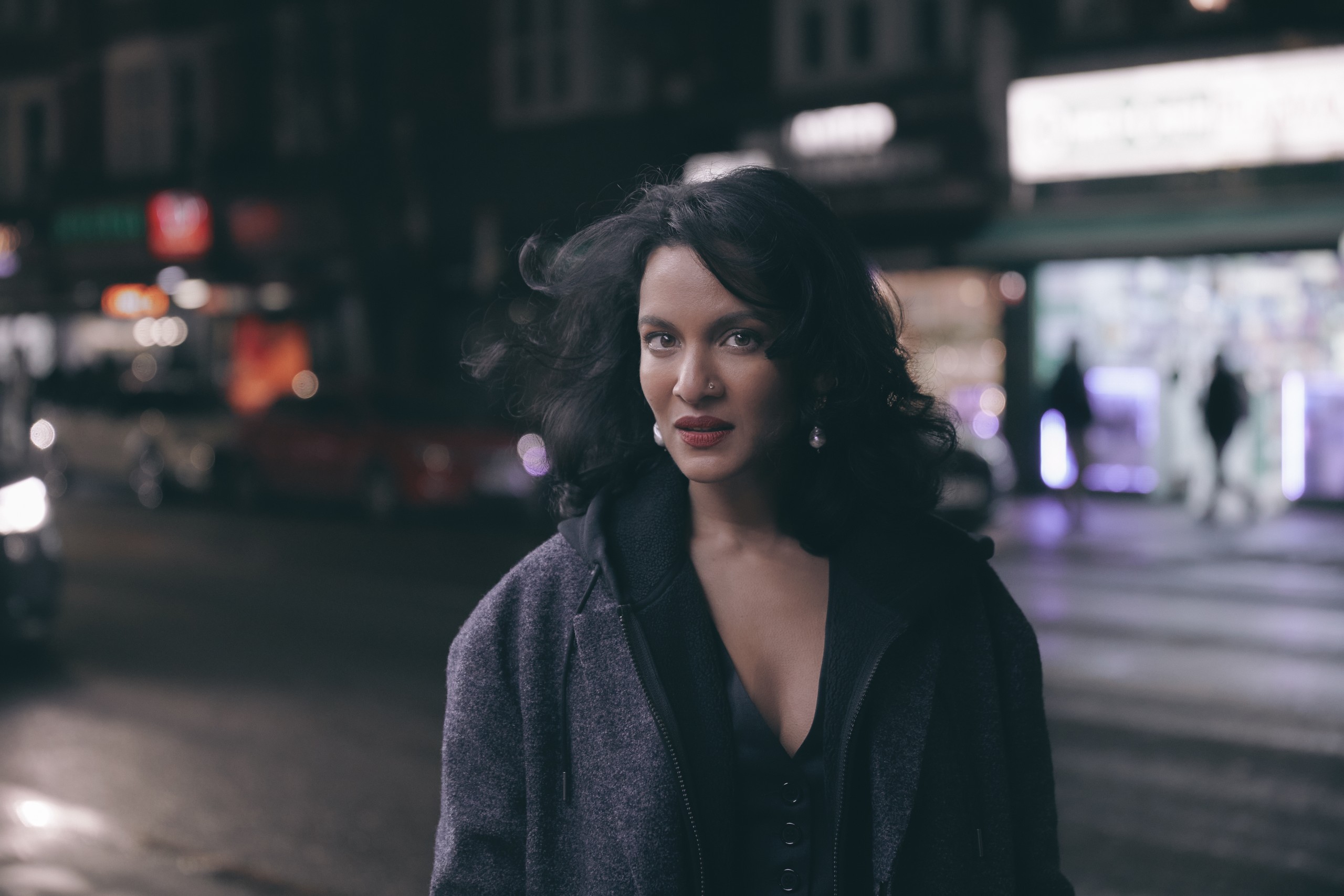
Name: Anoushka Shankar
Nationality: British-American
Occupation: Composer, performer, sitar player, vocalist
Current Event: Anoushka Shankar was presented with the Innovation Award at the Ivors Classical Awards on 11 November.
Current release: Anoushka Shankar's latest EP Chapter III: We Return to Light, featuring Alam Khan, and Sarathy Korwar, is out via Nils Frahm's LEITER.
[Read our Sarathy Korwar interview about Improvisation]
[Read our Sarathy Korwar interview about about KALAK, Indofuturism and Surrender through Music]
[Read our Sarathy Korwar interview about Drumming]
[Read our Sarathy Korwar interview about the South Asian Sounds Festival]
[Read our Nils Frahm interview]
If you enjoyed this Anoushka Shankar interview and would like to stay up to date with her music, visit her official homepage. She is also on Instagram, Facebook, and tiktok.
Where does the impulse to create something come from for you? What role do often-quoted sources of inspiration like dreams, other forms of art, personal relationships, politics etc play?
Usually it's things in my life or in the world around me that make me feel so strongly an emotion that needs to come out artistically - this could be a breakup or heartbreak, or it could be outrage in response to something happening in the world to others. It could be tender joy.
All of those things give me something to lean into, to make music in a really strange symbiotic way where, as an artist, I find those things inspiring, but also as a human, I find the act of leaning into making music from it a form of catharsis.
There's also another piece to this where sometimes the impetus comes from a desire for connection, a sense of chemistry or attraction that comes from being inspired by other people. So, if there's an artist I really love and sort of crave working with them, then it doesn't necessarily need a deeper thematic starting point.
It's just the desire to connect artistically and then we can find our themes together.
For you to get started, do there need to be concrete ideas – or what some have called a 'visualisation' of the finished work? What does the balance between planning and chance look like for you?
I think for me the biggest thing when I get started is to have some form of limitation.
This is because an empty, open-ended blank page is almost paralyzing. I need something to get me going where I know the parameters. It could be the thematic idea or it could even be something like a budget and a deadline, it could be the collaborator, it could be a kind of singular idea.
For example, I had an album called Traveller where I started with the idea that I wanted to explore Indian music and flamenco.
So that created the entire sound world within which to explore. And there's a whole universe to explore! It's not limiting, but it gives me the starting point of where I'm looking and where I'm leaning into.
With Land of Gold, I was making an album in response to the ongoing humanitarian refugee crisis.
I decided to lean into emotional imaginings or empathy around what it must be like in order to create music that might help other people connect to that empathy as well or what it's like for other people.
So, on Traveller, there was a kind of musical framework, and on Land of Gold, it was more of an idea. But both created a world within which I could work.
Do you have certain rituals to get you into the right mindset for creating? What role do certain foods or stimulants like coffee, lighting, scents, exercise or reading poetry play?
I do enjoy creating certain scenarios and settings to allow the creative process to flow smoothly, but in my experience it can be all kinds of situations. Some studios can be very kind of dry and uninspiring and beautiful work can still happen.
A moment I really remember was a song called “Say Your Prayers” on Land of Gold.
We were making the record over a long period of time and many, many layers, but then we were going to record “Say Your Prayers” live as a three-person performance between myself, Manu Delago, and my bassist, Tom Farmer.
And when I went in, my engineer, Julian Hepple, had put candles everywhere and made the room really beautiful. And I really noticed how that made it feel like we were trying to create beauty together and a sense of peace and calm.
I don't always do those things, but sometimes when I think things need a little extra, I'll try and make sure that the space is visually calming and beautiful, and maybe light an incense or a candle.
For Chapter III: We Return to Light what did you start with? If there were conceptual considerations, what were they?
In some ways, I think of my latest release as being the whole trilogy that it's a part of.
If we're just thinking about Chapter III, then I started with the fact that it was the final part of a trilogy, so I had a very, very clear sense and picture of where I wanted it to go.
Chapter I: Forever, For Now was the blank slate. Chapter I was where I got into the studio just from a place of pain.
I had been going through something really difficult in my life and I wasn't able to write music very easily. I felt quite numb. And so I just started leaning into playing from a place of tenderness and openness and found my way into Chapter I, which became about exactly that, how leaning into that tenderness and allowing space for it can help us get through it.
That sent me on a journey into Chapter II: How Dark It Is Before Dawn, using nighttime as an allegory for a place of womb-like peace and healing, going a little bit deeper than just surviving through moments, but actually carving out space for true change.
And that, of course, led me to Chapter III: We Return to Light - we're now in the light of a new day, it's bright, there's sun's out, and we're now on the other side of whatever difficulty it was.
So, I had that strong journey in my head and I was really clear that I wanted the music on Chapter III to be full of more energy than the previous chapters - more rhythm, more melodic intricacy, a lot of buoyancy, a lot of joy.
Tell me a bit about the way the new material developed and gradually took its final form, please.
As I mentioned, I kind of knew what I wanted Chapter III to feel like. It had to feel like the place of strength and a new day. I was also thinking in terms of geography, because one of my starting inspirations with the chapters was that each one would lean into my different homes, the places I'd grown up and call home.
That ended up being less important to the narrative than I thought it would at the beginning. But I had made Chapter I in Europe, in Berlin, in a very wintry kind of dark setting. I had made Chapter II in California, very inspired by the Pacific Ocean. So I knew I wanted Chapter III to feel like it was drawing from India a bit more.
And I was thinking of that sunrise and that morning heat in terms of my experiences in Goa - being at parties and waking up, or still being awake in the morning when the sun came up when I was younger.
I knew I wanted it to be leaning towards India, so I looked towards collaborators that could help me do that as a starting point. I asked Alam Khan to be one of my collaborators on Chapter III and he said yes, but I knew that as a sarod player and a sitar player, we were just two very “stringy” people who could go off on a very linear thread in terms of the melody. And so I asked Sarathy Korwar, the percussionist and producer, to be the third person as the main sound on the album.
The three of us then booked time in the studio and spent some initial sessions just playing and improvising and finding our sound and our melodies together, and we went from there.
Many writers have claimed that as soon as they enter into the process, certain aspects of the narrative are out of their hands. Do you like to keep strict control or is there a sense of following things where they lead you?
I think starting with an idea is essential, but I have to be open to changing things. I have to be open to being led by where things are going.
I think that's very much part of the process, being open to growing along with it. I think that's really important.
There are many descriptions of the creative state. How would you describe it for you personally? Is there an element of spirituality to what you do?
People talk about things like a flow state, which is very much my experience when I'm in the zone with creativity.
I find the same feeling when I'm in a really lucid, engaged conversation or a very intimate, vulnerable conversation or on a walk, which is very kind of unplanned and about just being in nature and taking left and right turns wherever feels right. I guess it's just about being purely present.
But there is also something about the creative act where being purely present also comes with feeling like there's something being channelled through us. I don't know where the music comes from. Sometimes it just feels like we are allowing it to come.
I recognize the same thing in my mother's cooking, for example. She's one of the people for whom creativity really comes through in the way she makes food for people. And I don't have that connection to making food, but I see it in her and it's the same as what making music feels like to me.
It's being in flow, being in connection, being in the present moment.
Once a piece is finished, how important is it for you to let it lie and evaluate it later on? How much improvement and refinement do you personally allow until you're satisfied with a piece? What does this process look like in practise?
I don't always do this, but a lot of the time when I’m working in the studio, I really appreciate getting to work in chunks of time rather than one solid single period of time. I think there's something about switching gears between being in the moment in the creative process and then stepping back and being a listener.
For Love Letters P.S or Rise, which I made over the course of a year, it was a process of working in the studio for two months and then stepping back and going on tour for something else and then coming back for two weeks.
I think there's a period of passive listening that can be really valuable because it allows me the opportunity to engage with the music as a listener, and that's when certain things may jump out in a way that they don't when I'm making the music.
Maybe something's a little too busy to be able to be listened to in the peaceful way I imagined. I only know that when I'm listening, because when I'm in the studio, I'm in the ideas and I'm really passionate about all of them. It's hard to be judgmental or critical.
And so I really love those phases where I can step back and just listen, and have that knowledge to hand when I go back into the studio.
How do you think the meaning, or effect of an individual piece is enhanced, clarified or possibly contrasted by the EPs, or albums it is part of? Does each piece, for example, need to be consistent with the larger whole?
I think for me, on the whole, I always work in a thematic, holistic way.
I can't think if I've ever made an album where it was just a set of songs, except maybe Rise, because the focus on Rise was that it was my first album that I was composing and producing myself. It was my fourth record, but I was being very open-ended.
The whole point was about exploring.
After that, I made Breathing Underwater with Karsh Kale and we had a whole narrative. We had a whole story in our heads about a shipwrecked sailor who found himself lost at sea and then a siren helped him find the shore, and eventually these star-crossed lovers would find themselves in the infinite nature of the ocean of life.
The second song on the album is “Sea Dreamer” with Sting singing about being a shipwrecked sailor, and by the end, my dad's playing a piece with me called “Oceanic”, which is just about being in that expanse.
I think with each album, I think in terms of story overall. I don't know if I even know how to make an album that's just songs.
Not that I think there's anything wrong with that. It's just not how I work.
After finishing a piece or album and releasing something into the world, there can be a sense of emptiness. Can you relate to this – and how do you return to the state of creativity after experiencing it?
I do. I think it's quite hard actually. There's the shift between being in process and then being done. I think that's really hard because nothing is ever perfect, so nothing is ever clearly finished.
It's a choice. And sometimes that choice is made from very practical reasons. We've hit the end of the budget, we've hit the deadline, or sometimes it's because it feels done. Maybe a year from then I feel differently, but we've moved into mixing and mastering and releasing, and now it's done.
So it can be hard to switch gears and let things out just as they were when we don't always feel as in love or passionate about the way they are as when we felt we finished them. It’s very vulnerable handing it out to people and now inviting people into offering feedback or writing reviews. That can be quite tricky.
And as far as the sense of emptiness goes, I do sometimes feel that. I tend to feel that more after a tour, because being on tour is so heightened and there's so much connection with so many human beings. Coming home so suddenly, even the most wonderful, blessed, “normal life” can feel a bit flat in contrast until I come down from the process.
Creativity can reach many different corners of our lives. Do you personally feel as though writing a piece of music is inherently different from something like making a great cup of coffee? What do you express through music that you couldn't or wouldn't in more 'mundane' tasks?
I think creativity is a kind of universal act. I think humans are just inherently creative, and every act of growth and development and evolution is creative.
A kid growing through stages is creative. Choosing to make children is creative. Choosing to invent things is creative. Choosing to build the shape of a day and how you're going to move through it, making weekend plans, it's creative. And when we create, we create beauty and connection in the world.
I think that’s the ideal way of being alive. Like a lot of artists, I guess I feel like I'm one of the lucky ones where I get to learn how beautiful that feels through my art. But then the joy is really approaching that in life, in more mundane things as well.