Published
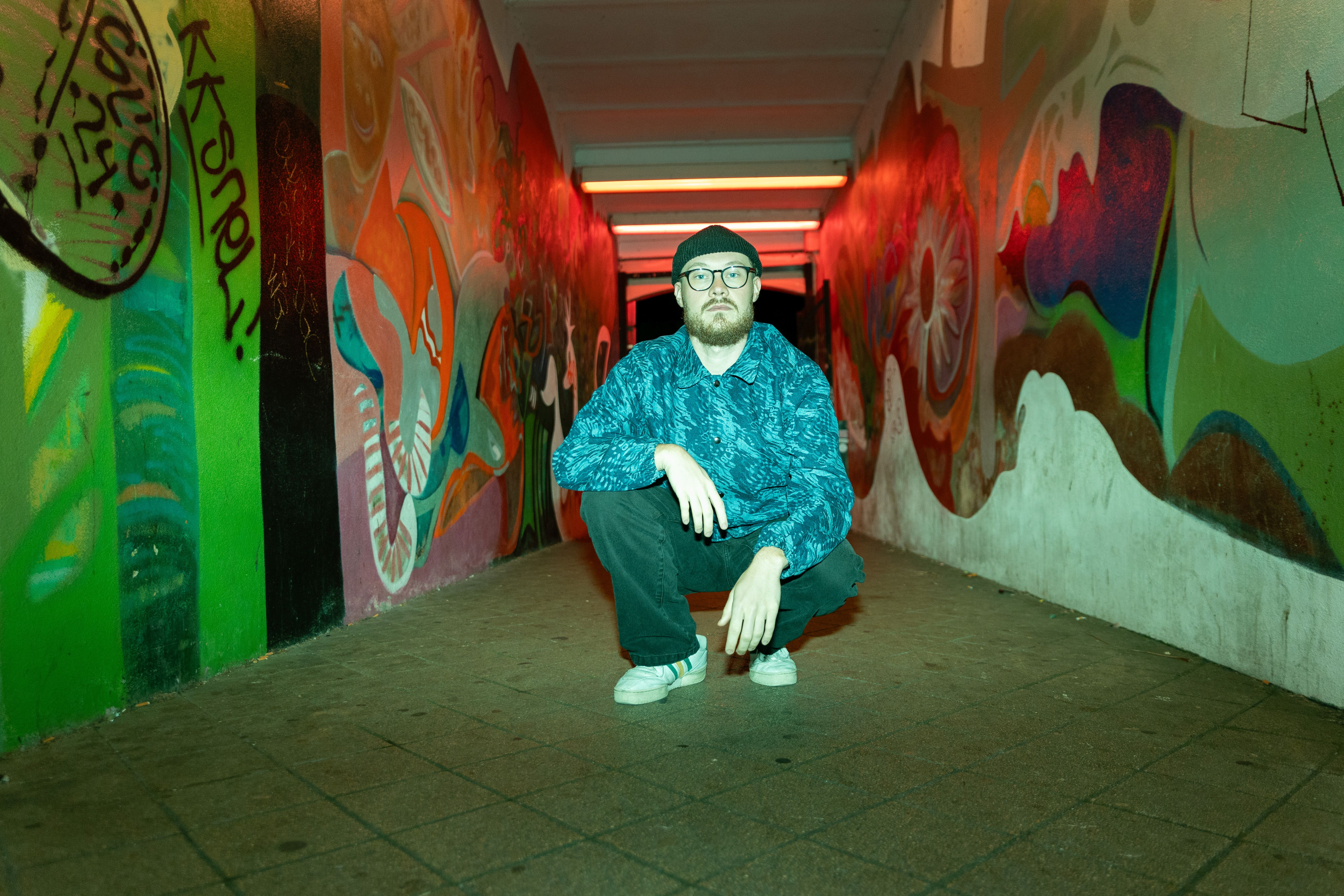
Name: Anton de Bruin
Occupation: Producer, composer, keyboard player
Nationality: Dutch
Current release: Anton de Bruin's new album Sounds of the Eclipse is out via Sundown. Next to Anton himself on Fender Rhodes and keyboards, the album features Peter Somuah (trumpet), Jesse Schilderink (tenor saxophone), Milan Boone (guitar), Thijmen Molema (drums), and Joop de Graaf (bass).
Shoutouts: For sure the whole group that pioneered the UK Jazz sound. Gilles Peterson, Shabaka Hutchings, Kokoroko, Ezra Collective, Steam Down and I could go on and on. These are the people that broke open my mind to the possibilities outside of the norm at that time. At the same time, I'd also say Flying Lotus and his Brainfeeder label and everything that happens on there, like Knower and Thundercat. The way that blends beat culture, experimental electronics and jazz is out of this world and really boundary pushing.
For festivals, I'd say anything that dares to program out of convention. That gives spaces to young, upcoming artists and let them connect with a new audience. Festivals that aren't afraid to take a chance on someone when they are doing something new or they are developing something interesting are the festivals that push the genre forward.
Recommendations for Rotterdam, the Netherlands: Come to Rotterdam to see what the city has to offer when it comes to independent night life! People always focus on Amsterdam when it comes to partying and there for sure are super cool things happening. But there are so many initiatives happening in Rotterdam that deserve attention and love that I'd dare people to come take a look - dive into the underground scene and find something new!
[Read our Ezra Collective interview]
If you enjoyed this Anton de Bruin interview and would like to stay up to date with his music, visit him on Instagram.
What were some of the musical experiences which planted a seed for your interest in jazz?
Funnily enough it was just being in my bedroom at 13 years old, browsing through Youtube and clicking on a performance of the Cole Porter song "Love For Sale'' by Oscar Peterson.
I was in a high school with a focus on music and in the next piano lesson I had with my teacher I went to him and said "that is what I want to do'' - and we went from there.
What does the term jazz mean today, would you say?
I think the term "jazz'' today emboldens more of a philosophy of self expression, improvisation and freedom that can be mixed into any genre you wish to explore.
People still tend to associate the term "jazz'' with a traditional line up of double bass, drums, piano and a horn or vocalist but for me it means being able to express and add to something in the moment.
In that line, I'd argue that you could go as far as saying dub music has some form of jazz in it due to the producer making a performance at the mixing desk and creating a new version in real time, expressing their view on the track.
As of today, what kind of materials, ideas, and technologies are particularly stimulating for you?
For me going back to hardware has been quite a game changer. I just love to touch buttons and do things in real time. Don't get me wrong, I love the flexibility of working in a digital workspace but just the little happy accidents analogue gear give you and just audio being converted into actual electricity is something special to me that digital can't really re-create.
Apart from that, what I spoke about earlier on what jazz means to me. I remember seeing Joe Armon Jones on his second album tour at our local club, BIRD Rotterdam, and seeing reggae and dub being mixed with "jazz'' for the first time and I was like "WOW YOU CAN DO THAT?!''
And from there the wormhole opened into what became and already was the UK Jazz scene but also sounds from LA where producers from the beat space are mixing their skills with jazz musicians are opened doors in my mind to spaces I might didn't see connections between.
Where do most of your inspirations to create come from - rather from internal impulses or external ones? Which current social / political / ecological or other developments make you feel like you need to respond as an artist?
My inspirations come from both external and internal impulses.
I tend to come up with a concept of an album due to things I see happening around me or a story I want to tell. After that I just go and listen to a lot of music, dig for new sounds and just try to internalise all of that and make a mental "moodboard'' of the things that I like.After a few weeks of doing that, I sit down and see what my subconscious created out of all of that.
With Sounds of the Eclipse I wanted to create a record to counter the political wave of far right extremism and the pushback that nightlife had to endure after COVID, where city centres turned into places to live instead of ever evolving spaces where ideas and people meet.
“Sounds of the Siren” is such a song that I wanted to feel like a protest song.
“Running on Slippers” is a track that came from feeling we're going into a direction with climate change but also socially that is going to be hard to come back from.
Running on Slippers for me means realising too late you need to fix things and at that point there is not much you can do. So it feels like you are running on slippers, which you'd know is very uncomfortable and not at all efficient if you ever tried it.
Tell me a bit about the sounds & creative directions, artists & communities, as well as the colleagues & creative hotspots of your current hometown, please. How do they influence your music?
I am from Rotterdam, the Netherlands, which is known to have had a bustling nightlife space where a lot of electronic music pioneered in The Netherlands. In recent years this nightlife has unfortunately been struggling and after COVID it became even harder, but this has lead to an increase in independent spaces where a lot of cool people do a lot of cool things.
Organisations like community radio Operator Radio and venue Time is the New Space but also the establish venues try to support local artist in their programming like de Doelen, BIRD and LantarenVenster. It's a very diverse place with something for everyone which makes it a very nice community to be a part of since everything you could want to do, is able to find a home.
Among the musicians there is also a lot of cross pollination. I play and produce for Peter Somuah, who in turn is playing trumpet on my record. For the feature of "Keep Your Distance," NIA, also did string arrangements and played them on Brintex Collective's new record.
Thijmen Molema, who is the drummer on my record, also plays and produces for MAIN. who did “Sounds of the Siren” with me on Sounds of the Eclipse.
We all play on each other's record, projects and play at jam sessions so it all feeds into the big collective idea of the city and its musical direction which in turn resonates throughout the musical output we have.
For me it is an ever inspiring thing and feeds me with ideas and energy to keep making new things and pushing to reach more people.
What role do electronic tools and instruments play for your creative process?
A lot! I love it when my old Space Echo delay does something weird because the tape might be a bit worn. I can take that and form it into an intro or outro of a song that gives you this cinematic world for a track.
I am of course a keyboard player by trade so electronic instruments are kind of what I surround myself with, apart from the acoustic piano. It just allows me to work and think in so many colours and textures that I can get overwhelmed at times. But it's a freedom I wouldn't want to miss.
Thanks to technological advances, collaboration has become a lot easier. What have been some of the most fruitful collaborations for you recently and what approaches to and modes of collaboration currently seem best to you?
I love that I was able to reach out to K.O.G to be on Sounds of the Eclipse and we made the track “B3sin” together that also features Aziza Jaye of Nubiyan Twist!
That song was living on my hard drive for a year because we recorded the album and I didn't know what to do with it and K.O.G and Aziza's work on it really tied it together so much that it became one of my favourite tunes on the record.
Recently I also did a record with Peter Somuah, "Highlife,'' that was released on German Jazz label ACT for which we travelled to Ghana to record and talk to the founders of the highlife genre.
That was an amazing experience because it is a very rare thing to be able to make a record in a genre and have the people that basically pioneered and developed that sound on it!
Currently I want to work with people that inspire me and push me to do different and better things and I can proudly say that Sounds of the Eclipse did that for me. I still have a big wishlist of people I would really want to work with in the future on the upcoming projects I want to do and have planned out. I think the most beautiful thing that collaborations do is to connect people, idea's, places and environments.
When you check out K.O.G you might find out about Ghanian music, when you check out NIA you might find out about the sound of cello in RnB music and I could go on with that.
[Read our Nubiyan Twist interview]
Jazz has always had an interesting relationship between honouring its roots and exploring the unknown. What does the balance between these two poles look like in your music?
Like I said earlier, I see "jazz'' as a philosophy rather than a sound. So for me the balance would lie between, for example, having a reggae song on the album but with a saxophone solo.
Mixing in elements of performance while producing the record through echoes, reverbs and effects to turn on and off like a drummer playing its fills on “Long Way Around.”
How much potential for something “new” is there still in jazz? What could this “new” look like?
There is always potential for "new'' as long as you are open to it! There are so many genres and sounds all around the globe people can pull from that it is an endless playground to evolve the music and to have people connect with sounds and ideas they've never heard!
The key is, I believe, to just be open to it and honour the idea of "jazz'' as an always forward moving medium that seeks to explore instead of to conserve.
For many artists, life-changing musical experiences take place live. How do you see that yourself?
Live music for me is where it all comes together.
I will say that making an album for me, being in the studio deep in the night and just kind off diving into the world of the story you are trying to tell is something that is very close to my heart. But seeing all the music come to life with people dancing, shouting and enjoying themselves has always been something very special.
You suddenly can see that what has been made has impact and that people are moved by it, literally or figuratively.
How, would you say are your live performances and your recording projects connected at the moment? How do they mutually influence and feed off each other?
Live performance provides very valuable feedback to me for what I'm missing in the line up of songs.
I feel the energy a set puts out into the crowd and might think "hm we really need an uptempo song right here because people want to go there'' and I make a mental note of that so when I start building the next album, that is one of the things I'll put into it.
At the same time, I want people to experience the emotions that I put into a record on the dance floor. So I try to really find a mix of those when I make the set list and when we rehearse our live sets.
Improvisation is obviously an essential element of jazz, but I would assume that just like composition, it is transforming. How do you feel has the role of improvisation changed in jazz?
I don't think it has changed that much in a detailed sense. It always has been very broad from free players to players that are more into the harmony and all those colours.
I think a recent development that is very interesting is that we are moving the concept of improvisation towards other instruments and disciplines. Freestyle rap, of course, always had a place since the start of hiphop but with Kendrick Lamar and Robert Glasper, it has also found a place in the bigger crowd of jazz. We start treating the voice as a saxophone or trumpet.
Same goes for seeing production techniques as "improvisation'' from what I touched on earlier with dub mixing. I think that is the beauty of the genre that it can constantly evolve and re-define itself, without losing its core value - which is expression.
What, would you say, are the key ideas behind your approach to improvisation?
I do not have a conscious approach to improvisation in the sense that I follow a guide line. I play what I feel and what comes to me in the moment from what happens in the moment.
I guess that would be my approach to it: just react to whatever is happening in that moment.
The Montreux Festival intends to preserve its archive of recordings for future generations. Do you personally feels it's important that everything should remain available forever - or is there something to be said for letting beautiful moments pass and linger in the memories of those that experienced them?
I do like that institutions like Montreux Festival document performances for future generations because it can inspire new talent in the future by listening to these concerts over and over again. I certainly know I did that when I was learning about the music.
At the same time, I do also think that in some cases it is very special to have something that only happens once so it becomes a snap shot in time, especially with music in the improvised space that is a reaction to current events and times.
Everything is already here forever it seems like, with the Internet, so having a special concert somewhere in a back alley venue that only a 100 people know of is something that can create a very special setting and feeling.