Published
Name: Anushka Chkheidze
Nationality: Georgian
Occupation: Composer, producer
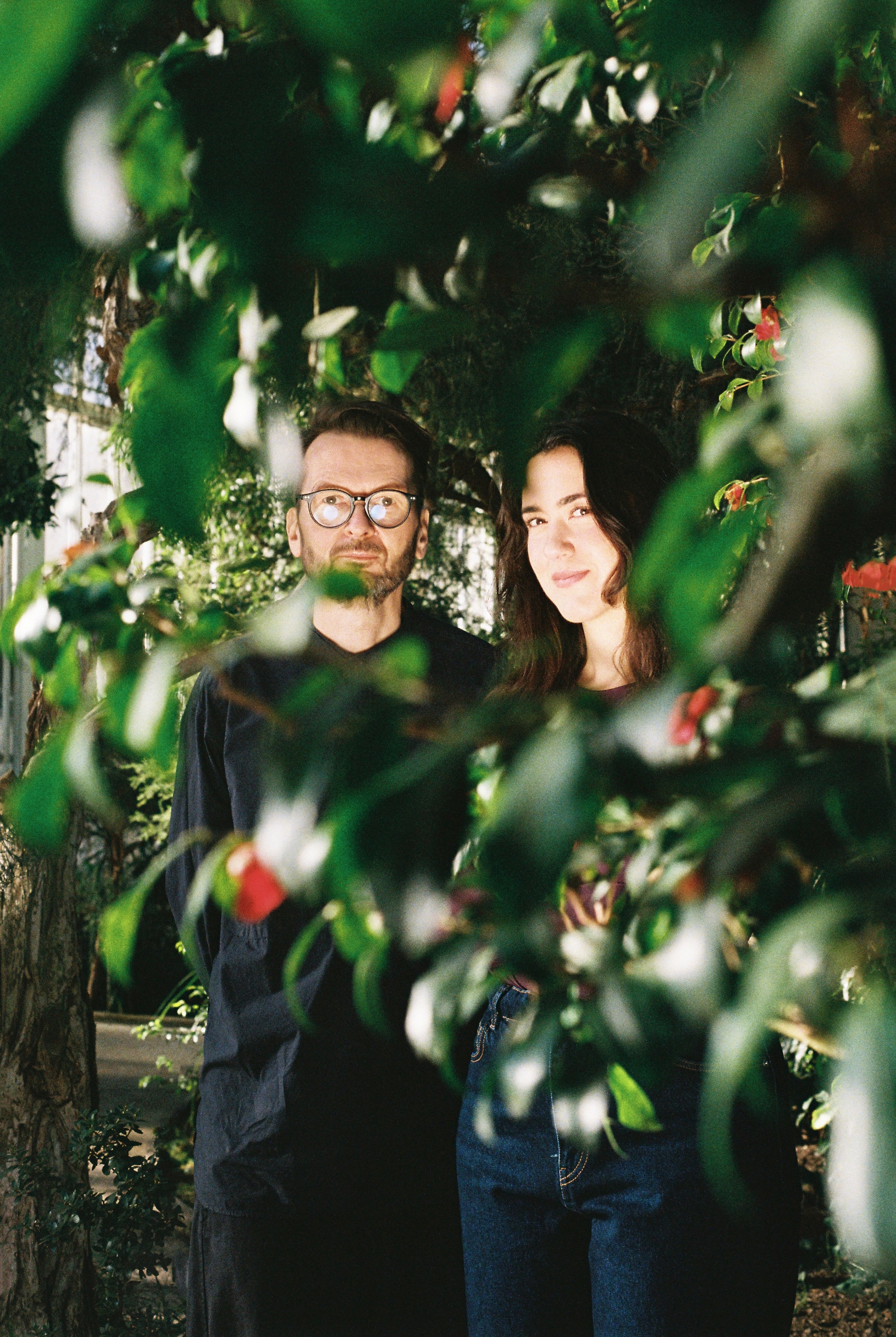
Current release: Anushka Chkheidze teams up with Robert Lippok for their new collaborative album Uncontrollable Thoughts, out October 31st 2025 via Morr.
Hometown Recommendations:
1. I would recommend trying a broodjie Carlo in Utrecht, close to the church. Sit, share some food with the pigeons, listen to some music, and watch the cyclists for a bit — sometimes good ideas come to me there, so it might be worth a try.
2. In my hometown, Kharagauli, I would recommend drinking Inezarda spring water — it tastes absolutely amazing.
3. I love dance, but it never became my profession for many reasons. I can’t really dance in public — only in videos.
Topic I am passionate about but rarely get to talk about: Mmmm … I'm also deeply worried about my country. I often feel guilty for leaving, and sometimes that feeling blocks my artistic vision. There are moments when I feel like I don’t deserve to be happy — and that’s something I’m still learning to overcome.
If you enjoyed this Anushka Chkheidze interview and would like to know more about her music, visit her on Instagram, Facebook, and bandcamp.
The path to becoming a producer is a process - but from many interviews, I am under the impression that there are nonetheless one or a few defining moments. If this was the case for you – what were they and why were they so incisive?
Honestly, I never had the intention of becoming a producer. Since childhood, I’ve simply loved creating music and writing down memories — it always came very naturally to me.
At certain points I tried to step away and think about what else I should do with my life, but those were the moments when I felt I was betraying myself. Luckily, I always found my way back, because music is the one thing I never get tired of doing.
Maybe now it can be called producing, because I’m working on bringing more discipline into the process and making it a daily practice. It’s not easy, but I believe I’m in that defining moment right now, where this path feels clearer and more intentional than ever.
Tell me about one or two of your early pieces that you're still proud of (or satisfied with) in terms of production – and why you're content with them.
If I had to point to one defining moment, it would be the track “Lingotto.” To this day, I haven’t been able to repeat myself with it, and honestly, I don’t even know exactly how I made it. Maybe it’s nothing special for others, but for me, production-wise, it opened new paths and ideas.
With this track, I discovered my production style, though I did so intuitively, without even realizing it at the time. I wrote it in Italy in 2019, and it ended up on my first album in 2020.
I felt a very strong energy while creating it — it came together in just one night. I had just been to a concert that had a huge emotional impact on me, which I think inspired its energy. This track also made me fall in love with the combination of fast rhythms and slow harmonies.
The video for it is still very special to me because, even though the music was born in Italy, it always reminds me of Tbilisi. I love that strange dissonance — the feeling of being in two places at once. Lingotto showed me how music could be a path, a process, and a home all at the same time.
How far, would you say, was your evolution as an artist connected to the evolution of your music set-up and studio? Were there shared stepping stones?
I’m still in the process of evolving, but my creative side isn’t really tied to my equipment. When I got my first analog instrument, of course my music changed, because I love the tactile experience of playing by hand.
But I don’t believe that having better gear automatically makes better music. There have been moments when I got more gear, but ended up producing less music because my workflow slowed down.
There are artists who can realise their ideas best with a traditional – or modified – piano interface, others with a keyboard and a mouse, yet others by turning knobs or touching screens. What's your preferred and most intuitive/natural way of making music and why?
For me, touching the notes is very important — I’ve been playing piano since I was three. I never played it professionally, but it was my first real connection to music. I love the tactile feedback of an instrument, whether piano, synthesizer, or knobs.
I also enjoy recording, arranging harmonies, and building music from scratch. Laptops and mice don’t feel natural to me, nor modular patches? I like instant interaction with an instrument, whether organ, controller, synth or drum machine.
But who knows ? … I have changed my mind multiple times …
Tell me about the space of your current studio/workplace and how you've set it up to optimise creativity.
I’ve been working hard to build a good studio, then I left Tbilisi.
After completing my master’s program in the Netherlands, where I had access to ideal school studios, I now have to start from scratch. For now, I’m sharing a space with friends, coordinating schedules for who works loudly when.
Eventually, I want to have my own space with a view of nature, because looking outside always gives me ideas on how to play. For now, it’s difficult to rebuild the same setup after losing the school studio, but slowly I’m trying to make it possible.
From the earliest sketches to the finished piece, tell me about the production process for Uncontrollable Thoughts, please.
For Uncontrollable Thoughts, I collaborated with Robert Lippok, and it really felt like a magical process. Normally I’m quite reserved and it’s not easy for me to share ideas, but with him it was natural.
For example, sometimes I would start with drums and sometimes he would play a melody, and we’d just hit record and play for 20–30 minutes without stopping. Later, we would go back, listen, and select the strongest ideas. From there, we began sending projects back and forth. I might add a vocal line, some piano, or new drums, and then send it back to him — he would respond by adding noise textures, harmonies, or completely reshaping the track. Some pieces I finished, some he did, depending on the mood and character.
There were even funny moments when files got lost or mixed up, and we had to rebuild tracks almost from scratch. But those challenges also kept the process alive.
For me, production and mixing are almost the same thing — they happen together, and this collaboration made that even more clear.
Late producer SOPHIE said: “You have the possibility with electronic music to generate any texture, and any sound. So why would any musician want to limit themselves?” What's your take on that?
Absolutely, I don’t think musicians should ever limit themselves.
If you’re worried about limitations, then maybe electronic music isn’t the right place for you.
Tell me about your aesthetic preferences for picking effects like reverb, delay, compression, chorus etc … - What was the role of these effects in the production of your current release?
Honestly, it’s better to ask Robert about that — he’s really the wizard when it comes to sound design.
I usually try to make my drums sound more raw, percussive, and a bit de-pitched. That texture feels more natural to me and gives the track a certain character, which does not sound like “drums,” I guess.
I use a lot of equalizing and sidechain effects when I work on sound. For me, it’s not really part of mixing — it’s more about shaping the sound the way I want it from the very beginning of composing.
Producers work with sound in a very direct way for very long stretches of time. What are some of its qualities that you appreciate now more than before, and how do you try to bring these to the fore in your work?
For me, no single instrument was ever fully interesting for composing until I stepped into the digital world and started making music on my laptop. I love the freedom — there are no rules, and I can approach any sound boldly, shaping it to my taste.
Before, I treated this more like raw material. Mistakes and happy accidents often led to unexpected discoveries. Now, in the producer’s world, I’m more aware of small rules, like removing unnecessary frequencies.
Still, I value these rules because material that once seemed unclear at home can reveal surprises in larger venues. It gives me a sense of security, knowing I can share what I truly hear with an audience.
The current production process allows for fast and infinite variations. Can you tell me about how you deal with this potential for the infinite and what ultimately decides on how many iterations to create and which version to release?
I’ve never had a problem finishing music because I don’t pressure myself with it. In life, I have many insecurities, but I treat music very carefully — it’s the one thing I haven’t ruined with my perfectionism or self-directed anger.
If I feel a piece is honest and ready to be shared, I let it go. I don’t overwork it, because that can be a trap — you might never stop changing the music in search of perfection.
I always try to stay close to the first idea, because instinctively, it often carries a unique feeling that nothing else can replace.
Tell me about the role collaboration played in your recent productions – and how you see the potential for machines as collaborators compared to humans.
I’ve participated in some collaborations, mostly in experimental music groups. However, I’ve never really released an album with anyone — for me, it’s still very new to share music with another person.
It’s a very pleasant experience, because for the first time I can listen to my own music as if I’m a real listener. Even after hearing “Rainbow Road” several times post-release, I can’t experience it that way on my own.
Listening with someone else creates a kind of comfort — almost a feeling that the music isn’t entirely mine.
When collaborating with a human, you think a lot — about feelings, decisions, the music, the cover, the live show, the release, and about how to stay free, as when you work alone.
With machines, you have control, and sometimes surprises happen — things might not work exactly as you expect. But with a human, you can’t “fix” them like a machine.
Production, as opposed to live performance, can be a lonely process and feedback from listeners isn't always tangible. What is it about it that gives you satisfaction?
After every live performance, I often think it’s the last one — and yet I keep playing. Sometimes I can’t explain the feeling, as if I question whether I’m really a performer. But other times, I feel a strong connection and a rush of adrenaline that I simply can’t let go of.
For me, composing music is an even grander process — something you can’t fully share with anyone. When a composition suddenly unfolds in a way that makes you fall in love with it, when you want to listen endlessly, dance, sleep, and wake up with it — it can change your days, have a profound effect on you.
I don’t know if I’ll ever be able to give someone as much motivation through my music as I give myself.
We can watch videos on production, take producer courses, and exchange deep insights on gear forums. Amidst these options to improve one's chops/skills, how do you keep things playful?
Honestly, I struggle with this. Sometimes I get caught up in gear nerdiness — feeling like I need all the latest equipment to be a better producer, musician, or live performer. It can be quite stressful in today’s reality.
Sometimes I try not to think about it and remind myself of the days when I started making my first tracks. I listen back to old recordings where I had nothing, and it helps me realize that all of this stress is kind of meaningless. In the end, what truly matters is what you hear.
I’ve often heard people say that my first album sounds like it was made with analog equipment, even though at the time I had nothing but a laptop and a keyboard.
AI is already capable of making something most people would recognise as music. I am curious, though, and will keep this question somewhat broad on purpose: What do you think that means?
It means that streaming platforms can now make even more money than before, which often sounds a bit alarming — like many other things involving big companies.
Creatively, I think this process is interesting, because we’ll learn to live with it, and in some ways it might even help musicians find new ideas. But creativity itself is an individual process — every artist goes through it in their own unique way, and those ideas, thoughts, and expressions are irreplaceable I’ll always want to see live concerts and real people.
I believe the best way to look at AI is not as a replacement for our process, but as something that can support it. In the end, everything in this world can be dangerous if it’s used in the wrong way— whether it’s education, money, or AI.
Creativity can reach many different corners of our lives. Do you personally feel as though producing a piece of music is inherently different from something like making a great cup of coffee? What do you express through music that you couldn't or wouldn't in more 'mundane' tasks?
I never feel better, more important, or more significant just because I make music. For me, doing something well is equally important, no matter what it is.
Being a musician feels inherently selfish, in a way — it brings such a huge benefit to me personally.