Published
Name: Apparitions
Nationality: American
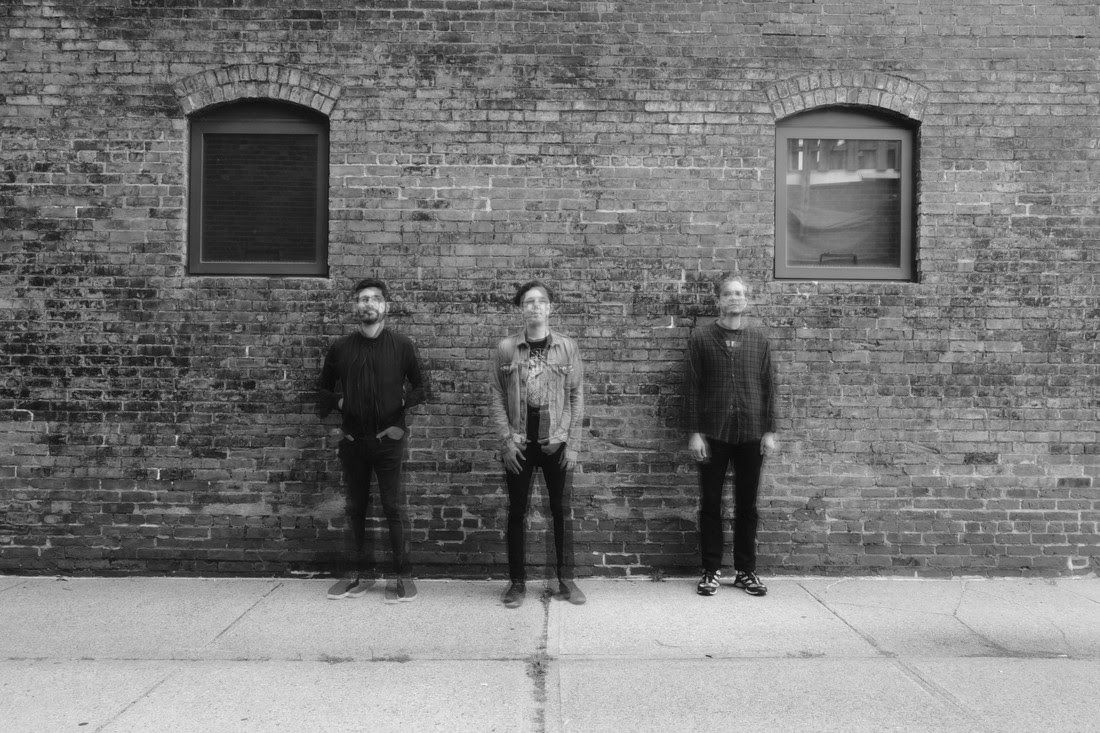
Members: Andrew Dugas (guitars, amplifiers), Igor Imbu (modular synthesizers), Grant Martin (drumset)
Current release: Apparitions's new album Volcanic Reality is out March 28th 2025 via Deathbomb Arc.
Global Recommendations: Houston; Rothko Chapel. Brooklyn; Noguchi Museum. Chicago; Garfield Park Conservatorium.
If you enjoyed this Apparitions interview and would like to stay up to date with the band and their music, visit their official homepage. They are also on Instagram, and bandcamp.
When it comes to experiencing the sensation of “energy” as a listener, which albums, performances, and artists come to mind?
A common thread that links many of our favorite live performances is a sense of the sacred.
Sunn o))), Wayne Shorter Quartet, Lingua Ignota, and Georg Friedrich Haas all come to mind as examples, albeit through a variety of means, of artists accessing this fundamental energy we hope that an Apparitions show achieves for others.
There can be many different kinds of energy in art – soft, harsh, healing, aggressive, uplifting and many more. Which do you tend to feel drawn to most?
Apparitions is maximalist in the sense that we’re seeking various musical limits.
We intentionally tend toward an austere focus in tone, but we all listen to a wide range of music - though much of what we listen to doesn’t necessarily inform our music.
For that, we’re often drawn to music that fits whatever definition of ‘heavy’ that can account for both A Love Supreme and Master of Reality.
I have had a hard time explaining that listening to death metal calms me down. When you listen to a song with a particular energy, does it tend to fill you with the same energy – or are there “paradoxical” effects?
It’s fascinating when another listener has a completely different experience of a piece of music than your own.
Some music lends itself to those paradoxical effects for not-so-obvious reasons, but it is inevitable that we consume music, or any art, through the lens of our own lived experiences.
Barthes’ idea of the ‘death of the author’ is relevant here.
When it comes to experiencing the sensation of “energy” as a creator, how would you describe the physical sensation of experiencing this energy? [Where do you feel it, do you have a visual sensation/representation, is there a sense of release or a build-up of tension etc …]
Sound as physical phenomena is one of the primary interests of the group, but at the same time the experience of sound is one of complete interiority.
We saturate the acoustic space and overtone series in an attempt to sever the listener’s consciousness from the past and the future - volume attempting to create a space for headless unity with only the present moment.
When it comes to composing / songwriting, are you finding that spontaneity and just a few takes tend to capture energy best? Or does honing a piece bring you closer to that goal?
Our compositional tendency is to slow down the writing process to an excruciating degree. The ensemble saves us from our perfectionism and brings us closer to the spirit of the classic recordings we are inspired by.
Our most successful recorded performances are the result of a combination of meticulous forethought and the initial reactions to the material by the ensemble - typically captured in one take. Nearly all of our time spent playing as a group is what can be heard in our discography.
How much of the energy of your own music, would you say, is already part of the composition, how much of it is the result of the recording process?
It’s a varying combination. Seth Manchester has done an excellent job of capturing the live feel of the band - and the sound of the room during our performances.
Turning an idea into an actual recording inevitably changes its nature - which we view as a positive.
For your current release, what kind of energy were you looking for?
A sense of anguished grandeur, of visceral immediacy, and of constant contradiction - simultaneously nervous and ecstatic, fast and slow, moving and still.
How do you capture the energy you want in the studio?
Through communication, when we plan the theme and the arc of the piece; and through performance, when we’re in the studio together.
What role do factors like volume, effects like distortion, amplification, and production in general for in terms of creating the energy you want?
We dream of creating music that challenges our perceptions of space and time, so distortion and reverb are crucial.
We’re not content with distortion only in the traditional sense of the word, applied only to the sound of a clean guitar; temporal time and acoustic space would also become distorted.
This is where we take cues from the French spectralists Gerard Grisey and Tristan Murail, but apply some of their compositional concepts to our instrumentation.
In terms of energy, what changes when you're performing live on stage, with an audience present, compared to the recording stage?
Nothing changes. Our aim remains the same - to create an explosive release of energy.
What kind of feedback have you received from listeners or concert audiences in terms of the experience that your music and/or performances have had on them?
That our music creates a sense of perpetual anticipation.
Would you say that you prefer to stay in control to be able to shape the energy or do you surrender to it and allow the music to take over? Who ultimately has control during a live performance?
We put in a lot of careful planning before going into the studio, and I think that’s what allows us to relinquish control in a meaningful way once we are in the studio or performing live.
Drone music can become tedious very easily, and surrendering control is an effective way to counteract that.
The energy that music is able to generate can sometimes be overwhelming. How, do you think, can artists make use of this energy to bring about change in the world?
It goes without saying, we are living in an extremely tumultuous point in history. Though it is only one facet of resistance, artistic creation is an essential one.
Creation itself is now an open act of defiance in the face of our increasingly fascist government and relentlessly capitalistic society. Artists have a unique avenue to create space for community in a world that has become increasingly hostile toward any action that does not take place for the sole purpose of the generation of capital.
We’ll leave with a line from André Breton; “'Transform the world,' said Marx; 'change life,' said Rimbaud: these two goals make only one for us.”