Published
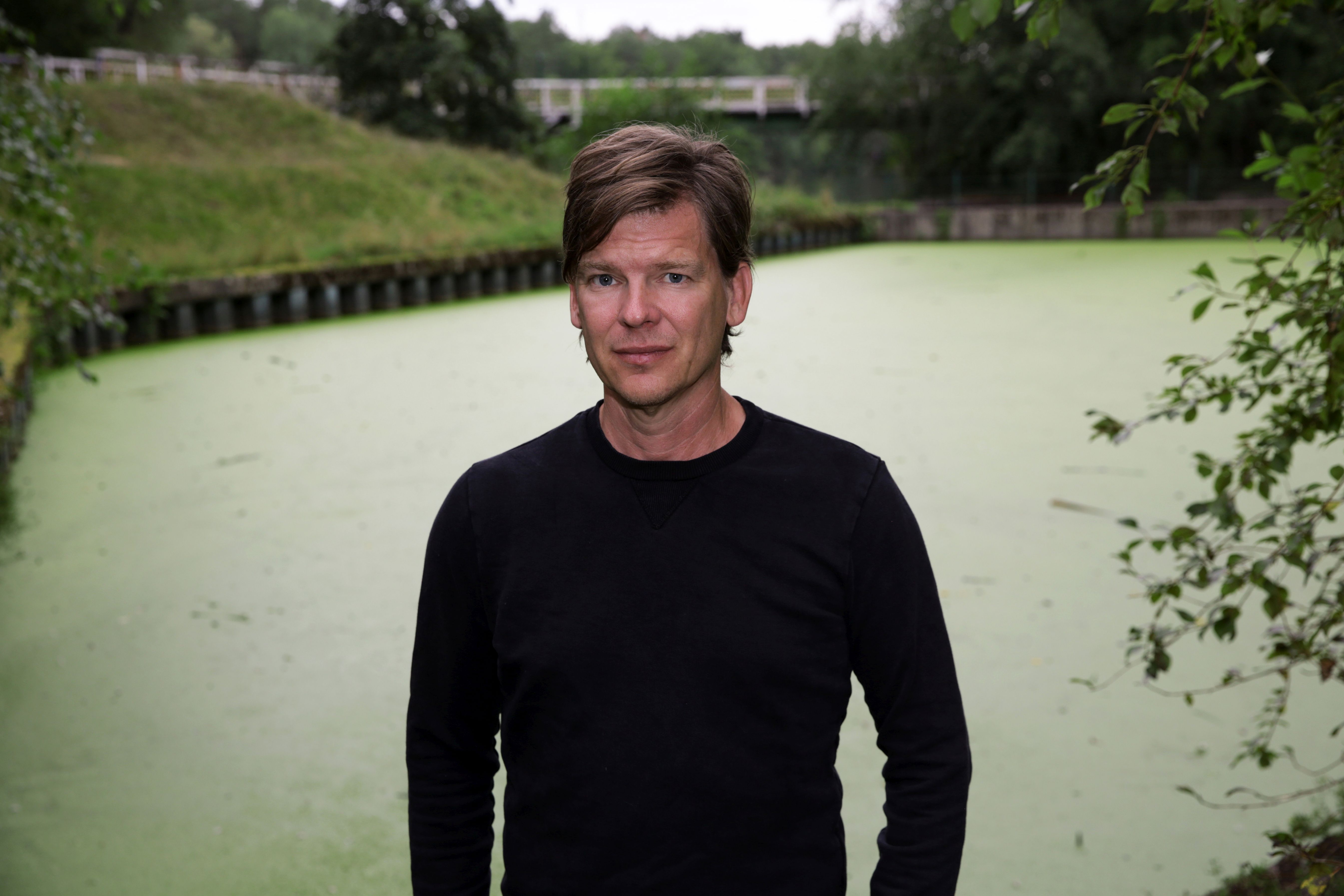
Name: Mark Wyand aka Arborra
Nationality: German
Occupation: Producer, composer, saxophonist, sound artist
Recent release: Arborra's new album Mind Over Matter, co-produced by David August, is out via K7.
Recommendations on the topic of sound:
Walter Russell: The Secret of Light
Paramahansa Yogananda: Autobiography of a Yogi
[Read our David August interview]
If you enjoyed this Arborra interview and would like to stay up to date with the music, visit the project on Instagram, and bandcamp.
When I listen to music, I see shapes, objects, and colors. What happens in your body when you're listening? Do you listen with your eyes open or closed?
When I listen to music with deep concentration, I usually close my eyes. If the music carries me into an almost meditative state, I sometimes perceive shifting clouds of light in my mind’s eye, accompanied by revitalizing sensations or a gentle vibration.
Sometimes, when the music is truly breathtaking, I even hold my breath for a moment. I love this state of listening—it feels expansive and heightens my awareness.
When I work on my own music, I experience specific inner colors—not in a synesthetic way, but more on a felt level. These colors serve as a kind of guidance, appearing when things start to feel right, deeper, and more connected to myself.
My track “Expanse” was inspired by this feeling.
How do listening with headphones and listening through a stereo system change your experience of sound and music?
Listening with headphones creates a closed system, offering an intimate, almost immaterial, and spiritual way of hearing. It is the most direct and personal form of resonance between the music and me, helping in moments when I don’t want to share the experience with the outside world.
With headphones, I can retreat and enter my own fantasy world—my personal utopia, which I call Arborra.
Listening through a stereo system, on the other hand, feels more interactive—it establishes a connection with the surrounding world. The way sound vibrates and reflects off the physical space drastically changes my perception of it. I would say that it becomes more visual. It's a step of integrating the music into a broader context, relating my fantasy to reality.
Another important experience that comes to mind is sharing my own work with musician friends. This can be both empowering and quite challenging—just the act of sitting together in silence, listening to the music. It’s always fascinating how the different energies in the room, simply by being present, can influence my own perception of the music.
Tell me about some of the albums or artists that you love specifically for their sound.
I deeply admire artists who create sonic landscapes where everything stays in flow, the narrative remains intact, and dimensions open up to stimulate associations.
When a composition loses balance or its narrative thread, the music loses me. As musicians, we sometimes need to be extremely delicate and diplomatic in holding things together. I greatly respect those who have mastered this discipline throughout a track or an album.
I love albums that tell a singular story—one, not many—yet manage to infuse that story with multidimensional meaning, complexity, emotionality, and intelligence. Some voices and sounds hold their integrity so strongly that they retain their magic regardless of, for example, poor technical conditions. They unfold their beauty gradually, revealing more with each listen and drawing me deeper into the artist’s inner world.
I’ve experienced this by listening to artists such as Miles Davis (Aura, Kind of Blue), …
… Martha Argerich, Jon Hassell (Last Night the Moon Came ...), …
... John Coltrane (Crescent), Tim Hecker (Love streams), …
...Arvo Pärt (Te Deum, Fratres for string orchestra), Björk …
There can be sounds that feel highly irritating and others we could gladly listen to for hours. Do you have examples of both?
I believe that what makes a sound irritating or deeply enjoyable depends on its integrity. Sound doesn’t lie—there is no pretense. It reflects or resonates with us, both consciously and unconsciously. Even an unpleasant sound has its place and purpose, and as artists, we can find ways to connect with its emotional depth if we choose to.
Issues arise when sounds are placed or treated unnaturally. If a sound wants to express something but is constrained by its environment—forced into being something it’s not—its integrity is compromised, and that’s when things become unsettling. On a subtle level, I believe this is something we musicians must constantly be mindful of. It’s an essential part of my learning process.
When I improvise, for example, it requires accepting my state of mind in that moment, interacting with the sound’s inherent qualities, and allowing things to flow rather than forcing them. Finding the right place for each note is key.
The most transcendent sounds—the ones that dissolve thought and bring me fully into the moment —are always at their right place.
Are there everyday places, spaces, or devices that intrigue you because of how they sound?
I guess I’m a bit old-fashioned in this regard—sunlight filtering through trees, the sound of a forest, or the wind sweeping across the seaside captivate me the most. These natural spaces resonate deeply, creating a sense of harmony and presence.
Equally important to me is the everyday sound of my own body—its inner space. The way it resonates changes daily, reflecting my physical and emotional state. Tuning into this internal soundscape is where the real work begins. It’s a practice of deep listening, self-awareness, and challenge, as it reveals truths and desires often overlooked in the noise of daily life. And sometimes,I simply have to accept that today is not the day for a great outcome.
The saxophone remains my everyday "device," and I'm constantly searching for musical tools that expand its versatility and depth of expression. But when it comes to that, I can be quite moody.
Do music and sound feel “material” to you? Does working with sound feel like sculpting or shaping something?
Absolutely. As a woodwind player, working with sound is sculpting—it’s a physical and organic process. I shape sound with my breath, lungs, throat, and lips, but also with my heart. Each note is a living, breathing form, shaped in real time.
Simultaneously, or later in the process, I shape sound with my hands on various electronic devices. This stage feels very tactile, almost sculptural.
How important is sound for our overall well-being, and how do you feel the "acoustic health" of a society reflects its overall health?
Walter Russell’s quote captures my feelings perfectly:
“The electric energy which motivates us is not within our bodies at all. It is a part of the universal supply which flows through us from the Universal Source with an intensity set by our desires and our will.”
To me, this describes the act of making music—amplifying and resonating energy within our bodies, then releasing it into the world as waveforms. These internal resonances are shaped by our mental and emotional state, and the energy we emit has real consequences.
Sound is essential to our well-being and can be very empowering. Beyond being an art form, music can be a best friend, a therapist, or a spiritual guide. My album Mind Over Matter explores this theme—our struggle with duality and how we attempt to transcend it over a lifetime.
The way our breath connects to our sound and mind is a profound realization. We are thrown into this world and must decide what energetic role we play. Great music and art have always helped individuals and societies navigate this labyrinth.
We can immerse ourselves in sound every second of the day. The great pianist Glenn Gould even considered this the ultimate delight. How do you feel about that, and what role does silence play for you?
Without silence, there would be no sound. I believe we emerge from silence, which is why we are so drawn to sound. If a gunshot rings out, we don’t notice the silence—it’s the sound that captures our attention.
Sound is an expression of life, of emotion. We exist through sound. Action and reaction, wakefulness and sleep, sound and silence—that’s the natural rhythm.
In music, silence and pauses create awareness. They give shape to meaning, just as stillness defines movement. We need sleep to recover from life’s challenges and we need silence to truly hear and appreciate sound. When we are awake and conscious, we crave life, experiences, beauty—we want to be fully alive - fully immersed in sound.
Seth S. Horowitz called hearing the “universal sense,” emphasizing that it is faster and more precise than vision. How would the world change if we paid less attention to looks and listened more?
The visual world has become so noisy, fleeting, and overwhelmingly intrusive. I’m not talking about the look of nature—I mean the appearance of the manmade world.
Sometimes, it feels almost desperate, craving my attention, trying to seduce and consume me. It wants to dictate how things should be, how they should behave, and even how I should be. As if it’s promising that we could somehow become more ourselves through external things.
It bombards me with information—not to help me, but to distract me from what I should be doing: closing my eyes, listening inward, and reconnecting with my true essence. Finding my way back to myself and believing in the possibility of becoming the best version of who I am.
I see a growing imbalance in the function of things. It feels as if they are no longer just there to support us and make life easier. They have reached a level of presence that numbs us in our greed for more, lures us into losing ourselves, and in the process, destroys both us and our environment.
Anything goes.
It has become exhausting and increasingly difficult to choose what might actually be meaningful and necessary for one’s personal development. But that’s the game, and we have to find our way through it.
Yet, there is something that can bring us back into balance, something that can neutralize us again. And when I look at the world we live in today, the only thing that truly gives me hope for humanity is sound. The whispers of the wind, the voices of my loved ones, or the sound of music.