Published
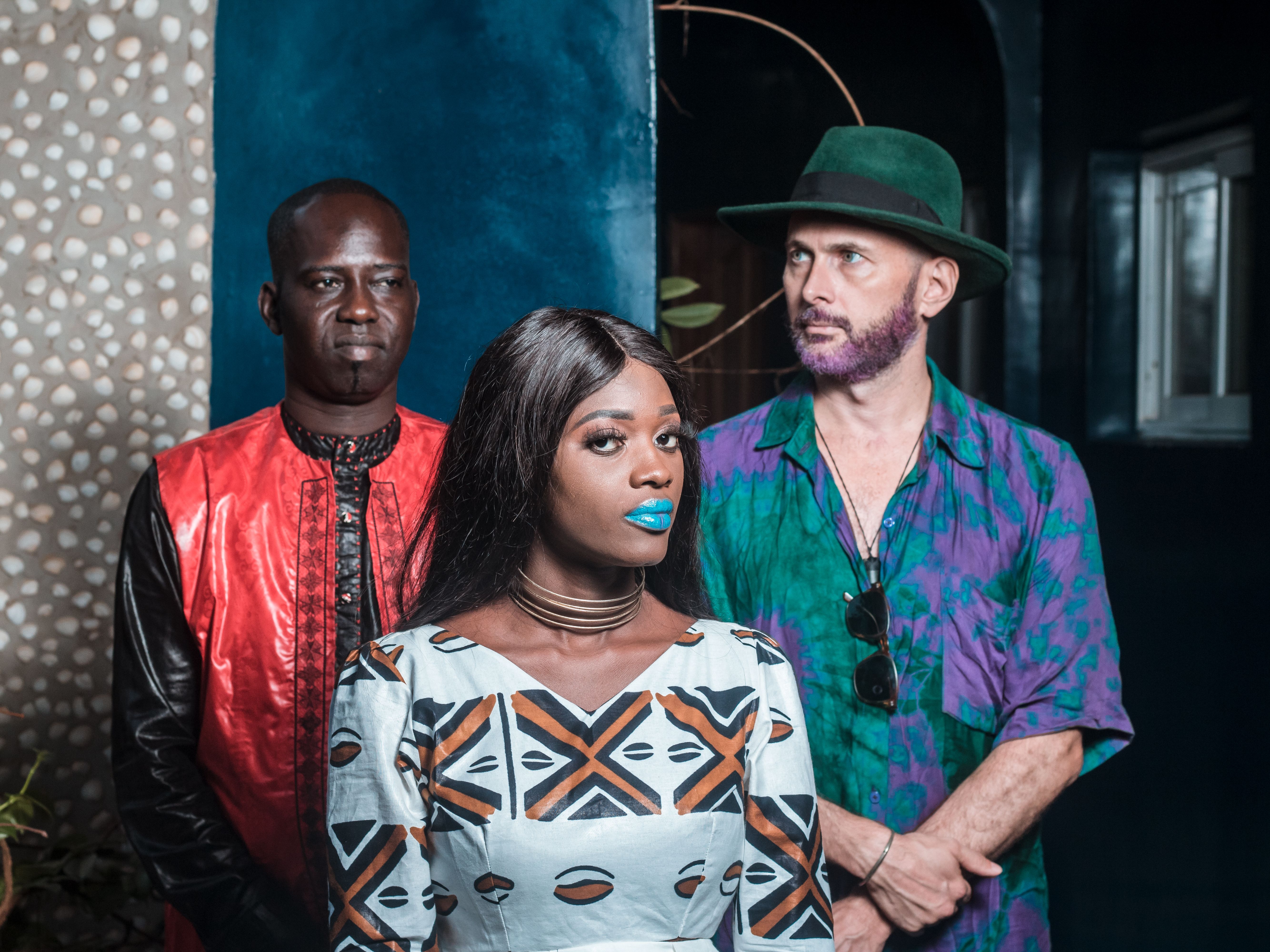
Name: Aron & The Jeri Jeri Band
Members: Aron Ottignon (band leader, keys, synth), Bah Kane Seck (percussion), Aicha Niang (vocals)
Nationalities: Senegalese (Bah Kane Seck, Aicha Niang), New Zealand (Aron)
Interviewee: Aron Ottignon
Current event: Aron & The Jeri Jeri Band are one of the acts appearing at the XJAZZ! 2024 festival in Berlin. For tickets, go here.
Recent release: Aron & The Jeri Jeri Band's debut album Dama Bëgga Ñibi (I Want To Go Home) is out now on vinyl via Urban Trout.
Topic I am passionate about but rarely get to talk about: I’m passionate about going against the grain – especially the paths laid out for us by conservatories and institutions. I believe in making our own paths. For me, true diversity is found in someone’s actions, not how they look. That belief runs through everything I do, especially my music.
Recommendation for New Zealand: Visit a Māori marae and take a moment to pay your respects to the indigenous culture. It’s a powerful experience and a reminder of the deep roots that shape the land and its people.
If you enjoyed this Aron & The Jeri Jeri Band interview and would like to stay up to date with the band and their music, visit them on Instagram, Facebook, Soundcloud, and bandcamp.
The XJAZZ! Festival is just around the corner. Tell me just a little bit about your performance at the festival, please.
We’re bringing just three musicians from Jeri Jeri for this performance – normally, in Senegal, the full band consists of more than fifteen people.
So, this show is about embracing the challenge: how do we translate that massive energy and complexity into a lean, powerful trio for our first European tour?
It’s a raw version of the project, but still rooted in the same spirit.
How, would you say are your live performances and your recording projects connected at the moment? How do they mutually influence and feed off each other?
A lot of the recordings on the album came out of spontaneous jams, field recordings, and remote sessions we did during the Corona period. There was no master plan – just moments we captured and later shaped into tracks.
Translating that to the stage is a real challenge. We use Ableton to help us bridge the gap, allowing us to create a live setup that’s hybrid: part electronic, part human, part memory.
The live shows aren’t just recreations – they’re reinterpretations, constantly shifting.
In as far as you have any experience or insights, what's your view of the Berlin jazz scene?
In my experience, the Berlin jazz scene can be quite demanding – especially if you’re more introverted or not constantly out networking. It’s not enough to just be good; you have to really push to be seen. I spent years sending emails, following up, showing up – often without any response.
It took me about three years before I finally got a gig at Zig Zag. I must’ve sent ten emails. But when I finally played, it sold out, standing ovation – and now they invite me back regularly.
Still, none of that came easy. Berlin tests your patience.
Tell me a bit about the sounds & creative directions, artists & communities, as well as the colleagues & creative hotspots of your current hometown, please. How do they influence your music?
I can’t really say I have a “hometown”. I’m from New Zealand, but I’ve been far from there for a long time. I try to stay connected, but it’s not always easy.
These days, I call home wherever I’m most active musically. Right now, that’s Dakar, Senegal. In Berlin, it took me three years to land one local jazz gig outside of festivals. In Senegal, I put on six gigs in three years – and that’s a sign of something.
In Dakar, there’s a real cross-pollination between artists – musicians, painters, dancers – it’s all connected. Probably because the scene is smaller, the relationships feel deeper, more immediate. It’s not about genre or status – it’s about showing up and creating together. That has had a huge influence on how I make music.
What does the term jazz mean today, would you say?
That’s a really difficult question, especially when you consider how jazz has been exported – often shaped to serve America’s political and commercial interests. So instead of asking what jazz means, I think we should ask: which jazz festivals are really about culture and expression, and which are about marketing a certain narrative of “American culture”?
To me, jazz is about expression, resistance, and truth-telling. Right now in Dakar, even though the jazz scene is small, the message is strong: jazz didn’t come from white people, even if some media and lineups might give that impression. And with the U.S. pulling back globally – tariffs, cuts, culture wars – I wonder if that will impact the private funding behind jazz festivals worldwide. Will there be less space for artists like Marcus Miller?
Look at Montreux today – it’s mostly pop music. The idea of “jazz” is evolving, and we should question who’s shaping that evolution.
Where do most of your inspirations to create come from – rather from internal impulses or external ones? Which current social / political / ecological or other developments make you feel like you need to respond as an artist?
It’s changed over the years. Right now, my main inspiration comes from the fight to stay original – to stay true to my voice without bending to the needs of funding bodies or venue promoters. That’s incredibly hard.
Being an original artist today feels like survival. If your timing is off – if people don’t want to hear your voice – you’re out. You either have to change your voice or shout louder. I chose the second. I see myself as a warrior for what I do. I fight for my right to play. There’s so much noise, so many more polished or popular artists out there – I have to work harder just to stay visible.
Relevance isn’t something I take for granted. It’s a daily battle to stay honest and still be heard
Thanks to technological advances, collaboration has become a lot easier. What's your view on collaboration and its ongoing role for the music you make?
For me, it’s all about balance. Collaboration has brought us some of the greatest bands in history – Sly and the Family Stone, for example, was a meeting of totally different minds and energies. That’s real magic.
But today, there’s this pressure to collaborate just to feed the algorithm, open up streams, boost visibility. It starts to feel more like a strategy than a connection.
And to be honest, I find that energy a bit toxic. Collaboration is like love – you can’t force chemistry. You can plan all you want, but the truth only shows up in the room. All these strategic collabs?
I feel the same way about them as I do about Tinder. Sometimes you get lucky, but most of the time, it's just noise.
What do you generally look for in a collaborator and what made you want to collaborate with the musicians you're playing with for your XJAZZ performance?
I don’t actively look for specific traits in a collaborator, but I’m often drawn to people who come from very different backgrounds than mine. As an atheist working with Muslim musicians over the past few years, I’ve learned so much – those differences have made the music and the relationships richer.
I believe in true diversity, not performative choices. I don’t care who you pray to or who you sleep with – I care about how you listen, how you create, and whether you're open to something real happening between us.
In terms of the results, the process, and the satisfaction, how do making music in the same room together versus filesharing compare to you, real concerts vs live streams?
Well, aren’t we lucky to have both. Sharing files lets me create across borders, but nothing beats being in the same room.
Real concerts have soul—live streams are just a glimpse.
What role do electronic tools and instruments play for your creative process?
Instrument tools are like weapons – and like a samurai, you have to train with them for life.
I can tell straight away when someone hasn’t been practicing, whether it’s their voice, their instrument, or their machines.
Ímprovisation is obviously an essential element of jazz, but I would assume that just like composition, it is transforming. How do you feel has the role of improvisation changed in jazz?
Improvisation has been institutionalized.
That can be useful for education, but once conservatories start operating like businesses, the true essence of improvisation – risk, honesty, surprise – often gets lost. It becomes safe, polished, and disconnected from real life
What, would you say, are the key ideas behind your approach to improvisation?
My approach has never really changed – stay connected to the inner child, be free, reflect the environment around you. Be fully in the moment, and be yourself.
Swedish pianist and composer Mathias Landæus told me: “Every person in the audience has an effect on the music. The more improvised the music is, the bigger is the potential of each person to affect the sound in the room.” What do you make of that?
I’m not so sure about that. If your voice is strong and you’ve trained regularly, you should be able to walk into any room – full or empty – and still speak your truth. The more the audience affects you, the less tuned in you are to yourself.
That said, everyone enjoys a shared vibe, and sometimes we ride the room because it’s more fun. But in that moment, you’re also kind of selling out.
How would you describe your own relationship with your instrument – is it an extension of your self/body, a partner and companion, a creative catalyst, a challenge to be overcome, something else entirely?
It’s a work in progress. My grandmother was a pianist, and I’m still trying to be as good as she was.
My hands are small, which can be frustrating – I’m definitely jealous of pianists with big hands. But I make it work.
In a way, live performance reminds us of the transitory nature of life. When an improvisation ends, is it really gone, just like a cup of coffee? Or does it live on in some form?
It lives forever.
Maybe not in a recording, but in the memory, the energy, the people who were there. It becomes part of you.