Published
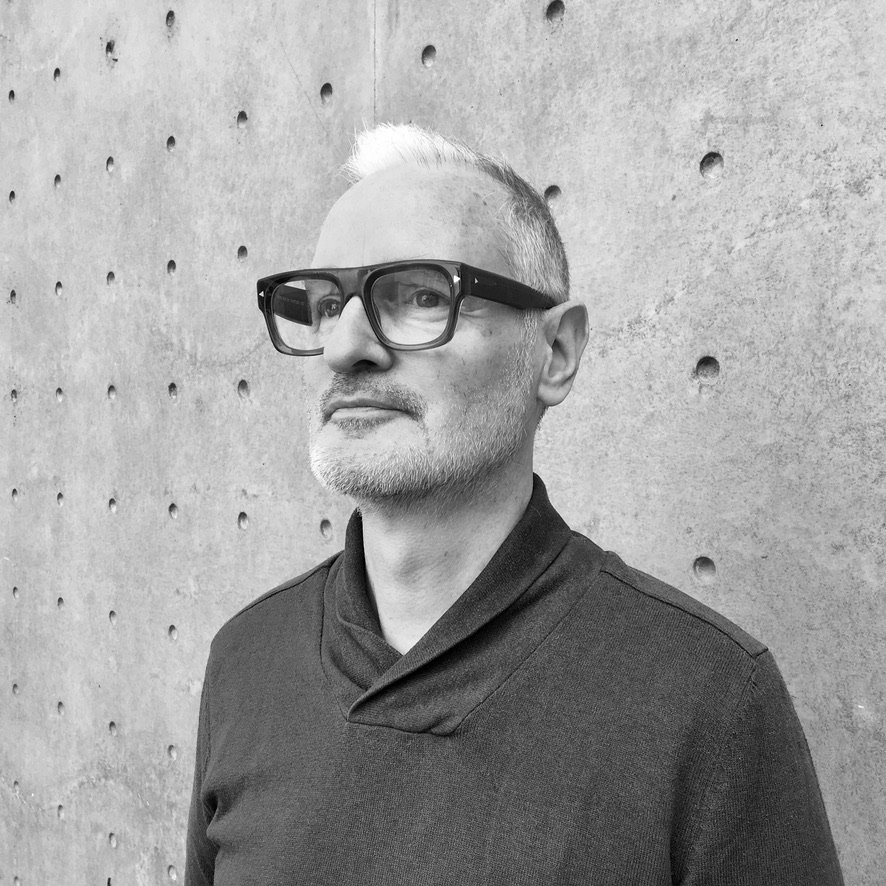
Name: Uwe Zahn aka Arovane
Nationality: German
Occupation: Producer, sound artist, composer
Current release: Arovane teams up with Yui Onodera for their album Stillform, out via affin.
Things I am passionate about but rarely get to talk about: I passionately enjoy drinking my coffee in the morning.
If you enjoyed these thoughts by Arovane and would like to know more about his music, visit him on bandcamp.
For a deeper dive, read our earlier Arovane interview.
What were some of the musical experiences which planted a seed for your interest in electronic music?
One of the very first musical experiences was a Kraftwerk song, played on the radio: “Autobahn,” from 1974. They played the long version which runs for over 22 minutes.
The young boy Uwe was totally carried away by the synthetic cars passing by with a doppler effect.
Synthetic sounds fascinated me very early on. The sounds in Start Trek Enterprise, for example, but also nature sounds.
Most genres of music make use of electronic production means. What does the term “electronic music” mean today, would you say?
That’s a very interesting question. What is not “electronic“ regarding production techniques?
I mean, an audio signal that is recorded with a microphone to tape, reel to reel recorder is electronic music. There are audio converters, capacitors, circuit boards, control electronics, etc.
In the narrowest sense, even country music is electronic when recorded in the studio. I heard very early on, in the 70s, the use of reverb or delay in pop music. So, electronic music? I would argue it is.
Nowadays, a lot of music is “electronic“, I'd say. And not just because synthesizers or digital recording technology are used.
Disco, house, techno, drum n bass, IDM and many other genres were about a lot more than just music. For you personally, is electronic music (still) a way of life – and if so, in which way?
Drum n’ bass was a huge thing for me. Breakbeats! In the heyday, I used to go to the club every night to dance to breakbeats until the morning. It was a way of life for me.
And even today, music still plays a big role in my life. Only the stylistic focus has shifted. Now it's more the very quiet and long pieces of music that fascinate me and form an antithesis to the crazy world.
Debates around electronic music tend to focus on technology. What, though, were some of the things you learned by talking to colleagues or through performing and/or recording with other musicians? What role does community play for your interest in production and getting better as a producer?
It's not the amount of equipment that is decisive for your music, but you, the person who produces the music. It's pretty important to focus on a few instruments and know them inside out. Often it is the process and the workflow that are decisive for good musical ideas.
Personally, for example, I think it's very important to have an ergonomically built studio. Everything needs to be easily accessible. I have to feel comfortable.
Community is very important to me. I really enjoy sharing ideas with colleagues on Discord, for example.
What are examples for artists, performances, and releases that really inspired you recently and possibly gave you the feeling of having experienced something fresh and new?
I admire people who perform live on stage with large modular systems. Nothing can be stored. Everything has to be patched live.
This requires a high degree of concentration, knowledge and routine as well as a spirit of research.
What kind of musical/sonic materials, and ideas are particularly stimulating for your own work right now?
Much of the 12k catalogue inspires me. But also young, unknown artists that I find on Bandcamp.
Literature, films, science and conversations with musicians are also stimulating - as well as new software or hardware developments.
Where do most of your inspirations to create come from – rather from internal impulses or external ones? Which current social / political / ecological or other developments make you feel like you need to respond as an artist?
Actually, both I would say. Some are internal impulses, while others are caused by experiences such as travels or encounters with other people.
But I wouldn't say that my music is explicitly politically or otherwise motivated. Rather, it is the expression of my inner reaction to the world in general. When it gets louder, I get quieter. When it gets faster, I slow down.
Tell me a bit about the sounds & creative directions, artists & communities, as well as the colleagues & creative hotspots of your current hometown, please. How do they influence your music?
lol. My hometown is a small village with about 300 inhabitants, all of whom have nothing to do with electronic music or have ever heard of it. (I think)
Today, electronic music has an interesting relationship between honouring its roots and exploring the unknown. What does the balance between these two poles look like in your music?
My roots lie in the early days of electronic music, for example musique concrète, minimal music. But my antennae reach into the future. New things interest me, drive me forward.
So my balance is in long-term research, interest in new synthesis technologies, new instruments, unknown playing techniques, etc.
What were some of the recent tools you bought, used, or saw/read about which changed your perspective about production, performing, and making music?
The osmose keyboard from Epressive E has greatly expanded and changed my perspective as a keyboard player. A whole new way of playing and articulating sounds.
Another technique, that of looping, has been on my mind lately. The fascination of repetition.
One tool that I use very often is a pedal by Vongon, the Polyphrase. The ability to record a phrase or sound for up to 22 seconds and to wander through time without changing the pitch (with a big white button called TIME) is wonderful.
How do you see the role of sampling in electronic music today?
For me, sampling plays a very important role, as well as all the playing styles and techniques associated with it.
Sampling is a very accessible and spontaneous process these days. Samples are no longer fixed recordings that are just repeated. Rather, you can shape them in a variety of ways.
They're a malleable material. decomposed by granular synthesis or resynthesis.
What are some of the most recent innovations in sound design for you - and what are currently personal limits to realising the sounds you have in your mind?
In recent years, there haven't been any really big innovations in the field of sound design. Rather, it is the synthesis techniques that are more effective and faster due to faster and more effective processors.
The interface between human, musician and computer has been greatly improved by tightly integrated controls.
To be honest, I can't imagine a sound that I have in my head and can't produce. It's just that it often sounds different than I imagined. lol.
How, would you say are your live performances and your recording projects connected at the moment? How do they mutually influence and feed off each other?
I use studio projects for live performances and vice versa. They are permeable concepts and influence each other.
Even if AI will not entirely replace human composition, it looks set to have a significant impact on it. What does the terms composing/producing mean in the era of AI, do you feel?
I have no connection to AI at all. Why or what should I use it for? We humans can get creative, we are curious, we play, we fail … there is no feeling for an "artificial intelligence". I wouldn't call it “intelligence,“ either. Rather a big, stupid copying machine.
In my opinion, it will n e v e r replace a human composition. It is not at all able to react intuitively, to create a feeling, to process or create a deep impression in the music, or to create something new.