Published
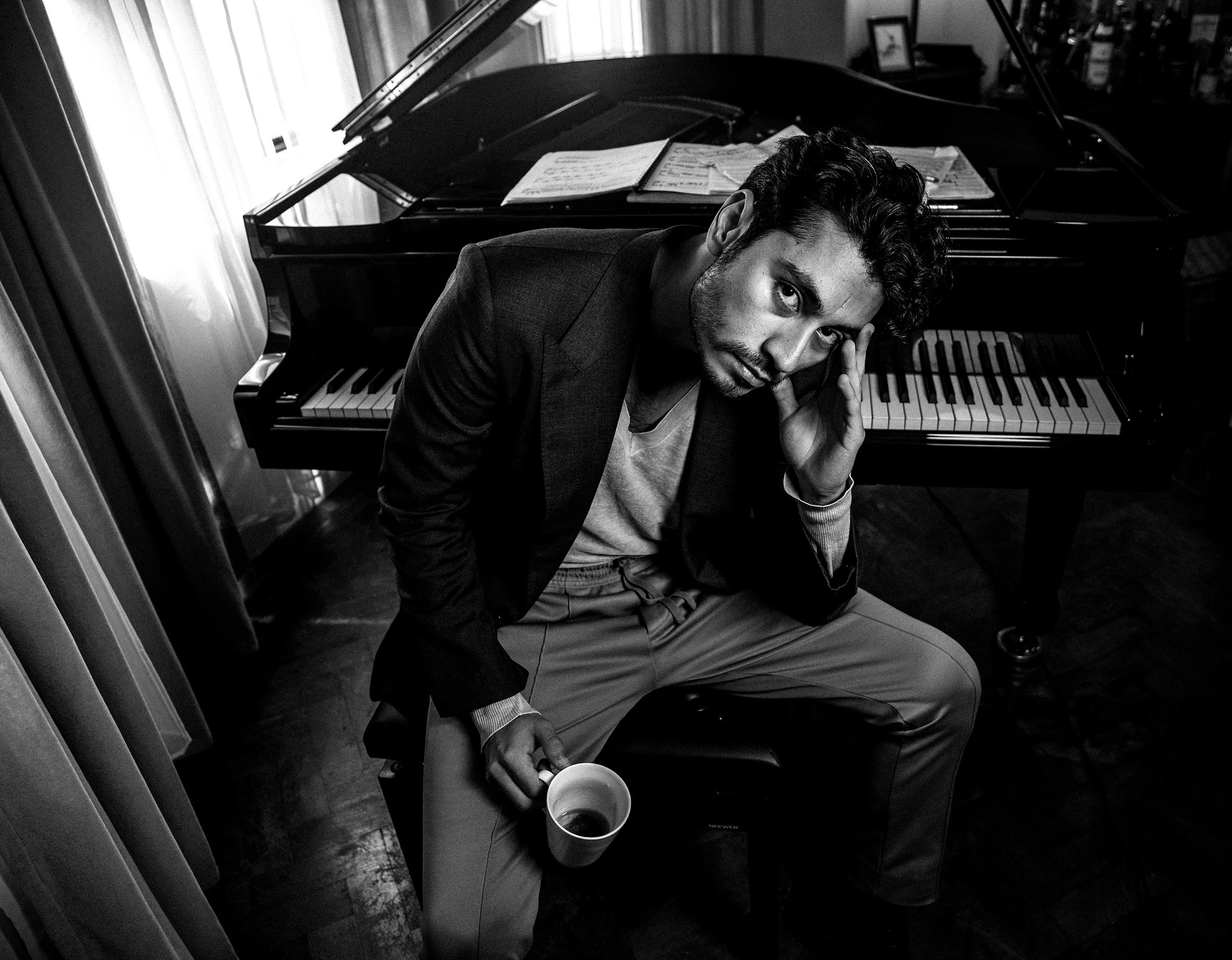
Name: Arsha Kaviani
Occupation: Pianist, composer
Nationality: British
Recent release: Arsha Kaviani's Accents & Echoes out via SRSLY.
If you enjoyed this Arsha Kaviani interview and would like to find out more about his music and current live dates, visit his official website. He is also on Facebook, and Instagram.
When did you first start getting interested in musical interpretation?
I’ve always been pathologically bad at following instructions without adding some element of creativity to it. So early on, when I discovered I loved music, the natural step was to try and add my own unique take to something, and if I had nothing unique to say/add I just wouldn’t play the repertoire.
This not being able to follow instructions 1:1 can be liberating and exciting as a musician but I definitely don’t recommend it for cooking: I’ve had some catastrophes in the kitchen because of this!
Which artists, approaches, albums or performances captured your imagination in the beginning when it comes to the art of interpretation?
First, when I was familiarising myself with the repertoire, I would pick the most solid true-to-score interpretations by greats like Zimerman, Pollini, Arrau and as I started to familiarise myself with the score itself I then would seek approaches, performances, artists, that would be creating their own world within something that was there.
I feel performance of prepared repertoire should be like: you are a potter at the wheel, where the wheel spinning is your intense and detailed preparation. But you are also moulding this in real time, with a certain amount of creativity, spontaneity, that depends on the acoustics, the audience, the piano, and how you feel about this work at that exact moment in time.
Are there examples for interpretations that were entirely surprising to you personally and yet completely convincing?
The absolutely incredible recording of Bach’s Well Tempered Clavier by one of my favourite composer/pianists Samuel Feinberg.
I adore his piano sonatas and preludes and hearing the composer play repertoire by Bach that is so well known, in such an intimately improvisatory, unique way is a miracle.
What do you personally enjoy about the act of interpretation? Are you finding that this sense of enjoyment is changing over time?
I love doing intense work on a piece and then completely letting it ‘decant’ in my subconscious. This lets me fall in love with the piece over and over again.
I find playing a piece 60 times in a season to be very tedious and I think in the last 8 years I’ve repeated a program maybe twice in its entirety? I always like to try and spice things up with variety and keeping a healthy distance from pieces of music after I do intense work on them.
There are of course exceptions to this like the works of Nikolai Medtner that I feel are so densely profound and multilayered that one lifetime is not enough to need any break from them!
How much creativity is there in the act of interpretation? How much of your own personality enters the process?
There should be a good element of creativity when interpreting something. But sometimes the creativity consists in removing yourself from the performance and merely becoming a conduit for the objectivity of the work and allowing the audience to perceive it how they like.
Improvisation is incredibly dear to me and I nearly do it in every single concert - there, my personality is entirely inseparable from what is heard. I love to get the audience to write on manuscript paper in the intervals melodies for me to work on. Or sometimes the brave ones can come up and pick 6-7 random notes on the piano for me to give harmonic/structural order to.
Could you describe your approach to interpretation on the basis of a piece, live performance or album that's particularly dear to you, please?
My album Accents & Echoes is very much about my personal kind of interpretation which is taking music from multiple genres that I adore and reworking, transcribing and arranging it through my classically trained interpretations of it as a concert pianist.
This means Shostakovich, Bach and Scriabin sit alongside British trip-hop bands Portishead and Massive Attack, with the coherence being that they are all original reworkings and improvisations through my lens. There is an amount of collective ‘musical zeitgeist’ understanding of how well a work is known that affects my interpretation too.
For example, when I was performing Feinberg’s Piano Sonatas, or Buskin’s Fantasia Contrappuntistica, these works were probably being heard for the first time for many people and so I would stick very much to trying to interpret the composer without imposing my own ideas and thoughts.
However with something like Rachmaninoff's Bb minor sonata which has been played thousands of different ways, I feel the opportunity is greater and more appropriate to allow liberties and personality to enter my interpretation.
What was your own learning curve/creative development like when it comes to interpretation - what were challenges and breakthroughs?
I was very lucky in being born and raised in the Middle East since there was no supposedly ‘done way’ of doing things - a lot of the time I had to create my own solutions to technical/musical problems which allowed me to shape my own musicality early on.
The technical breakthroughs were understanding the use of momentum, arm weight, etc ...
One of the key phrases often used with regards to interpretation are the “composer's intentions”. What is your own perspective on this topic and its relevance for your own interpretations?
Understanding a lot about the ‘deliberateness’ or the ‘finality’ of the composer is very interesting in informing this.
Chopin, as far as I’m aware, despised having to write out music as he was an incredible improviser. So it feels like his music lends itself well to creativity. Rachmaninoff the same (his own recordings of other composer’s works shows this very well!): he famously even allowed Vladimir Horowitz to change his 2nd sonata that he was never happy with.
Ravel, however, was a much more exacting composer, as was Bach. Classical composers like Beethoven and Mozart, depending on the work, usually incorporated a lot of improvisation when playing their own works (particularly concerti with traditionally improvised cadenzas that are now played oddly as if they’re part of the Urtext score..!)
I am infinitely fascinated by radically different or even “wrong” interpretations – the tempi of Toscanini, Kempff's Goldberg Variations. Are there extreme interpretations that you enjoy as well? Do you personally draw a line – and if so, what happens when we cross it?
I genuinely think it depends so much on our understanding of the piece, how well we know it and whether we crave novelty simply because it’s in contrast to what we already have internalised to be that work - or whether we crave the novelty because it adds something to the work.
I don’t like interpretations which are so extreme that the soloist overshadows the composer. But the aforementioned Feinberg playing Bach’s WTC is a great example of a more unorthodox interpretation that I actually adore.
I also have a soft spot for some things Lang Lang has done that can be considered ‘out there’ but actually work from a musical perspective
When you have the score in front of you, what's your take on taking things literally, correcting possible mistakes, taking into account historical aspects etc?
My favourite thing to do when I get a score of something to learn is to avoid listening to recordings of the work immediately, and to just play around with the sound I interpret from the squiggly dots on the page.
The first time I heard the Liszt Piano Sonata was when I performed it live when I was 18 - I had avoided recordings of the work and had never heard it live. Of course I knew and had heard excerpts of the famous parts, but, as the totality of the work goes, I had to create my own world with it which was a beautiful experience.
With regards to the live situation, what role do the audience and the performance space play for your interpretation?
They are nearly inseparable. Argerich has a funny famous quote about how sometimes the Steinway plays better than the pianist, I’m happy to paraphrase it that sometimes the concert hall plays better than the piano/pianist too.
The audience is also very important - I tend to not want to know who is in the audience when I’m performing and oddly tend to play my best the more people there are.
Part of the intrigue of interpretations is that the process is usually endless. Are there, vice versa, interpretations that feel definitive to you?
There are plenty of recordings that I go back to that feel definitive to me because they were my first foray into that piece of music (Igor Zhukov playing the 1st Medtner Concerto + Peter Donohoe’s insanely remarkable performance of the Busoni Concerto from the Proms for example).
But I guess the issue with the recording process is that that interpretation is, by default, definitive to that performer at that moment it was recorded unless the soloist releases a new interpretation of the work.
So for example, when I was recording my Piano Sonata: Accents & Echoes, from which the title of my album was taken from, I realised that it’s 21m:21s of music that will be the first recording of this piece. So my main focus was on trying to as accurately as possible explain what I was thinking when writing it, in terms of colours, tempi, articulations.
Will I play it entirely differently in 10 years? Very likely!