Published
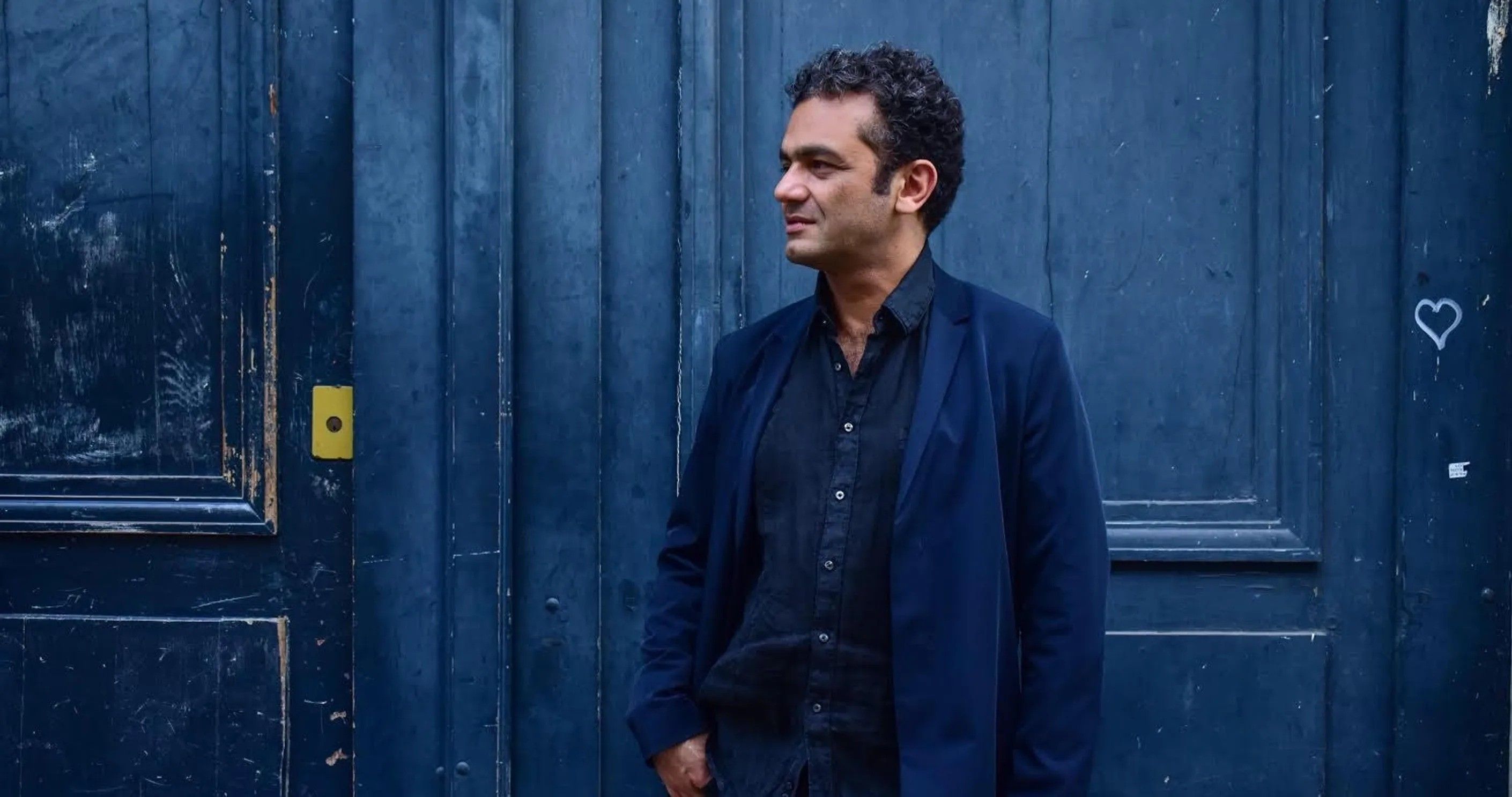
Name: Arshid Azarine
Nationality: Iranian, Paris-based
Occupation: Singer, songwriter
Current Release: The Arshid Azarine Trio's most recent release is Vorticity, out via Melmax.
Current event: The Arshid Azarine Trio, featuring Habib Meftah on percussion and vocals, and Hervé de Ratuld on bass, recently performed at the Elgar Room Royal Albert Hall, London.
Hometown Recommendations: Visit Isfahan and let your inspiration flow as you sit beneath the Khajoo Bridge.
Paris: Experience a jazz concert at the New Morning.
If you enjoyed this Arshid Azarine interview and would like to stay up to date with his music and live dates, visit him on Instagram, Facebook, and bandcamp.
What were some of the musical experiences which planted a seed for your interest in jazz?
When I was a teenager, I joined the blues band of our neighbor’s son. Until then, I had played only classical music, so it felt as though I were discovering an entirely new — almost forbidden — world.
Later, around the age of 17 or 18, while studying at medical school, I started playing with the university band. We explored a wide range of jazz and jazz fusion with a big influence of Miles, from early Miles Davis classics like "All Blues" to his later fusion pieces such as "Jean-Pierre," "Tutu," and "Fat Time."
As a pianist, I was deeply fascinated at that time by Chick Corea.
What does the term jazz mean today, would you say?
Freedom, and Improvisation
As of today, what kind of materials, ideas, and technologies are particularly stimulating for you?
Acoustic instruments remain, to me, the true kings of music.
I often blend jazz with the many styles that have shaped me throughout my life — from bossa nova and tango to Persian music. Odd rhythms and oriental or Persian modes are a constant source of inspiration.
I also enjoy incorporating technology into my music, whether as an instrument in its own right or as a support to my melodies.
Where do most of your inspirations to create come from – rather from internal impulses or external ones? Which current social / political / ecological or other developments make you feel like you need to respond as an artist?
Internal impulses — love, impossible love, sadness, excitement, anger, and of course the birth of my son — have been important to my creative process.
In my most recent album, I was also inspired by the Woman, Life, Freedom movement and by the death of Jina Mahsa Amini (“Song to Jina”) in Iran, as well as by the victims of flight PS752, shot down by a missile (“75.2 bpm”).
Finally, even my research on vortices and helical flows in the aorta and pulmonary artery has found its way into my music, inspiring pieces such as “Vorticity” and “Helix of Life”.
Tell me a bit about the sounds & creative directions, artists & communities, as well as the colleagues & creative hotspots of your current hometown, please. How do they influence your music?
I enjoy using electronic tools and instruments, and I often experiment with them at home or in collaboration with DJs.
However, I try not to let this component take over. I prefer to let inspiration come naturally, at its own pace.
Thanks to technological advances, collaboration has become a lot easier. What have been some of the most fruitful collaborations for you recently and what approaches to and modes of collaboration currently seem best to you?
We used this approach a lot during COVID. One of the best examples was a track we created for Radio France Internationale:
I played the piano at my hospital, Mahyar performed the cello on a rooftop in Tehran, and Roya sang from a panoramic terrace in London at sunset. The piece was "Hidden Hell – RFI version" (Roya Arab, Arshid Azarine, Mahyar Tahmassebi).
Jazz has always had an interesting relationship between honouring its roots and exploring the unknown. What does the balance between these two poles look like in your music?
Right now, I’m drawn to exploring the unknown — but sooner or later, I know I’ll be called back to the standards.
How much potential for something “new” is there still in jazz? What could this “new” look like?
If you let it free …
There is an infinite potential for new things happening in jazz … and not only through technology, electronic music or AI.
How, would you say are your live performances and your recording projects connected at the moment? How do they mutually influence and feed off each other?
We usually begin by testing new pieces live. Performing them helps reveal their natural direction, as well as the elements that can be simplified or removed.
Once the music feels mature, we record it with a more defined structure — though this structure often continues to evolve during the recording process.
And because it’s jazz, the pieces keep changing over time, sometimes to the point that we record entirely new live sessions.
Improvisation is obviously an essential element of jazz, but I would assume that just like composition, it is transforming. How do you feel has the role of improvisation changed in jazz?
I sometimes feel that jazz has lost a bit of its freedom, as technical mastery and virtuosity have started to outweigh emotion and spontaneity.
What, would you say, are the key ideas behind your approach to improvisation?
I sing what I play in particular when I improvise, and sometimes it may be disturbing when it’s recorded or for the audience I guess.
The Montreux Festival intends to preserve its archive of recordings for future generations. Do you personally feels it's important that everything should remain available forever - or is there something to be said for letting beautiful moments pass and linger in the memories of those that experienced them?
Of course, in jazz we learn a lot by listening to and watching the great musicians who came before us — trying to capture their phrasing, their energy, and sometimes even transcribing their work note by note.
In countries like Iran, where Habib and I were born, jazz and formal jazz education were once largely inaccessible, and women are still forbidden to sing publicly.
Yet, with the rise of online platforms such as YouTube, access to recordings and performances has transformed the scene — today, Tehran is home to a remarkable number of emerging jazz musicians and female jazz vocalists.