Published
Part 1
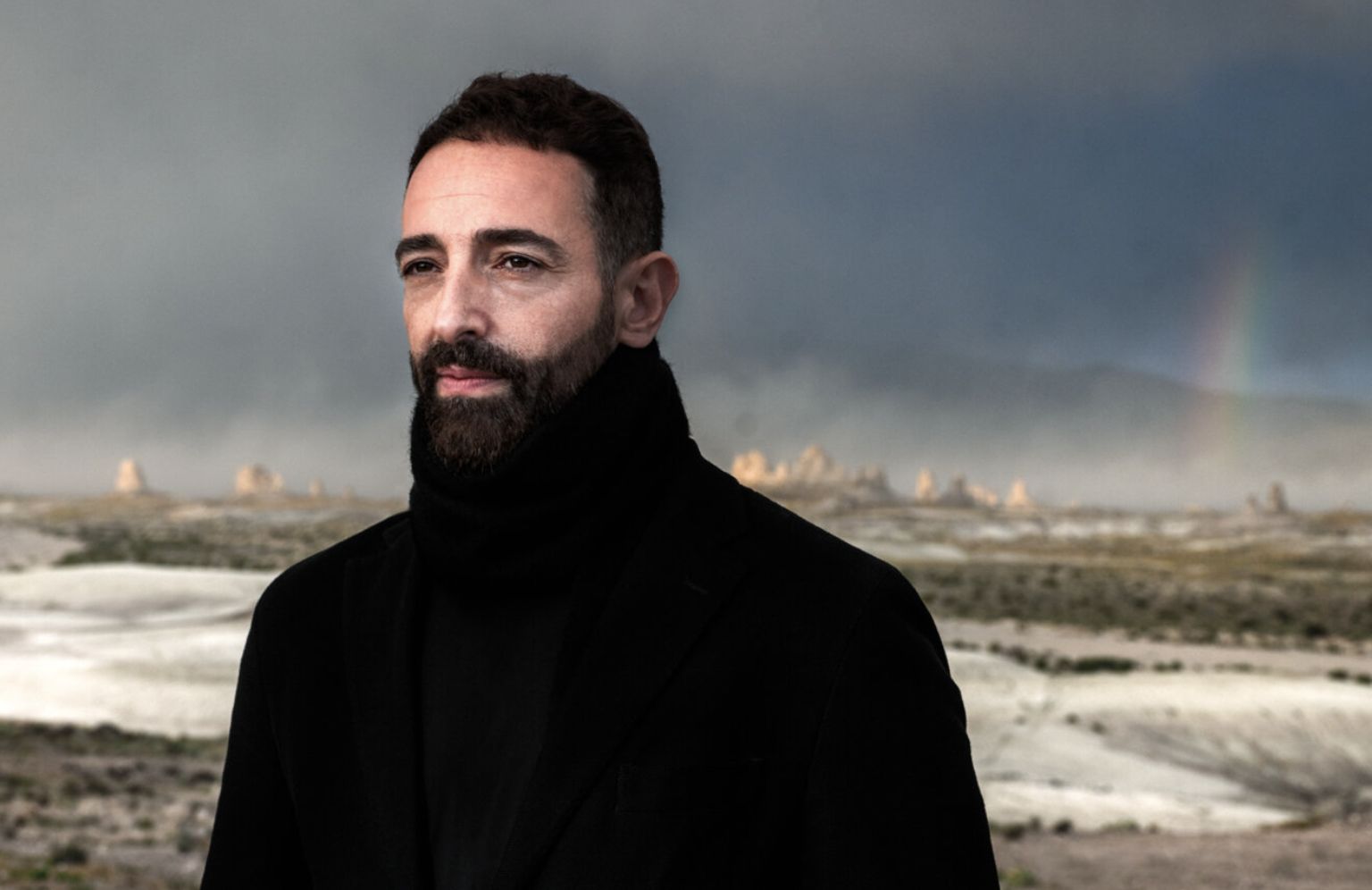
Name: Asaf Sagiv
Nationality: American
Occupation: Composer, multi-instrumentalist
Current release: Asaf Sagiv's new album IMA is out now. It features Asaf Sagiv himself on piano, electronics, bowed guitar, synths, as well as the American Contemporary Music Ensemble (including Clarice Jensen, cello). First Dome Chamber Choir under the baton of Jenny Wong, and a cast of additional musicians.
Shououts: When I lived in London, I often went to the Barbican, which always had forward-looking programs. Berlin is probably the strongest in this regard. Places like Kraftwerk and the Atonal Festival, where sound expands without boundaries. That same force is alive in people too, Francesco Donadello has been pivotal in shaping how contemporary music is heard. But also here in LA, that spirit continues – with people like Justin Moshkevich, who moves fluidly between orchestral scores, artists like FKA Twigs, and my own work, always with rare integrity.
I’ve always felt a connection to Jazz and festivals too, and still want to make it to Montreux one day as a long-time Miles Davis fan. When the IMA vinyl was printed, Stoughton had just finished printing Bitches Brew and the freshly printed stack of Miles’ album cover sat literally next to IMA. That moment and image stayed with me. Japan also has a significant and constantly evolving jazz scene, especially around Tokyo and Osaka.
As for composers, for the most part, the ones I listen to are all dead now.
Recommendations for Pasadena, USA: I recommend the Norton Simon Museum. It’s a modest size but it holds an extraordinary collection of European art from the Renaissance to the 20th century – It has Van Gogh, Picasso, and a Rembrandt, and the post-Impressionists. There’s also a quiet garden surrounded by Rodin’s Thinker and several of his other sculptures. It’s a place I return to, for perspective and stillness.
If you enjoyed this Asaf Sagiv interview, visit his official website for more information. He is also on Instagram, and bandcamp.
The borders between producers, sound artists, and even songwriters are becoming increasingly blurry. What does being a composer mean today, would you say?
Being a composer today is no different from any other time. To me, the composer is a vessel.
Tools and forms change, roles may blur, but the act remains the same: to listen, to receive and shape, to bring sound into existence with truth. It begins and ends in silence and the music is present within it already. Music is a living thing with its own evolution. Craft and tradition are not cages, they can be foundations to carry forward and they still matter. I remember them, respect them - but I am not bound by them.
It is about presence - being fully present. Sometimes it feels like sculpting in time, creating a space listeners can later revisit. But I do not write for the listener, at least not intentionally or in order to please or appease. I write to honor Source, for the sake of music itself. In IMA, I did this for my beloved late mother, Osnat Sagiv. If the work is honest, if it moves naturally without artifice, with integrity – it is alive.
Speaking for myself, it is an obsession, a necessity. It has been with me internally for as long as I can remember. It keeps me whole, and has lifted my spirit up from some very difficult times and dark places throughout life. It helps me process emotions, thought, and the world, the universe itself a little better. Maybe to be, or become a better person, over and over again. With composing, I look to expand to challenge myself in various ways, to find new ways of expression.
To be a composer is to be a vessel, an instrument through which what needs to arrive can arrive, in its purest form.
Many people perceive classical music and contemporary composition as having high barriers of entrance, both for listeners and musicians. What have your own experiences been in this regard?
Each listener finds their own entry point. Music always meets people where they’re at any way, in this moment. Mine’s no different. It isn’t about understanding intellectually or knowing the background - if it resonates, if it moves someone deeply, for me that is enough.
I’ve never really thought about it from this angle but yes, for some, the term ‘contemporary composition’ might actually seem intimidating. This never occupied my mind. With IMA, I wasn’t trying to impress or fit in. It simply is. It is exactly what it needs to be, no more, no less. If it resonates, great. If not, that’s fine too – the work remains intact as it is.
I saw the work through - to completion, through all the many challenges and falls, got up again and again, and that in and of itself means a lot to me. Because there was no other way. It is do or die. Writing to me is an act of devotion, an obsession, a love for the process itself. Music feels more like a return than an entrance.
As of today, what kind of materials, ideas, and technologies are particularly stimulating for you?
These days I’m drawn to the pipe organ. It began the piece Organum and became its thread.
Though it is not a wind instrument, it carries an endless flow of air; press a key down and it breathes as long as you hold it. That sense of infinite breath feels both deeply human and post-human, something transcendent. Its range is vast, both in pitch and dynamic or timbre, from the faintest whisper to sheer, brute force.
It’s an ancient technology, but I sometimes think of it as a ‘Dolby synth’ or the first sampler. In one instrument you hold an orchestra in your hands and feet, sculpting air through metal pipes. No two organs are ever the same; each belongs to the building’s architecture that holds it.
Some halls, like the Philarmonie Berlin place the pipes in a sort of a surround setting around the room including the floor and the ceiling. It’s programmable much like a modern modular analog synth, and the pipes acting as oscillators, like this massive ancient dolby synth with thousands of oscillators - a real true analog machine of breath.
Architecture inspires me in the same way. Brutalist spaces in particular, monuments, churches. The church in Cologne where we recorded Łódź II had all of it – concrete walls and a high concrete ceiling, stone, very long resonance, and even a train running past its stained glass. The space itself demanded clarity and simplicity.
I return often to Alan Watts, and to Gao Xingjian, whose paintings became IMA’s cover. He was born in China and lives in Paris, my late mother’s favorite place in the world and place of refuge. He is a Nobel laureate, though to me his work as a painter, too, carries a unique depth. One that still feels under-recognized. He is one of my favorite living painters, if not all-time.
Japanese art and culture continues to shape me as well. Only later did I learn that “IMA” in Japanese means “now.” In Hebrew it means “mother,” my original intent. That crossing of meanings felt like a gift.
Where do most of your inspirations to create come from – rather from internal impulses or external ones? Which current social / political / ecological or other developments make you feel like you need to respond as an artist?
Inspiration can come from anything.
Life moves the way it does, and the music arrives. Not as commentary, but as a necessity.
Tell me a bit about the sounds & creative directions, artists & communities, as well as the colleagues & creative hotspots of your current hometown, please. How do they influence your music?
I live in a quiet part of Los Angeles, where my studio, Studio 111, is based. I’m fortunate to work with friends and collaborators who are at the top of their craft.
For IMA, we recorded chamber vocals in a Pasadena church with singers selected from the LA Phil and Los Angeles Master Chorale, conducted by Jenny Wong who is also their Associate Artistic Director. Joshua Ranz from LACO [Los Angeles Chamber Orchestra] played clarinet, and my longtime friend and collaborator Justin Moshkevich captured the sound with the same integrity I try to write with.
There’s a strong session culture here. With some of the best studios and scoring stages in the world and musicians that can read pretty much anything you put in front of them. But for IMA I wanted to take the music into a church. It was a great challenge, and also a thrill, and it happened only through the support of this community.
Los Angeles is not only orchestras and sessions, though. There is also an underground side, more edgy and raw, though not so much publicly known, at least not as Berlin or NYC’s reputation goes. Jonathan Hepfer’s Monday Evening Concerts connect directly to the history of John Cage. Zipper Hall and The Ford LA are places where new and cool things happen. Silver Lake and Echo Park have a vibrant scene full of artists.
I’ve always felt a bit of a misfit, not really a Hollywood composer, and I don’t confine myself to one place. I often work in New York, where we recorded with ACME and Roomful of Teeth at the Church of Heavenly Rest.
In Berlin and Cologne, the energy is raw and unpolished. Francesco Donadello brings a depth of listening and a way of making music that continues to shape how contemporary music is heard. Alongside him, Bo Kondren brings this rare sensibility and precision in mastering that I value just as much.
Working with both of them on both the album versions, the live stuff and the vinyl press keeps expanding how I think about sound.
Composing has always had an interesting relationship between honouring its roots and exploring the unknown. What does the balance between these two poles look like in your music?
It isn't so much of a conscious process but when writing I often feel an expansion moving in two directions simultaneously – inward and outward. It wasn’t a fixed balance but a dance, a tension, like the growing edges of a universe. With IMA, sometimes it meant stripping away anything that wasn’t the work – listening instead of imposing, letting obstacles become the way.
I was simply writing music that I myself enjoy, and that my mother would. It isn’t a deliberate attempt of some sort to do this or that. I was more occupied with emotion, memory, this vast expansion and force I could feel moving through me.
It can push one to extremes. Don’t be eluded to thinking it always is an easy path. But then it reveals itself and those moments are among the best in life - when the unknown becomes known.
How much potential for something “new” is there still in composition? What could this “new” look like?
Music is infinite, the possibilities for something new are infinite. I don’t think it is for me to describe with words, but rather create. There’s always so much to discover, and so much music to be made.
The way people consume music digitally keeps shifting, and will continue to shift. I can imagine it becoming more immersive and visual, customized , personal - even biologically integrated and integrated in us. That will change how composers write, or even more so; how music is produced to fit these new forms of ‘media’.
I do believe the very internet itself as we know it may end up being like tape, or CDs, or DVDs – an obsolete technology that once felt permanent, and is replaced by a new kind of connectivity and network.
Still, a live orchestra is such a delicate and complex organism- a hive mind of musicians, a conductor, audience, the hall, nuance, air moving through the room, someone coughing ... that experience is irreplaceable. No device or format can match it, at least not yet. There’s always someone coughing. [laughs]
Beneath all of it there is always Void, silence. It does not change. It remains.