Published
Name: AUA
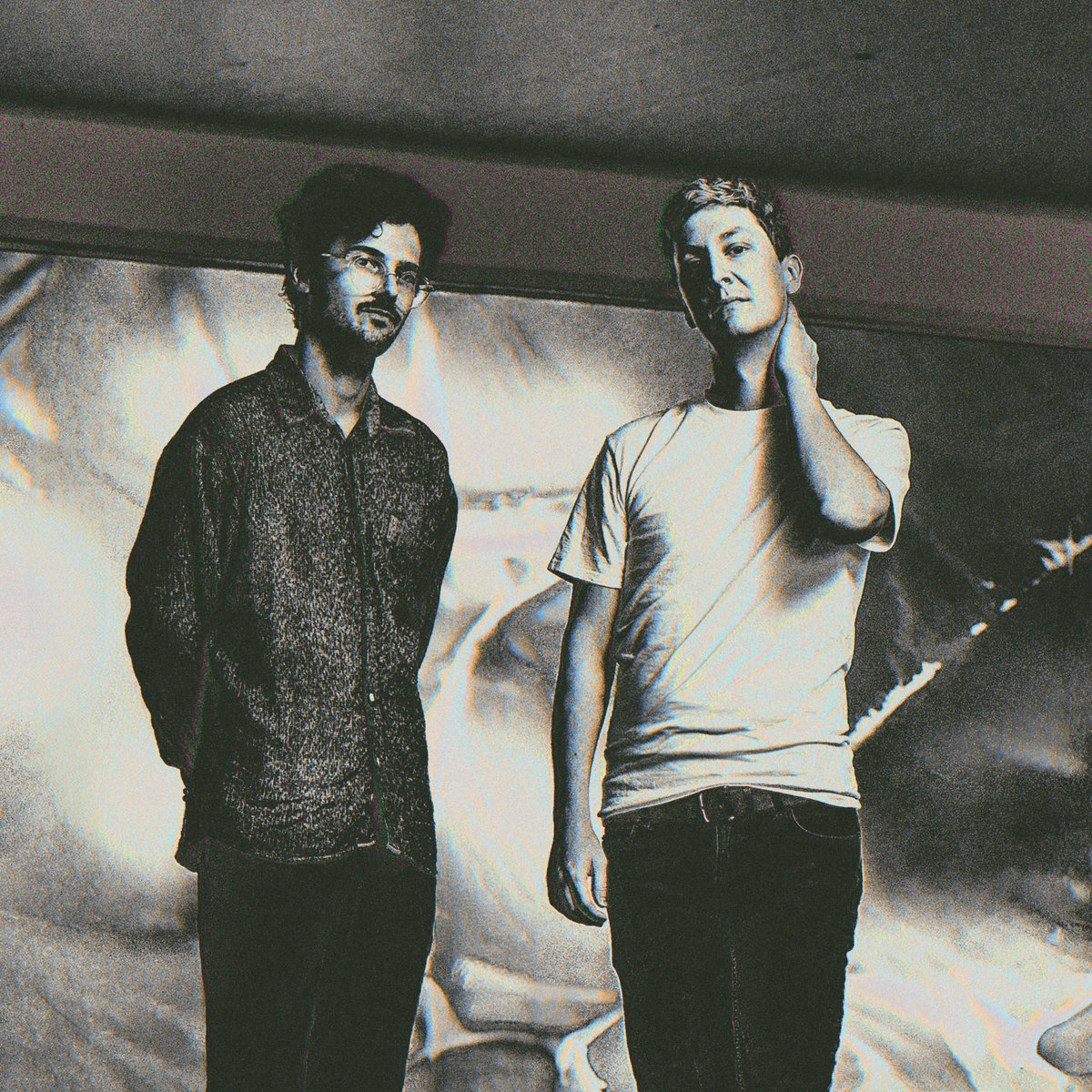
Members: Fabian Bremer, Henrik Eichmann
Nationality: Germany
Current release: AUA’s third album Painkiller No. 1 will be released via Crazysane Records on November 8, 2024.
Recommendations: Fabian: Everybody Split by Possible Humans is on heavy rotation here.
Aside from that, our friend Helge introduced me to The Residents a few weeks ago, and I was immediately hooked with their 1979 Commercial Album, which consists of 40 one-minute songs. The band claimed that any three songs played in random order could form a conventional three-minute pop song. The idea of reducing a song to its essence, eliminating unnecessary repetition, is incredibly appealing, despite the challenges posed by such restraints.
Henrik: I’d recommend Die Kanten by Das Kinn—the current project by Toben Piel, whom we’ve known since our youth in the DIY scene around Frankfurt. Another record we’re frequently listening to is The Left Banke’s The Left Banke Too from 1968, which sadly was a one-hit wonder in terms of commercial success, but there’s so much more to this band.
Fabian: Ah, and our friends in Death By Gong have just released their debut album, Descalator, which is out on Crazysane Records and is a joy to listen to. To me, it feels like a heavy version of a mid-90s alt rock or slowcore band—imagine the Deftones playing Codeine songs, or the other way around. Give them a listen now!
If you enjoyed these insights by AUA and would like to know more about the band and their music, visit them on Instagram, and Facebook.
For a deeper dive, read our earlier AUA interview.
Where does the impulse to create something come from for you? What role do often-quoted sources of inspiration like dreams, other forms of art, personal relationships, politics etc. play?
Henrik: Some ideas just come to me out of nowhere—or at least I think they do, as outside influences may flow unconsciously into the creative process. Primarily, it’s personal relationships or encounters that inspire us …
Fabian: … or fictional characters that we create based on our perceptions of people, which we then expand upon. What starts as silly inside jokes often evolves into serious, profound themes.
For example, our ongoing series of songs about a character called the Glowing One. It’s a continuous inner dialogue between me and a very selfish, results-oriented, yet extremely lonely character, reminiscent of my former boss.
Over time, themes like these mature, influenced by media, dreams, or spontaneous insights.
For you to get started, do there need to be concrete ideas – or what some have called a 'visualisation' of the finished work? What does the balance between planning and chance look like for you?
Henrik: We usually rely very heavily on chance and intuition.
For example, the idea for the cover artwork of our new album, Painkiller No. 1, came from a walk in the forest where I discovered these strange lichen structures. Throughout our collaboration with Belgrade-based artist Mihailo Kalabic, who has created the artworks for all three of our albums, we’ve elaborated on this discovery, envisioning life forms capable of growing and surviving in any environment, particularly those affected by humans.
Combined with the album title, this concept increasingly resonated with us, evolving and becoming second nature somehow.
Is there a preparation phase for your process? Do you require your tools to be laid out in a particular way, for example, do you need to do 'research' or create 'early versions'?
Henrik: Preparation typically involves a back-and-forth exchange of ideas and approaches. We are dedicated list makers and often plan to restrict the range of instruments or recording tracks we use, or create a manifesto—whatever works.
A few times a year, we set up all our equipment in a remote holiday home and let whatever happens happen. In many cases, improvised versions of a song end up being the produced and released material, for example the instrumental Starstruck.
Do you have certain rituals to get you into the right mindset for creating? What role do certain foods or stimulants like coffee, lighting, scents, exercise or reading poetry play?
Fabian: Admittedly, we’re not particularly spiritual people, but there’s definitely something about the mindset, or the time and space in which a song is written or recorded.
As Henrik mentioned earlier, we regularly retreat to a holiday home in the middle of nowhere, about a two-hour drive from our hometown, Wiesbaden. It’s a quiet wooden cabin located right on the edge of a forest, with a fireplace, dim lighting—all of which likely influences our work.
It might seem absurd, given that our music might evoke a dystopian version of this tranquil environment.
What do you start with? And, to quote a question by the great Bruce Duffie: When you come up with a musical idea, have you created the idea or have you discovered the idea?
Fabian: The idea has to come to me. “I do not seek, I find,” or how does the saying go? Sounds quite trivial, but it’s true. I can’t just sit down and write music as if it were an office job—the moment has to be right.
In the case of our song “Wrong Address,” the idea found us. The entire track, from start to end, was improvised in one piece with vocals, drums, guitar and a synth bass. We didn’t even agree on a tempo or a single chord. That first accidental recording was the template for the composition that ended up on the album.
Sure, it’s a simple song, but it wouldn’t have come about in exactly the same way at any other time.
When do the lyrics enter the picture? Where do they come from? Do lyrics need to grow together with the music or can they emerge from a place of their own?
Fabian: Both, I guess. We’re not a band that writes lyrics before the music. Often, the phrasing and melody of the vocal lines are already clear, but the words are still nonsense, so we try to write something that stays as close to the initial demo as possible, but makes a little more sense.
Take “White Sharks,” for example: in Henrik’s first improvised vocal demo, he sang “Send the white sharks,” but neither of us knew why. Still, we both felt there was some sort of meaning to it and decided to go with it.
Henrik: Interestingly, for our first album all the lyrics and vocal melodies were written after the instrumentals were complete. By the time we got to our second record we had gained more confidence in our vocals and started to develop the instrumentals and lyrics simultaneously.
What makes lyrics good in your opinion? What are your own ambitions and challenges in this regard?
Fabian: Above all, the words should sound good, even if they’re a bit cryptic. For me, it’s more about the emotional impact than the literal meaning.
They don’t need a clear narrative to capture my interest, which is why I’m drawn to so many songs by David Bowie or Scott Walker. Their words are intriguing, and my perception of them changes every time I listen.
Many writers have claimed that as soon as they enter into the process, certain aspects of the narrative are out of their hands. Do you like to keep strict control or is there a sense of following things where they lead you?
Henrik: Drifting is definitely part of the creative process for us. Ideally, the current takes you exactly to the right place.
Fabian: I think we prefer to be surprised and don’t really seek to understand every narrative in detail. We’d rather keep things somewhat nebulous for ourselves, since we both get bored with certain types of music or storytelling quickly— which is ironic, given that we also aim to perform in a somewhat detached manner ourselves.
In terms of recording technique and production, however, we need full control and are very meticulous in documenting our recording setup, settings of synths, pedals, etc.
There are many descriptions of the creative state. How would you describe it for you personally? Is there an element of spirituality to what you do?
Fabian: I guess it’s the dynamic between the two of us that really does the trick. Henrik and I have known each other and played in bands for over two decades now.
In many ways, we’re very different people, but in other aspects, we’re almost like twins, sharing a similar identity that we’ve more or less unconsciously developed over the years. That combination has proven to be incredibly valuable.
When you’re in the studio to record a piece, how important is the actual performance and the moment of performing the song still in an age where so much can be “done and fixed in post?“
Fabian: When we record spontaneously, without spending hours fine-tuning the perfect synth sound or choosing the right guitar amp, it usually turns out best. I guess we’re both pretty intuitive and like to experiment without overthinking.
Henrik: Yeah, the question often is whether it was really fixed in post-production, or if, despite being raw and perhaps technically flawed, it still sounds better.
Once a piece is finished, how important is it for you to let it lie and evaluate it later on? How much improvement and refinement do you personally allow until you’re satisfied with a piece? What does this process look like in practise?
Fabian: It depends. Some pieces benefit from being captured entirely in the first go, getting them as close to the final state as possible. Others need time to evolve and mature over a long period to really come into their own.
For instance, “Glowing One, Pt. 3” is the song that needed the longest time to develop its intricate nuances, especially lyrically. Then there are pieces that surprise you with how quickly they came together, while others can be frustrating because you’ve been tweaking them for so long …
Henrik: … and quite often we tend to make something worse in an attempt to improve it, that’s why we often end up going back to the rough original. It’s very crucial for us to compare recordings with the first rough takes, as they usually contain the initial spark that made them so special.
What’s your take on the role and importance of production, including mixing and mastering for you personally? In terms of what they contribute to a song, what is the balance between the composition and the arrangement (performance)?
Henrik: Certain mixing decisions or a well-done mastering give the finishing touches, but I guess it’s about hitting and strengthening the emotional impact of the song. But in the end the composition is the heart of the song, the arrangement brings the dynamics to it and makes it come alive.
Fabian: I agree. In the end, production is secondary if the composition or the artistic gesture behind it is convincing. Then again, good production can highlight the strengths of an arrangement, while a bad mix can muddle them or make them inaudible.
We mixed our first two albums ourselves and are constantly self-critical of our own work. As autodidacts, we may approach certain techniques differently than in a professional, daily routine. Recording and producing went hand in hand and developed in parallel—at least in our case. In this process, composition, arrangement, and production were often hard to separate.
The decision to entrust Magnus Wichmann with the mixing of Painkiller No. 1 proved to be the right one, and we are glad that we were able to concentrate much more on the compositions.
After finishing a piece or album and releasing something into the world, there can be a sense of emptiness. Can you relate to this – and how do you return to the state of creativity after experiencing it?
Fabian: I can 100% relate. You win and you lose something at the same time: on one side, there’s the finished product you’ve worked on for so long, and on the other, you have to let go of the creation process, which is usually more magical to us than the product itself.
In my case, I usually dive straight into the next adventure, even if it doesn’t always pan out.
Henrik: After our last two records, we were motivated to finalise unfinished songs and release a B-sides collection. However, you often only realise why these songs ended up on the big pile of unfinished drafts.
Fabian: Right. Perhaps not everything should be turned into a track worthy of release …
Creativity can reach many different corners of our lives. Do you personally feel as though writing a piece of music is inherently different from something like making a great cup of coffee? What do you express through music that you couldn’t or wouldn’t in more 'mundane' tasks?
Fabian: I couldn’t compare writing music to anything else. For me, it’s solving a riddle that needs time to be deciphered. It circulates in my mind for weeks, sometimes months, waiting to be pieced together.
As a result, my daily routines are often disrupted because I need to quickly write down a lyric or record a voice memo. It can be really annoying, but it’s a very exciting process.