Published
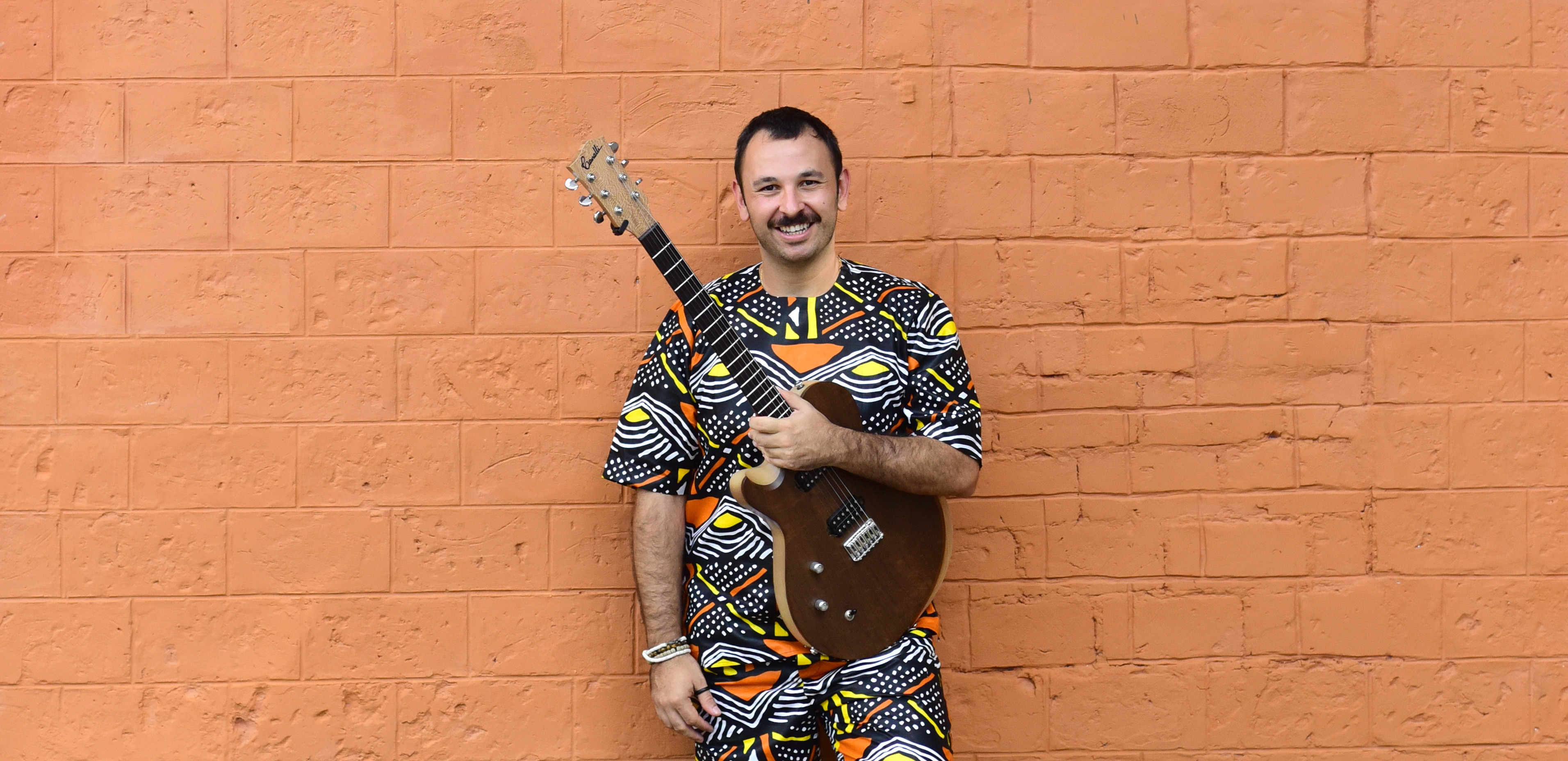
Name: Augusto Baschera
Nationality: Brazilian
Occupation: Guitarist, composer, improviser
Current Release: Augusto Baschera's new album APÓCRIFO is out now.
If you enjoyed this Augusto Baschera interview and would like to know more about his music, visit his official homepage. He is also on Instagram, and Facebook.
What were some of the musical experiences which planted a seed for your interest in jazz?
It probably all started with my family. My late father was a professional musician throughout his entire life, and my older brother is also a professional musician and still active.
Since my father didn’t have a formal musical education, and my brother also didn’t at the beginning of his path, improvisation was always present — and for me, jazz is directly connected to that. I believe this was the kick-off for my love of jazz.
What does the term jazz mean today, would you say?
I think jazz still sounds like freedom. And when I say still, it’s because I believe we can never completely detach ourselves from history—whether it’s the history of a piece of music or of a culture.
Even though the branches and directions are infinite, the history remains.
As of today, what kind of materials, ideas, and technologies are particularly stimulating for you?
I feel that anything that can be turned into music and finds a dialogue with an idea or a purpose inspires me.
In my case, particularly, the question of timbres and the use of technology and digital tools to shape and create new sounds really excites me. That’s where most of my attention goes when it comes to technology in music.
Where do most of your inspirations to create come from – rather from internal impulses or external ones? Which current social / political / ecological or other developments make you feel like you need to respond as an artist?
I believe everything is interconnected, and it’s hard to separate one thing from another.
The current obsessive pursuit of power and greed is leading society down a dangerous path. We’re forgetting that we are human, and we want a completely adulterated performance of everything. I believe this is shaping our behavior and creating a culture of ‘immediacy’ and ‘superficiality.’
The speed at which we process new information and knowledge, however, is still the same as it has always been. I try to walk in the opposite direction of this frantic movement, searching for calm within myself, so I can get to know myself more deeply and truly understand what I want to express through my music.
What role do electronic tools and instruments play for your creative process?
It can be many things — from the more subjective side of creation to the more practical side.
For example, making an illustration or a sketch of a piece, or just part of it, to share with my colleagues on a specific project, so they can already get a good sense of how it’s meant to sound.
Jazz has always had an interesting relationship between honouring its roots and exploring the unknown. What does the balance between these two poles look like in your music?
I love that balance, and it’s something I’m always searching for, because there’s always a history to honor and something to recreate from it.
In my latest album, APÓCRIFO, that balance is something I constantly pursue throughout the compositions—both in the written parts and the improvised ones.
Rhythm, for me, is always connected to ancestry, to roots, and to the history of a culture. Melody, harmony, orchestration, and counterpoint, on the other hand, are more closely tied to development, knowledge, and the blending of languages. That’s why I’m in a constant search for this balance.
It’s what I love doing the most: expressing what I think musically while always referencing the things that have brought me here.
How much potential for something “new” is there still in jazz? What could this “new” look like?
As I write this interview, I receive the news of Hermeto Pascoal’s passing — the greatest icon of Brazilian instrumental music, a worldwide reference, and a tremendous inspiration to me.
Reflecting on this, I cannot help but bring forward everything Hermeto represents: freedom, novelty, audacity, and, above all, creativity. He was capable of turning any object into music — a kettle, a tool, or any unconventional thing — because music simply lived within him.
However, I realize that this spirit can often be misinterpreted, taken in an opportunistic direction and disconnected from its true essence. There will always be room for what is new, but I feel that, in general, much of what I see today feels forced. Few creations strike me as genuine.
It’s difficult to say this, because no one holds the truth, but this is how I feel: I see an excessive urge to prove something, to stand out, which ends up overshadowing the natural flow of creation and creating a disconnection from everything that has already been built before.
I believe that the most important thing is to understand that the path is built in small, steady steps.
What, would you say, are the key ideas behind your approach to improvisation?
I make every effort to keep myself in constant transformation and to develop my own way of playing, always adding new knowledge without forgetting where I come from.
Above all, I cannot forget that improvisation is music — and music, for me, is affection. It is a message charged with an emotional force, capable of renewing itself in each listener who engages with the work.
In my approach, I always seek to give voice to this affection that arises during a performance, a recording, or any other musical moment, using the resources and tools I have gathered throughout my journey to sustain that expression. To be present, to live each note intensely, to sing, to listen, and to feel what surrounds me — that, for me, is the best way to make music.
The Montreux Festival intends to preserve its archive of recordings for future generations. Do you personally feels it's important that everything should remain available forever - or is there something to be said for letting beautiful moments pass and linger in the memories of those that experienced them?
I like this idea; after all, it’s the way we record things today.
In the past, composers like Bach — whom I deeply admire — left everything meticulously catalogued, and thanks to that, we can now learn from the genius of an artist like him.
That’s why I see nothing wrong with it; on the contrary, I consider it a remarkable achievement.