Published
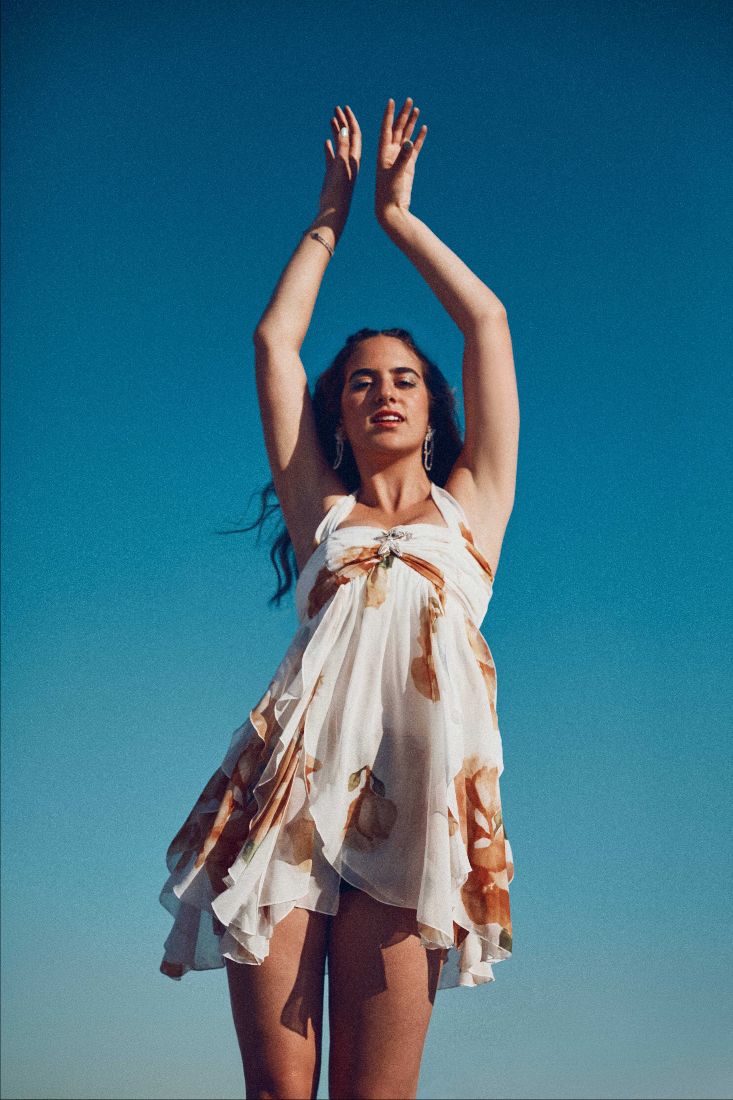
Name: Ava Della Pietra
Occupation: Singer, songwriter, multi-instrumentalist, actress
Nationality: American
Current release: Ava Della Pietra's new single "Single for Life" is out now.
Recommendations for Boston, USA: The Boston Public Garden which is so beautiful year-round. Or Little Italy if you want to eat your way into a food coma.
Topic I am passionate about but rarely get to talk about: I’m a biology major at Harvard, and I really love it! I think it’s fascinating how much art and science overlap. Both rely on creativity, curiosity, and finding patterns in unexpected places.
If you enjoyed this Ava Della Pietra interview and would like to keep up to date with her music and upcoming live dates, visit her official homepage. She is also on Instagram, Facebook, and tiktok.
When did you first consciously start getting interested in singing? What was your first performance as a singer on stage or in the studio and what was the experience like?
I don’t ever remember not being interested in singing! As a kid, I was obsessed with Shirley Temple movies and I’d stomp around the house trying to imitate her tap dancing and the way she sang with her cute little accent.
I also loved The Little Mermaid and would belt out “Part of Your World” constantly.
My first performance was in a community theater production of Where the Wild Things Are when I was probably three years old. The main thing I remember from that experience is that I had a solo, and the head of the studio would always sing along with the kids (even during the actual performance) in case they forgot their parts.
I had memorized my part, and I remember trying to sing louder than the teacher so everyone could hear me!
How does the expressive potential of the instruments you play compare to your own voice?
That’s such an interesting question! I play the violin, which is an incredibly expressive instrument. I feel like it can weep, express joy, and even sound angry.
But my voice feels the most personal because it’s part of me. There’s something about using your actual voice and your own sound that’s as raw and human as it gets.
And, songwriting is basically my diary, and I write about my life constantly.
Singing is an integral part of all cultures, and traditions. Which of these do you draw from – and why?
My family has this really fun tradition of changing lyrics to famous songs for everything, whether it be birthdays, holidays, weddings. Sometimes it’s total chaos, but I always look forward to it!
I also have my own little tradition of writing original songs for my family for special occasions. They’re usually a bit comedic but also very sentimental. It’s kind of my favorite way to show my love for them.
What were some of the main challenges in your development as a singer/vocalist? Which practices, exercises, or teachers were most helpful in reaching your goals – were there also “harmful” ones?
One of the biggest transitions for me was moving from Broadway-style singing to pop.
When I recorded my first pop song, I was still using a lot of musical theatre techniques like enunciating too clearly, projecting too much. Over time, I’ve learned how to relax into my own style and let the emotion lead rather than the technique.
Sometimes I still hear a bit of my theatre background in my vocals, but I actually like experimenting with that crossover. I feel like it gives my sound a little character and my style a bit of unpredictability at times.
What are the things you hear in a voice when listening to a vocalist? What moves you in the voices of other singers?
I listen for emotion. I love singers who make me believe them.
One of my favorite vocalists right now is Conan Gray. He has amazing technique, but there’s also this beautiful cry in his voice that’s so raw and heartbreakingly honest.
Billie Eilish’s tone is also truly gut-wrenching, especially on her latest album where she really plays around with different textures and colors in her voice.
How would you describe the physical sensation of singing? [Where do you feel the voice, do you have a visual sensation/representation, is there a sense of release or tension etc …]
When I’m singing correctly, I feel it in my stomach. There’s engagement in my core and this sense of release.
When I start feeling tension in my throat, I know I’m doing something wrong. Singing, at its best, feels freeing and grounding at the same time.
We have a speaking voice and a singing voice. Do these feel like they are natural extensions of each other, ends on a spectrum or different in kind?
I’ve been told my speaking voice is pretty melodic and it kind of sings on its own! I think for me, there’s definitely a connection between how I speak and how I sing.
The human voice is an instrument everyone has, so I believe anyone can learn to sing well with training. Singing just feels like an extension of being human and turning your feelings up a few notches, like a more heightened way of expressing yourself.
How do you see the relationship between harmony, rhythm and melody? Do you feel that honing your sense of rhythm and groove has an effect on your singing skills?
Definitely. Understanding rhythm and groove makes a huge difference in how a song feels.
When I’m comfortable in the groove, I can focus more on the storytelling instead of just keeping time. It helps the performance feel alive and connected.
What are the potentials and limits of your voice? How much of your vocal performance can and do you want to control?
I always try to have technical control over my voice like breath, pitch, and tone.
But at the same time, some of my favorite moments happen when things aren’t perfect, like when my voice cracks a little or wavers because I’m feeling something real. Those imperfections tell a story, and I think that balance between precision and vulnerability is what makes a vocal performance interesting.
You want it to feel alive, not mechanical.
I'd love to know more about the vocal performances for your latest release, please, and the qualities of your voice that you wanted to bring to the fore.
My latest release, “Single for Life,“ was such a blast to record. It actually started as a slow, more acoustic song about a friend getting into a relationship and us drifting apart.
But in the studio, I realized it would be more fun to make it funny and empowering, and also focusing more on a celebration of female friendship. I gave production references like “Running Up That Hill” and “Good Luck, Babe!” and it evolved into something energetic and unexpected.
I wanted my voice to reflect that contrast, so I made the conscious decision to have a soft vulnerability in the verses and more intensity and play in the choruses.
When you're writing song lyrics, do you sense or see a connection between your voice and the text? Does it need to feel and sound “good” or “right” to sing certain words? What's your perspective in this regard of singing someone else's songs versus your own?
Even if the words technically fit the syllables, I always pay attention to how they feel when I sing them. The phrasing has to sound natural, almost like how I’d say it in conversation.
Sometimes a lyric looks great on paper but just doesn’t land right when it’s sung. This could be because the emphasis hits in a strange spot, or two words with awkward sounds bump up against each other.
For example, sometimes an “s” ending into another “s” word can be tricky to sing, so I’ll end up changing that lyric to make it sound better.
Strain is a particularly serious issue for many vocalists. How do you take care of your voice? Are the recipes or techniques to get a damaged voice back in shape?
I have a drink that my Mom calls the “magic drink”. It’s hot water with lemon, honey, ginger, and sometimes onion if I feel like spicing things up.
I also swear by sleep, hydration, and not screaming at concerts (still working on that one)!
How has technology, such as autotune or effect processing, impacted singing? Has it been a concrete influence on your own approach?
I see autotune and Melodyne as creative tools, not cheats.
Melodyne is great because it lets you fine-tune things in a really natural way so you can adjust pitch, timing, and tone note by note without losing the emotion of the performance. For emotional ballads, I like to keep things pretty raw so the imperfections come through.
Sometimes for super pop songs, I’ll use a bit more tuning for certain bits because it can make the vocal sound more “shiny”. But I typically like the more raw vocals because in my opinion, it often sounds way cooler.
For recording engineers, the human voice remains a tricky element to capture. What are some of the favourite recordings of your own voice so far and what makes voices sound great on record and in a live setting?
I really love my vocal on “Moon Over Capri,” a song I wrote about my grandpa who passed away earlier this year. He was from Italy and always talked about wanting to go back one last time, so this song was my way of taking him there.
Iwanted the vocal to feel raw and honest to really capture the grief and love behind it. It’s not heavily edited or processed, and you can even hear me get a little out of tune at the end because I got emotional while recording.
But to me, those imperfections are what make it beautiful and real.
Motherese may have been the origin of music, and singing is possibly the earliest form of musical expression, and culture in general. How connected is the human voice to your own sense of wellbeing, your creativity, and society as a whole?
Using my voice, especially to sing my own music, is extremely cathartic for me.
Many of my songs start from real events or thoughts, but I like to dramatize them. Songwriting lets me explore all kinds of feelings like happiness, curiosity, nostalgia, and confusion, and then transform them into something creative. It helps me connect with myself and with other people who might have felt the same way.
I love that singing gives me permission to feel everything more deeply but also share it in a way that feels uplifting and human.