Published
Name: Ayom
Members: Jabu Morales (percussion, voice), Alberto Becucci (accordion, synths, piano), Ricardo Quinteira (guitars, tres cubano, voice), Francesco Valente (bass), Timoteo Grignani (percussion, voice), Walter Martins (percussion, drum pads, voice)
Interviewee: Jabu Morales
Nationalities: Brazilian (Jabu), Italian (Alberto, Francesco, Timoteo), Angolan (Ricardo), New Zealand (Walter)
Current Release: Ayom's new full-length album Sa.Li.Va is out September 13th 2024.
Recommendations: I just finished reading Mahabharata, and I’m still processing so many incredible things and so much wisdom in this epic. I’m in love! I used to read it and tell it to my children so I wouldn’t forget.
For music, I recommend an album by my fellow countrywoman, an incredible artist, Luiza Brina. The album is called Prece, and the song that is a portal is "Oração 15 (Oração a Cobra Grande)."
If you enjoyed this Ayom interview and would like to know more about the band and their music, visit their official homepage. They are also on Instagram, Facebook, and Soundcloud.
Where does the impulse to create something come from for you? What role do often-quoted sources of inspiration like dreams, other forms of art, personal relationships, politics etc play?
Songs are born as an attempt to express my emotions.
My inspirations come from everyday life, and they can be beautiful (this happens quite often) or not: a lovers' quarrel, a night of anguish, the arrivals and departures of migrants that we are, the normalized social injustices and distortions of everyday life, such as racism, sexism, and xenophobia.
I mention “Feitiço” (the story of a passion), “Oxalá” (dance of the migrant).
For you to get started, do there need to be concrete ideas – or what some have called a 'visualisation' of the finished work? What does the balance between planning and chance look like for you?
I always start a song intuitively; I never plan a script for a song. The lyrics usually come first; they almost always come out whole in the first draft, and when we start composing the music (Alberto and I), the lyrics start to settle in, dressing the melody. Planning comes after the soul of the lyrics is born.
Usually, when the melody and the lyrics are ready, Timoteo contributes with the choice of rhythmic groove, and other band members propose the arrangement.
Is there a preparation phase for your process? Do you require your tools to be laid out in a particular way, for example, do you need to do 'research' or create 'early versions'?
I need to let the first version come out without interference; it usually comes out pure and clear. Even the first pre-production recordings are often similar to the final version. After that, there are adjustments and polishing, but this is when I start to have doubts, and often rejection, and lose the sublime of inspiration.
For example, “Oxum” was born this way: first, Alberto and I made the melody, and then I fitted the lyrics, which are a traditional oriki collected from a book on Cuban Santeria
Do you have certain rituals to get you into the right mindset for creating? What role do certain foods or stimulants like coffee, lighting, scents, exercise or reading poetry play?
Usually, the most inspiring songs come out when I am more attentive and focused. Rituals of presence help me organize the frenetic flow of my mind. Many songs start to be composed at night when tiredness naturally slows down the pace of my thoughts.
When I am more focused, I can also read the poetry in the routine's lyrics and be moved by little moments of carelessness and everyday moments in my interactions with my children or my love story with Alberto.
Ayom Interview Image by Fabiana Nunes
What do you start with? And, to quote a question by the great Bruce Duffie: When you come up with a musical idea, have you created the idea or have you discovered the idea?
I believe I just downloaded an idea that was hovering over our heads.
Many writers say that once they enter the process, certain aspects of the narrative are out of their hands. Do you like to keep tight control, or is there a sense of following things wherever they lead you?
Definitely, the ideas lead me! When we start discussing and negotiating the melodic and harmonic paths of the song with Alberto, conflicts usually arise, and creativity may slip away. That's why we always talk about a good formula, and basically, it's when the songs start from that moment of my creation, without interference, very ritualistic and poetic.
Then we work on that virgin dough with four hands, then six hands with Timoteo, and finally twelve hands with Ricardo, Walter, and Francesco. But it has to be born first!
Often, while writing, new ideas and alternative roads will open themselves up, pulling and pushing the creator in a different direction. Does this happen to you, too, and how do you deal with it? What do you do with these ideas?
It happens; I try to welcome everyone well, like a mother of many. But sometimes, this brings too much "information" to the song, and the main message ends up losing its strength.
That’s why when I am more centered and contemplative, less reactive, the songs come out more powerful and clear, without much movement of arguments and crossing of different proposals.
There are many descriptions of the creative state. How would you describe it for you personally? Is there an element of spirituality to what you do?
There definitely is! Composing, for me, is communicating with the sacred! And being able to express myself, reaching everyone capable of being moved, and letting the message convey something great to them, touches them.
It is transcending my codes and communicating, even if from my codes, with the sublime in each person. Beyond the tangible!
“Oxum” is an example, as is “Oxalá!”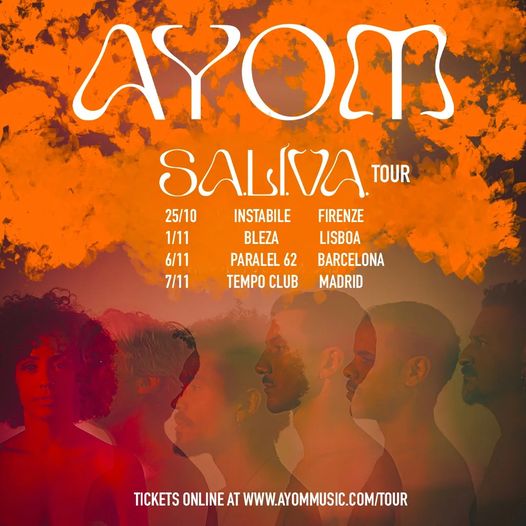
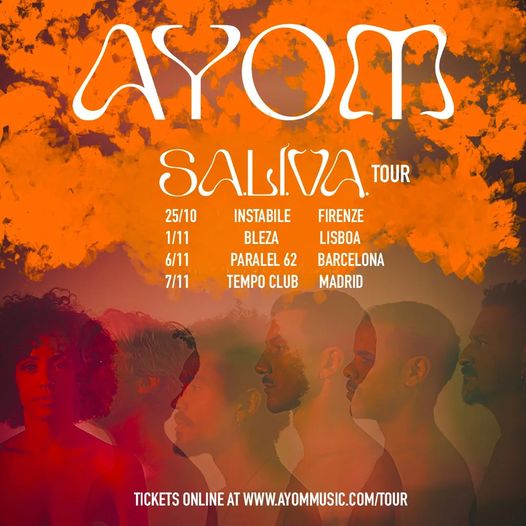
Ayom Tour Dates 2024
Once a piece is finished, how important is it for you to let it lie and evaluate it later on? How much improvement and refinement do you personally allow until you're satisfied with a piece? What does this process look like in practise?
The pieces often go through adjustments! We always improve if we realize we were more driven by our intellectual ideas than by the strength of the song.
Sometimes, we play the music live and feel that the song has a different flow than we had envisioned. It is much more musical if we remove some words or change something in the melody. And we make these adjustments without fear!
When you're in the studio to record a piece, how important is the actual performance and the moment of performing the song still in an age where so much can be “done and fixed in post?“
Emotion is the first aspect to be contemplated when we go to the studio! And I love going to the studio!
The recordings are as raw and real as possible; we can consider ourselves anachronistic and from an old era!
Even recording a solo song is usually a collaborative process. Tell me about the importance of trust between the participants, personal relationships between musicians and engineers and the freedom to perform and try things – rather than gear, technique or “chops” - for creating a great song.
Trust and harmony are the formula for our music. Among the band members, we are accomplices in sound! And we seek to expand our sound contribution until the other’s expression begins!
On this album, Sa.Li.Va, we had the privilege of recording under the direction of Kastrup, who led the process with a lot of lightness and competence, and it was pleasurable and inspiring!
What's your take on the role and importance of production, including mixing and mastering for you personally? In terms of what they contribute to a song, what is the balance between the composition and the arrangement (performance)?
They are still part of music as an art form! They are decisive in guiding listening. The composition often needs the arrangement to reach the listener's heart.
Just as lighting in a play creates the environment for the eyes, the arrangement creates the environment for the ears. It has the power to greatly enhance a song or even weaken it if it confuses the listening experience and disrupts the central idea.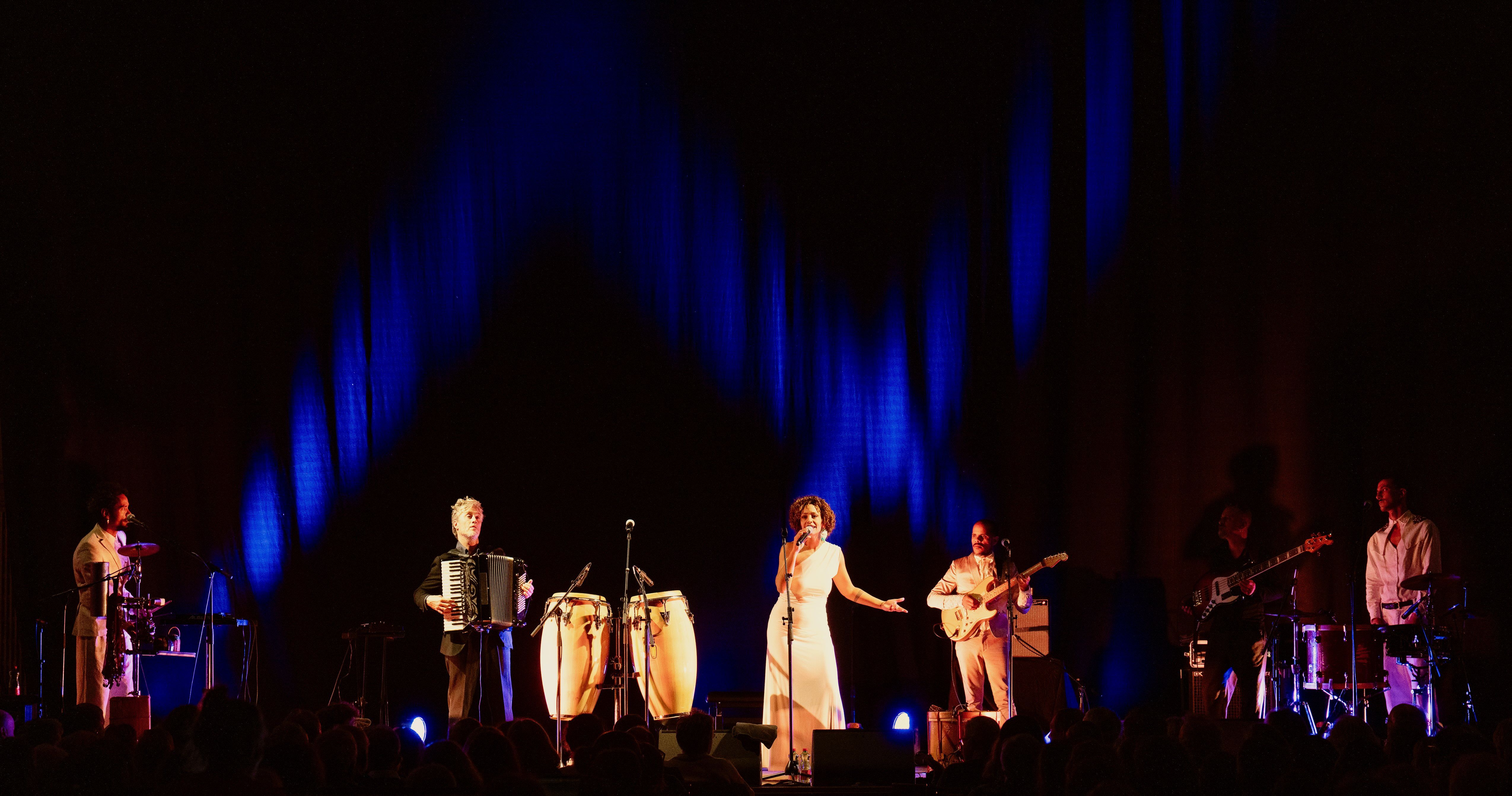
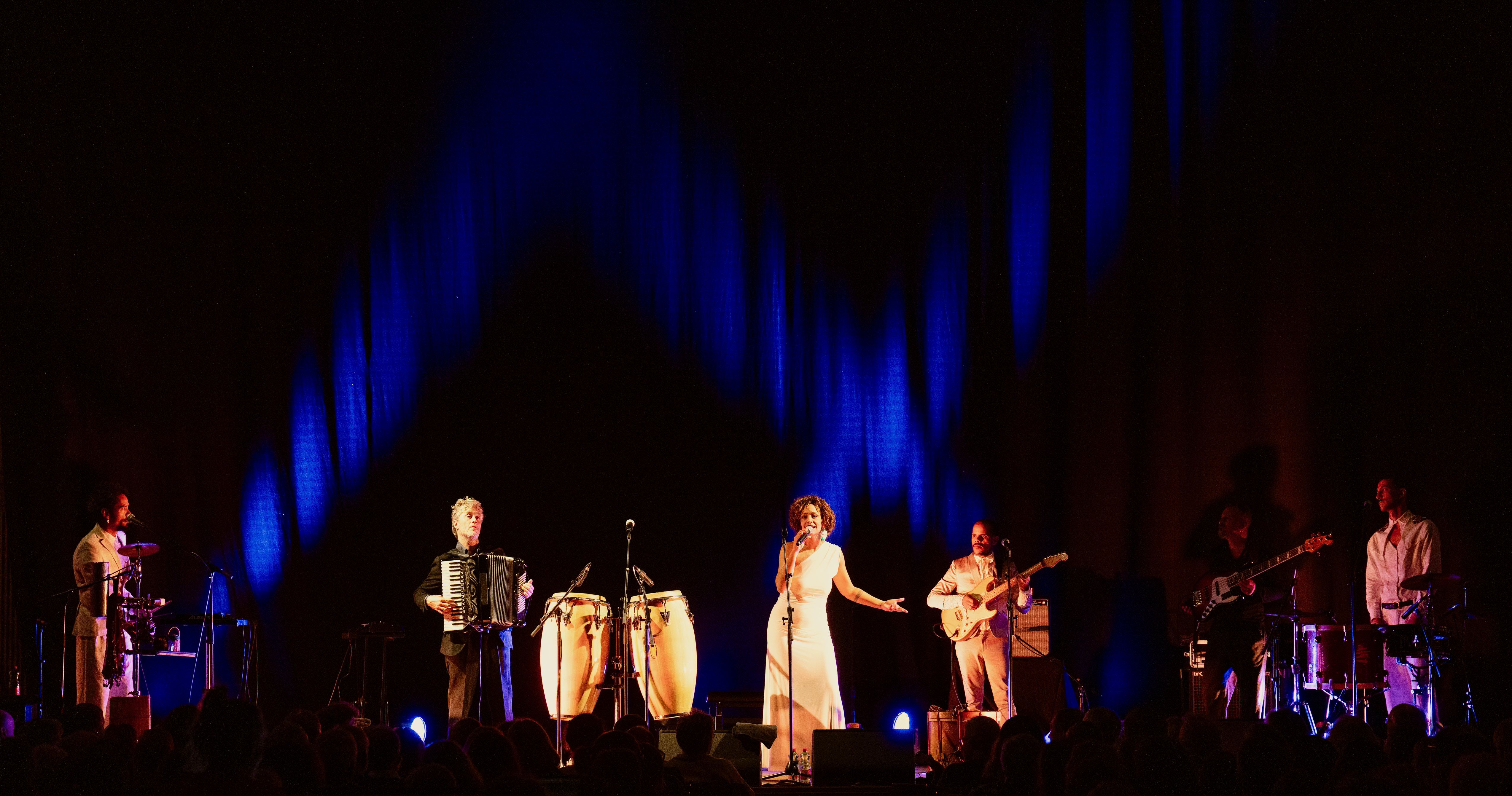
Ayom Live Image by Lukas Beck
After finishing a piece or album and releasing something into the world, there can be a sense of emptiness. Can you relate to this – and how do you return to the state of creativity after experiencing it?
My life is too intense for that emptiness.
I start listening to the music of routine again, and soon new songs are coming. The group’s creative flow is quite constant
Music is a language, but like any language, it can lead to misunderstandings. In which way has your own work – or perhaps the work of artists you like or admire - been misunderstood? How do you deal with this?
These days, we need to be very attentive to our communication because we are constantly deconstructing and reviewing beliefs, and we are available to everyone's ears all the time. And we artists have this commitment to being heard by many, so it is even more important to use this privileged position to give voice to the sensibilities of our times.
Fortunately, I have never been misunderstood in my songs, but we were criticized for participating in a big event in Italy that had sustainability and ecology as its banner and received criticism from environmentalists because of the event's size and the possible collateral damage of bringing so many people together!
In this situation, we responded politely to the criticism and shared our perspective on the subject with listening and respect! Nothing more powerful than listening and dialogue to dissolve misunderstandings!
Creativity can reach many different corners of our lives. Do you personally feel as though writing a piece of music is inherently different from something like making a great cup of coffee? What do you express through music that you couldn't or wouldn't in more 'mundane' tasks?
I think making music, from composing to playing live, is connecting with the divine, and you can connect with the divine by watering plants or making a delicious cake for coffee!
But the magic of making music is that you reach many hearts and can be an interlocutor of the divine! It connects people through joy and the moment.