Published
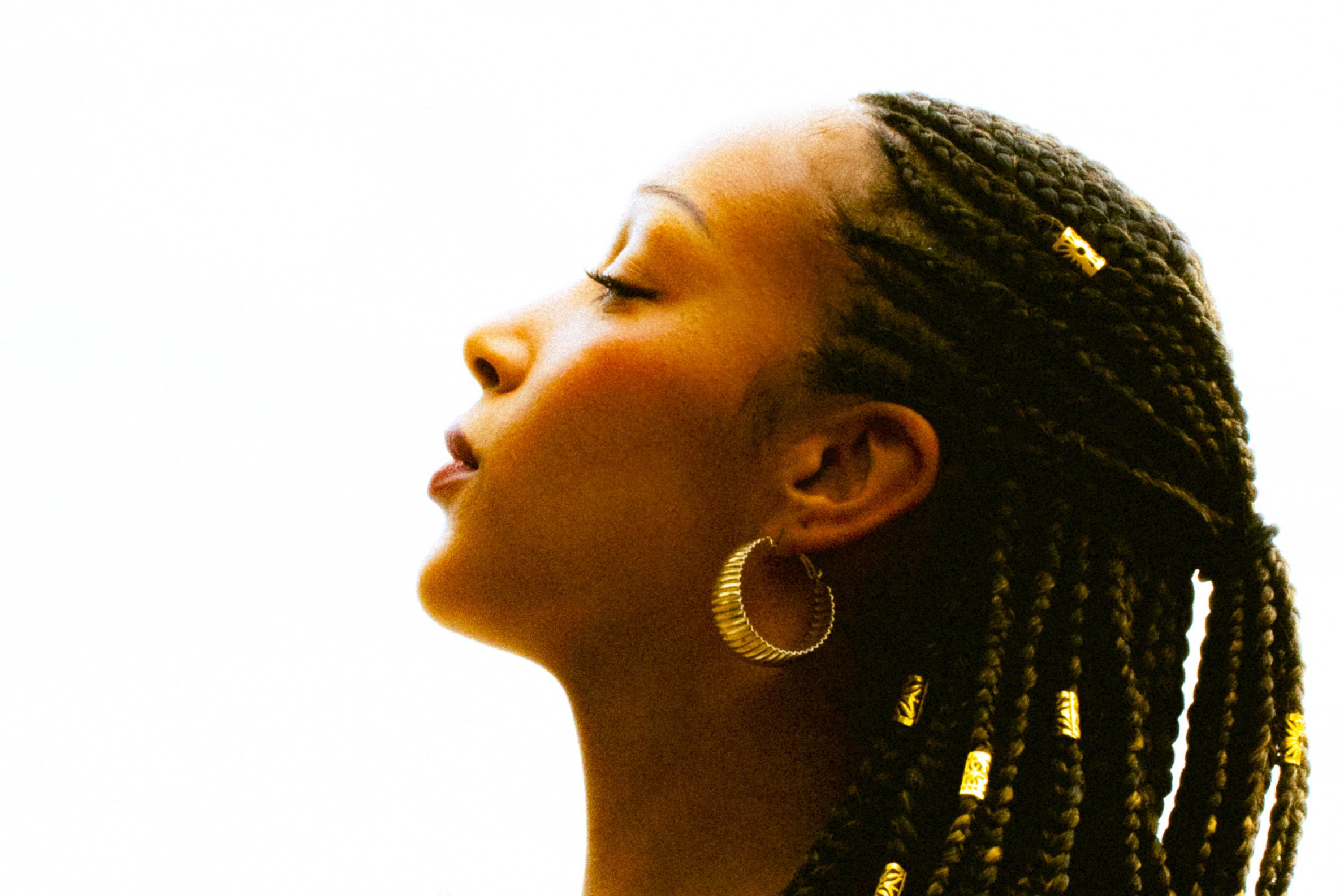
Name: Azul Kechi
Occupation: Singer, songwriter
Nationality: Nigerian-British
Current release: Azul Kechi's debut album Celestial Love is out now.
Recommendation for London: Holland Park is a beautiful place I like to go for a walk. There is something so tranquil about this park, and the Japanese inspired Kyoto Gardens are so beautifully designed, I love seeing the koi fish particularly.
If you enjoyed this Azul Kechi interview and would like to stay up to date with her music, visit her official website. She is also on Instagram, Facebook, and twitter.
For a deeper dive, read our earlier Azul Kechi interview.
When did you first consciously start getting interested in singing? What was your first performance as a singer on stage or in the studio and what was the experience like?
Music has always been escapism for me. When I was a child sometimes I felt like no one really understood me, and that I was different.
As an introvert I found it hard to express myself but when I discovered music, it was like this new language that I suddenly understood. Writing music and singing felt like second nature to me, and when I actually started taking it seriously as a career I started to understand myself more, and it deepened my connection with myself as a person.
It has been such a valuable journey.
If you're also playing other instruments, how does the expressive potential of these compare to your own voice?
I used to play the piano regularly, and this was actually my first step into the world of music way before I discovered singing.
The piano opened my eyes to a different way of expressing myself, and I think the physicality of the way you play the keys is integral as your whole body moves in alignment with it. It is an immersive experience, and so beautifully different to the voice.
Singing is an integral part of all cultures, and traditions. Which of these do you draw from – and why?
Singing is togetherness and community for so many cultures - sometimes I’d go to church with my family and the very first and last part of every service without fail would be a song that everybody would all sing.
This fascinated me, how singing even in religion and worship is so important.
What were some of the main challenges in your development as a singer/vocalist? Which practices, exercises, or teachers were most helpful in reaching your goals – were there also “harmful” ones?
The main challenge for me was simply confidence. When I first started singing, I hadn’t figured my vocal style out, and didn’t really know who I was musically. I would imitate the styles of other singers, and wouldn’t let my own personality and aura shine through in songs.
Once I became comfortable with myself, my confidence grew and I was able to understand who I am. Now I feel like my music is 100% authentically me.
What are the things you hear in a voice when listening to a vocalist? What moves you in the voices of other singers?
I always listen out for the raw emotion. Sometimes I don’t want to hear the perfect takes, the clean flawless riffs or otherwise.
I like the imperfections, parts where the mood and the feeling just take over, the artist isn’t performing anymore, just simply existing in their world for a moment. It’s beautiful.
How would you describe the physical sensation of singing? [Where do you feel the voice, do you have a visual sensation/representation, is there a sense of release or tension etc …]
Singing for me is like meditation. It’s something that I’ve always done in times where I need an escape or a moment to calm.
When I’m anxious or nervous, I’ll be singing a melody out of nowhere, and a lot of people don’t understand it. But it’s a kind of coping mechanism for me a lot of the time.
We have a speaking voice and a singing voice. Do these feel like they are natural extensions of each other, ends on a spectrum or different in kind?
Yes definitely, for me I feel like my singing voice says what my speaking voice cannot.
My speaking voice can only say so much, so I feel like these two voices work in tandem to align with one another, to help understand one another.
How do you see the relationship between harmony, rhythm and melody? Do you feel that honing your sense of rhythm and groove has an effect on your singing skills?
Harmony, rhythm and melody come so naturally when I sing. When the vocals take over, everything else is in full alignment almost automatically and I think this reflects how music comes from within, and sometimes it’s a feeling you can’t explain.
They are all linked together and each one definitely affects the other, it’s like a domino effect.
What are the potentials and limits of your voice? How much of your vocal performance can and do you want to control?
I feel like haven’t even scratched the surface yet. As someone who is starting out in the music world and developing myself as an artist I can’t wait to push the boundaries and see how far I can go, and what I am capable of.
I want to explore as much of it as possible.
As a singer, it is possible to whisper at the audience, scream at the audience, reveal deep secrets or confront them with uncomfortable truths. Tell me about the sense of freedom that singing allows you to express yourself and how you perceive and build the relation with the audience.
Performance is so powerful.
As someone who is new to performing and gigging, I am so excited to build up my relationship with audiences and show a more personal and intimate side of myself that you can’t quite get through streaming or social media.
As I build a fanbase I think it’s going to inspire me so much with ideas, understanding my audience and expressing who I really am.
I'd love to know more about the vocal performances for Celestial Love, please, and the qualities of your voice that you wanted to bring to the fore.
I wanted to show the real me. Just authentic, real Azul.
My vocal performance in my upcoming album is a showcase of who I am naturally, something that I can always look back on and think, ‘yes, that was a true representation of who I am, and I’m proud of it’.
When you're writing song lyrics, do you sense or see a connection between your voice and the text? Does it need to feel and sound “good” or “right” to sing certain words? What's your perspective in this regard of singing someone else's songs versus your own?
I always write my own lyrics, because I feel like the more of a personal connection I have with songs, the better. A bit of a myth I’ve made up in my head (but I do believe) is that I sing better when I’ve written the lyrics.
When the words are right, the vocal ability just flows.
Strain is a particularly serious issue for many vocalists. How do you take care of your voice? Are the recipes or techniques to get a damaged voice back in shape?
I know my limits and over time I’ve learnt what I can and can’t do, so prevention for me is key.
I’m someone that always goes with natural remedies, so if I ever need to recover my voice a lemon, honey and ginger tea does the job.
How has technology, such as autotune or effect processing, impacted singing? Has it been a concrete influence on your own approach?
Technology is magical and in the world of music offers so much potential for sound and can allow us to push boundaries.
I think it’s really inspired me to go further and push myself, as the possibilities are endless and with
everything readily available at our fingertips, there’s no limits to what we can create. That’s really exciting.
For recording engineers, the human voice remains a tricky element to capture. What are some of the favourite recordings of your own voice so far and what makes voices sound great on record and in a live setting?
My favourite recording has to be my acoustic EP.
I recorded acoustic versions of a few of my favourite songs from my album, Celestial Love, and it was the first time I really heard my voice in a stripped back, raw setting. It made me realise the potential of my voice.
Motherese may have been the origin of music, and singing is possibly the earliest form of musical expression, and culture in general. How connected is the human voice to your own sense of wellbeing, your creativity, and society as a whole?
My voice reflects who I am. It’s something that is fluid and moves depending on how I’m feeling at the time, or what I’m going through, and it is the one consistency I know will always be there no matter what’s going on in my life.
No matter what, there will always be singing, and that makes me feel secure.