Published
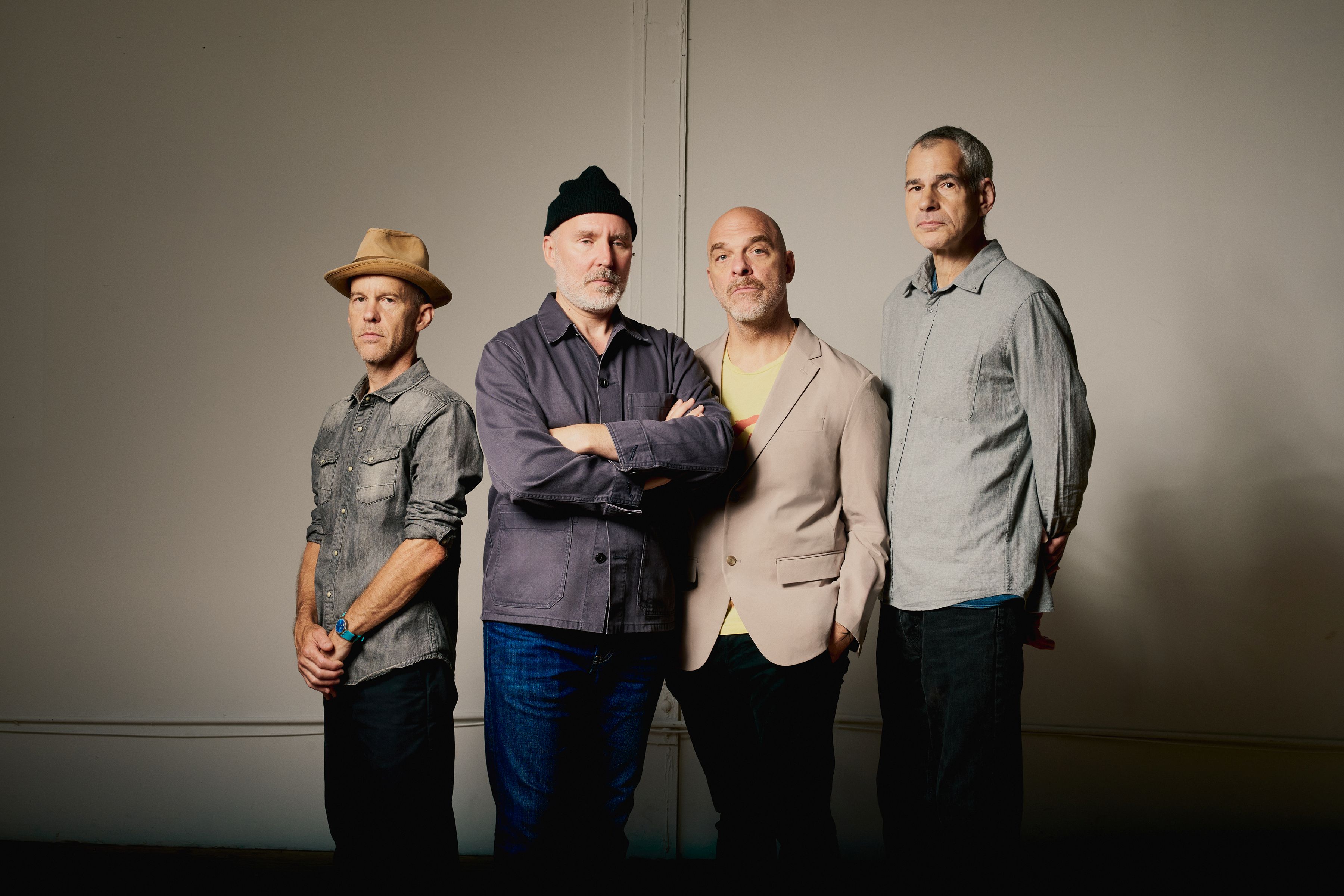
Name: The Bad Plus
Members: Reid Anderson (bass), David King (drums), Ben Monder (guitar), Chris Speed (tenor saxophone)
Interviewee: Reid Anderson
Nationality: American
Current Release: The Bad Plus's latest album Complex Emotions is out via Mack Avenue.
If you enjoyed this The Bad Plus interview and would like to know more about the band and their music, visit their official homepage. They are also on Instagram, Facebook, and bandcamp.
Tell me about your instrument and/or tools, please. What made you seek it out, what makes it “your” instrument, and what are some of the most important aspects of playing it?
I play the bass but I actually don’t feel that personally identified with the instrument. It’s a way for me to participate in music with other people.
And of course the bass function is a fascinating subject.
How would you describe your own relationship with your instrument – is it an extension of your self/body, a partner and companion, a creative catalyst, a challenge to be overcome, something else entirely?
My relationship to the instrument is really quite practical. It’s more about how to shape the music within a given context in accordance with the responsibilities and freedoms available within that context.
Derek Bailey defined improvising as the search for material which is endlessly transformable. What kind of materials have turned to be particularly transformable and stimulating for you?
Melody.
Do you feel as though there are at least elements of composition and improvisation which are entirely unique to each? Based on your own work or maybe performances or recordings by other artists, do you feel that there are results which could only have happened through one of them?
Yes, composition and improvisation in the abstract have unique qualities. Each can take you to places that the other can’t.
But practically speaking they are inextricably entwined.
When you're improvising, does it actually feel like you're inventing something on the spot – or are you inventively re-arranging patterns from preparations, practise or previous performances? What balance is there between forgetting and remembering in your work?
When you’re improvising you are responding to many things. For example what you just played, an idea that you have, what other people are playing, the sound of the room, etc.
As an improviser you draw from a vocabulary of musical ideas, phrases, patterns, techniques, influences, sounds. In a good improvisation these elements come together in musical ways that cannot be pre-planned.
They are being invented “on the spot” but they come from somewhere. Most importantly from the life experience of the improviser.
Artists from all corner of the musical spectrum, not just “free jazz” have emphasised the importance of freedom in their creativity. What defines freedom for your improvisations?
I think of it mostly in the sense of freedom of imagination. A lot of people tend to think of freedom as “oh we don’t have to follow the rules anymore.” And that leads to a lot of “free” music sounding the same.
Freedom comes with responsibility.
Taking your recent projects, releases, and performances as examples, what, would you say, are the key ideas behind your approach to improvisation?
Clarity and serving the song.
In your best improvisations, do you feel a strong sense of personal presence or do you (or your ego) “disappear”?
I don’t think you should want to deny your voice. But the music is what’s important in the end.
What are some of your favourite collaborators and how do they enrich your improvisations?
Anyone who listens and has their own ideas and an open mind.
In a live situation, decisions between creatives often work without words. From your experience and current projects, what does this process feel like and how does it work?
In a live situation there is no time for words. The collective understanding of the material and aesthetic objective should be enough.
Stewart Copeland said: “Listening is where the cool stuff comes from. And that listening thing, magically, turns all of your chops into gold.” What do you listen for?
You listen to the song and that informs what you do.
As a listener, do you also have a preference for improvised music? If so, what is it about this music that you appreciate as part of the audience?
In addition to having the right performance energy, the balance of clarity and mystery is essential.