Published
Part 1
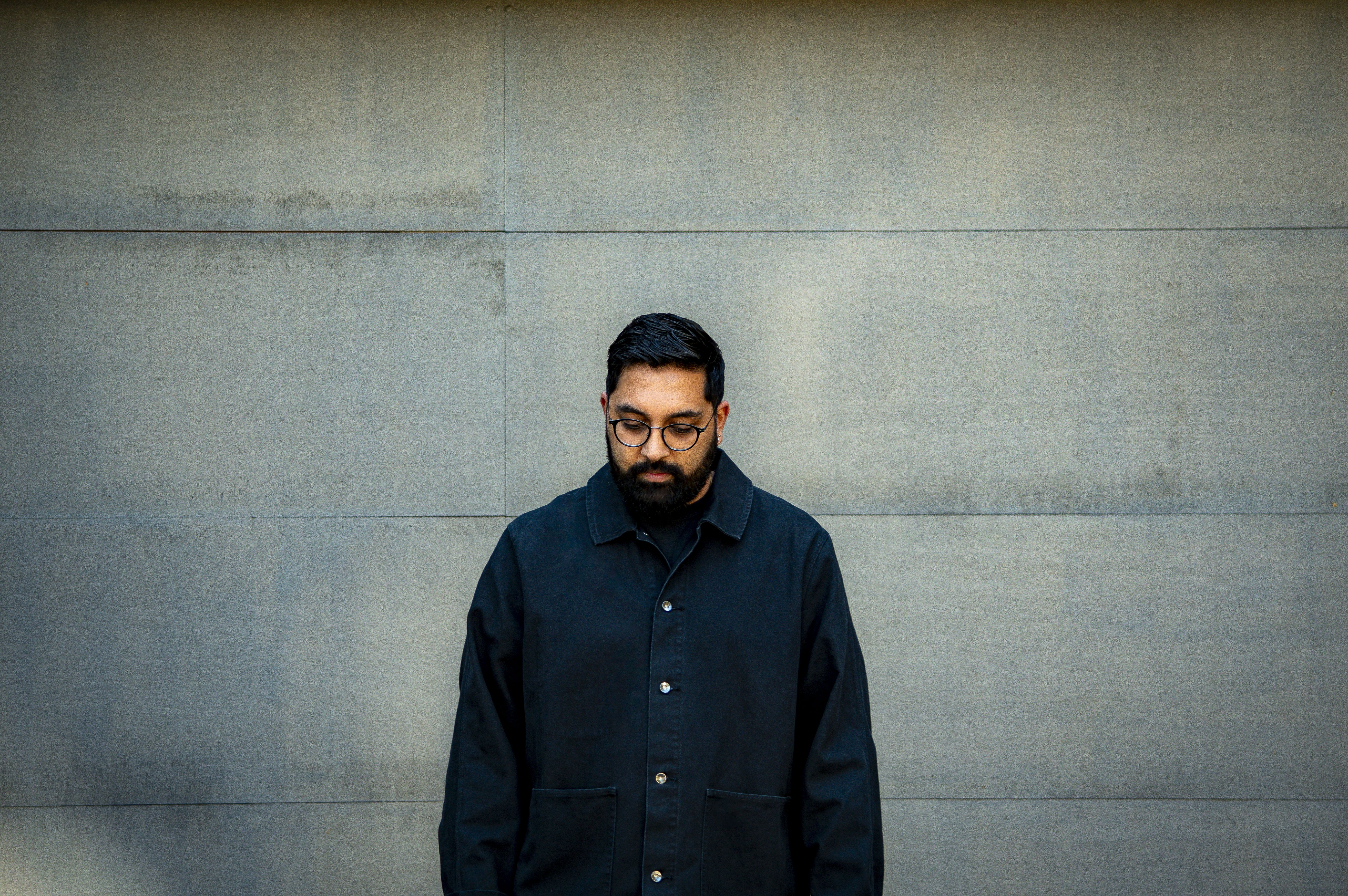
Name: Vasu Patel aka Banksia
Nationality: South Asian-British
Occupation: Producer, DJ, pianist
Current release: Banksia's Here, Somewhere EP is out via his Ordinary Pleasures imprint.
If you enjoyed this Banksia interview and would like to know more about his music, visit his official homepage. He is also on Instagram, Soundcloud, and Facebook.
What were some of the musical experiences which planted a seed for your interest in jazz?
Jazz became a profound part of my life much later than most might expect.
Growing up, I’d catch snippets of it here and there, but it didn’t hold a central place in my musical world until I moved to the United States. That transition was transformative—not just for my life, but for my relationship with music. I found myself captivated by the interplay of piano and saxophone or at times purely just the solo piano on its own. Their dialogue felt both intimate and transcendent, drawing me deeper into the world of jazz.
It was during this time that I discovered artists like Pharaoh Sanders, Shabaka Hutchings, John Coltrane, Floating Points, and Nils Frahm. Their music unlocked something within me — an unexplainable feeling that resonated on a deeply emotional and even spiritual level.
[Read our Nils Frahm interview]
I became particularly drawn to contemporary jazz, which strips away complexity and funk to reveal a raw, introspective, and almost meditative depth. That sense of spirituality and emotional rawness was what truly hooked me.
With my EP Here, Somewhere, I aimed to channel that energy. The music reflects the raw, emotional spectrum of jazz that I fell in love with — where joy, calm, and introspection coexist. It’s my way of honoring the genre that continues to inspire and ground me, blending the emotional weight of its roots with my own interpretation.
How do jazz and jazz culture factor into your artistic processes and the music resulting from them?
I’ll admit, I struggled with this question a lot. I’m primarily known as an electronic music producer and DJ, with most of my work tailored for club settings, festivals, and dance floors.
Jazz was a different world entirely, and stepping into it professionally felt daunting. There’s a prevalent expectation in the music industry to stay in one lane—to focus on a singular genre or style under one alias to maximize metrics, numbers, and all the other important data points. It’s a formula that often works, and I understand why it’s widely embraced. But for me, it felt limiting.
The turning point came when I realized that some of my biggest musical influences weren’t bound by those rules. They were releasing electronic music alongside other genres under the same alias, defying conventions and staying true to themselves. It was a lightbulb moment. I thought, Why can’t I do the same? Why should I confine myself when my identity as an artist spans more than one genre?
Choosing to release my jazz work under my own alias felt risky, but it also felt authentic. It’s a decision that not only showcases my range as an artist but also allows me to stay true to my creative spirit. So while jazz and jazz culture deeply inform my process—through their emphasis on improvisation, rawness, and emotional depth—what really drives me is a broader music culture rooted in individuality, rule-breaking, and authenticity.
That’s the ethos I want to contribute to and help cultivate: a space where artists can fully embrace all facets of who they are.
What does the term jazz mean today, would you say?
To me, jazz today means freedom of expression—pure and simple. It’s one of the few genres that feels limitless, where the boundaries are constantly pushed and redefined.
Jazz allows artists to be unapologetically themselves, expressing their emotions, ideas, and individuality in ways that are as diverse as the genre itself. It’s this sense of freedom and authenticity that resonates so deeply with me and inspires my own work.
Jazz was about a lot more than just music in the 60s and 70s, from politics to fashion. For you personally, is jazz still a way of life – and if so, in which way?
Absolutely, jazz is still very much a way of life for me, but not just in the traditional sense. For me, jazz represents more than just music—it’s a mindset, a philosophy of freedom, exploration, and authenticity. It’s about embracing the unexpected, breaking boundaries, and staying true to yourself, even when it feels risky. That ethos is deeply embedded in how I approach not just my music but also my broader creative process and life choices.
While the jazz of the '60s and '70s carried bold statements in politics, fashion, and culture, I feel its spirit lives on today in the way it inspires individuality and self-expression. It’s about creating your own path, finding your own rhythm, and expressing your truth without compromise. That’s what I try to embody, both in my music and in how I navigate the world as an artist.
Jazz, for me, is a reminder to live with purpose, spontaneity, and a deep respect for the beauty of imperfection.
Many people perceive jazz as a genre with high barriers of entrance, both for listeners and musicians. What have your own experiences been in this regard?
I can understand why people perceive jazz as having high barriers to entry, it’s a genre with so much history, technicality, and nuance that it can feel overwhelming, both as a listener and a musician. But for me, jazz has always been about breaking down those barriers. It’s not about mastering every complex chord progression or understanding every historical reference; it’s about feeling something and expressing it authentically.
When I first started exploring jazz, I felt intimidated, too. The depth of the genre can make it seem inaccessible at first, but once I let go of the need to “get it” and just allowed myself to experience it, it became a completely different journey.
As a musician, I found my entry point by focusing on what spoke to me — the interplay between piano and saxophone, the rawness of contemporary jazz, and the emotional and spiritual connection it brings. That became my way in.
Derek Bailey defined improvising as the search for material which is endlessly transformable. As of 2024, what kind of materials are particularly stimulating for you?
Derek Bailey's concept of improvisation as a search for endlessly transformable material resonates deeply with me.
In 2024, I find myself particularly stimulated by the fusion of electronic textures with organic sounds. The interplay between synthesized elements and acoustic instruments offers a vast landscape for exploration, allowing me to craft unique sonic experiences that evolve with each piece of art or music I create.
Additionally, drawing inspiration from diverse musical traditions and contemporary genres provides a rich tapestry of motifs and rhythms to reinterpret and transform, keeping my creative process dynamic and ever-evolving.
What, would you say, are the key ideas behind your approach to improvisation?
The key ideas behind my approach to improvisation center around emotional authenticity, minimalism, and interplay. For me, improvisation isn’t just about technical skill or complexity — it’s about tapping into a raw, unfiltered emotional space and letting that guide the music. I aim to create moments that feel deeply personal yet universally resonant, where the listener can connect to the emotions being expressed.
Minimalism plays a big role as well. I like to work with fewer elements, focusing on the purity of tone and the space between notes. This allows me to explore the subtleties of sound and create a sense of intimacy, where every gesture feels deliberate and meaningful.
Finally, I view improvisation as a conversation—whether it’s between instruments, textures, or even silence. I’m drawn to the interplay of elements, like the way a saxophone can respond to a piano phrase or how electronic effects can interact with acoustic sounds. It’s about listening as much as playing, being open to the unexpected, and allowing the music to unfold organically.
At its core, my approach is about staying present, embracing vulnerability, and creating something that feels alive in the moment.