Published
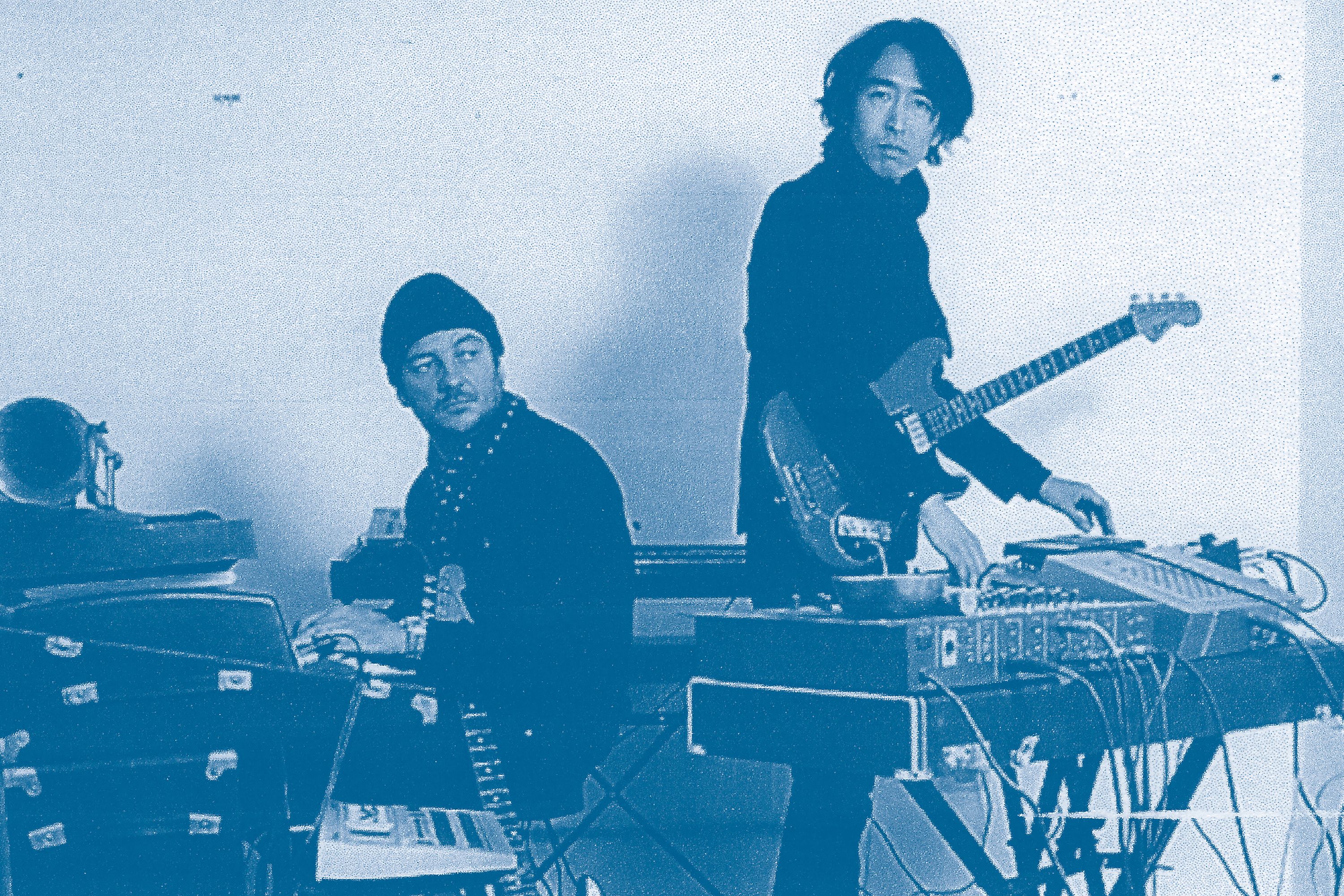
Names: Jean-Gabriel Becker and Susumu Mukai
Nationalities: French (Jean-Gabriel Becker), Japanese (Susumu Mukai)
Current release: Becker & Mukai's Spirit Only is out via SaS.
Recommendations: JGB: I think everyone should read a book called Tristes Tropiques by Claude Levy Strauss. It's a fascinating anthropology book that gives you a good glimpse into what defines the whole of the human condition.
Painting-wise, I'm very fascinated by anything by Robert Delaunay at the moment ... So something like Simultaneous Windows on the City maybe?
If you enjoyed this Becker & Mukai interview and would like to stay up to date with their music, visit them on Facebook, and Soundcloud.
What were some of your earliest collaborations? How do you look back on them with hindsight?
JGB: our first collaboration was on the first EP Eyes that we released in 2018. Our music on Eyes was very loose and free-flowing, with a lot of improvisation.
We still love working in this way, and long improvisations over sequenced music are still the basis of our work. But recently we have chosen to spend more time fine-tuning our productions, which led to shorter and more composed tracks. We may choose to go back to those long raw improvised moments in a future release, but Spirit Only is not it ...
SM: We had zero anticipation of what kind of music we would make together at the start, and were doing whatever felt fun at the time. I think some of the fresh energy comes across on the early tracks.
There are many potential models for collaboration, from live performances and jamming/producing in the same room together up to file sharing. Which of these do you prefer – and why?
JGB: We only make music together in a room, first by playing music simultaneously and then by overdubbing, but our main modus operandi is human contact. We may sometimes work on our music separately but always bring it back into the studio together.
SM: Yes, very much live based. I think we generally worked on it when we were both in the room and for editing etc we worked separately.
How did this particular collaboration come about?
JGB: Spirit Only will be our 6th release together and since we've started working together, we've never stopped creating more music. Even today, we've already started work on more tracks that will go towards our next releases.
So we didn't really need an impetus to get us started on this album. It was a realisation at some point that we had a coherent body of work that we were ready to share.
What did you know about each other before working together? Describe your creative partner in a few words, please.
JGB: We met through our mutual friend Alex and I was a huge fan of Susumu's work as Zongamin.
I ran a label a long time ago and asked Susumu to remix a track for us and it took a few more years for us to really start working together. I remember once talking to Susumu at a party about the fact that my favourite drum machine was the TR707 and his the TR727. We'd said that we should get those together and we did ... You can hear them really clearly on the Eyes EP, especially on the title track.
Susumu is a hugely talented person, both as a musician and as an artist and illustrator, but he's also very astute in his philosophy of life and in his thought process. He's a great person to jam with but also to have abstract conversations with. Our studio sessions are a bit of both.
SM: Jeanga is an incredibly creative person, and a physical, dynamic musician, and very open minded producer with sharp ears. We talk about things at our sessions. Jeanga is very knowledgeable in art, films, books, as well as music. Our recording sessions are also conversations.
What do you generally look for in a collaborator and what made you want to collaborate with each other specifically?
JGB: A different point of view, something that I won't think of or won't be able to do ... Susumu's music is hard to define, that's what makes it so interesting.
Tell me a bit about your current instruments and tools, please. In which way do they support creative exchange and collaborations with others?
JGB: This is a good question because we use a lot of hardware and instruments and I think they really define each one of our releases: the actual sound but also the creative process.
On this release, we've been using a lot of toy samplers and trying to find ways to make them our own ... As you can hear on our most recent single “Meditative Blip”.
We're not really starting a track with any kind of restriction, thinking we have to use this or that instrument, but these were just what we had around at the time of creating this record.
Before you started making music together, did you in any form exchange concrete ideas, goals, or strategies? Generally speaking, what are your preferences when it comes to planning vs spontaneity in a collaboration?
JGB: All spontaneity. We started working together based on a conversation about drum machines in a club and just thought it'd be fun to make music together. Even now, we're strangely devoid of any strategy, which might be a little worrying actually ...
SM: Yes, pretty easygoing.
Describe the process of working together, please. What was different from your expectations and what did the other add to the music?
JGB: We weren't really expecting much when we started working together. I don't even think any of us thought we'd do 6 releases together …
SM: We didn't really have any expectations as to what kind of music we would make together.
Is there a piece which shows the different aspects you each contributed to the process particularly clearly?
JGB: Very roughly, Susumu is a bass player at heart and is brilliant at it, so a lot of the bass lines are played by him. I play a lot of the guitar parts and we share the synth parts. On a track like “Dark Fields Of The Republic” on our Time Very Near release, Susumu would play the bass, I would play the guitar and we'd create the rest together.
SM: Also we don’t have much egos as instrumentalists, often end up swapping instruments and it doesn’t really matter who played what.
What tend to be the best collaborations in your opinion – those with artists you have a lot in common with or those where you have more differences? What happens when another musician take you outside of your comfort zone?
JGB: I think differences create interesting results. I feel that Susumu and I keep taking each other out of our comfort zones, which is what makes the music interesting.
SM: Yes, we have some common grounds but also find Jeanga’s approach to doing things and viewpoints fascinating and surprising sometimes which makes collaboration exciting and unpredictable.
Decisions between creatives often work without words. How did this process work in this case?
JGB: Through a lot of conversations!
We create a lot of our work through jamming, which I guess could be called “without words”, but we discuss every corner of each track extensively before the audience gets to hear it...
What are your thoughts on the need for compromise vs standing by one's convictions? How did you resolve potential disagreements in this collaboration?
JGB: Disagreements are healthy and help music and the musicians get better, I think.
We don't always agree on everything, but both have utter respect for the other's opinion, so we always manage to listen to each other and find an agreement.
SM: We are always open minded. If we see different things in a situation then that’s great.
Was/Is this collaboration fun – does it need to be?
JGB: Yes, and yes.
SM: yes
Do you find that thanks to this collaboration, you changed certain parts of your process or your outlook on certain creative aspects?
JGB: I feel that I learn from each and every day I spend in the studio, so I think I've learnt tremendously from this collaboration. It definitely shaped the way I work.
SM: It has been inspirational.
Collaborating with one's heroes can be a thrill or a cause for panic. Do you have any practical experience with this and what was it like?
JGB: No, not really.