Published
Part 1
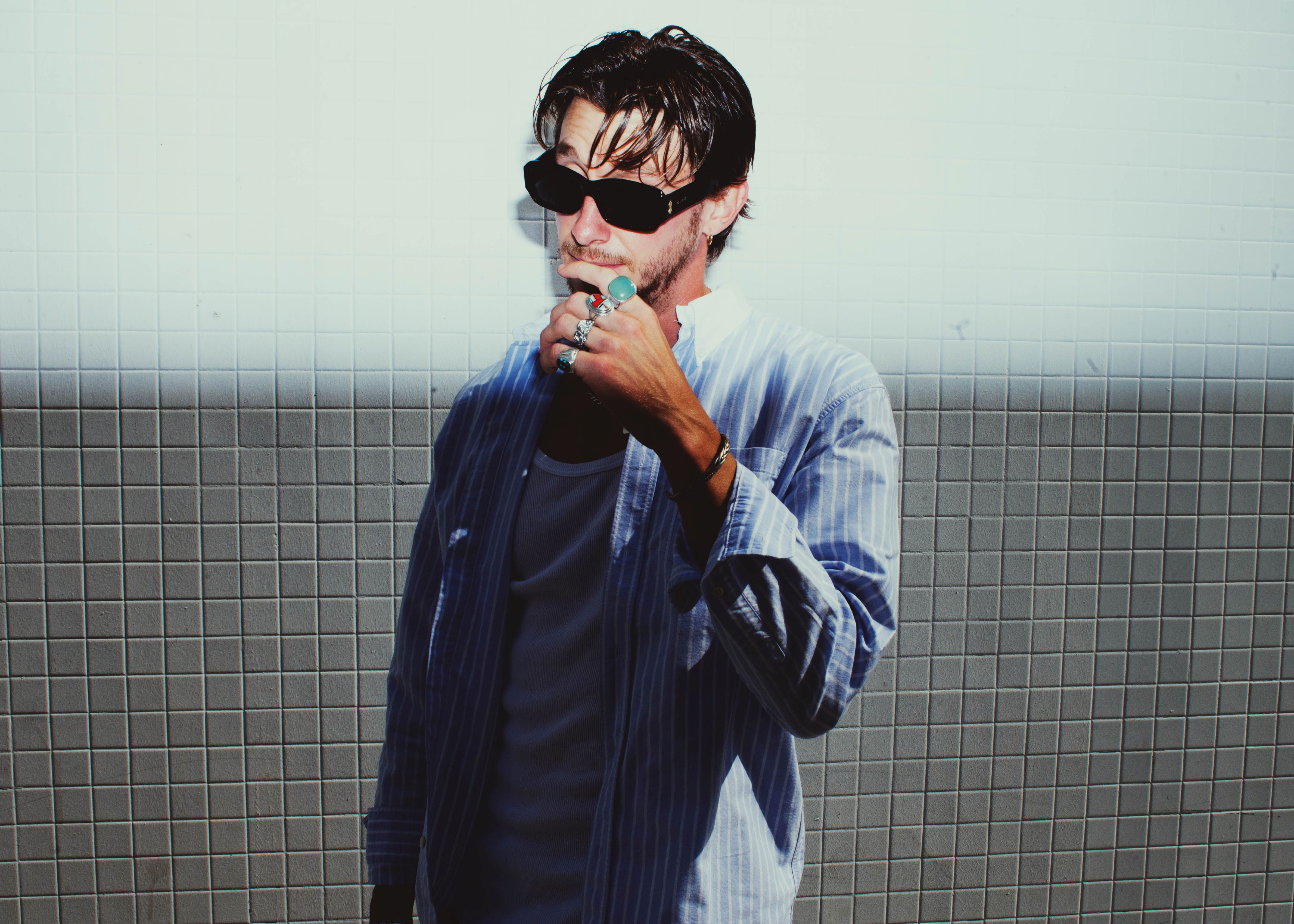
Name: Béesau
Occupation: Trumpet player, composer, improviser, beatmaker, producer, label founder at La Belle Kaki
Nationality: French
Current release: Béesau's new single "Pas Encore" is out via Out Of (The) Blue. It is a harbinger of his upcoming new full-length, expected for Fall of 2025.
Hometown Recommendations: Where I grew up, on Île de Ré, I would recommend Les Portes-en-Ré and all its beaches. There’s one beach I particularly like, with a pretty funny name: le Trousse-Chemise.
For Paris, it’s a bit more complicated because there are so many great places to visit. I’d say more in terms of neighborhoods, like the one I live in, the 11th arrondissement, which is a lively and pleasant area.
I also remember an anecdote that connects to videos floating around online: before performing his famous piece "Strasbourg Saint-Denis" at the New Morning, Roy Hargrove mentioned that he had visited a fun place in Paris, and that it inspired him to write the piece. As he said himself: “it’s a fun place.”
Topics I am passionate about but rarely get to talk about: There are quite a few things I’m passionate about, but I’ll talk about one that might be less central to my life now than it used to be, yet still remains important and fun to share in relation to music and jazz: surfing. I come from a small island called Île de Ré, and I worked as a surf instructor there for a few years. It was a big passion for me, and even if it’s a little less so now, it continues to inspire me. I often draw parallels between music and sports. For example, in sports, to be recognized and succeed, you have to be the best — you need top physical performance and a strong, disciplined mindset.
In music and art in general, it’s not quite the same. You don’t have to be the absolute best technically to move people and create beautiful music. Of course, technique is important, but emotion, feeling, and creativity matter just as much. That’s why I often talk about surfing: it was one of my great passions, and it continues to influence the way I think about music and life.
If you enjoyed this Béesau interview and would like to know more about his music and upcoming live dates, visit him on Instagram, Facebook, and Soundcloud.
What were some of the musical experiences which planted a seed for your interest in jazz?
I actually discovered jazz quite late — around 17 or 18.
In the beginning, jazz was just an idea of freedom to me, something I heard about at the conservatory without really understanding what it meant. Between the ages of 7 and 14, I thought jazz was simply about improvising and doing whatever you wanted. But I didn’t really know what that meant, and I never had the chance to study it properly.
When I was 14, I got expelled from the conservatory and stopped playing the trumpet — I had lost interest, and the place didn’t offer any jazz program, which was what I really wanted to explore. That’s when things shifted: I bought a computer and an MPC, and started making hip-hop beats.
I was very influenced by the New York scene of the ’90s, especially DJ Premier. Through sampling, I discovered that many rap instrumentals from that era were built on samples from jazz, funk, soul, or gospel records.
As I started tracing the origins of those samples, I began digging deeper into jazz albums — until I came across Earfood by the Roy Hargrove Quintet.
That’s when everything changed. I completely fell in love with jazz.
What does the term jazz mean today, would you say?
This is a very interesting and at the same time complex question, because the term “jazz” can mean different things to different people. For me, it’s a vast topic that could be debated for hours.
Today, I see jazz as a music in constant evolution — and that’s exactly how I try to approach it. Even though it can sometimes feel old, to me jazz remains one of the most modern forms of music, because it has been evolving continuously since its beginnings.
Originally, jazz was made for dancing and was synonymous with celebration, whereas today, at least in France and in popular perception, it is often seen as an intellectual music — which was never its original intention. For me, jazz doesn’t fear rules or boundaries. I see it less as an elitist music and more as an open, evolving art form, always ready to reinvent itself.
Note: The reason I say this question is so vast is that jazz exists in so many forms that it’s difficult to have just one vision of it. I could divide my answer into several parts to explain what jazz is and all the folklore surrounding it. It’s a complex subject, and honestly, and I could speak about it for hours.
As of today, what kind of materials, ideas, and technologies are particularly stimulating for you?
Things haven’t really changed much since I started composing music. What stimulates me the most is the way I work, which I’ve always approached in this way: composing largely on the computer.
Even today, I’m particularly inspired by certain modern sounds, like synthesizers, which can capture my attention for a long time — almost in a slightly obsessive way. This is an approach I’ve been using since I was 14, thanks to my computer and software like Ableton.
I would say it’s a “modern” way of composing jazz, if you will.
Where do most of your inspirations to create come from – rather from internal impulses or external ones? Which current social / political / ecological or other developments make you feel like you need to respond as an artist?
I would say that my inspirations mostly come from internal impulses, although they are often triggered by external elements. To explain: I tend to let my heart speak in response to what I feel about life.
For my latest project, for example, what affected me most was the feeling of love and perseverance — the beauty, but also the difficulty of loving. So it’s primarily a very personal, almost somewhat selfish feeling, since I write based on what I feel deep in my heart.
Tell me a bit about the sounds & creative directions, artists & communities, as well as the colleagues & creative hotspots of your current hometown, please. How do they influence your music?
Having lived in Paris for over 12 years, I can say that my musical — and more broadly creative — environment is very vast.
My network is divided into several spheres, but the majority of the people I work with are first and foremost friends. These connections were formed in the jazz world — at music school or later during jam sessions in Parisian clubs.
We quickly developed strong bonds, perhaps because we were a bit of outsiders in the jazz scene, or at least within the more elitist Parisian circles. From these encounters emerged a group of friends who influence me greatly, as we often share similar ways of working.
Additionally, I also work as a beatmaker for rap artists. This experience gives me an extra level of openness that nourishes the way I compose. My musician friends sometimes share this approach, and we influence each other through our experiences and practices.
What influences me greatly as well is that these musicians I’m talking about are all artists I deeply admire. There is a desire to surprise each other, to astonish one another at times — even though it’s not a competition and we don’t experience it that way. Each of us admires the work of the others — at least, that’s how it is for me — and this has a huge impact on what I aim to create.
What role do electronic tools and instruments play for your creative process?
As I mentioned earlier, electronic tools play an almost central role in the way I compose music.
I discovered sampling and computer-based music production when I was around 14, along with sound cards, synthesizers, and software. I’ve been working with Ableton for a very long time — these tools are a part of who I am, and they’ve really shaped me as an artist.
Even though there was a time when I used to write music on sheet paper, it’s been years since I’ve done that. Now I compose almost entirely through technology — using computers, recording software, and other digital tools. This role is all the more central because I often combine electronic music and jazz.
And on the other side of my work — as a beatmaker and producer — these tools are just as essential, because this is precisely the way that kind of music is created.
Thanks to technological advances, collaboration has become a lot easier. What have been some of the most fruitful collaborations for you recently and what approaches to and modes of collaboration currently seem best to you?
This is a great question. I’ll address two aspects of collaboration enabled by technology.
First, technology makes connecting with other artists much easier. Thanks to phones, social media, and digital tools, everything feels much more accessible: you can easily reach out to someone, propose a collaboration, and see whether it happens or not — something that wasn’t possible before.
Second, regarding working methods, the ability to record at home using a computer, an audio interface, and software allows music to be created remotely. This has been very useful for me.
For example, I collaborated with JaRon Marshall, an American jazz pianist, on a feature that was done entirely remotely. We couldn’t meet in person, but the track was completed.
I also worked with Leo Middea, a Brazilian artist, in the same way: each of us worked from our own space, but we shared a mutual admiration for each other’s work.
Technology made it possible to form these connections quickly.
For me, the most important collaborations are those that go beyond the technological aspect and become real human encounters. For the artists I mentioned, the collaborations started remotely, but we eventually performed together in concerts, and that’s when the true beauty emerges.
For the rest of my collaborations, I’ve done a lot — in roughly 70% of cases, the people I worked with became close, almost like friends. And it’s precisely these kinds of collaborations that I find the most beautiful, and it’s true that almost all of them happened thanks to technological means.