Published
Name: Being and Becoming
Interviewees: Peter Evans, Nick Jozwiak
Nationality: American
Occupation: Trunpet player, composer, improviser (Peter Evans), bassist, composer, sound artist (Nick Joz)
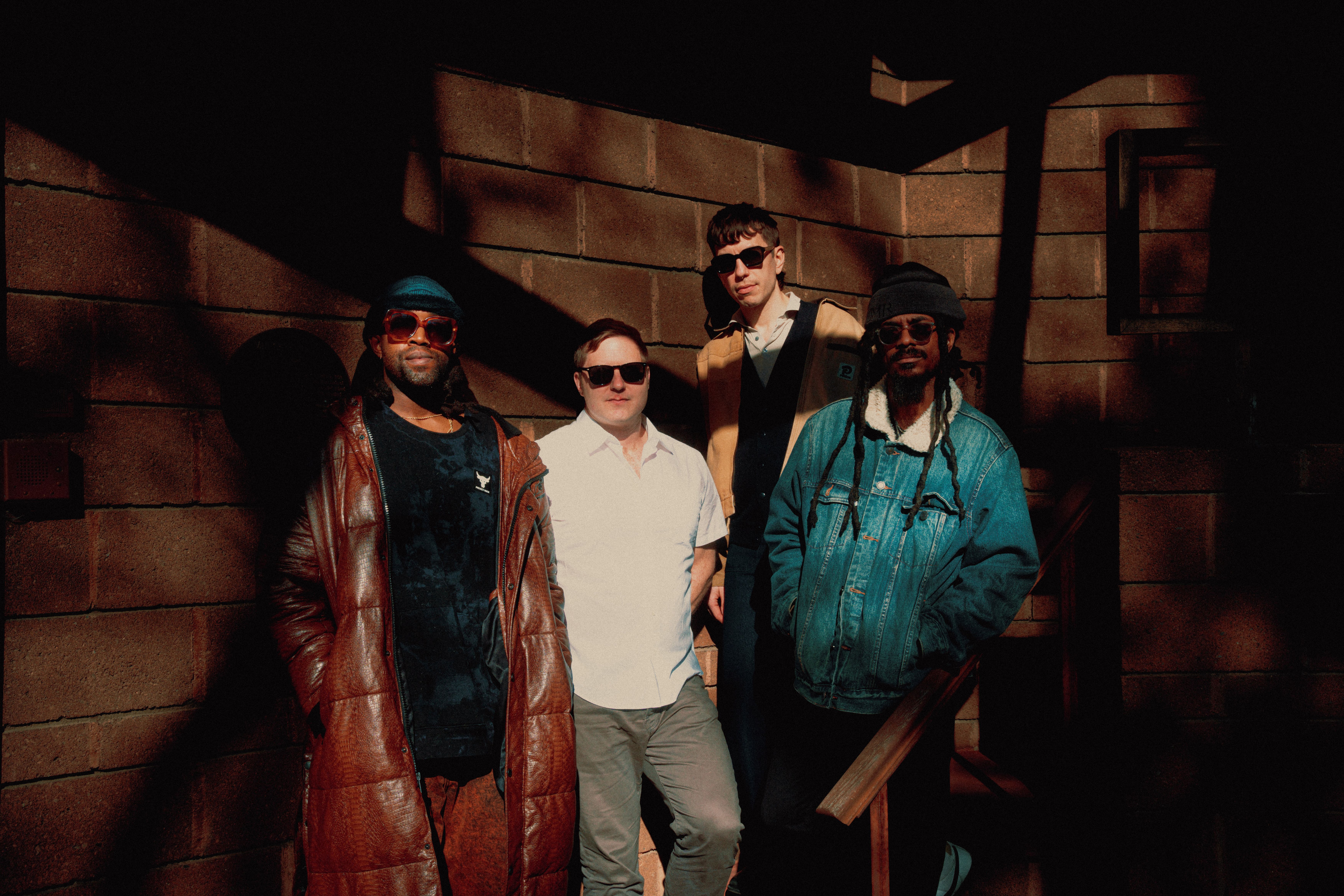
Current release: Being and Becoming's new album Ars Ludicra is out via More is More. On the album, the band consists of himself on trumpet, piccolo trumpet, flugelhorn, electronics, and piano as well as Joel Ross (vibraphone, synth, percussion), Nick Jozwiak (bass, synth) and Michael Shekwoaga Ode (drums)
If you enjoyed this Peter Evans and would like to stay up to date with his music and current live dates, visit his official homepage. He is also on Instagram, Facebook, and bandcamp.
Being and becoming is the name of the band, but it can also be seen as a philosophy. Can you reflect a bit on the notion of moving forward as an artist while also staying true to your creative and personal core?
Peter Evans: The phrase comes from a book of writings by Inyat Khan, and early 20th Century Sufi writer and lecturer.
It seemed like an apt name and I just stuck with it!
What's behind the album title – Ars Ludicra?
Peter Evans: It is first of all a connection to the previous album Ars Memoria. So this can be considered something like a sequel.
Beyond that the idea of the “art of the game” seemed like a nice description of this way of making music.
What were some of your most important criteria for picking the Van Gelder studios?
Peter Evans: I had recorded there as a sideman a few times with Jon Batiste, Christian Lillinger/Elias Stemeseder and one or two others. The inside is all wood, with amazing acoustics - just incredible.
Don Sickler, a trumpeter, runs the studio with Maureen Sickler, who is engineering. They are lovely people and really just love great music. It’s a pleasure to work with them.
They’re super efficient as well.
It's certainly a place with a special aura. What are some of your favourite recordings both past and present made there?
Peter Evans: I grew up listening to the Blue Note records recorded there, those of Wayne Shorter, Art Blakey, Joe Henderson, and many more. There’s not exactly a uniform sound.
These were done before the advent of isolation booths and headphones, so on many of the albums you can really hear the sound of the band reverberating in and filling the room. Speak No Evil, Free For All for example.
The trumpet in the large recording room sounds especially great, and Don knows this.
For Ars Ludicra, we used the isolation booths for the vibraphone, bass and drums. I knew from the beginning that the record in the end would be a combination of live playing with post-production techniques. So the isolation was essential.
However I got to have my cake and eat it too, playing trumpet in the main room.
What are your thoughts on Rudy as a producer/engineer?
Peter Evans: Rudy van Gelder was, as far as I know, only an engineer and not actively producing any of the albums. I think he did a good job although I can’t tell if it’s actually good or if I’m just used to it. I’m one of those people who doesn’t enjoy the sound of the piano on many of the old Blue Notes. Still, it’s not uniform.
In the late 60s Blue Notes, there is a marked change in the sound- it’s much more “modern” and slick sounding, which I really enjoy as well. Same studio, same engineer. This (I think) is when there was more isolation (perhaps with baffles) and headphones.
Nicholas Payton has pointed this out somewhere online, that in the session photos of The Procrastinator by Lee Morgan, you see Ron Carter with headphones. This record is a good example of that late 60s Van Gelder sound.
Ultimately I was not at all trying to mimic the sound of any of this stuff, and went for a much more “produced” texture.
The album follows in the wake of what looks like an intense touring schedule. How do you think your performances over the last couple years concretely changed the sound of the band and its internal dynamics?
Peter Evans: The sound of the record is more or less what I had in mind from the beginning. But we had to play a lot to be able to make a record like this in one day. So the touring, playing and rehearsing in 2024 was essential in getting us to a place where we could show up and play the music down and generate the material I would need to make a good album.
Nick Joz: Peter has kept almost the same lineup in the band for years and has trusted us to allow the music to take shape over many performances, which to me is one of the best ways to work. Not many people in this type of music have the luxury to do this - lack of money, changing personnel etc often tightly limit the time to rehearse new music.
Ways of performing his ideas have developed through this method that could not possible have come about through rehearsals - telepathic decisions made by the band on paths through the music have settled over time, yet the openness that is always present means that pieces can be performed very differently in any given performance.
Peter Evans: The album was a combination of many approaches. Some of it barely even happened in real life, and was constructed later in the mixing and editing, with Mike Pride. All the improvising for this record, however, was very fresh, there was no attempt to recreate anything we did on the shows.
Nick Joz: In improvised music there is no such thing as a perfect performance. We meet the moment and perform the music as we would any other time - then we do some creative studio work like overdubs or recording individual parts to be placed in the record during the production process.
Which of the pieces are most faithful to their live versions, would you say?
Peter Evans: “Malibu” and “Hank’s.”
I tried to balance the album with pieces that have a more natural flow with something like “Pulsar” which is deliberately artificial.
The only real connection to the previous versions is the rhythmic ostinato that underpins the opening few minutes. Everything else is new material.
Can you talk a bit about how the studio changes the performances compared to a live situation? I'm especially curious how you managed to capture the enthusiasm and incredible energy without an audience present!
Nick Joz: Recording sessions are always difficult and I often wish that all records could be live - things happen on stage that could never be captured in a studio. That being said, the studio obviously offers possibilities that live performance excludes - overdubs, multiple takes etc. It is only a matter of embodying those principles which come from within the musicians. One of our primary jobs is to meet the moment with that high level of energy no matter the circumstances.
Peter Evans: Generating energy is something that is just an essential skill for this job; all of us have made a lot of records so it’s not even a question that we will deliver in terms of energy.
The problem, believe it or not, in studio situations is that there can be a tendency to overdo it.
There are some electronic manipulations taking place at the end of “My Sorrow is Luminous” which really add to the sound world of the album. How much electronics are part of your studio set-up and how do you see their potential for your work in general?
Peter Evans: Nick’s use of the Moog Sub 37 became a central part of our sound starting in 2023.
It’s used heavily on all the tracks, although “Sorrow” is a more obvious implementation of the instrument, with the arpeggiator outlining the changes of harmony.
Joel uses a synth a bit in live situations and there is a little on the record. In addition, I used some electronic sounds and MIDI instruments in the production process.
Nick, how do you see connection between acoustic and electronic sources here? How did you decide how and where to use the Moog?
Nick Joz: Studying synthesis enables one to approach all sound with that knowledge - acoustic sounds share the same morphological principles with synthesized sounds.
In the current time period, most people are used to hearing music that includes sub bass - a frequency range that is severely lacking in acoustic music, both improvised and composed.
The decisions on how to use the synthesizer were sometimes dictated by the music and Peter’s compositional vision and sometimes chosen in the moment - for example switching between the upright bass and the sub bass as I accompany solos was an improvised decision.
“Images” is a gorgeous closer to the album, but it could as well have made for a good introduction. What were some of the considerations for the final sequencing?
Peter Evans: It could have been ordered differently but this seemed the most natural to me when the final moment came to sequence the tracks.
It was common for us to open our shows with “Malibu.”
If I understood correctly, Tyshawn Sorey recently joined you on drums. How did that come about and what were some of your first performances together like?
Peter Evans: This record marks the end of the phase with Ode, which was wonderful. I need the band to move on to different styles, and with Tyshawn this is possible. He always thinks in the big picture, as a composer, and this is incredibly rare.
Our debut show with him was the Long Play Festival in May 2025, organized in NYC by Bang on a Can. In July we premiered 2 nights of music with the group augmented by 3 multi-instrumentalist singers.
I plan on continuing that version of the band as well although it takes even more planning and logistical work.