Published
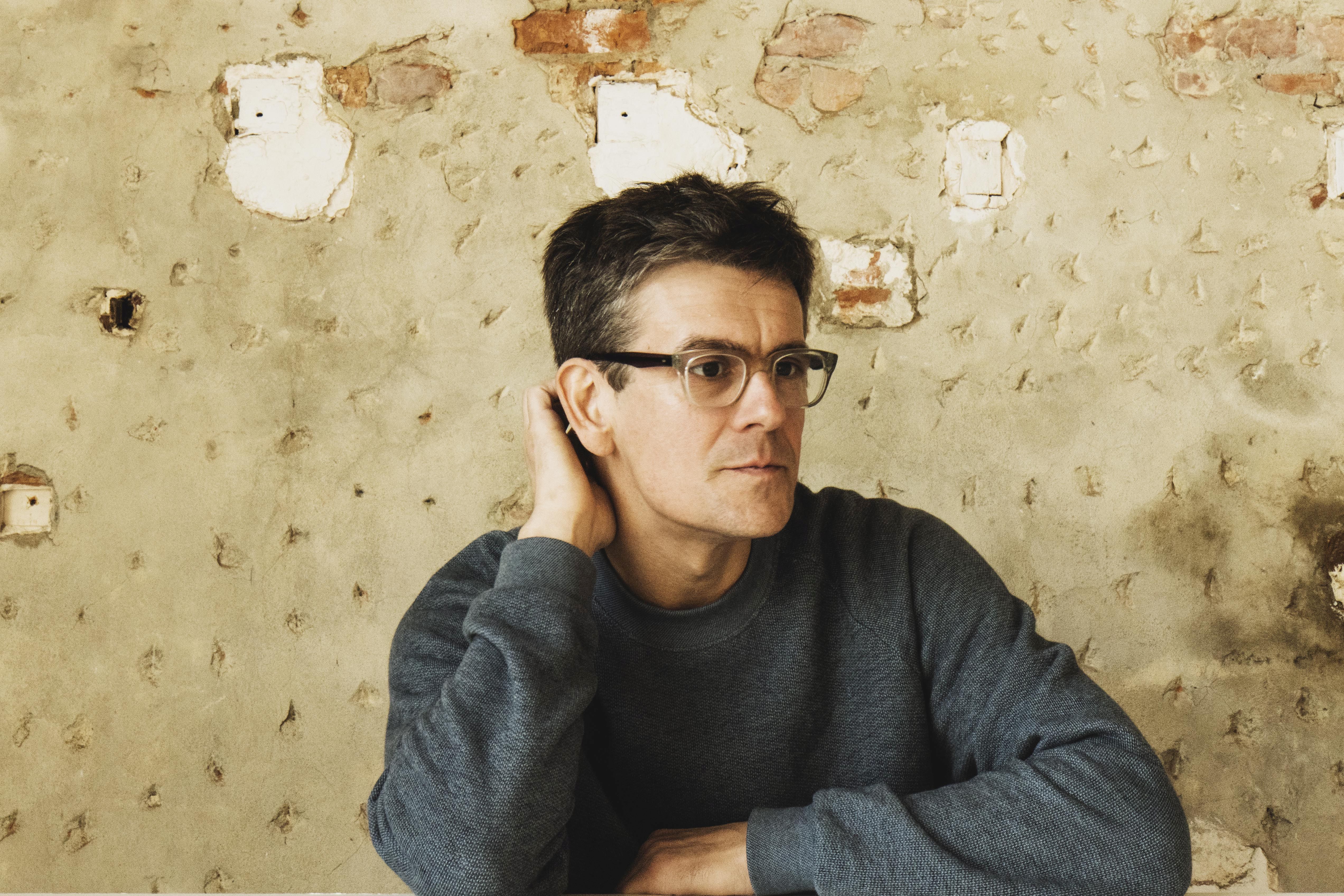
Name: Ben Bertrand
Nationality: Belgian
Occupation: Bass clarinetist, composer, sound artist
Current Release: Ben Bertrand's new album Relic Radiation is out via Stroom.
If you enjoyed this interview with Ben Bertrand and would like to know more about his music, visit him on Instagram, facebook, and bandcamp.
For a deeper dive, read our earlier Ben Bertrand interview.
When I listen to music, I see shapes, objects and colours. What happens in your body when you're listening? Do you listen with your eyes open or closed?
When I listen to music, my mind starts to function in a calmer way. My brain starts to think less and my body relaxes.
I listen to music while walking as well as while sitting. So my eyes are not always closed when I listen to music. But when the music is there, my vision of my surroundings changes, I see the world more as a setting than as the environment in which I live.
Music, whether I listen to it with my eyes closed or open, somehow creates a new place within me
How do listening with headphones and listening through a stereo system change your experience of sound and music?
For me, listening to music on a stereo system generally involves a social experience of the musical experience: dancing, at a concert, putting on a record at home ...
Whereas when I listen with headphones, I have a more personal experience of sound.
Tell me about some of the albums or artists that you love specifically for their sound, please.
I really like Christina Vantzou's sound work.
I participated in her album N5, and I learned a lot about the treatment of sound and the weight that we can give to an idea: the more we polish our ideas and the more we clarify our statements, the more weight the sounds have.
[Read our Christina Vantzou interview]
Do you experience strong emotional responses towards certain sounds? If so, what kind of sounds are these?
When I go to the cinema and I hear the bass clarinet in the soundtrack (an instrument frequently used in film music), I can no longer listen to the dialogue, I only listen to the bass clarinet and I have difficulty following the dialogue or the narration.
In a way, I am listening to the voice of my master.
Are there places, spaces, or devices which intrigue you by the way they sound? Which are these?
I remember "White frame", a Calder frame - mobile - sculpture in the Stockholm Moderna Museet.
I was captivated by the sound of the mechanism as much as by the beauty of the sculpture.
Have you ever been in spaces with extreme sonic characteristics, such as anechoic chambers or caves? What was the experience like?
I remember being in Berlin in one of the bubbles of the Teufelsberg listening station in Grunewald, Berlin, and playing clarinet there many years ago.
The echo and the natural delay of that place completely mesmerized me.
What are among your favourite spaces to record and play your music?
As I use electronics on my clarinet, I really like to play on a «normal» PA to record and do concerts.
But I’ve always dreamt of composing music for real resonant space (such as church, hall, silos, ….). I hope that it will actually happen at one moment.
Do music and sound feel “material” to you? Does working with sound feel like you're sculpting or shaping something?
When I compose music, I often feel like I'm polishing different pieces so that they fit together, a bit like building a piece of furniture.
At the same time, once the composition is finished, I feel like I've created a space, not an object.
How important is sound for our overall well-being and in how far do you feel the "acoustic health" of a society or environment is reflective of its overall health?
I find the world we live in very noisy, both in the literal sense of the word and in the sense of ideas: we are constantly faced with a new catastrophe or a new dilemma.
Music allows me to find a calm and safe place in the midst of this storm.
Sound, song, and rhythm are all around us, from animal noises to the waves of the ocean. What, if any, are some of the most moving experiences you've had with these non-human-made sounds?
Not far from my home, there's a marsh where, in June, frogs start to sing. I love walking by it at this time of year and listening to these animal conversations.
I composed music for a walk that begins with the sound of these frogs.
Many animals communicate through sound. Based either on experience or intuition, do you feel as though interspecies communication is possible and important? Is there a creative element to it, would you say?
A few years ago, a friend had a "bat box": a detector that makes the sounds of bats (which emit sounds inaudible to humans) audible. It was summer, at night, near a deserted and silent pond. Once we turned on the detector, we noticed that this space was full of bats and not at all silent.
I really appreciated this change of perspective: the place seemed empty and silent when in reality it was crowded and noisy. It is sometimes complicated to communicate when the transmitters and receivers do not use the same spectra to communicate.
Tinnitus and developing hyperacusis are very real risks for anyone working with sound. Do you take precautions in this regard and if you're suffering from these or similar issues – how do you cope with them?
I have always protected myself from sounds that are too loud and high-pitched.
I don't wear earplugs, but I don't hesitate to move away from the source of the sound or to plug my ears when the sound causes me pain.
We can surround us with sound every second of the day. The great pianist Glenn Gould even considered this the ultimate delight. How do you see that yourself and what importance does silence hold?
I try to be surrounded by beautiful sounds and music as much as possible.
I also really appreciate silence. But in a way, silence doesn't really exist: there's almost always a sound coming from within or without, whether it's an external sound, a bodily sound, or a thought.
I try to take full advantage of these moments of authentic silence during the day.
Seth S. Horowitz called hearing the “universal sense” and emphasised that it was more precise and faster than any of our other senses, including vision. How would our world be different if we paid less attention to looks and listened more instead?
I think that real listening requires more effort than looking. It requires real work on the part of the receiver.
Perhaps the world would be a softer place if people had a greater capacity for listening.