Published
Name: Ben Glas
Occupation: Composer, interdisciplinary artist
Nationality: American
Recent release: Ben Glas's new album Music For Listeners is out via Room40.
Recommendations on the topic of sound: Hazrat Inayat Kahn's The Mysticism of Sound and Music is a terrific book for a unique perspective on sound and its universal purpose.
I also recommend Judith Becker's Deep Listeners as well: it's a smashingly anthropological insight into listening practices around the world.
Pauline Oliveros' Deep Listening is also a great shout, especially for anyone who enjoys socially minded musical scores.
[Read our Pauline Oliveros interview]
If you enjoyed this Ben Glas interview and would like to know more about his music, visit his official homepage. He is also on Instagram, bandcamp, and Soundcloud.
When I listen to music, I see shapes, objects and colours. What happens in your body when you're listening? Do you listen with your eyes open or closed?
When I listen, with eyes closed, I have like a 2000s era Windows visualizer, an ungraspable slipstream of striated abstractions meshing in and out of focus. It's a rollercoaster of sensation.
Sometimes I feel that a hyper-object (a seemingly infinite plane or celestial body so large I can't begin to even comprehend its size) is just millimeters from my face and moving at breakneck speeds. It's really something.
My body, when I'm in that state, is a well cooked noodle: limp, relaxed and formed to whatever piece of furniture I'm in.
How do listening with headphones and listening through a stereo system change your experience of sound and music?
Oh my, we could write a whole book about the differences between "headphone listening" and "spatial listening"!
As cliché as it may be, I find that listening to music and or sounds via headphones creates for a more cerebral experience - there is only a tiny distance between the headphone and my eardrum. I would say that headphones make for an intimate and isolated listening experience, whereas listening to sound in an open space makes for a more physical one.
Here's my bias, though: I compose relativistic drones, comprised of standing waves and matching acoustic beats, in order to allow listeners agency in their own sonic experience. The listeners' physical movement through these drones is the act of composing and their movement through a tonal field of possibilities depends partly on the composition being played via speakers, into an open and navigable space.
Tell me about some of the albums or artists that you love specifically for their sound, please.
Gladly :) I'll try to whittle this down! I adore Elaine Radigue for her simple, yet breathtakingly deep, approach to drones and atmosphere. It's very contemplative stuff that I can, like a wave, come and go through.
CAN's Future Days is also there, in my top list and heart: there is a dreamlike quality Future Days and Bel Air achieve for me. So dreamy, that I end up dreaming about segments of those tracks in my own dreams.
I'm a big fan of Stereo Lab (Dots and Loops is my favorite album) for their unique style.
And also the Orb (Bicycles and Tricycles and the "Land of Green Ginger" from that album is what inspired me to want to make music and sound).
Do you experience strong emotional responses towards certain sounds? If so, what kind of sounds are these and do you have an explanation about the reasons for these responses?
Oh, sure! I have strong emotional responses to wailing voices (think Kate Bush's "Wuthering Heights" (so good) or "Reckoner" by Radiohead) and soft piano (think "Gymnopedie 1" by Erik Satie or "In a Landscape" by John Cage).
For the voices, I think and feel it's an empathetic response: to hear and witness another human being being vulnerable and voicing something that is oft concealed or feared by society. Voices remind me to feel, to express.
The piano is absolutely a callback to childhood memories: of my laying under the piano while Dad played his favorite tunes, over and over again.
There can be sounds which feel highly irritating to us and then there are others we could gladly listen to for hours. Do you have examples for either one or both of these?
Maryanne Amacher's "otoacoustic" experiments are my go to example.
In audiology, "otoacoustic" tones are two tones, set to a specific dissonant ratio, that elicit a unique distortion from a listener's inner ear (the cochlea). As the tones used need to be relatively high (800Hz and above!), some people aren't big fans of the effect.
But to others, my self included, these distortions are fascinating! My inner ear speaks, squeaks(!) and voices itself.
Another example, which might be apt here, is the Nurse With Wounds album Salt, which I can listen to for hours, although I've heard it compared to the sound of sharpening knives.
Something about that album makes me feel so small, like a particle in a much, much larger wave: like I'm only getting a small snippet of the larger picture. Love that.
Also absolutely citable: any longwinded compositions by Eleh and his masterful tonal touch.
Are there everyday places, spaces, or devices which intrigue you by the way they sound? Which are these?
Following in the footsteps of Pauline Oliveros: I adore the resonance of humming devices: faulty fans and exhausts, the buzzing of a communal fridge, the rumble of a subway.
I also love the cooing of pigeons and that little ingrained melody they seem to riff on (oo oo ooo, oo oo, oo oo ooo).
Also up there: any German city on a holiday-day: the muffled tones of voices, in a landscape of hushed street scenes.
Have you ever been in spaces with extreme sonic characteristics, such as anechoic chambers or caves? What was the experience like?
I was once on Center Island (just between Toronto and Niagra Falls) during the winter season and was taken by the effect the dampening snow had on the sonic atmosphere there. It wasn't an anechoic chamber, but I could definitely hear my thoughts.
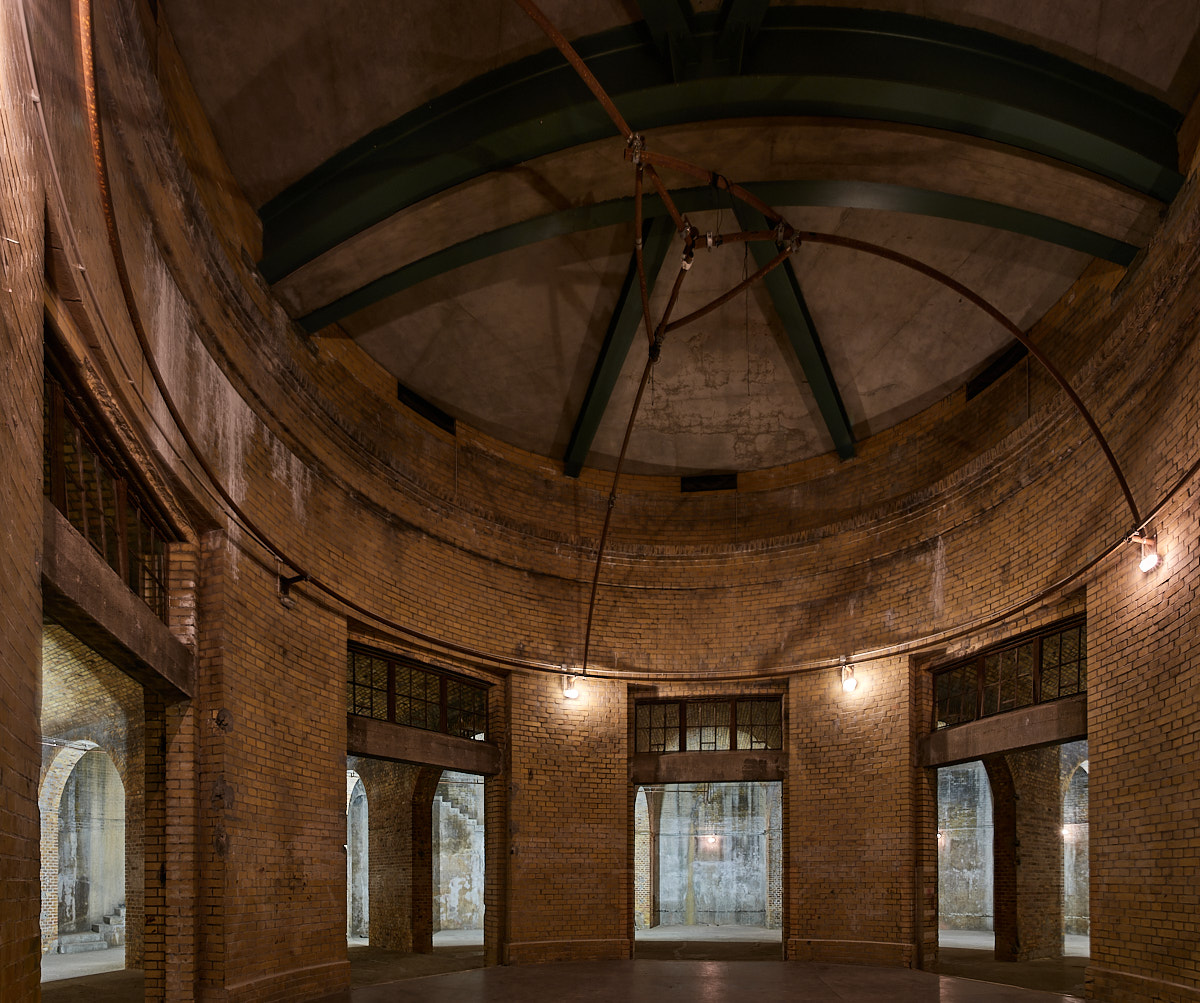
The "Kleine Wasserspeicher" in Berlin is also worth mentioning, for its reverberant characteristics: that place makes a pin drop into a symphony. 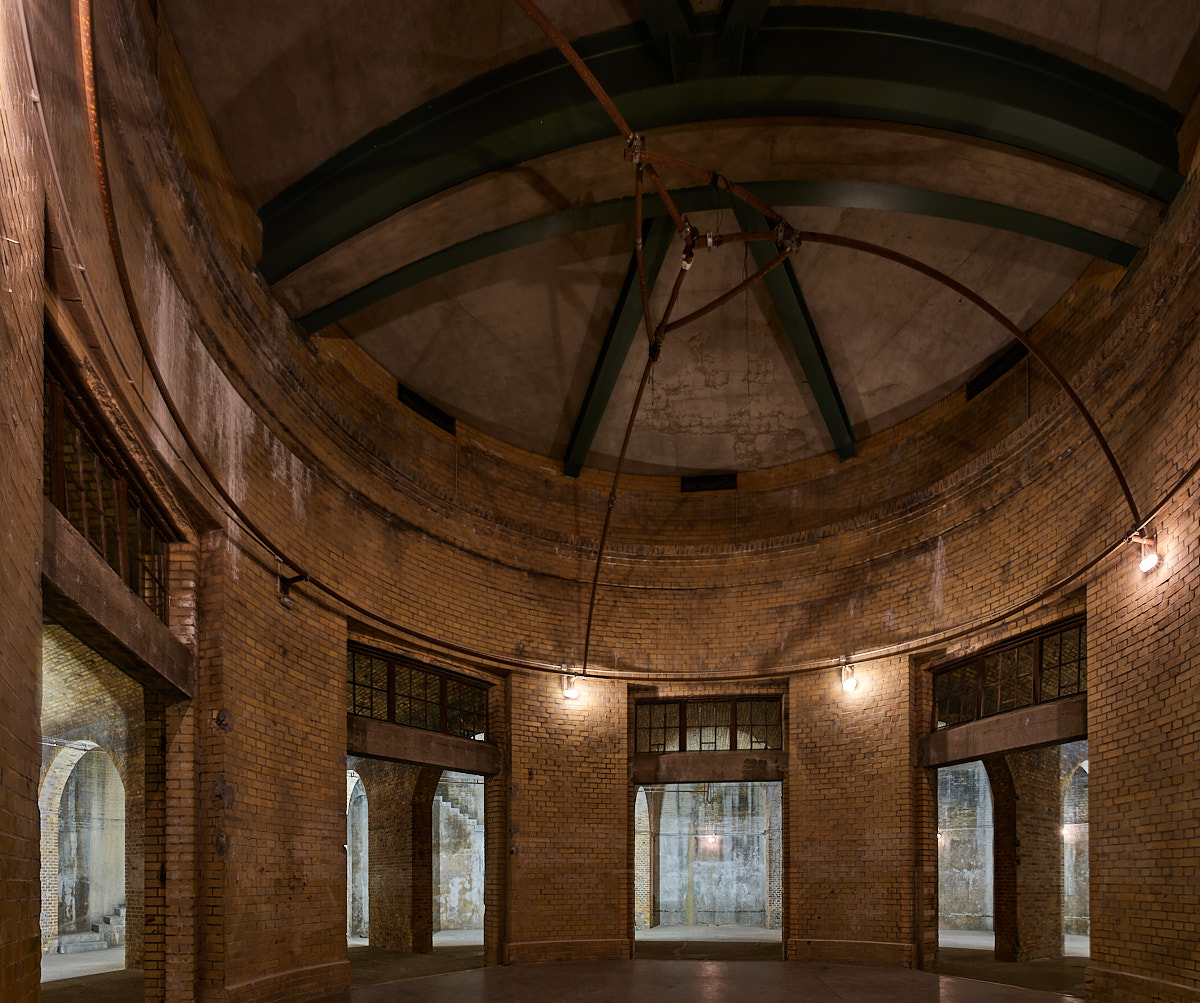
Kleiner Wasserspeicher Photo by Andreas Rost
La Monte Young and Marian Zazeela's "Dreamhouse" was also an extreme sonic settings, as the standing waves present in the space seem so stagnant until I began to move physically through the space.
That environment really blew my mind: to become aware that my own physical movement through the peaks and troughs of the wave determined how I heard the sound itself was enlightening to say the least.
What are among your favourite spaces to record and play your music?
To play? I appreciate a nice clean and visually quiet space, open too for physical movement.
To record? My favourite scenes to record are slow, evolving soundscapes, pockmarked with serendipitous little moments, little easter eggs for those willing to listen in.
Do music and sound feel “material” to you? Does working with sound feel like you're sculpting or shaping something?
I think and feel so, yeah. Much of my compositional output is focused on sculpting sound (mostly pure sinetones) to create interactive scapes of sound, that allow for listener interactivity, in a very physical sense.
The standing sinetones allow for the listener to trace individual tones and, through the phenomenon of interference, compose their own perception through their own movement(s) throughout the space. The listener then sculpts the space, their memory and their idiosyncratic experience.
I do agree with Joseph Beuys and his notion of sonic sculptures, that sound is in itself a sculpture in time.
How important is sound for our overall well-being and in how far do you feel the "acoustic health" of a society or environment is reflective of its overall health?
Very. I think about this a lot: the word "noise" is derived from the Greek term for nausea. With too much noise, too much sonic smog, it becomes harder to focus in on specific elements and or avoid unwanted sounds. This makes me think of the Lorenz Oken (a German Naturalist and botanist) quote: "the eye takes a person into the world. The ear brings the world into a human being".
When I am not watching (listening in on) my acoustic health, I find it hard to slow down and be present. I'm *so* sensitive to sound! Sonic smog has the tendency to make me want to isolate, shut off and escape. I wonder how many others are like that too.
Sound, song, and rhythm are all around us, from animal noises to the waves of the ocean. What, if any, are some of the most moving experiences you've had with these non-human-made sounds?
"Green-noise", or the rushing sound of wind through light leaved trees, pigeon-talk, the harmonic drone of bees and the punctuative sound that fish make when ever so briefly surfacing in a pond or lake.
Rain hitting an open window is also to note!
Many animals communicate through sound. Based either on experience or intuition, do you feel as though interspecies communication is possible and important? Is there a creative element to it, would you say?
Hrmm, that's hard to answer. I absolutely wouldn't be surprised if there were universal expressions linking species to species: I've seen too many "cat-and-dog-bonding" videos on social media to not believe that.
And yes, I think there is most likely a creative element to this inter-special communication, but I doubt that it fits our human expectation of what "creative" means. It strikes me more as a natural function, an expression that easily comes off the cuff, rather than a concrete and compartmentalized action.
Tinnitus and developing hyperacusis are very real risks for anyone working with sound. Do you take precautions in this regard and if you're suffering from these or similar issues – how do you cope with them?
Ooh yeah, I am careful not to test the limits of my hearing (I had some acute, short-term tinnitus due to my work with otoacoustic tones … not fun). In the weeks that I was affected by that bout of tinnitus, I actually took to composing compositions with only brown and white noise, as to soothe my aching (left) ear. This definitely helped.
Other than that, preventative measures are a must: earplugs and monitoring sound levels when listening is key.
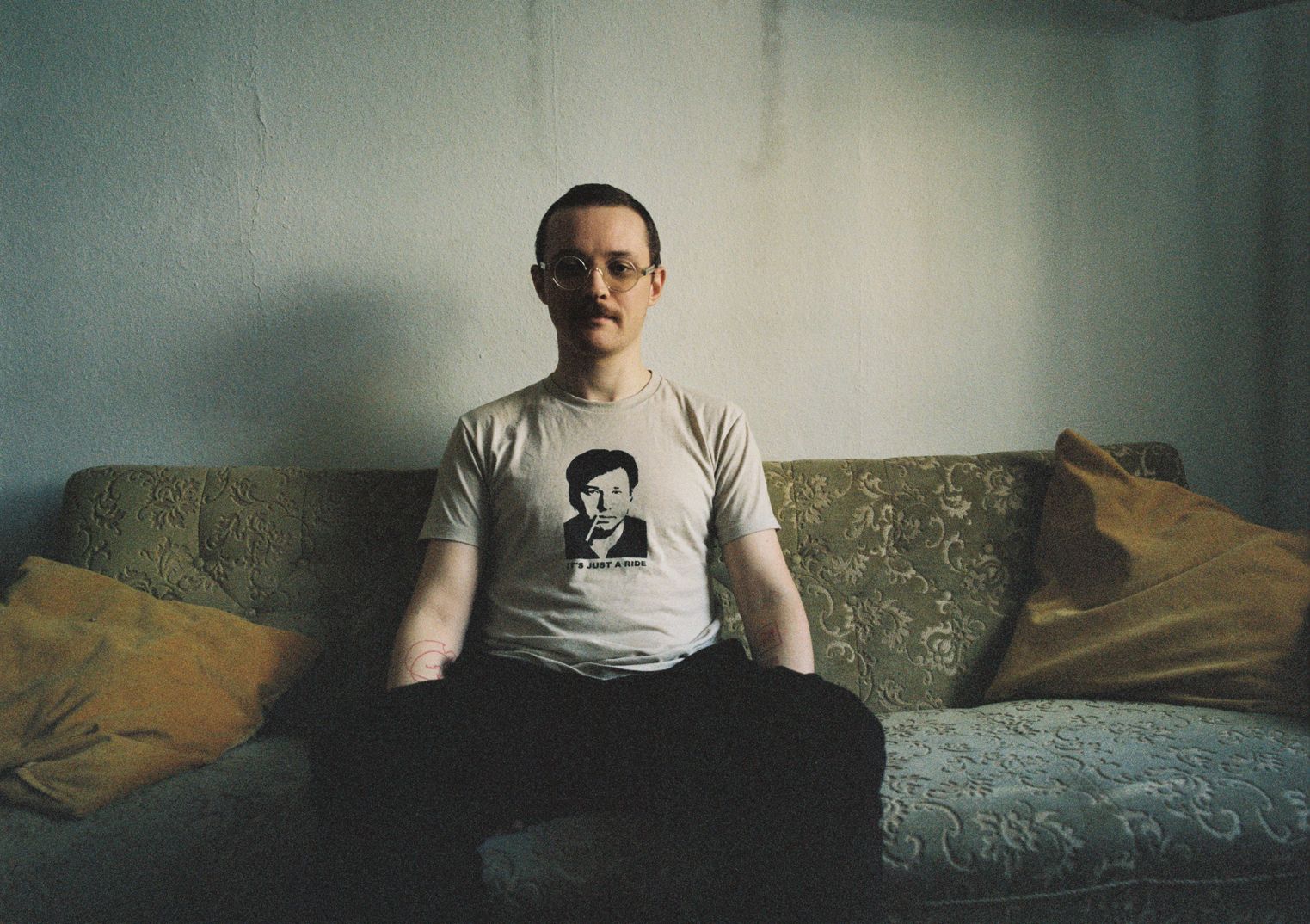
Ben Glas Interview Photo (c) the artist
We can surround us with sound every second of the day. The great pianist Glenn Gould even considered this the ultimate delight. How do you see that yourself and what importance does silence hold?
Yay and nay: up begets down/ sweet is nothing without sour.
I do take delight in being surrounded by sound or noise and I appreciate, and even anticipate, equally the lack of said sound or noise. For me the delight is in knowing that I am constantly traveling between these two (on/off) on a sonic gradient.
Seth S. Horowitz called hearing the “universal sense” and emphasised that it was more precise and faster than any of our other senses, including vision. How would our world be different if we paid less attention to looks and listened more instead?
Interesting question! I haven't a clue though, really. I think I have been cultivated by a "seeing-is-believing" system and it's hard for me to pinpoint and objectify that perceptive bias, my blind spot.
I assume that we would be less mailable by and vulnerable to propaganda and fear mongering. I do think there is something to that Lorenz Oken quote I cited earlier: with my visual senses come into the world and with my ear I allow the world in.
I vaguely recall, during my undergraduate years, to have read that the neurological connections between ear and brain (although they're really the same thing) there are ~30,000 connections. In contrast, there are ~200,000 connections between eye and brain. Seeing really is believing.
I think if we were more sonically minded (or brained) in our societies, we would be more intuitive and less susceptible to unwanted and unwarranted manipulations via propaganda or advertisements. I also assume that society would be much, much more intuitive- mentally, emotionally and spiritually.