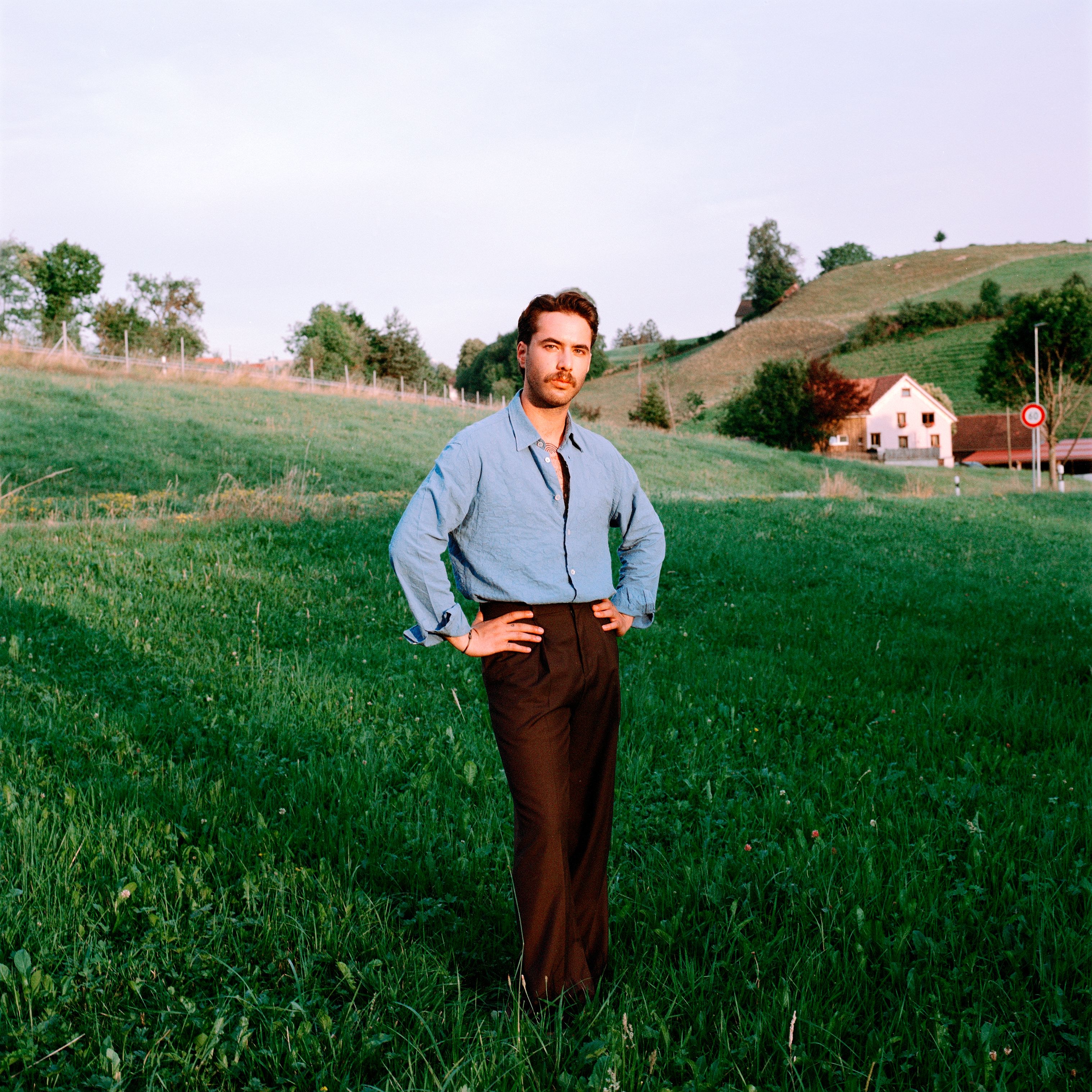
Published
Name: Benjamin Amaru
Occupation: Singer, songwriter
Nationality: Swiss
Current release: Benjamin Amaru's I always remember all of my dreams is out now.
Recomendations: The Name of the Wind – Patrick Rothfuss: It’s my favourite fantasy book and it’s about a young musician as well.
“Possibility” – Lykke Li: One of my favorite songs.
[Read our Lykke Li interview]
If you enjoyed this Benjamin Amaru interview, realised with the support of Swiss Music Export, and would like to stay up to date with his music, visit his official homepage. He is also on Instagram, Facebook, and tiktok.
Where does the impulse to create something come from for you? What role do often-quoted sources of inspiration like dreams, other forms of art, personal relationships, politics etc play?
I think it is intrinsic motivation and curiosity that drive my creative motor. The curiosity initiates the reason to create, and the motivation makes me do it. Along the way fun, reflection and development are probably the most important factors.
My dreams are my most important source for creation. Whether it is what I dream at night, to the dreams I have kept in my heart since I was a small boy. It’s probably because they come from so deep inside of me, that I believe them to be completely authentic and true, which are things I look for in art.
For you to get started, do there need to be concrete ideas – or what some have called a 'visualisation' of the finished work? What does the balance between planning and chance look like for you?
I think my favorite way to get started, is when I have only a notion of what I want to do. A feeling. Of course it helps to be prepared, but I think that is for when one is trying to finish something or to finalize.
When creating something completely new, I do not want to have a plan.
Is there a preparation phase for your process? Do you require your tools to be laid out in a particular way, for example, do you need to do 'research' or create 'early versions'?
No. I think I just try to go find whatever it is I want to write about, but that happens the night before or in the studio. I like to think of making music as the time to reflect and channeling of emotions. I want to be doing it, when I am at the studio.
Before that, I am experiencing, and not thinking about how I turn something into music.
Do you have certain rituals to get you into the right mindset for creating? What role do certain foods or stimulants like coffee, lighting, scents, exercise or reading poetry play?
I like to work with people that know me well or understand how my creative mind works out and processes things.
So, it’s more about personal factors that have ritual values to me. The rest doesn’t matter really.
What do you start with? And, to quote a question by the great Bruce Duffie: When you come up with a musical idea, have you created the idea or have you discovered the idea?
I probably create the ideas somewhere in my head and if I hold on to it for long enough, so I don’t forget it, it’s worth putting it into realization.
So, It’s a bit of both I think.
When do the lyrics enter the picture? Where do they come from? Do lyrics need to grow together with the music or can they emerge from a place of their own?
I believe they can emerge from a completely different place, but not for me. I like to write music in the very moment I create it. It’s like taking a picture. I need the momentum of something to understand what a song will be about and how it makes me feel.
And as I mentioned before, I don’t really create outside of the studio, I try to soak it all in and then channel it. So it usually happens when I compose and record.
What makes lyrics good in your opinion? What are your own ambitions and challenges in this regard?
An honest one. I prefer lyrics that are simple, but powerful.
They do not have to be in a specific way, they just have to be true, authentic and a bit original.
Many writers have claimed that as soon as they enter into the process, certain aspects of the narrative are out of their hands. Do you like to keep strict control or is there a sense of following things where they lead you?
I like to just go on and see what happens. If something feels right in the moment, it will finish itself, if not, I will go on and find something new.
Often, while writing, new ideas and alternative roads will open themselves up, pulling and pushing the creator in a different direction. Does this happen to you, too, and how do you deal with it? What do you do with these ideas?
I create something new with those new ideas, or I let whatever I am working on at the moment be influenced by it.
There are many descriptions of the creative state. How would you describe it for you personally? Is there an element of spirituality to what you do?
I think a creative state is like a deep thought state to me. A thinking stage maybe.
I don’t necessarily connect it to something spiritual, but as something I find interesting and want to chase.
When you're in the studio to record a piece, how important is the actual performance and the moment of performing the song still in an age where so much can be “done and fixed in post?“
I believe the performance is always important, but I also believe that a good production can shape a song in different ways than what can be played live.
It doesn’t always have to be “fixed”. Sometimes it’s about developing.
Once a piece is finished, how important is it for you to let it lie and evaluate it later on? How much improvement and refinement do you personally allow until you're satisfied with a piece? What does this process look like in practise?
To me, when a piece is finished, it’s finished. I don’t spend too much time thinking what I could have done better or looking for mistakes I haven’t noticed before.
The moment the song was created and finished, I will just enjoy it and when the time is right I will release it.
Even recording a solo song is usually a collaborative process. Tell me about the importance of trust between the participants, personal relationships between musicians and engineers and the freedom to perform and try things – rather than gear, technique or “chops” - for creating a great song.
I produce almost exclusively with people I call my friends or with which I have a healthy and fun relationship. I think the goal of such collaborations should be to create together and trust is an important element to freely explore.
That’s why I’m a fan of speaking the truth. One should never be afraid of trying and sharing ideas and thoughts.
What's your take on the role and importance of production, including mixing and mastering for you personally? In terms of what they contribute to a song, what is the balance between the composition and the arrangement (performance)?
The production process is very important. It helps to channel a musician's ideas, thoughts and emotions into a medium that can be understood by a wider audience. So pretty important in my opinion.
After finishing a piece or album and releasing something into the world, there can be a sense of emptiness. Can you relate to this – and how do you return to the state of creativity after experiencing it?
Time is key, I think. If you are empty, don’t wait for it to come back. Try out new things, get out there and experience.
The question is never “Will it come back” but much more “When will it”.
Music is a language, but like any language, it can lead to misunderstandings. In which way has your own work – or perhaps the work of artists you like or admire - been misunderstood? How do you deal with this?
If you release something such as a song to a broad audience, I think you cannot expect from everybody to just all of a sudden understand everything you say and feel.
Of course a real misunderstanding can be annoying, but with the right communication and common sense I think we can all manage.
Creativity can reach many different corners of our lives. Do you personally feel as though writing a piece of music is inherently different from something like making a great cup of coffee? What do you express through music that you couldn't or wouldn't in more 'mundane' tasks?
I think it is one of many ways of expressing one’s feelings. There a lot of other ways to do that , however it’s the one I like the most personally, of course for somebody else it could be that cup of coffee. Well my inner feelings, emotions, fears, anger and more.
Other people might be able to express all that in other ways, but I’m not.