Published
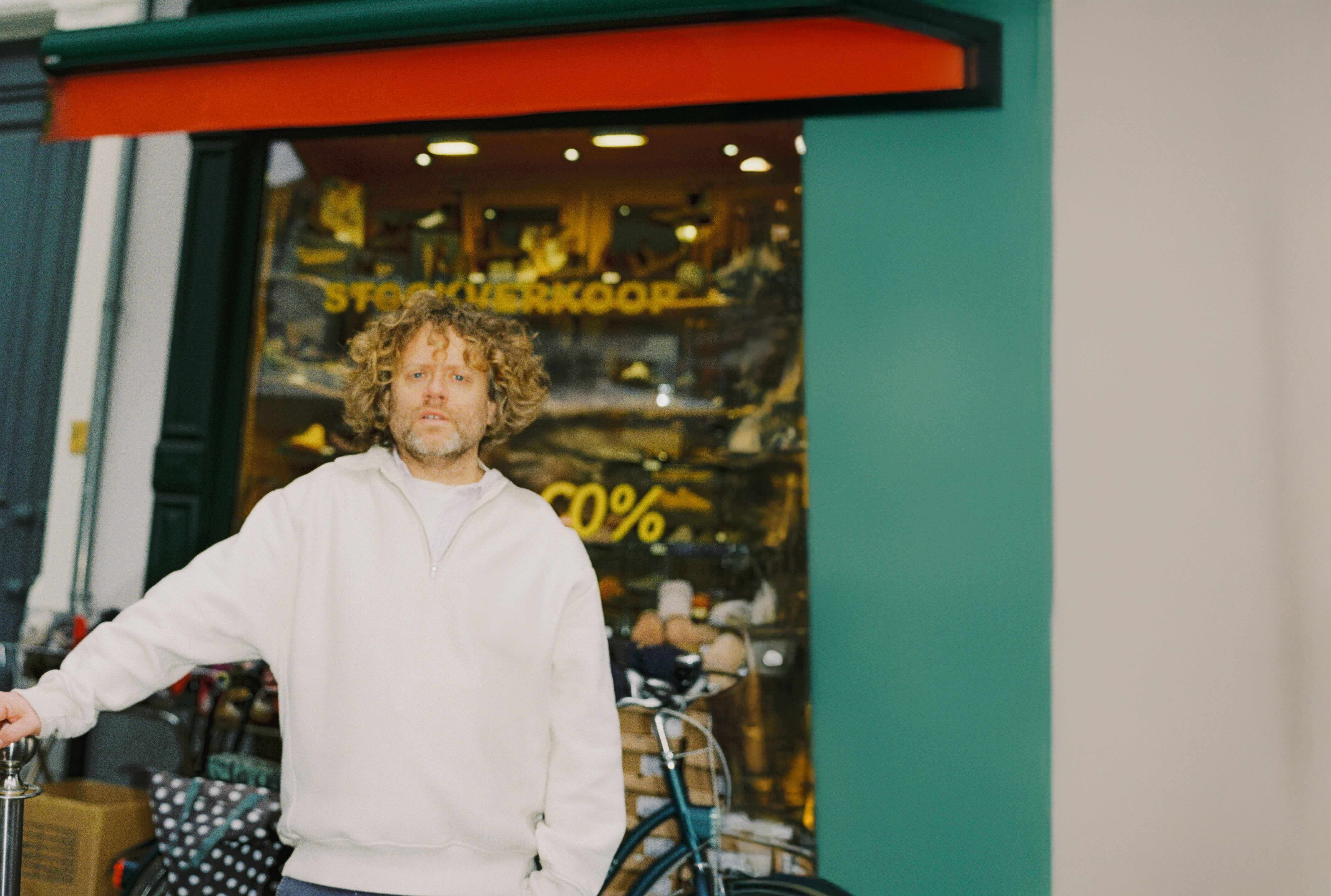
Name: Tim van Berkestijn aka Benny Sings
Nationality: Dutch
Occupation: Producer, songwriter
Current release: Benny Sings's new album Beat Tape III is out via Stones Throw.
If you enjoyed this Benny Sings interview and would like to stay up to date with his music and current lives dates, visit his official homepage. He is also on Instagram, and Facebook.
The path to becoming a producer is a process - but from many interviews, I am under the impression that there are nonetheless one or a few defining moments. If this was the case for you – what were they and why were they so incisive?
I released my first album in 2003, Champagne People. It was released worldwide, and for me the biggest success one could ever imagine, but it didn’t pay the bills.
So me and my record label owner Bart Suer, who is a good friend of mine, had to come up with a plan, because we had the feeling that my kind of feel good music must be able to have a bigger audience.
We had different plans, one of which was, what if we keep the music the same, but we have a different type of singer, more a “when they walk in, the room lights up”- kind of person. We found that person in the likes of Wouter Hamel, a extremely talented jazz singer and songwriter. So that was my first production work.
We wrote a lot of stuff together, so I kept being the songwriter as well, which is something I always do when I produce. I never produce finished songs, I am always part of the writing process.
And the plan worked! He got really successful in the Netherlands, and I was able to pay the bills.
So that was a great moment for me, I felt like I was going to do this music thing for real. That was in 2005.
Tell me about one or two of your early pieces that you're still proud of (or satisfied with) in terms of production – and why you're content with them.
After Wouter Hamel came Giovanca, Dox Records and my next big project.
I’m still proud of those productions, because we had nothing yet, we were still exploring, and with that small knowledge and skill we still made some songs that worked, even in a commercial way.
I mean, in terms of taste, there’s some cringe moments, but come on, it was 20 years and go, and we were trying to make it. We didn’t want to be part of the indie cool crowd, but wanted to make universal good music, without losing quality.
It wouldn’t be the music I’d make today, but still am proud of those productions. Also the way we recorded was all very vintage studios etc.., and that’s not easy as a rookie, to make that work.
In how far, would you say, was your evolution as an artist connected to the evolution of your music set-up and studio? Were there shared stepping stones?
Well, I would say in terms of production, I had a small period where I branched out to real studios, real drums, etc. (that was in that time of the early 2000s with Wouter Hamel and Giovanca), but pretty soon, at the end of the zeroes I had already figured out that my place was lo-fi beats and production. That’s just the place that I love the most and where I thrive.
So of course I got some better mics and a better drum kit, but nothing huge. It’s still just making beats on the computer for me, helped by a good piano, bass, guitar etc..
So for me the evolution is much more getting to know myself, and getting better at the “instruments” I already had.
There are artists who can realise their ideas best with a traditional – or modified – piano interface, others with a keyboard and a mouse, yet others by turning knobs or touching screens. What's your preferred and most intuitive/natural way of making music and why?
I always start with a beat from samples. Like a songwriter who strums his guitar in a certain rhythm, that’s my start. And I take a keyboard, piano and guitar, and start strumming for real. Then bass, and then we have the idea. So it’s both for me.
I can also just scroll through all the samples that I got, while singing along to them, to see if something clicks. I’m just one beast with my instruments, voice and computer. It feels as smooth as just holding a guitar, and looking for inspiration.
Tell me about the space of your current studio/workplace and how you've set it up to optimise creativity.
It’s basically just a room, which is prepped acoustically, so pretty dead. It’s like my “painter studio”, it’s just got all my instruments, piano drums etc.. And my desk with my computer.
No output gear, only thing I use is my Roland JC amp. But then good mics, straight into the Apollo 8. No booths or anything, all in one room, so I can be free to do anything.
From the earliest sketches to the finished piece, tell me about the production process for your current release, please.
So I start with beats or samples, while humming along, put instruments on, and as soon as something clicks I start recording, all very messy and quick. It’s not about perfection to me. Then usually I have a chorus and verse, and I leave it at that demo stage for a while.
I think I write 50 to a hundred songs like that, and in the process some songs really stand out, and I know which 9 to 12 song I’m going to finish for the album. The finishing process is just trying to find a way of storytelling (is the verse the question, and the chorus the answer? Or is the verse a story about a person, and the chorus proverbial? Anything goes, I try to be open for songs to not make sense, as long as you’re being moved for the entire song)
And then writing the words (mumbling, free styling, making the rhythm and vowel sounds work, together with the meaning), and maybe recording some additional arrangements, but never much. I want it to be raw as it was in the demo. And then mixing is also just minor adjustments before going to master.
Late producer SOPHIE said: “You have the possibility with electronic music to generate any texture, and any sound. So why would any musician want to limit themselves?” What's your take on that?
If you feel really comfortable with technological progress, and love that corner of the world, then this is true for sure. But I’m not like that. I’m not opposed to it entirely, not at all, but I do find the shortcomings in that world.
Of course options are unlimited, but how does it feel intuitively? It sure feels exciting, but I guess I’m not a person that’s looking for excitement. I’m looking for consolation.
Tell me about your aesthetic preferences for picking effects like reverb, delay, compression, chorus etc … - what was the role of these effects in the production of your current release?
I guess I don’t like effects that much, except if they’re more on the trippy side. I love the sound of dryness and closeness, as if you are there with the person.
For me the act of music is very up-close and personal. So I’m not a live music guy at all, my experience is at home, with a good stereo set, on my own. This was probably not the way it was meant, but for me it is.
Reverb just gets me away from the music. Compression is sometimes useful, if you don’t want to automate, but I’m not a big fan of the sound. It makes it less present for me as well. But I do love a good chorus or flanger. Also because of the nostalgic character of it.
Producers work with sound in a very direct way for very long stretches of time. What are some of its qualities that you appreciate now more than before, and how do you try to bring these to the fore in your work?
I’m not so sure if I’m a sound fanatic. It’s just a tool to express a certain feeling or state. Could be anything. I think I just love it best if stuff sounds real and unpolished.
I know my music can be a bit glazed, but that’s more in the songwriting and arrangements, I do love that Disney feeling, but it’s never a hi-tech production.
The current production process allows for fast and infinite variations. Can you tell me about how you deal with this potential for the infinite and what ultimately decides on how many iterations to create and which version to release?
I’m very straight forward in my production, we just write to a beat, and whatever feels good during that session will end up on the album. And I don’t have the need to make it “even better”.
I think all the technological stuff can help in songwriting, and one can use anything they want, including AI, but there’s still something very unexplainable going on when a good song gets written. No one knows why we label it as good, and only we humans can decide on that.
Tell me about the role collaboration played in your recent productions – and how you see the potential for machines as collaborators compared to humans.
In my own productions I do use Splice and Chat GPT. But it doesn’t change my music at all. Because I still make the (weird and wrong) decision what to use, and what not. So it’s always going to be my music.
I just don’t like dogmas or perfectionism. Let it all be ugly, stupid and unclear. Just do something, show up and make. No one knows anything, ever.
Production, as opposed to live performance, can be a lonely process and feedback from listeners isn't always tangible. What is it about it that gives you satisfaction?
I guess I’m not the most social guy, although I love being with people.
But it’s also exhausting, so I need that time alone. Gives me the time to re-energise so I can be with the ones that I love.
We can watch videos on production, take producer courses, and exchange deep insights on gear forums. Amidst these options to improve one's chops/skills, how do you keep things playful?
I think in previous answers that becomes clear. I love those videos myself a lot, of course it’s one of my big loves. But I always come to the conclusion that none of it matters. You can’t predict what sound will resonate, it’s just impossible.
So I just keep to the things I like, which I always had, and every once in a while something is added. But almost never gear.
AI is already capable of making something most people would recognise as music. I am curious, though, and will keep this question somewhat broad on purpose: What do you think that means?
I don't know! It is exciting to see where it ends, and what will be the final frontier for AI, because that is going to be useful information in our search for what it means to be human.
Creativity can reach many different corners of our lives. Do you personally feel as though producing a piece of music is inherently different from something like making a great cup of coffee? What do you express through music that you couldn't or wouldn't in more 'mundane' tasks?
The act of expression and creation as a maker is the same, I would say. But the result is very different.
I think music does a mind trick with your subconscious, to do with expectation in “micro” time (up to maybe 15 minutes max?). And that is unique for music, nothing else does that. Going through the ears, and not the eyes, it connects with emotion and subconscious stuff without first going through conscious experience, which is the case with everything else.
Of course, there are some exceptions, like scent etc ... but still, it can undeniably “move” you, your “inside”. So we deal with something very “unsayable” or untangible, which makes it so weird and irrational.
That’s also what makes it so valuable, because it gives us a chance to escape the rational harsh reality of things, and can teach us something about the things we are not conscious of.