Published
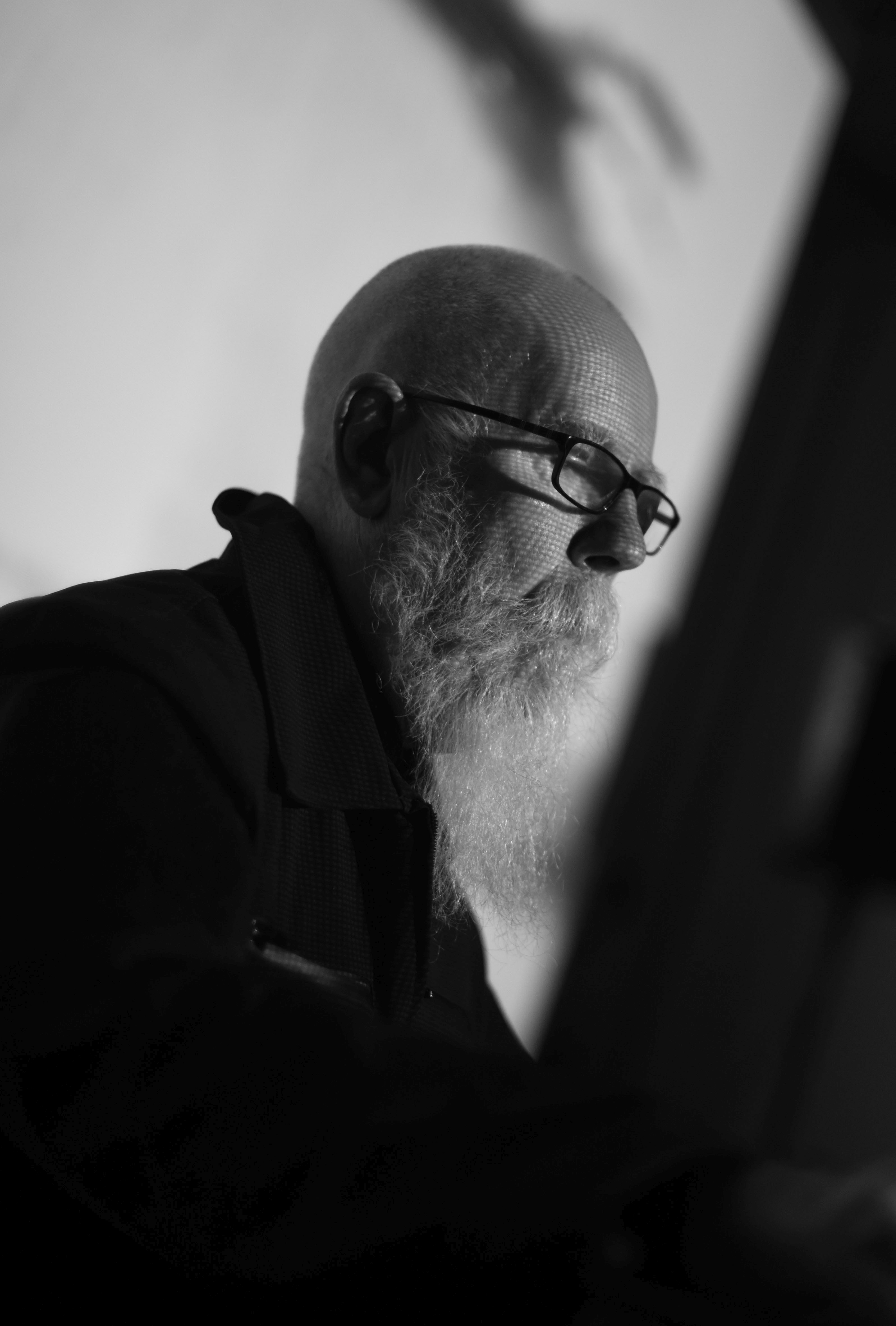
Name: Bernhard Living
Nationality: British
Occupation: Composer
Current release: Bernhard Living’s From Here to There is out now.
If you enjoyed these thoughts by Bernhard Living and would like to know more about his music, visit his official homepage. He is also on Facebook.
For a deeper dive, read our earlier Bernhard Living interview and our conversation about his composing grid.
We can surround us with sound every second of the day. The great pianist Glenn Gould even considered this the ultimate delight. How do you see that yourself and what importance does silence hold?
I think it is essential to make space in one’s life when there is very little going to - and so silence is important. One should have the ability to enjoy ‘nothing’.
I try to read for about three hours a day - this is in the evening - and I do not have music playing when I read. If it is late at night - then there might be a call of an owl - or the bark of a fox - and I would miss this if music was playing.
Silence - Void - Negative Space
Silence plays an important part in many of my compositions. However - my intentions for using silence are very different from those of the composer John Cage.
Cage used silence in his music as a way to challenge conventional notions of what music is - and to explore the boundaries between sound and silence. For Cage - the ambient sounds of the environment were integral - and as important - to the music being performed. The sounds of the ‘silence’ that occur naturally during the performance—sounds that would typically be ignored or considered irrelevant.
In my own work - the silences within a composition are an important structural component - an empty space between the sounds - and that the sounds of the compositions are heard in relationships to the silences. Silence is used in a structural way - and is both form and content of the composition.
Silence within a digitally determined composition is a form of ‘technological nothingness’ - and I am interested in how the individual sounds/tones are suspended in the technological void.
Also connected to the idea of silence is ‘negative space’ - which is a term often used by architects - with negative space referring to the areas in a building or structure that are left intentionally empty or unoccupied. This concept is integral to the design process and plays a critical role in the overall aesthetics - functionality - and experience of the space.
I am very interested in Greek and Roman temples of the Classical period - and in the formal way in which they were designed and constructed - in particular the Parthenon in Athens. The architects Ictinus and Callicrates used the algebraic equation x=2y + 1 to build the temple - so its proportions would be perfect - and that it would form a fully integrated mathematical whole. The equation was used to determine the number of columns - the distance between columns - and the size of the cella - which is the interior space of the temple.
The existence of empty space within the Parthenon is similar to the ‘negative space’ used by sculptors such as Barbara Hepworth and Donald Judd. Within my own work - the negative space and the empty voids of sculpture and architecture become the silent empty spaces within the music.
With all of these different influences which have come from different periods in history - my music becomes a combination of both classical and modernist ideals.