Published
Name: Birds of Mind
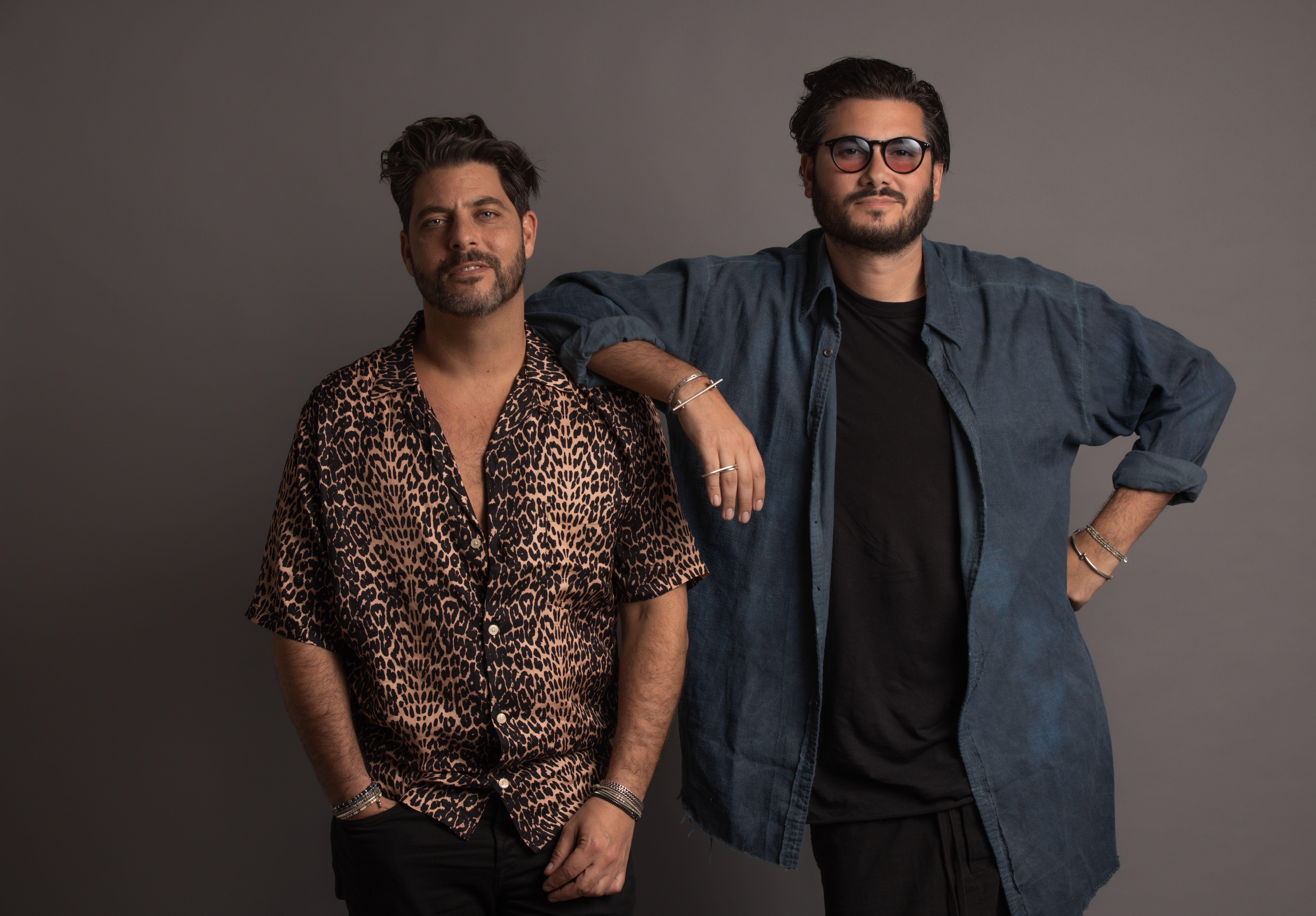
Members: Alex Heim & Adrian Carreno
Nationality: French
Occupation: DJs, producers
Current release: Birds of Mind's new compilation album is the 25th edition of Get Physical's Body Language series.
Recommendations:
Alekos: My top three movie recommendations are:
Holy Mountain by Alejandro Jodorowsky—trippy and insanely good.
Apocalypse Now by Francis Ford Coppola—a deep, cinematic quest.
Human Traffic by Justin Kerrigan—a hilarious and touching tribute to 90s rave culture.
For books, I recommend In the Name of Identity by Amin Maalouf. It’s a powerful exploration of identity and belonging.
Adrian: I recommend you go and see the work of one of my favorite artists, Jesús Rafael Soto (Venezuela). He is a major artist of the Op Art movement and kinetic sculpture. One of his works is on the top floor of the Centre Pompidou in Paris. However, the museum will close in 2025 for a period of five years in order to carry out renovations. So there’s not much time left to enjoy it.
If you enjoyed this Birds of Mind interview and would like to stay up to date with the duo and their music and current live dates, visit them on Instagram, Facebook, and Soundcloud.
Do you think that some of your earliest musical experiences planted a seed for your interest in DJing? How and when did you start DJing?
Adrian: Every music producer is influenced by their musical upbringing. The music our parents listened to, as well as what we loved as teenagers, leaves a lasting impact. My background in classical music and Alex’s in cinema are strong influences that constantly shape our work.
Perhaps unconsciously, navigating through these genres and eras naturally leads to the desire to blend them together. Electronic music and DJing became a convergence point for all these inspirations.
Alekos: I’ve always been a fan of cinema and loved the emotions music creates in films. When I started raving, I noticed that some DJs were creating cinematic moments on the dance floor.
Twelve years ago, I was working for a film production company and wrote a script about electronic music. With my first paycheck, I bought turntables to learn how to DJ and develop my characters. I fell in love with DJing and haven’t stopped since.
Today, DJs are rarely just DJs. Very often, they can be producers who are also DJs or DJs who are also producers.
Alekos: You’re absolutely right—there’s a crossroads that many artists take, including Adrian and me. I started as more of a DJ, while Adrian was more of a producer. He taught me how to produce music, and I showed him how to mix. Today, we combine our strengths, and I think this gives our music and performances a unique power.
Adrian: It’s hard to stand out without producing music because it’s the quickest way to gain recognition. But being a good DJ takes time and experience—you grow gradually, playing for 50 people in a bar, then 300 in a club, and eventually for tens of thousands at festivals.
A DJ hones their craft through years of trial and error, testing tracks, and connecting with audiences. Producing, on the other hand, is more of a solitary journey. It requires experimentation, persistence, and collaboration. Both roles reflect where you are musically as an artist, and together, they shape your identity.
What were some of the most important insights you gained from teachers/tutorials, other DJs, or personal experience? What does it mean to be a “better DJ”?
Adrian: Two lessons stand out for me. Gaspard Augé from Justice once said, “It’s all about compression!” He explained how he used up to five compressors per track, which revolutionized my approach.
The second came from Nu, who advised us to keep the intention of our first mix intact when producing a track. He said, “Never change your first mix!” That initial balance sets the tone for the entire production process.
Alekos: Honestly, the crowd is my only teacher. You learn everything from the energy in the room. I’ve never had a formal teacher or taken tutorials—I just focus on creating my own style and staying true to myself.
For you, is there still listening outside of looking for music for your next sets? If so, what do you prefer to listen to and how does it possibly nonetheless have an influence on your performances?
Alekos: I take a lot of inspiration from cinematic scores, from American films to Serbian composers like Goran Bregović, French composer Eric Serra and Ennio Morricone.
At home, I listen to a wide range of music—60s and 70s rock like Pink Floyd and The Doors, 90s pop, hip-hop, and sometimes ambient music like Gunter Lause. It helps me relax and find inspiration.
Adrian: Inspiration can come from anywhere. A song in a cab or a film score might catch my ear, but digging for sets is a more focused process.
We spend days searching for tracks, refining playlists until just before a performance. Alex and I work individually, then combine our discoveries. This blending of our musical searches creates the unique sound we deliver on stage.
When digging, what are you looking for? Is the process all about taste for you, or is it about “going beyond taste”?
Alekos: Digging is about matching your state of mind. It’s a quest to find tracks that resonate with you and create the right energy for the dance floor. For me, it’s about discovering those rare golden nuggets.
Adrian: It’s about going beyond taste and creating a connection. We look for tracks that not only sound good but also feel right for the moment. Digging is about finding a story to share with the audience.
On the basis of one of your most recent gigs, tell me about how the preparation- and decision-making process works during a gig with regards to the inclusion of key records, the next transition and where you want the set to go?
Adrian: We perform as a duo, alternating tracks like a back-to-back set. Over time, we’ve developed an almost instinctive connection. One track signals the direction, and the other responds.
Sometimes, one of us shifts the tone, creating a turning point in the set. Our performances are largely improvisational but draw on playlists we’ve refined over previous shows. This lets us identify sequences that work well together.
Alekos: I don’t prepare transitions or keys—I just go with the flow. It’s the rush of the unknown that drives me. Of course, I might know which tracks I want to play, but I never plan the order or predefine the journey.
There must be endless ways of “matching” two or more tracks. How do you prefer to do it? What makes two tracks inherently “matchable” and what constitutes a great transition?
Alekos: The best transitions aren’t planned—they happen in the moment.
When two tracks blend seamlessly and create something entirely new, it’s magical. It’s like a dance, and the feeling is incredible.
How would you describe the experience of DJing, physically and mentally?
Adrian: DJing is an intense experience. When everything aligns, it feels effortless, but when it doesn’t, it can be challenging. Experience helps you adapt and find harmony in those moments.
When a set goes well, the connection with the audience gives you a boost of energy, even if you’re exhausted from travelling. It’s both physically demanding and mentally invigorating.
Alekos: It’s about connecting with your surroundings and feeling the music. I keep my eyes open to stay present and connect with the audience.
Do you engage with audiences/dancers - and how? Taking one of your online DJ mixes as an example, how does the experience and the way you deejay change when you subtract the audience?
Alekos: No, I don’t actively engage with the audience or dancers. I focus entirely on spinning the records. I’m not an entertainer—I’m here to share my musical taste and ensure people have a good time on the dance floor.
Adrian: From the moment we arrive at a venue, we observe the audience—their age range, energy, and even the cultural vibe of the location. This helps us adapt our performance.
When we’re on stage, the crowd’s reactions guide us. Playing live is faster and more intense because the physicality of the bass and the audience’s energy are irreplaceable. An online DJ mix, by contrast, is more introspective and carefully crafted. It’s about creating a mood, but it doesn’t replicate the vibrancy of a live set.
Collaboration is a key part of almost every aspect of music making, but it is still rare in DJing. Tell me about your own views on back-to-back DJing, interactions with live musicians or other forms of turning DJing into a more collective process.
Adrian: Back-to-back DJing is like a jam session. Each DJ brings their own influences, and the interplay creates something richer than either could achieve alone. With Birds of Mind, we draw from each other’s backgrounds and discoveries, which gives our sound more depth.
It’s similar to how rock bands used to work—one member would bring a melody, another would add chords, and the group would build something unique together. That collaborative spirit is still alive in DJing when it’s done well.
Alekos: Collaboration is essential, whether you’re solo, a duo, or part of a trio. It allows you to explore your artistic identity while respecting the other artist’s style.
The energy between two DJs during a back-to-back set can be incredible—it’s like exploring uncharted territory. This mutual respect and shared experience can even lead to lasting friendships.
How important is dancing for our well-being on a personal and even on a societal level?
Alekos: Dancing is about letting go, and it’s essential for both mental and physical well-being. Among my friends, we like to joke, “We don’t trust DJs who don’t dance!” (laughs).
Especially in the light of advances in AI, where do you see the role of humans in DJing versus that of technology? Can AI act as a collaborator or creative stimulus?
Alekos: Technology is advancing fast, and we can’t escape it. AI can assist in building tracklists or help with production, but it will never replace the human touch. Art requires a sense of craftsmanship, and that’s something AI can’t replicate.
Adrian: We’ve experimented with AI in small ways, like using it to isolate vocals or create loops. While it’s impressive, it hasn’t been a game-changer for us yet.
AI is more advanced in visual arts than music right now, but I can imagine a future where it creates hit songs or even becomes a “performer.”
That said, live DJing is about human connection. Even if an AI could mix tracks flawlessly, it wouldn’t evoke the same emotion or energy as a real person.
Tinnitus and developing hyperacusis are very real risks for anyone working with sound. Do you take precautions in this regard and if you’re suffering from these or similar issues – how do you cope with them?
Alekos: I highly recommend anyone in the industry protect their ears. I personally use custom ACS earplugs with -8 dB and -14 dB filters. They’re essential when working in high-volume environments.
Do you feel as though DJing is inherently different from something like making a great cup of coffee? What do you express through music that you couldn’t or wouldn’t in more « mundane » tasks?
Adrian: DJing is completely different. Artistic expression is what transforms something ordinary into something extraordinary. If a barista created coffee in such an innovative way that it mesmerized people, we’d call it art. But for most, coffee is just coffee.
DJing, on the other hand, is deeply personal and emotional—it’s about connection and creativity.
Let’s imagine you lost all your music for one night and all there is left at the venue is a crate of records containing a random selection of music. How would you approach this set?
Alekos: That would be a challenge! I’d pre-listen to each track before playing it, but honestly, with cloud technology today, losing music isn’t as big of an issue. If I lose a USB, my music is backed up in the cloud, so I can easily retrieve it.
Adrian: It would be a nightmare! We’d try to make sense of the records, listening quickly and improvising. But without our curated music, it would be difficult to deliver the type of set we’re known for.
Still, it might be fun to take up the challenge and see where it leads.