Published
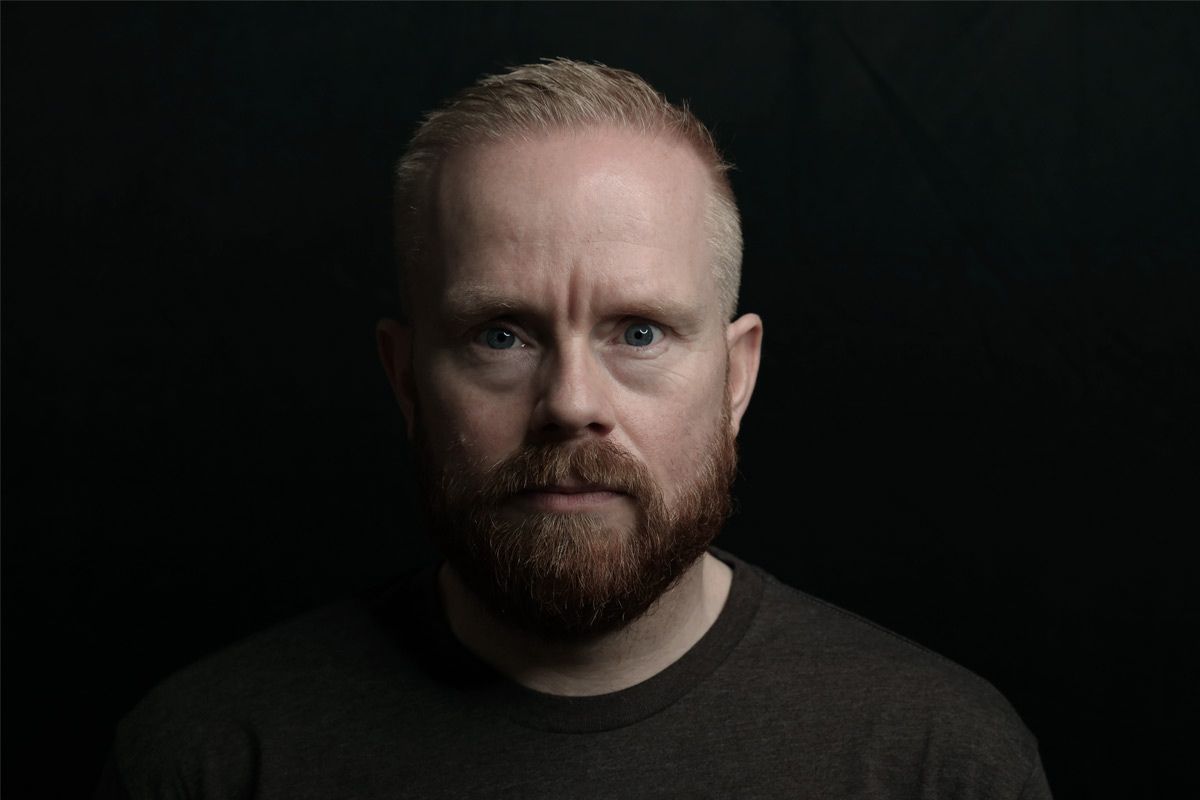
Name: Frosti Jonsson aka Bistro Boy
Nationality: Icelandic
Occupation: Producer, sound artist, composer
Current Release: Bistro Boy's Ambient Short Stories is out via Möller.
Recommendations on the topic of sound: I could make a long list, but I will leave you with one book worth reading, Ben Wardle's Mark Hollis: A Perfect Silence
If you enjoyed this Bistro Boy interview and would like to find out more about his work, visit his official website. He is also on Instagram, facebook, and bandcamp.
Music begins where words fade out. Making music has always helped me express myself, tell a story and communicate with the outside world or just paint some kind of images of the unspoken. Images in my mind, to refer to one of my songs (from the album Journey, 2013.
Creating music is my way of meditating. It brings some kind of inner peace and stability. Music has definitely saved my life.
How do listening with headphones and listening through a stereo system change your experience of sound and music?
When listening to music the experience often depends on the context, the mood, time and place. Listening to an album in the car is a different listening experience than sitting down on the sofa with your headphones on and eyes closed or sitting in your studio when you are working on it.
From a more technical point of view I run all of my music and reference tracks on different systems just to get a better feel for what it sounds like or should sound like and different context helps make different things stand out.
Tell me about some of the albums or artists that you love specifically for their sound, please.
There are so many albums and artists out there I admire for different reasons. I am a huge Underworld fan and they have had so many great moments since their breakthrough release Dubnobasswithmyheadman 30 years ago. And 30 years later, that album still sounds current.
Lately I have been enjoying the music of Arve Henrikse, Elling Vanberg and similar artists who are often juggling between electronica, ambient and jazz. Their album Ellivan is such a beauty.
I am also a big fan of Nils Frahm’s All Melody, Jon Hopkins' Immunity, just to name a very few, but very influential artists and albums.
[Read our Nils Frahm interview]
Do you experience strong emotional responses towards certain sounds? If so, what kind of sounds are these and do you have an explanation about the reasons for these responses?
I absolutely do and always have. I was drawn to electronic music from a young age and as a kid I was fascinated with artists such as Jean-Michel Jarre, Kraftwerk and Art Of Noise to name a few.
[Read our Jean-Michel Jarre interview]
[Read our Art of Noise's Trevor Horn interview]
Synths, pads, arpeggiators just sounded so cool and interesting to me, more than mainstream pop or rock. I don't need another guitar solo in my life lol.
When I bought my first synth, I spent hours and hours just playing chords and texture and fiddling with some basic filtering. Such a joy! My album Ambient Theory Of Dreaming (2020) is all about that.
“Þræðir 3” from my collaboration album tengsl I released with my good friend Gasper Selko (X.U.L) is another example.
Texture and flow of sounds, you lose sense of time, like when you are dreaming.
There can be sounds which feel highly irritating to us and then there are others we would gladly listen to for hours. Do you have examples for either one or both of these?
Hmmm … That's an interesting one. I don't know honestly and I think this might be more of a question of taste than the sounds themselves.
When I listen to electronica, techno or ambient music, the texture, the flow of it, the movement is what I connect to while others can't make any sense of it.
I don't think many of my friends would last long listening to Manuel Göttsching’s E2-E4 but I absolutely love that album.
[Read our Manuel Göttsching interview]
[Read our feature on Manuel Göttsching's E2-E4]
Are there everyday places, spaces, or devices which intrigue you by the way they sound? Which are these?
Everything inspires. Nature is an amazing source of sounds just as much as busy streets.
I love to record all kinds of sounds and give them a different meaning or context. I keep my Zoom close to me when traveling and I use my phone all the time to record all kinds of sound which later become a source of sound.
I also like to sneak in my voice into many of my songs for the fun of it or added drama. The last song (title track) on Píanó í þokunni (Piano in the mist) is a good example of that.
Have you ever been in spaces with extreme sonic characteristics, such as anechoic chambers or caves? What was the experience like?
Large caves have an amazing sound and so do cathedrals.
What are among your favorite spaces to record and play your music?
I record almost everything at home in my studio, that's where I feel most comfortable and creative. Making music and recording is my creative outlet as much as it is its own form of meditation I guess.
But as mentioned earlier I source a lot of externally recorded sounds into my music.
Do music and sound feel “material” to you? Does working with sound feel like you're sculpting or shaping something?
I do work with physical instruments as any other sound source and work with them like I work with sounds on my synths and samplers. It is an endless source to work with. The instruments themselves are a source of ideas I can tweak any way I want.
This was for example the idea I worked with on my album Ambient Short Stories. I bought a saxophone because I wanted both to challenge myself with a new instrument but also I wanted to source new sounds and give it a new context so to speak, not as a saxophone per se but more in a way I would use any synths or sound modules.
Bend to sound to my needs.
How important is sound for our overall well-being and how far do you feel the "acoustic health" of a society or environment is reflective of its overall health?
We live in a noisy, dopamine driven world and we should more often just sit down and enjoy the silence. Silence is just as powerful as the music itself and I would argue we should enjoy the silence a little bit more.
More is not always better.
Sound, song, and rhythm are all around us, from animal noises to the waves of the ocean. What, if any, are some of the most moving experiences you've had with these non-human-made sounds?
I am moved by the sounds every day. It can be the texture, the ambiance, the flow, some moving sounds or just the noise on a busy street.
I remember when I was a kid, we received a thin 7” vinyl with a National Geographic magazine with recordings of whales. That blew me away!
Many animals communicate through sound. Based either on experience or intuition, do you feel as though interspecies communication is possible and important? Is there a creative element to it, would you say?
Absolutely, all animals and probably plants too communicate, both beyond our human senses and I think we pick some of it up, knowingly or unknowingly. We humans are pretty limited and narcissistic species!
My track “Cicadas” on my new album was inspired by those little creatures. The sound they make, the noise is fascinating from those small creators. I wanted to recreate and make something meaningful out of it, make a conversation about it in a way by adding music to it.
Tinnitus and developing hyperacusis are very real risks for anyone working with sound. Do you take precautions in this regard and if you're suffering from these or similar issues – how do you cope with them?
I am definitely aware of this and I do take more care of my hearing now than I used to when I was younger. Luckily my hearing is still in good shape but I definitely know the risks and the importance of giving your ears a good rest and not putting yourself at risk.
If I have issues, sometimes happening after air travels, just rest and be patient.
We can surround ourselves with sound every second of the day. The great pianist Glenn Gould even considered this the ultimate delight. How do you see that yourself and what importance does silence hold?
Silence is often underestimated. We don't need all that noise 24/7!
Seth S. Horowitz called hearing the “universal sense” and emphasized that it was more precise and faster than any of our other senses, including vision. How would our world be different if we paid less attention to looks and listened more instead?
I would argue we need to give attention to all of our senses. Sound as much as vision, hearing as much as seeing as much as feeling and touching.
I would also argue many of us take our senses for granted, not appreciating what we have. For those of us seeing and hearing, what a gift we have been given! Being able to see, watch, touch and smell. When you lose any of those, your perceptions change as well as how you connect with your other senses and the outside world.
I have learned a lot from my nieces who lost hearing and vision in their early teenage years who still have a wonderful way of sensing the world around them and enjoying life to the fullest. It makes me humble and thankful for what I have been given for sure.