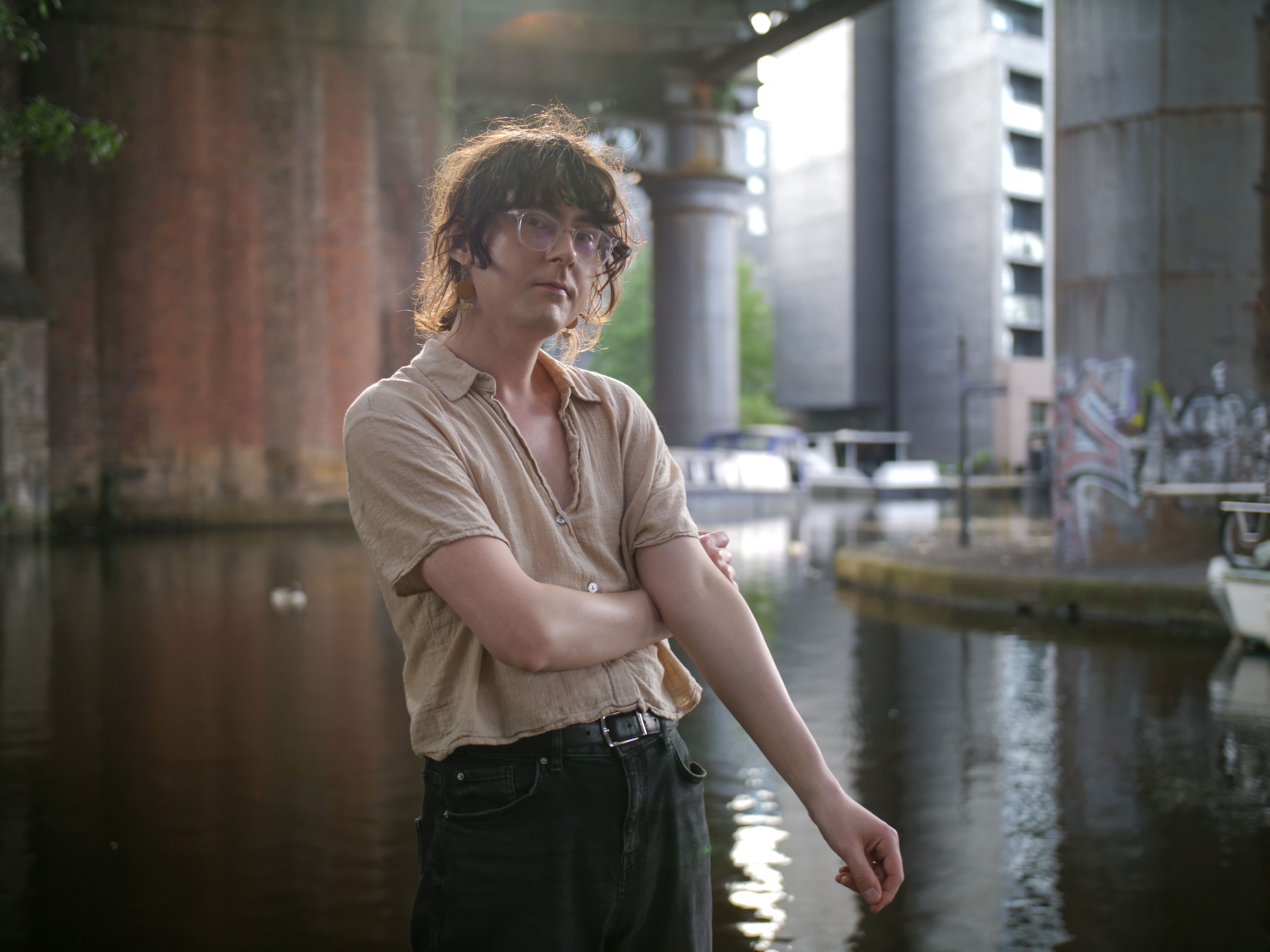
Published
Name: Black Brunswicker
Nationality: American, UK-based
Occupation: Producer, guitarist, composer
Recent release: Black Brunswicker's new album Been Around Here Before is out via Nettwerk.
Recommendations: My spouse got me David Hendy’s book Noise: A Human History of Sound and Listening. It’s an interesting look at the history of sound and noise. It’s worth picking up.
If you enjoyed this Black Brunswicker interview and would like to stay up to date with their music, visit them on Instagram, and bandcamp.
When I listen to music, I see shapes, objects and colours. What happens in your body when you're listening? Do you listen with your eyes open or closed?
I often listen to music when I’m on the go or working. It often just provides a background to what I’m doing. But when I have time to actually sit down and listen to something, it can be a very nice experience.
I find that when I’m listening to something late at night, when drowsiness sets in, it can often be a magical experience, amplifying the hypnotic elements of the music.
But also, some of my favourite moments listening to music were back when I was still living in the States and drove so much daily to and from work listening to music. It’s when I’m on my own driving that sometimes I can actually sit and listen a bit more closely to the music (well, within reason and keeping my eyes on the road).
How do listening with headphones and listening through a stereo system change your experience of sound and music?
I guess it really depends on where I am or what I’m doing. I work remotely from my home, so I often have on music or podcasts from my speakers.
Other times, I enjoy listening with headphones when I’m out and about or traveling. It feels like I’m in my own little world when I’m listening with headphones.
Tell me about some of the albums or artists that you love specifically for their sound, please.
I suppose folks may find this a bit surprising given the chill nature of my music, but I primarily listen to metal when I’m on my own - doom metal, black metal, sludge, drone, and noise. I tend to resonate with heavier, hypnotic sounds. Sleep has been a long-time favourite of mine with their heavy, droning hypnotic guitar riffs.
More recently I’ve been getting into Thou a lot more. I love how heavy and harsh their music is, but they’ve found a good balance for themselves.
From a technical standpoint, I’m fascinated by how they manage to fit so many guitarists into their sonic space without it all going to mush.
Do you experience strong emotional responses towards certain sounds? If so, what kind of sounds are these and do you have an explanation about the reasons for these responses?
I tend to struggle with feeling and identifying emotions, but certain sounds can make me feel a bit more at ease or more anxious depending on the context and situation. Obviously natural sounds like streams, rain, and wind are lovely, but I think since moving to the city, I’ve become increasingly interested in urban sounds, some of which I’ve sampled and used in my music.
As someone who enjoys traveling, I am very interested in the different soundscapes and sound environments in different spaces and communities of the places I visit. I often enjoy collecting field recordings while traveling, and have used some sounds from trips to Italy and Norway in my recent music.
Also worth noting is that, as a guitarist and someone who’s deeply interested in guitar playing and technique, I tend to resonate more with guitar-based music because I can listen to it and sort of understand what the guitarist is doing and how they make their sound. I feel that I’m able to work through my feelings with the guitar, so I find it easy to connect with guitar-based music and understand the emotions and feelings the guitarist is trying to convey.
There can be sounds which feel highly irritating to us and then there are others we could gladly listen to for hours. Do you have examples for either one or both of these?
My pianist friends might hate me for this, but I find the piano highly grating. It’s an instrument that I’ve never had a strong connection with and even brings up some unpleasant memories of church music from when I was forced to attend church services as a youth.
I realize it’s been the cornerstone of Western music for centuries, but for me - meh, I’d rather just listen to some other instrument.
Are there everyday places, spaces, or devices which intrigue you by the way they sound? Which are these?
As mentioned in a previous response, I quite like nature sounds, be it birds chirping, farm animals, or the whipping of grass in the wind. But since moving to Manchester, I have become more interested in urban sounds and city soundscapes. It’s quite different from the sounds of slow country life I grew up with, but I find it charming and interesting in different ways.
Each part of Manchester has a slightly different soundscape, and it changes at different times and days. It can sound anything like rushing traffic to groups of youth on an outing to the electronic rumblings from any of the endless number of clubs and venues that call this city home. It’s the sounds of day to day life mixed with machinery and the hum of city life.
I feel very at home amongst the Mancunian soundscapes and enjoy the diversity of people, life, and sounds I come across here.
Have you ever been in spaces with extreme sonic characteristics, such as anechoic chambers or caves? What was the experience like?
I recently went on a cave tour back home in Indiana at Blue Springs Cavern, which has a nearly 3-mile-long river in it. It’s been ages since I’ve been in a cave, but the echo and acoustics were so cool. The boat driver at one point stopped the tour and demonstrated the natural echo by banging his torch on a bit of metal on the boat, which resulted in a long, sustained echo that sounded a bit like a gunshot. Like some kind of nerd, I sampled it and maybe will have to use it in some music in the future.
I record my guitar straight through my pedalboard into my tape machine or OP-1, so I don’t often think about the space in which I’m recording since my pedals cover delay and reverb. Although after experiencing that cave tour, it makes me want to try recording some music in a cave now.
What are among your favourite spaces to record and play your music?
I’ve always recorded everything on my own at home or on the road whilst traveling. I like having an extremely mobile setup to record that I can take with me wherever I go, usually recording straight into a Tascam DP-006 Pocketstudio, a Teenage Engineering OP-1, or even a handheld battery-powered tape machine. Travel and new sceneries are often great sources of inspiration for my music, so I try to bring a guitar and some basic equipment with me whenever I can.
Some notable places where I’ve written or recorded music include Chicago, the Amalfi Coast in Italy, a cabin in the Llyn Peninsula in Wales, and a farmhouse in Yorkshire, where I recorded demos of tracks from my 2022 album High Peaks.
Do music and sound feel “material” to you? Does working with sound feel like you're sculpting or shaping something?
Music feels material to me insofar as to the instruments used to create it.
As a guitarist and someone who tends to listen primarily to guitar-based music, I find it easier to connect to the music when I can listen to and try to understand what the guitarist is doing or how they got their tone. Electronic music seems like a black box to me - I don’t really get what’s going on a lot of the time and so it makes it harder for me to connect to the music.
Being able to hold a guitar in my hands and have pedals at my feet feels meaningful to me. I feel a certain connectedness with my guitars that’s hard to describe. It’s a joy for me to play guitar and to be able to alter my sound with my hands by twisting and turning the knobs on my pedals.
How important is sound for our overall well-being and in how far do you feel the "acoustic health" of a society or environment is reflective of its overall health?
Sound and the sonic landscapes we live in are often an ignored or forgotten part of the way we engage with the world—until those sounds become a nuisance. With most people living in cities and urban centers, we’re inundated with sound constantly to the point we just tune out the drone and humdrum of everyday life. But the sounds are still there, and if left unexamined, they can contribute to stressors that weigh on our lives.
I’ve found for myself, as someone with social anxiety, what causes me the most anxiety from big crowds is not all of the people, but all of the noise—fragments of overheard conversations, and sounds. I think part of being mindful is also being aware of the sounds in your immediate environment and how your body reacts to those sounds.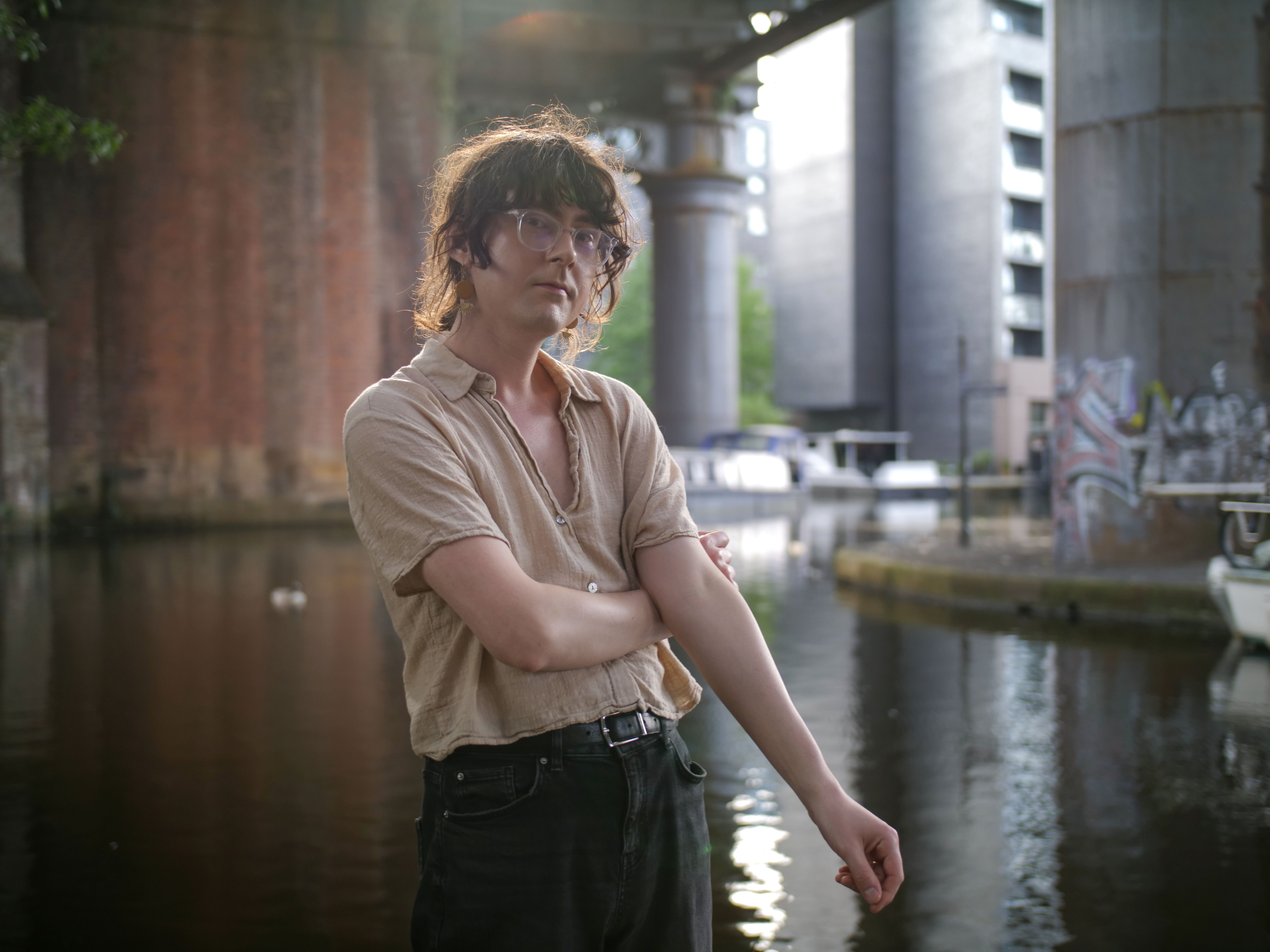
Black Brunswicker Interview Image by Chris Deakin
Sound, song, and rhythm are all around us, from animal noises to the waves of the ocean. What, if any, are some of the most moving experiences you've had with these non-human-made sounds?
Maybe it’s a recency bias, but I rediscovered my love of cicadas over this past summer when I spent 2 months in the US visiting family and playing some gigs.
Anyone who’s grown up in the Midwest or spent any time there will know that summers are often soundtracked by the incessant buzz of cicadas. I find their low droning sound meditative and kind of calming in a way.
Many animals communicate through sound. Based either on experience or intuition, do you feel as though interspecies communication is possible and important? Is there a creative element to it, would you say?
Whether or not we can communicate with other species, I have no clue. But we do have the ability to recognize patterns and use them to understand behavior.
I spent a semester in grad school doing a design ethnography course with orangutans in the Indianapolis Zoo. One of the interesting takeaways was that through observing the orangutans’ interactions with others and their environment, and the way they navigated their enclosure, you could start to recognize patterns in their behaviors and relationship dynamics.
This isn’t to say anything about the ethics of zoos and animal captivity, but rather an observation from personal experience. I think anyone who has had pets with anxiety can also recognize and understand signs of anxiety and distress in them. Poor kitties.
Tinnitus and developing hyperacusis are very real risks for anyone working with sound. Do you take precautions in this regard and if you're suffering from these or similar issues – how do you cope with them?
Ohhh no, I’m so bad about this. I have really neglected to take precautions with my hearing. I went to a lot of loud metal gigs as a teen and have always had a penchant for loud amps.
It’s definitely worth taking earplugs to gigs. Just be kind to your ears and to yourself.
We can surround us with sound every second of the day. The great pianist Glenn Gould even considered this the ultimate delight. How do you see that yourself and what importance does silence hold?
I guess I would ask back - to whom is it the ultimate delight? For myself, I value having silence. I am an introvert and I do not like talking a whole lot, so having space for silence and space for myself is much appreciated - which I read as the meaning of this statement. But for others, silence can spark anxiety. Silence is an absence, and that lack can be scary or nerve-wracking.
In a modern urban world, we’re not really able to get much silence. We’ll always have some electric hum or droning from the world outside. I think we can take from silence what we need from it.
Seth S. Horowitz called hearing the “universal sense” and emphasised that it was more precise and faster than any of our other senses, including vision. How would our world be different if we paid less attention to looks and listened more instead?
Listening is important for sure, but I think we also need to understand the internal biases or assumptions we carry and how they impact our interactions with others and the world around us. While we might listen to someone, we might not fully understand their story or their struggles.
The answer is obviously to be empathetic and try to put yourself in the other person’s shoes, but the reality is that people have biases that stem from various places—be it religious or ideological. Or just straight-up hatred.
I can’t help but be cynical, as a transfemme person, at the notion that we should listen more than we look, because that means I’ll have to start voice training more.