Published
Name: Blake Stranathan aka Blake Lee
Nationality: American
Occupation: Guitarist, songwriter, producer, music director
Current release: Blake Lee's No Sound In Space, his debut album as a solo artist after many years of contributing to albums and live tours of Lana del Rey, is out via OFNOT.
If you enjoyed this Blake Lee interview and would like to know more about his music, visit him on Instagram.
For No Sound In Space, where did the initial impulse to create something come from for you? What role did often-quoted sources of inspiration like dreams, other forms of art, personal relationships, politics etc play?
I had brought home all of my touring gear and pedals that I use with Lana on the road and I started creating as an outlet with no intention other than feeling a strong need to create. Especially from a long layoff from not touring post-COVID … and this is what started to take shape. It was very much an exercise in following the inspiration and being open to where it takes you.
I’m heavily inspired by films and scores, directors like Stanley Kubrick, Ridley Scott, Christopher Nolan, Tarantino, and their ability to navigate nuance, the bigger picture, and the layers of depth beneath the surface. I liked the idea of creating these sonic and visual worlds and what would get me excited if I was to experience them in a dark cinema.
This would later influence me directing and scoring the companion short film for this album on 35mm film.
No Sound In Space is definitely a departure from the work you did for artists like Lana del Rey or Hazel English. On the other hand, I've always felt that sound, texture, timbre, and feeling are essential components of recording a great song. How do you see that relationship?
I usually approach any kind of work with trying to evoke a feeling —-Whether that was a more feeling of 60s nostalgia with Hazel, or finding ways to bring out the variety of moods and emotions and depth within Lana’s music. Sound and textures are absolutely vital.
I’ve always wanted to release music but never liked the idea of being put in a box, and feel like genres exist just so people can classify things. The challenge of the unexpected and creating with no rules is exciting.
The album is said to have been a meditation about the cosmos. In an infinite space, there are infinite centers – what were some of the core questions that came up during these meditations for you personally and how did they lead to concrete creative responses?
Somewhere in the heart of the process, I started practising Transcendental Meditation. The journey to the unknown —finding solace in the isolation of a void —I tried my best to create with the absence of thought. I feel there is a big difference between work being done cerebrally and what is done off of raw emotion and inspiration.
I intrinsically try to avoid cliches, or art being too on the nose.
No Sound In Space is definitely a guitar album but hardly in the sense that most people would understand that term. Tell me a bit about the guitar as a creative tool for you, please.
I play different instruments, but guitar has always been my best tool. At the end of the day, it is a string instrument, and the combination and ways you can manipulate it with different pedal chains or with your hands allows you to transform it into many different sounds. It’s such a great tool for expression.
I heard John Frusciante talking once about a certain ‘controlled reckless abandon’ when it comes to approach, and I definitely feel akin and subscribe to that as well. I resonate more with the raw energy in a Kurt Cobain solo that sounds like the speaker is going to explode than shredy fast noodling.
To many instrumentalists I've spoken to, there is almost a physical need to touch their instrument. I can imagine that you played very differently with your guitar than usual for this album – so did your relationship with the guitar change over the course of recording it?
Over the past few years, I’ve noticed the love/hate relationship I have with guitar, or more so quintessential guitar playing.
I’d say my relationship has been changing prior to working on this record and slowly over time. I view myself as a musician first, not just a guitarist. There is a difference there, and the approach with other music is always about serving the song and the composition.
I did notice when I came back to playing guitar again with Lana on tour [after making the record] that my playing was more inspired than ever and it felt easier and quicker to tap into those raw places. I do have the same approach playing sounds with Lana del Rey, and I think this album is just a more extreme representation of that. 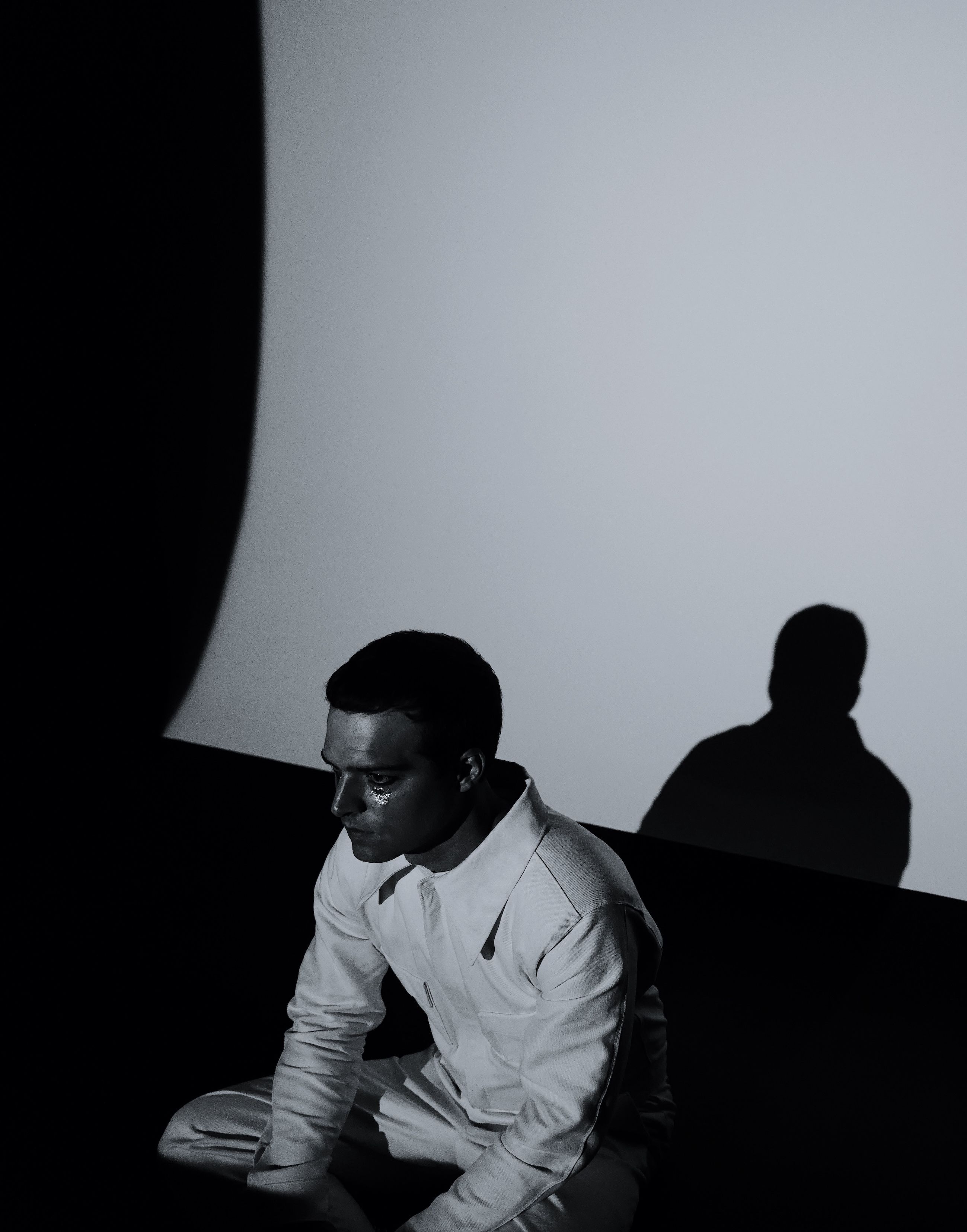
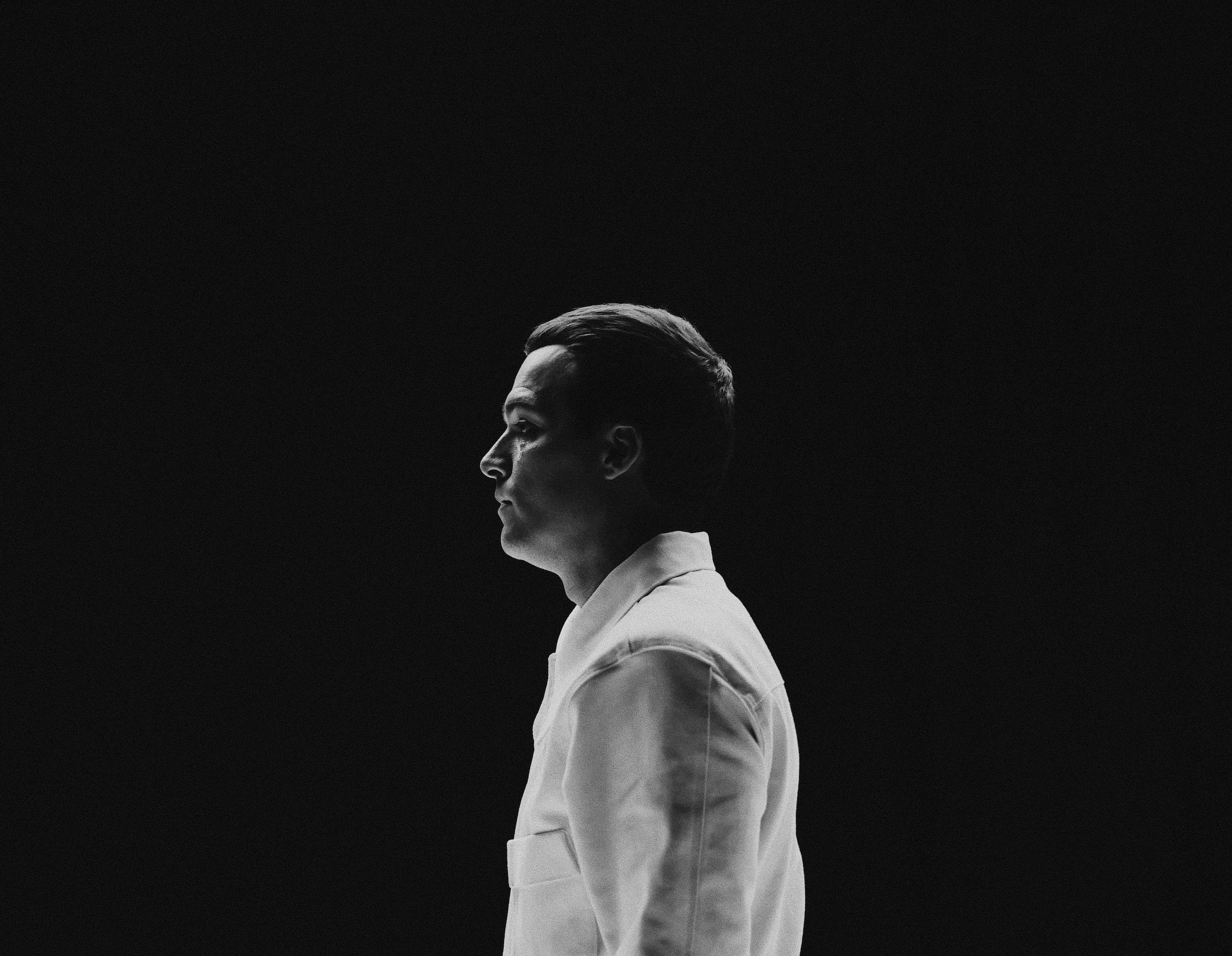
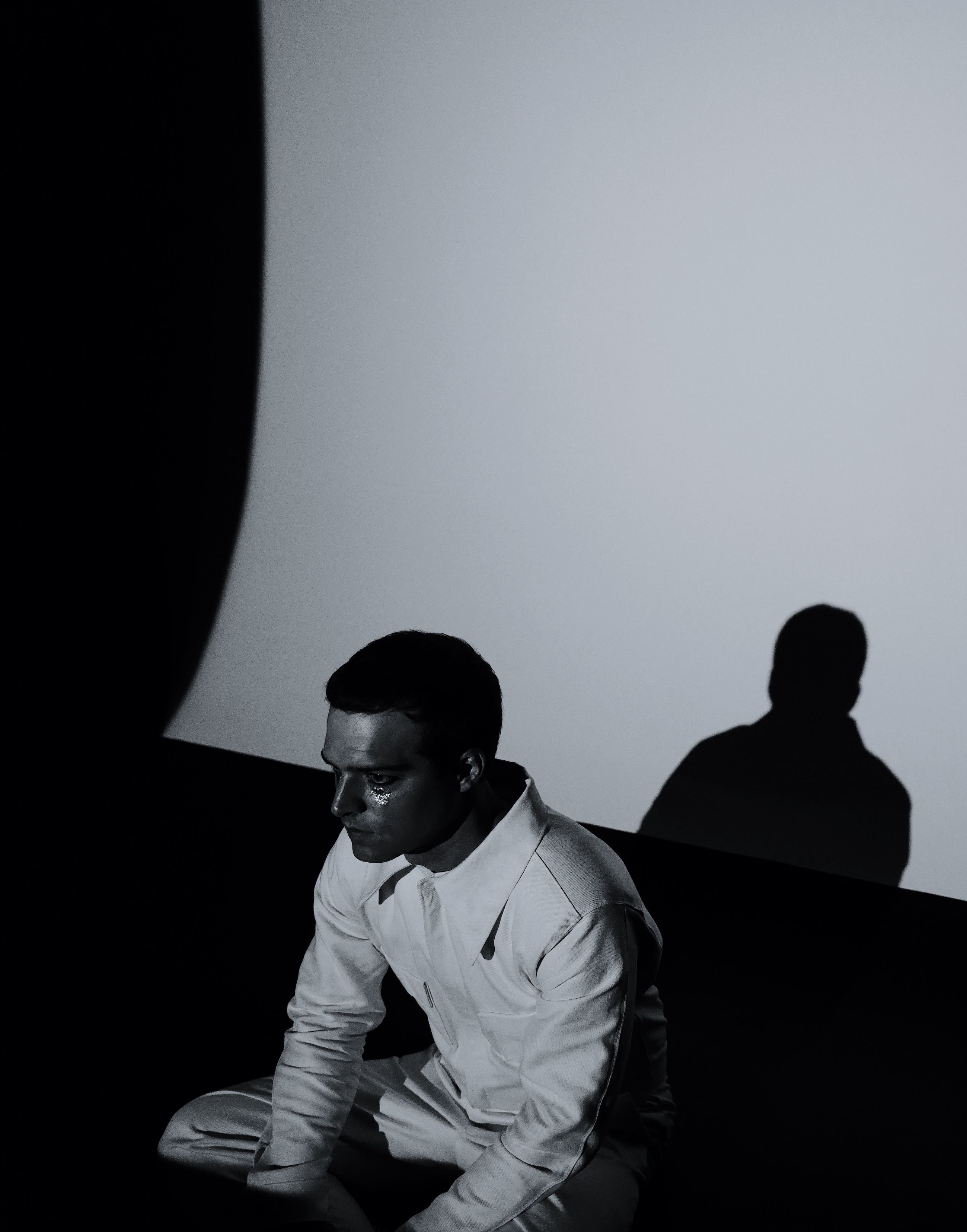
Blake Lee Interview Image by Greg Hatton
The process for No Sound In Space was an expansive long one. How would you describe it and what are some of the memories you've kept of it for yourself?
I learned a lot about myself in the process. Sometimes it felt like throwing paint against a canvas, and then either letting everything stick, or subtracting it down to a minimal form that gets the same emotion across.
Overall it was very natural and pure, and I feel grateful for that. It wasn’t music that I sat down to create in a specific style. I cherish the moments where you’re really inspired and don’t realize what time it is, or that you haven’t eaten a meal all day because you’ve been in your own world.
I ran into one of my neighbors a couple of days after recording ‘EXP’ and they mentioned they could hear me recording and that it sounded like an airplane was landing. [laughs] That made me really happy.
When you're writing a song, there are usually clear structures. If you were to compare the process for a piece like “Pretty when you cry” and “Moving Air” off your solo album - what changes once you leave those clear structures behind?
What holds the process of those two together is the way in which they were formed. They both flowed out naturally and very quickly without any preconceived intention. You chase and and follow the inspiration and that excited feeling because you learn to cherish those moments as it doesn’t happen like that very often. ‘
‘Pretty When You Cry’ was created with limitations as I only had a couple pedals and recorded in the live room with an old telecaster that was at Electric Lady.
With a piece like ‘Moving Air’, I had endless options at my disposal, so the limitations had to be self-made. I’ve been learning that limitations help me with productivity in a world of technology and endless creative tools.
You've characterised the process for the music as instinctive. But I imagine there has to be some form of evaluation there as well and at least a vague sense of direction. How did the balance between these poles establish itself?
Because the process was quite long, the evaluation came more from the test of time, and If I still resonated and connected to the compositions in the same way — Evaluating If I was honoring the work that was created in a genuine and sincere way.
There were a bunch of sessions as well where things were not as instinctive where I could feel myself trying, and then frustrations would arise.
Do you feel as though there are at least elements of composition and improvisation which are entirely unique to each? Based on your own work or maybe performances or recordings by other artists, do you feel that there are results which could only have happened through one of them?
I think it really depends on the artist and art form and whatever gets them to a place of true expression or a place where they enjoy it themselves. In music, they often influence each other.
For example, when recording on a more structured song in the studio, I like to spend time crafting specific parts, but it does take a bit of improvisation or jamming to get there. I feel like bands like Radiohead used to workshop their songs live before they recorded the final product.
In a medium like filmmaking, the end product and cinematography is usually going to be better the more composed and planned out beforehand, rather than just getting a handheld camera and seeing what happens, if you know what I mean.
Your collaborations with KMRU are not mere sidethoughts – they're actually literally at the heart of the record. Describe the process of working together, please. What did the other add to the music?
When I first connected with KMRU after seeing his show at Zebulon in 2022, I got a strong impression we were speaking the same language. Our friendship quickly formed, getting to know each other through emails.
Since he lives in Berlin, he would ask for me to share stems to a couple of the tracks. He would add bits and help extend the arrangements. ‘Waiting’ was much shorter, almost like a segue, and I love what he did with slowing the pacing down and letting it breathe.
It was an effortless collaboration because there was no need to over explain anything as he already understood instinctively what to do.
Based on your experience with songwriters like Lana del Rey, or sound artists like KMRU - what tend to be the best collaborations in your opinion – those with artists you have a lot in common with or those where you have more differences? What happens when another musician take you outside of your comfort zone?
I like the collaborations where you are coming from a similar place and understand each other, sort of like riding a wave together with no egos getting in the way.
For example, the time spent trying to collaborate with an over thinker can be draining if you are trying to create from your instincts. Getting out of your comfort zone can be essential as also knowing when to come up for air, or go for a walk.
Those moments can lead to a certain clarity that you wouldn’t have found otherwise.
You've mentioned that you did not want to “ruin things by being a perfectionist” in your collaboration. On the other hand, after spending time with the music, I do feel like the album hits perfection at several points and I'm glad about that as a listener. When does perfectionism become an issue and what room for perfectionism is there still in a world where most music is consumed for a fleeting moment only?
Perfectionism is an issue if you’re no longer focused on the meaning behind something and the art itself. Most times there is more beauty in things being raw and honest.
If you’re acting from a place of being concerned with how things will be consumed or how others will react to something, you’ve already lost and are not creating good art.
The truest form of creating comes from within and hopefully the audience will connect to that sincerity.
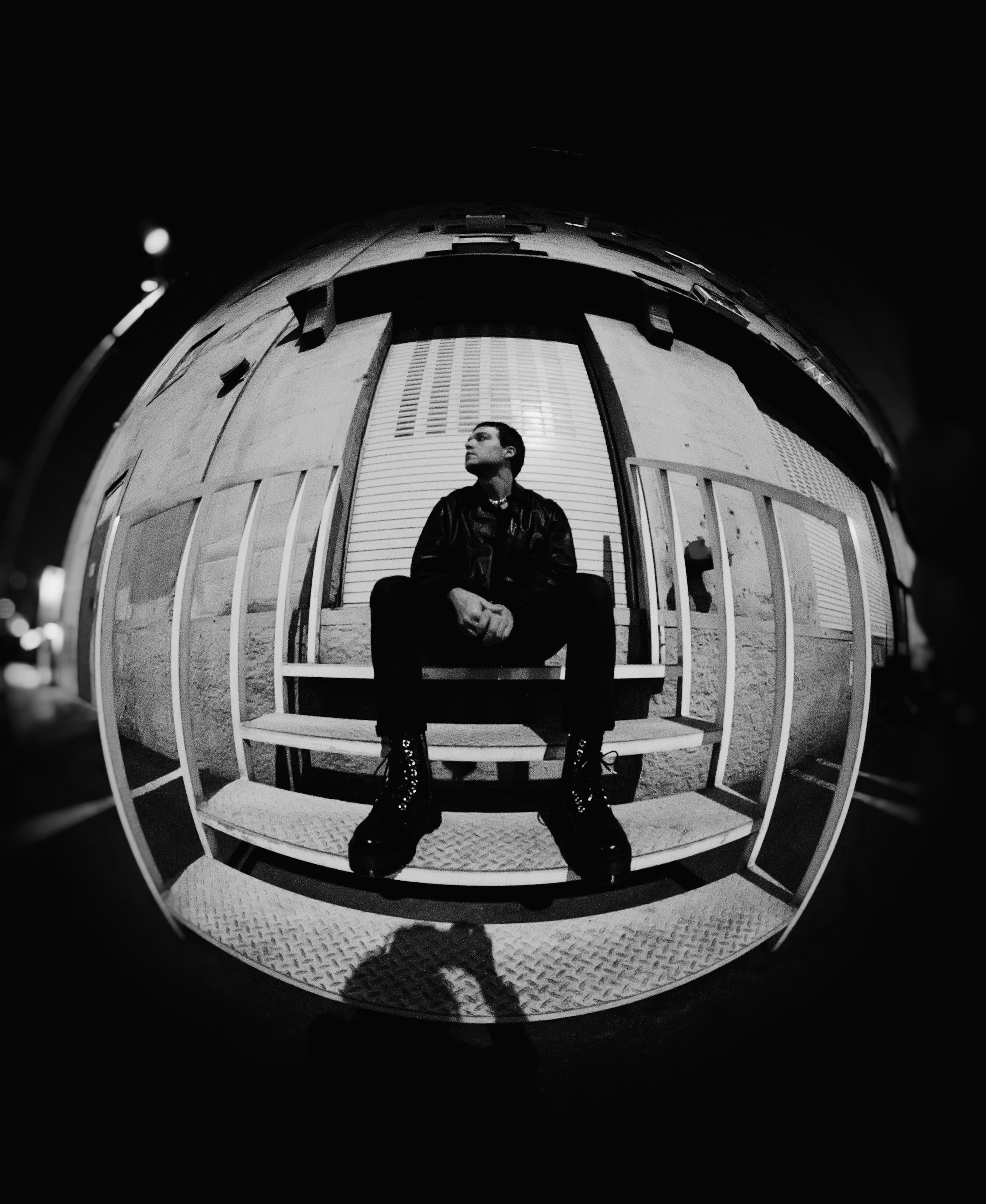
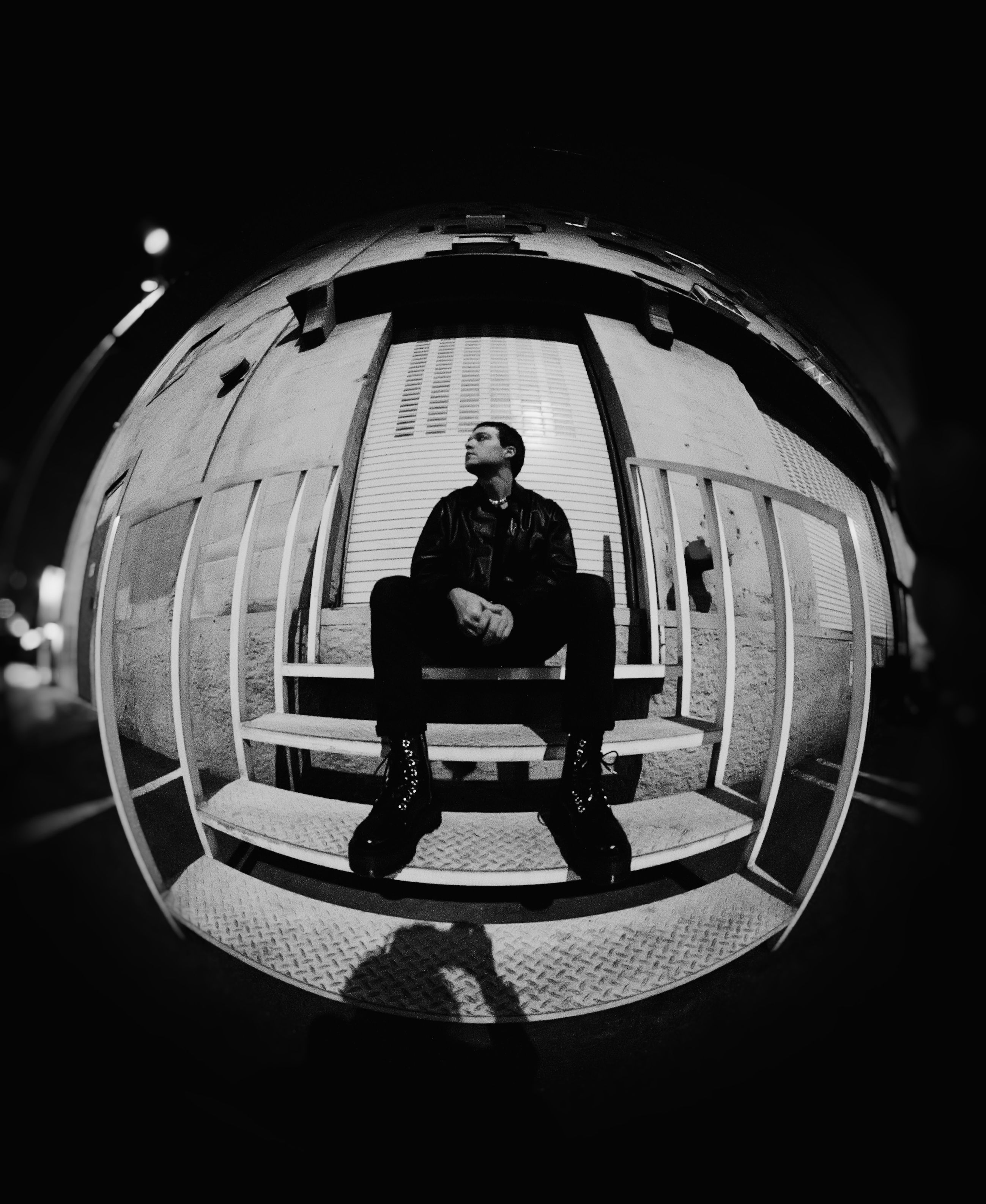
Blake Lee Interview Image by Greg Hatton
I have listened to drone music for a very long time now and I still can't figure out what sets a great drone apart from a merely good one. Since I find the drones on No Sound In Space quite remarkable – do you have an answer to that question?
Whatever turns your brain off, where you’re just experiencing and feeling. When creating some of the compositions, I would later realize after around ten minutes or more that I had something looping in the background, and that was a good sign that I continued to honor throughout the process. It’s not an intellectual response, but more of a body and gut reaction.
There is a magic to mystery and there is a beauty in things that remain inexplicable. And yet, the field recording on "Pan Am" suggests that there may be a narrative behind the album, even if it's possibly a subconscious one. Does the record have a concrete meaning to you, if so could you hint at it, and what feedback have you had from listeners so far?
I love the reality of multiple takeaways and revisitation that comes with the nature of ambiguity. It wasn’t an intention for that to happen, but the art I gravitate towards allows the listener or viewer to bring their own emotions and perceptions to the table, and that is really valuable.
‘Pan Am’, through to the end of the record, has its own narrative to me that feels like embarking on a journey. The field recording serves like a waiting room or station per say, with the sort of Kevin Shields chords creeping in from the distance.
Listening back l feel like I was chasing an atmosphere and visual interlude that reminded me of listening to Pink Floyd when I was young. The distortion layers and collage on ‘EXP’ put me in the mindset of the psychedelic flying sequence from 2OO1: A Space Odyssey, as well as the experience I had seeing My Bloody Valentine live and the euphoria that I felt during the extended noise section at the end of their shows.
Creativity can reach many different corners of our lives. Do you personally feel as though writing a piece of music is inherently different from something like making a great cup of coffee? What do you express through music that you couldn't or wouldn't in more 'mundane' tasks?
Yes, I’ve felt a connection between producing music and everyday activities like cooking and making coffee. Being attune to what affects what. Mixing as you go.
The difference being a piece of music or art will live forever, and thinking from the lens of will I be proud of what I’ve put into the universe when I’m older … although I do make a great fucking cappuccino.